
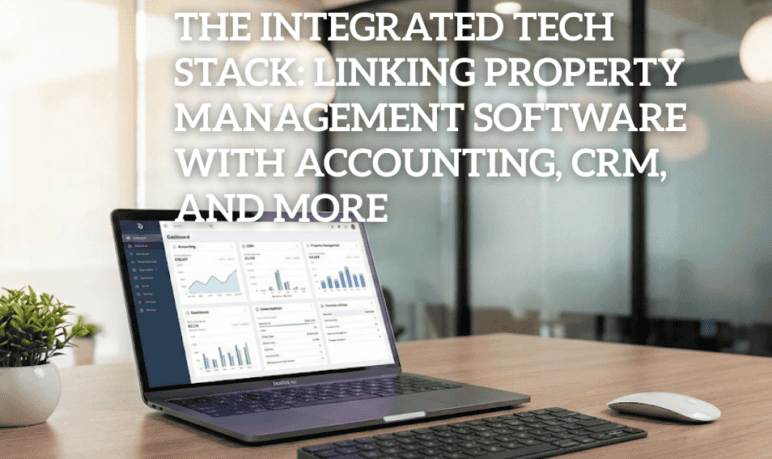
by Rinki Pandey January 5, 2026
Property management is much more than collecting rent or calling a plumber. As portfolios grow and tenants expect more, managers have to juggle efficiency, clear communication, and accurate reporting to owners. The right mix of connected technology, known as an integrated tech stack, makes life easier. Instead of jumping between separate apps for accounting, leasing, maintenance, and reports, more managers are linking these systems together so everything just works.
An integrated tech stack links your property management software with accounting, CRM, communication, and other tools you use every day. When these systems talk to each other, data moves automatically, mistakes drop, and your team spends less time on tedious work. That means faster decisions, more trust from owners, and happier tenants. Let’s explore how building the right tech stack can turn a patchwork of tools into a smooth, stress-free operation.
Why Property Managers Need an Integrated Tech Stack Today
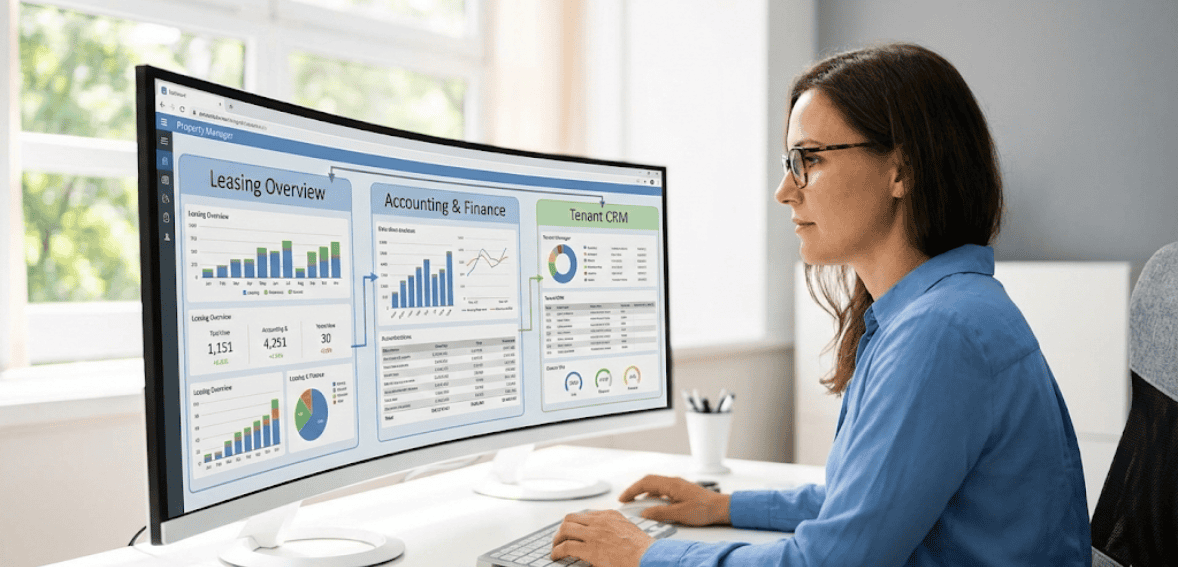
One big reason property managers need an integrated tech stack is that running properties is complicated. You have to keep track of rent payments, security deposits, repair bills, lease renewals, owner payouts, tenant messages, and all sorts of compliance paperwork. If you’re doing all this in different apps or spreadsheets, it’s easy for things to slip through the cracks. Miss an invoice, forget to update a tenant balance, or send an owner report late, and suddenly your reputation takes a hit.
A connected tech stack solves this by giving you one reliable place to find the truth. When your property management system links with accounting and CRM tools, updates happen automatically. Record a rent payment in one place and it shows up everywhere it should. Renew a lease, and both the tenant’s file and the owner’s forecast get updated. You don’t have to double-check everything by hand. You just know it’s right.
Another big plus: scalability. The way you handle ten units won’t work for fifty, and it definitely won’t work for two hundred. Manual work just doesn’t scale, but integrated tech does. With connected systems, you can grow your portfolio without drowning in admin. Setting up integration early keeps things running smoothly as you add more doors.
Linking Property Management Software with Accounting Systems
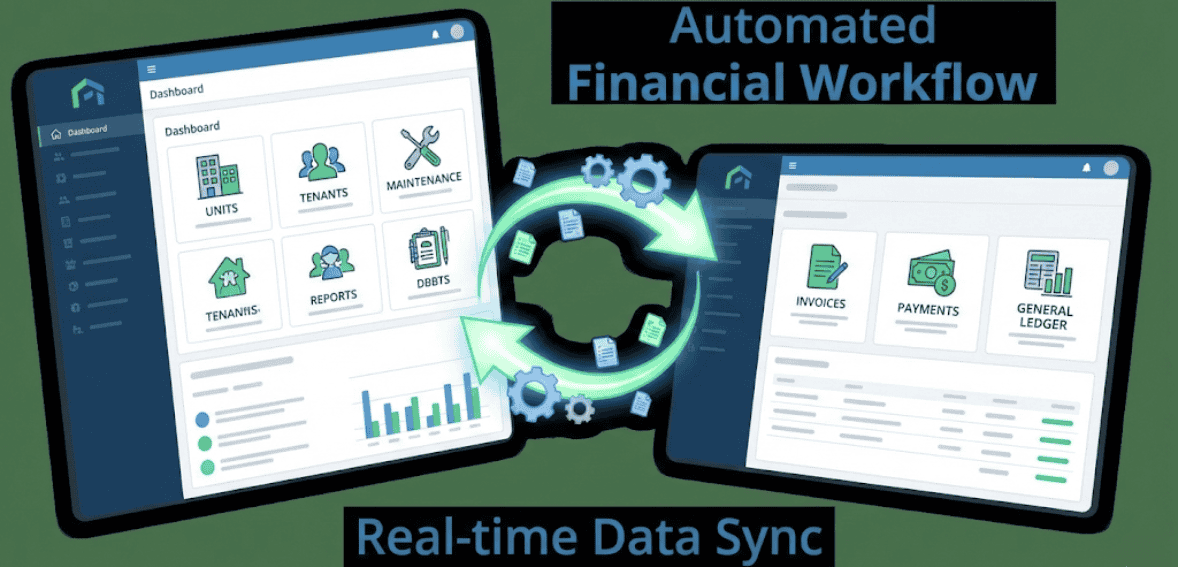
Accounting is the backbone of any property management business. It is also one of the most error-prone areas when systems are disconnected. When property management software and accounting tools operate separately, teams often duplicate data entry. Rent payments are entered once in the property system and again in accounting. Vendor bills are tracked in emails or spreadsheets before finally being recorded in financial software. This duplication wastes time and increases the risk of mistakes.
By integrating property management software with accounting systems, financial data is automatically and consistently moved. Rent income, late fees, credits, and refunds sync directly into general ledgers. Maintenance expenses and vendor invoices are displayed in real time, allowing managers to track profitability at both the property and portfolio levels. Owner statements become easier to generate because income and expenses are already categorized and reconciled.
Integration also makes compliance and audits easier. When financial records are synced and time-stamped, it’s simple to answer questions from owners, tax professionals, or regulators. There’s a clear record of when each transaction happened and how it was handled. Property managers can rely on their data instead of scrambling to explain errors.
Connecting CRM Systems to Improve Tenant and Owner Relationships
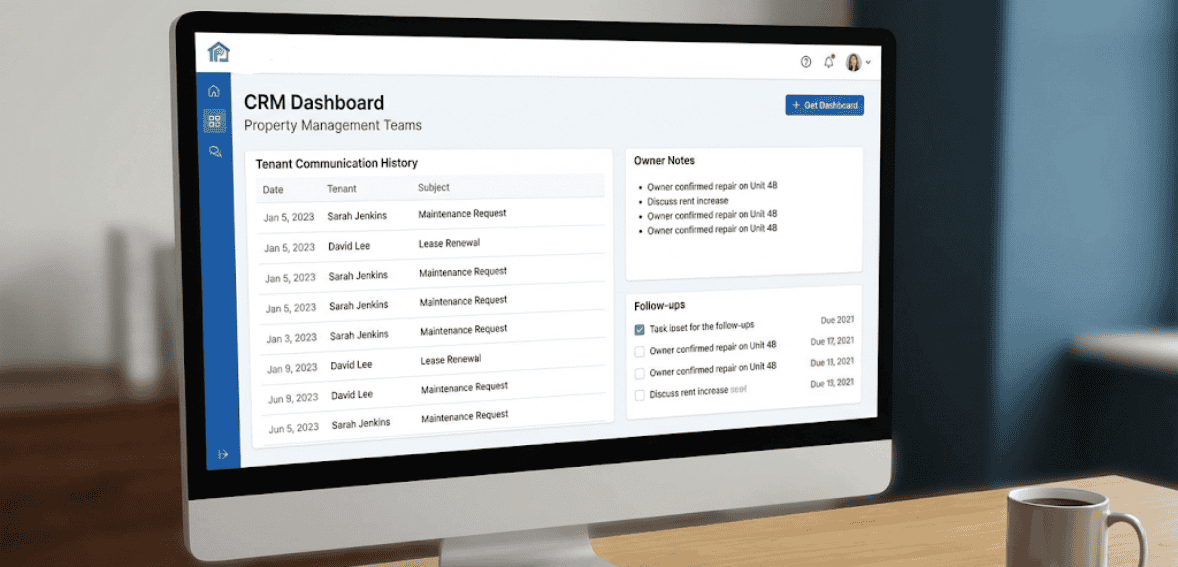
Customer relationship management systems, or CRMs, are often overlooked in property management, but they are key for communication and keeping tenants and owners happy. A CRM keeps track of information about tenants, owners, prospects, and vendors, including past conversations, preferences, and follow-up tasks. If the CRM isn’t connected to property management software, important details can be missed.
Integrating CRM systems with property management software allows teams to see the full relationship picture in one place. When a tenant submits a maintenance request, the interaction can be automatically logged in the CRM. When an owner asks about income performance, the CRM shows past conversations alongside up-to-date financial data. This makes communication more informed and personal.
CRM integration is especially useful for leasing and growth. Prospective tenants who reach out online can be tracked from their first contact through application, screening, and signing a lease. Automatic follow-ups prevent lost leads. This increases occupancy and reduces vacancies. The same approach helps with owner acquisition, making sure every conversation and step is tracked so no opportunity is missed.
How Integrated Systems Reduce Manual Work and Human Error
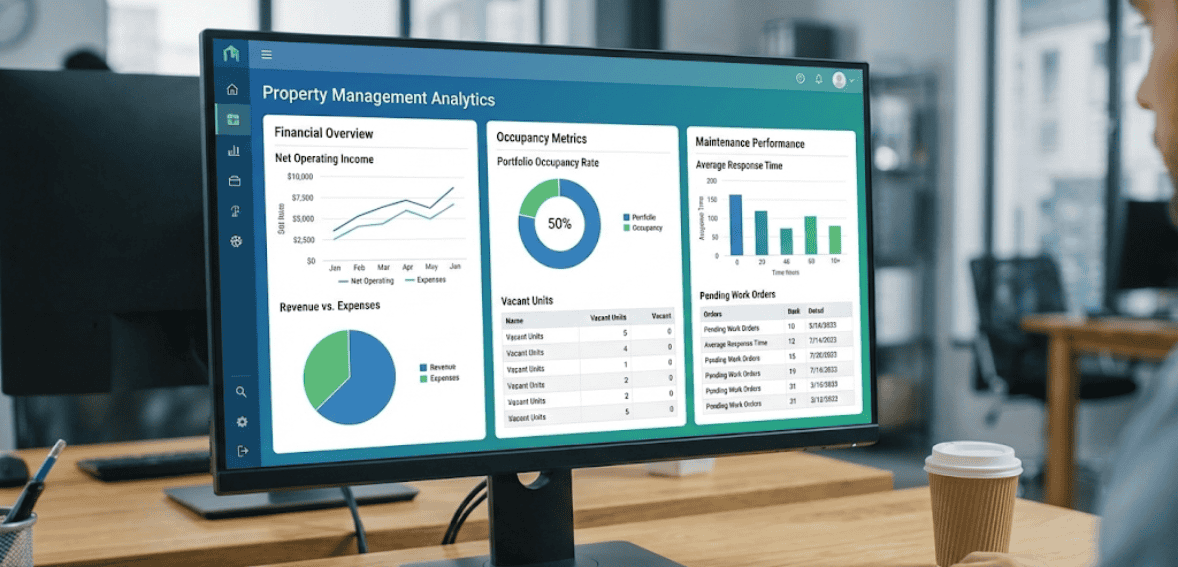
One of the biggest benefits of an integrated tech stack is less manual work. Entering data by hand takes a lot of time and can be tiring. When staff spend hours copying information between systems, they have less time and energy to solve problems, help customers, or plan ahead. Integration takes care of routine updates automatically.
Human error is another major concern. Even careful staff can make mistakes when entering the same data repeatedly. One wrong decimal or missed update can lead to reporting problems, tenant disputes, or unhappy owners. Integrated systems help prevent these issues by making sure data entered once is shared everywhere it’s needed. This builds trust. Tenants receive accurate statements. Owners see reliable reports. Internal teams work with confidence instead of constantly double-checking numbers. The tech stack becomes a quiet but powerful support system that keeps operations running smoothly in the background.
Integrating Maintenance, Vendor, and Workflow Tools into One System
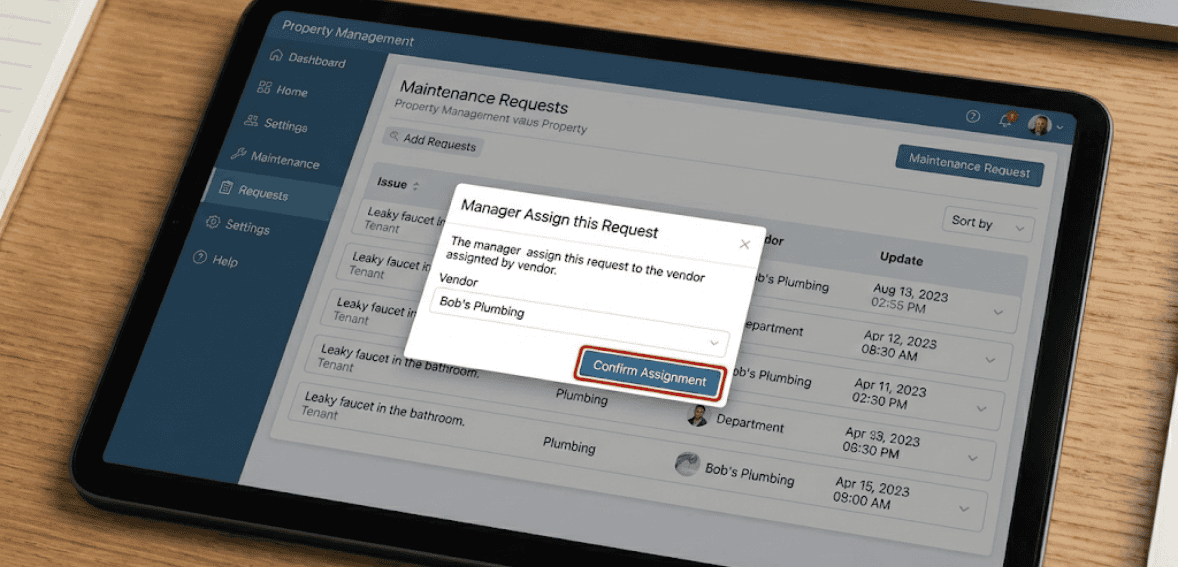
Maintenance is often where property management operations struggle. Requests may arrive by email, phone, text, or portal, and are then passed around by hand to vendors or staff. If maintenance systems aren’t connected to the main property management software, information can be lost, responses slow down, and it’s harder to know who is responsible.
An integrated tech stack puts maintenance tracking in the same system as leases, tenant records, and accounting. When a tenant makes a request, a work order is created and linked to their unit, lease, and history. This work order can be sent to vendor management tools so approved contractors are notified, job status is updated, and invoices are sent online. Once approved, the invoice goes straight into accounting without being entered again.
This kind of integration does more than improve efficiency; it also builds trust. Tenants get quicker updates and clearer timelines. Owners can see exactly where maintenance money goes. Property managers can spot recurring problems and track vendor performance, helping them make better decisions about preventive maintenance and controlling long-term costs.
One of the biggest advantages of linking property management software with accounting, CRM, and operational tools is the ability to provide unified reporting. When systems operate in silos, reporting becomes a manual exercise of exporting spreadsheets, reconciling numbers, and hoping nothing was missed. This not only consumes time but also delays insight.
With an integrated tech stack, reporting becomes real-time and reliable. Financial performance, occupancy rates, maintenance costs, tenant communication history, and owner distributions can all be viewed through connected dashboards. Managers no longer have to wait until month-end to understand how a property is performing. They can spot issues early and act before problems grow.
For property owners, this transparency is powerful. Clear, accurate reports build confidence and strengthen relationships. Owners are more likely to trust managers who provide consistent, easy-to-understand data without delays or discrepancies. Over time, this transparency becomes a competitive advantage, helping property managers retain clients and win referrals.
Also read: Integrating Accounting Features in Property Management Software
Security, Permissions, and Data Governance in Integrated Systems

As systems become more connected, security and access control are even more important. An integrated tech stack should have clear permissions so users only see what they’re allowed to see. Leasing agents, maintenance staff, accountants, and owners all need different access levels, and a good system automatically sets these boundaries.
Integrated platforms also support data governance by consolidating sensitive information into fewer locations. Instead of tenant data being spread across emails, spreadsheets, and personal devices, it stays in secure, access-controlled systems. This lowers the risk of data leaks and compliance issues, and makes audits and record-keeping easier.
When property managers take security seriously and use integrated systems with strong controls, they protect not only their business but also their reputation. In an industry built on trust, data protection is no longer optional; it is part of professional responsibility.
Best Practices for Building and Scaling an Integrated Tech Stack
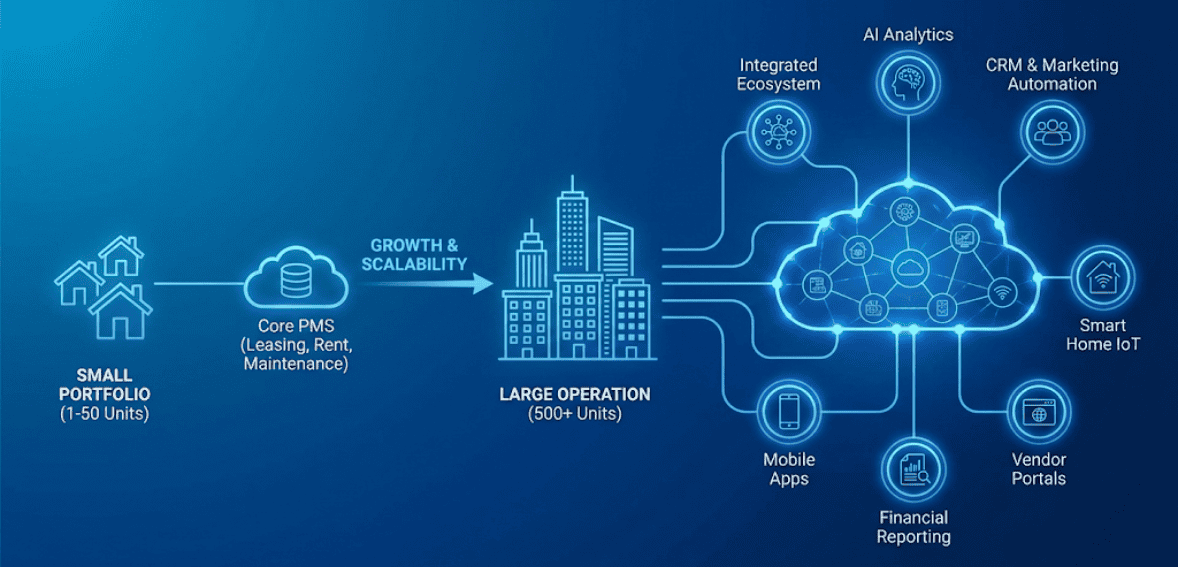
Building an integrated tech stack doesn’t mean adding every tool right away. The best property managers start with the basics and add more tools as needed. Property management software should be the foundation, with accounting and CRM integrations added early. Maintenance, communication, and analytics tools can be added later as the business grows.
It is also important to focus on adoption, not just implementation. A perfectly integrated system only delivers value if teams actually use it correctly. Training, documentation, and clear workflows ensure that staff understand how systems connect and why consistency matters. Over time, this creates a culture in which technology supports people rather than frustrates them.
Scalability should always be part of your planning. The right tech stack grows with your business, handling more units, users, and complexity without problems. By selecting systems that integrate well and can adapt, property managers ensure their operations are ready for the future.
Conclusion
The integrated tech stack is no longer a luxury for property management; it is a necessity. Linking property management software with accounting, CRM, maintenance, and reporting tools transforms scattered workflows into a cohesive operation. It reduces errors, saves time, improves communication, and builds trust with tenants and owners alike.
As portfolios grow and expectations rise, property managers who invest in integration gain a clear advantage. They operate with clarity rather than chaos, insight rather than guesswork, and confidence rather than constant reconciliation. In a competitive market, the ability to connect systems and data seamlessly is what separates reactive management from strategic leadership.
FAQs
What is an integrated tech stack in property management?
It is a connected set of software tools in which property management systems, accounting, CRM, and operational tools share data automatically rather than operate separately.
Why is integration better than using multiple standalone tools?
Integration reduces manual data entry, minimizes errors, and ensures consistency across financials, tenant records, and reporting.
Can small property managers benefit from an integrated tech stack?
Yes. Even small portfolios benefit from automation and accuracy, and integration makes it easier to scale without adding administrative burden.
Does integrating systems require advanced technical skills?
Most modern platforms are designed for non-technical users, with built-in integrations and guided setup processes.
What is the biggest mistake to avoid when building a tech stack?
Adding tools without ensuring they integrate well. Disconnected systems recreate the same problems technology is meant to solve.