

by Rinki Pandey December 29, 2025
Time management for property managers is no longer just a personal productivity skill; it’s a business survival requirement. Modern property management software juggle leasing, tenant communication, maintenance coordination, owner reporting, compliance deadlines, and financial oversight, often across dozens or hundreds of units. Without intentional systems, the workload expands faster than available hours.
Unlike many professions, property management is an interruption-heavy field. Phone calls, urgent maintenance issues, tenant questions, and vendor delays can derail even the most organized day. This makes traditional “to-do lists” ineffective unless paired with smarter workflows. Property manager productivity tips today focus less on working harder and more on reducing friction, repetition, and reactive work.
Effective time management does not mean responding to everything faster. It means designing your day so that fewer emergencies occur in the first place. Busy property managers who master time control are not magically more disciplined. They operate with better systems that protect their time.
Understanding Where Property Managers Actually Lose Time
Before improving efficiency in property management, it’s critical to understand where time is truly being lost. Most property managers underestimate how much of their day is consumed by small, repetitive tasks rather than major responsibilities.
Much of the time is spent on tenant communication. Answering the same questions about rent due dates, maintenance status, or lease terms repeatedly fragments the day. Another major drain is task switching, jumping between accounting, leasing, maintenance, and compliance without structured blocks of focus. Each switch adds mental friction and slows progress.
Manual processes also silently erode productivity. Updating spreadsheets, following up on unpaid rent individually, coordinating vendors by phone, or manually tracking lease expirations may seem manageable on a small scale. As portfolios grow, these tasks compound and consume hours that should be spent on strategic decisions.
Reducing property manager workload begins with acknowledging that “being busy” is not the same as being productive. Time management for property managers starts with eliminating unnecessary work, not just organizing existing chaos.
Structuring Your Day to Reduce Reactive Work
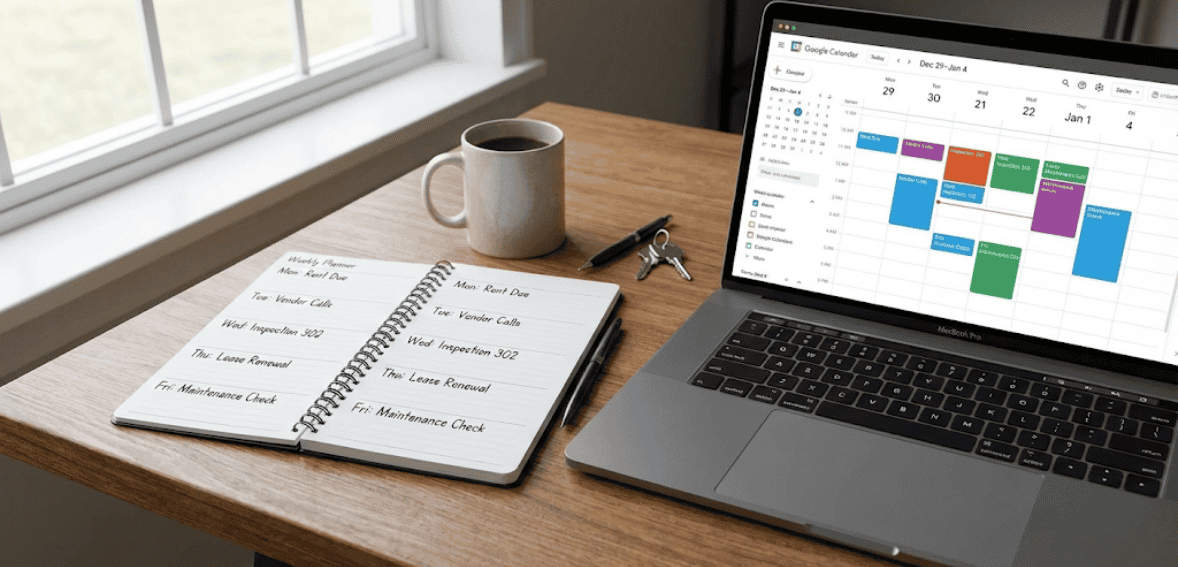
One of the most effective property management productivity hacks is reshaping the workday structure. Many property managers begin their mornings reacting to emails, texts, and calls, immediately placing themselves in a defensive posture. This reactive start sets the tone for the rest of the day.
High-performing property managers intentionally block their time. Mornings are reserved for focused work such as financial reviews, lease approvals, or planning. Communication-heavy tasks are pushed into designated windows later in the day. This approach reduces context switching and allows deeper concentration.
Another key technique is categorizing tasks by urgency and impact. Not every tenant message requires immediate attention, and not every maintenance request is an emergency. Establishing response standards that must be handled immediately versus what can wait dramatically improves efficiency in property management without harming tenant satisfaction.
Time management for property managers improves when the day is controlled by design rather than inbox pressure.
Reducing Tenant Communication Overload Without Lowering Service
Tenant communication is one of the biggest challenges in property manager productivity. While responsiveness is important, unlimited availability leads to burnout and inefficiency. The goal is not to communicate more, but to communicate smarter.
Clear expectations reduce repetitive questions. When tenants know where to find information, how to submit requests, and when to expect responses, unnecessary back-and-forth disappears. Standardized communication templates also save time and ensure consistency across properties.
Another major productivity shift comes from moving communication out of personal channels. When messages arrive through structured systems rather than scattered texts and emails, property managers regain control over their time. Conversations become easier to track, delegate, and resolve efficiently.
Reducing property manager workload does not mean becoming distant. It means creating systems that handle routine communication so human attention is reserved for issues that truly require judgment and care.
Prioritization Techniques That Actually Work in Property Management
Generic productivity advice often fails property managers because it doesn’t account for the unpredictable nature of the role. Effective time management for property managers requires prioritization frameworks that adapt to constant change.
One practical method is prioritizing tasks based on consequences rather than deadlines. For example, a lease renewal decision may be more impactful than responding to a non-urgent inquiry, even if the inquiry arrived earlier. Focusing on high-impact actions protects long-term performance.
Another approach is grouping similar tasks together. Processing rent issues, reviewing maintenance approvals, or handling leasing applications in batches reduces mental fatigue and speeds completion. This method alone can significantly improve efficiency in property management operations.
Property manager productivity tips that stick are those that simplify decision-making. When priorities are clear, less time is wasted deciding what to do next.
Using Documentation to Save Time Long-Term
Documentation may feel like extra work, but it is one of the most powerful tools for reducing workload over time. Property managers who document processes, policies, and recurring scenarios spend less time reinventing solutions.
Written procedures for maintenance handling, lease renewals, late payments, and move-ins ensure consistent action without repeated deliberation. Documentation also makes delegation easier, allowing team members or assistants to handle tasks independently.
Even solo property managers benefit from clear internal documentation. When processes are documented, decisions become faster, and mistakes reduce. This directly improves property manager productivity and reduces mental load.
Time management for property managers improves when fewer decisions must be made repeatedly.
Building Personal Boundaries to Protect Productivity
One overlooked aspect of time management for property managers is boundary setting. Without boundaries, work expands into evenings, weekends, and personal time, leading to burnout and declining performance.
Setting communication hours, defining emergency criteria, and establishing escalation paths protect both the manager and the tenants. Boundaries do not reduce service quality; they improve it by ensuring responses are thoughtful rather than rushed.
According to Spacewell, sustainable efficiency in property management depends on setting clear and achievable goals, rather than relying on hacks that overlook human limitations.
Preparing for Scale Without Increasing Hours
The ultimate test of time management for property managers is scalability. If adding more units automatically means longer days, the system is broken. Efficient property managers design workflows that accommodate growth without proportional increases in time.
This requires identifying tasks that should not scale linearly, such as rent collection, routine communication, and reporting, and redesigning them early. The goal is to spend time where human judgment adds value and remove manual effort everywhere else.
Reducing property manager workload is not about shortcuts. It’s about building smarter structures that allow growth without exhaustion.
Delegation as a Time Management Multiplier for Property Managers

One of the most misunderstood property manager productivity tips is delegation. Many busy property managers believe delegating tasks will take more time than doing the work themselves. In reality, not delegating is one of the fastest ways to become overwhelmed.
Delegation does not mean giving up control. It means assigning clearly defined tasks with clear expectations and outcomes. Administrative work, routine follow-ups, data entry, and basic coordination tasks do not require a property manager’s direct involvement. When these responsibilities remain centralized, the manager becomes the bottleneck.
Effective time management for property managers involves identifying tasks that require judgment versus those that follow predictable rules. Once those predictable tasks are documented, they can be delegated confidently. Over time, this dramatically reduces workload while maintaining consistency and quality.
Delegation also protects mental bandwidth. When property managers stop carrying every task personally, they regain time for strategic thinking, owner relationships, and long-term planning.
Automating Repetitive Tasks to Reduce Property Manager Workload
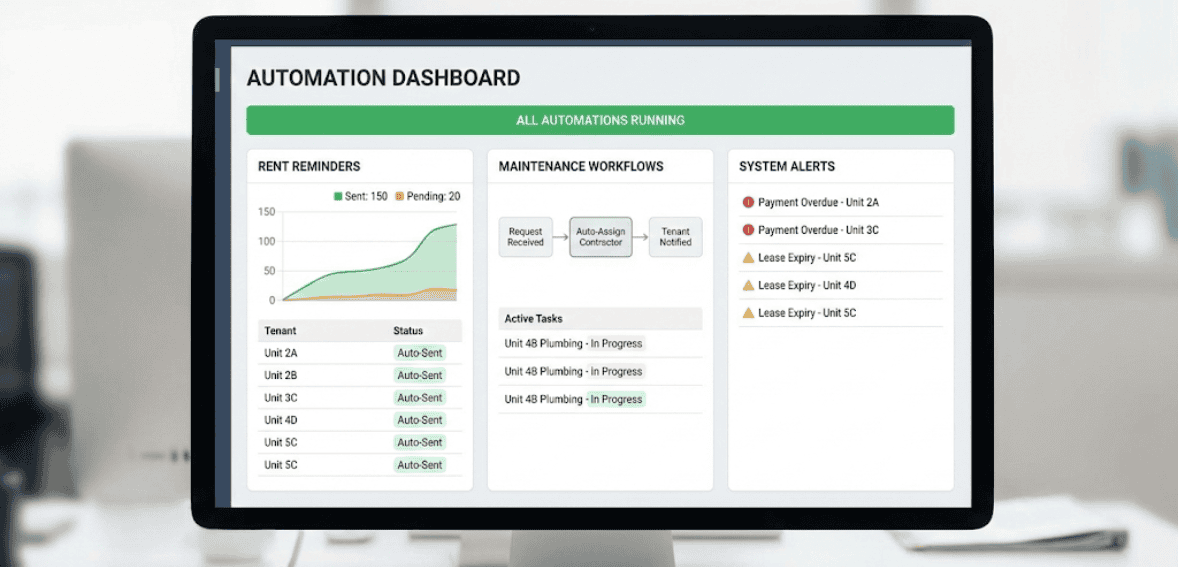
Automation is not about replacing people; it’s about removing unnecessary repetition. Many property management tasks are rule-based and predictable, making them ideal for automation.
Examples include rent reminders, late fee postings, lease expiration alerts, maintenance request routing, and owner reporting. When these tasks are automated, they occur reliably without manual intervention. This prevents errors while reclaiming hours each week.
Property managers who resist automation often fear losing control. In practice, automation increases control by ensuring tasks happen consistently and on time. Instead of checking whether something was done, managers can trust the system and focus on higher-value work.
Improving property management efficiency depends heavily on reducing the frequency with which the same task is performed manually. Automation transforms time management from reactive to proactive.
Managing Maintenance Without Letting It Control Your Day
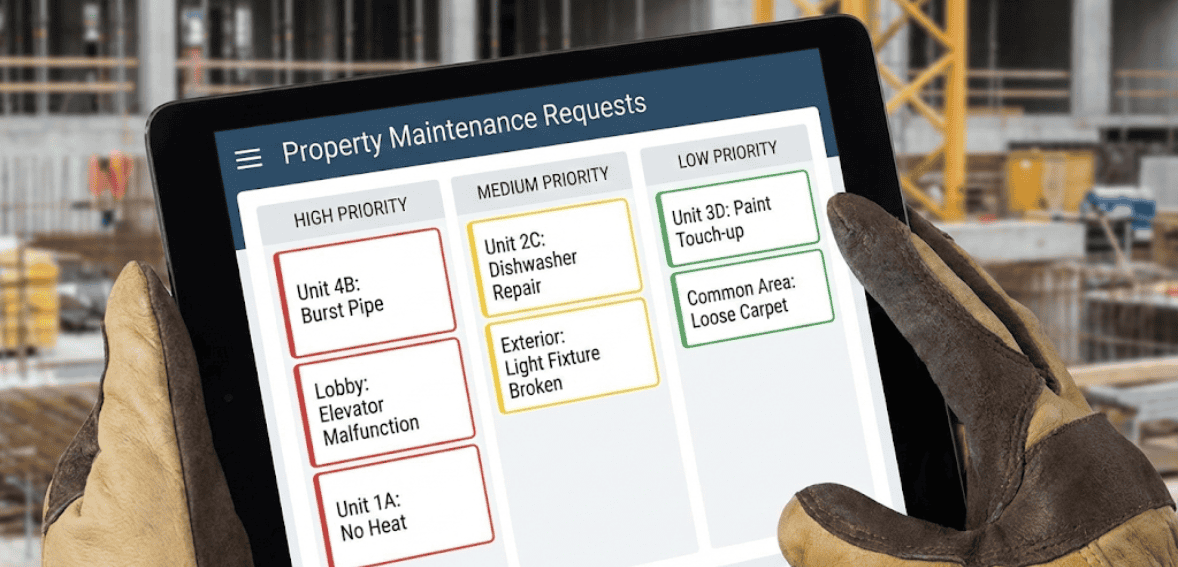
Maintenance coordination is one of the most time-consuming aspects of property management. Without structure, it becomes a constant interruption that derails productivity.
The key to better time management for property managers is separating urgent maintenance from routine issues. True emergencies are rare, but when every request is treated as urgent, productivity collapses. Clear categorization allows managers to respond appropriately without overreacting.
Another major time saver is standardized maintenance workflows. When requests follow the same process from submission to assignment to completion, managers spend less time tracking progress and answering questions. Visibility replaces micromanagement.
Reducing the property manager’s maintenance workload does not mean ignoring tenants. It means creating clarity, so fewer follow-ups are required, and fewer mistakes occur.
Using Reporting to Save Time Instead of Creating More Work
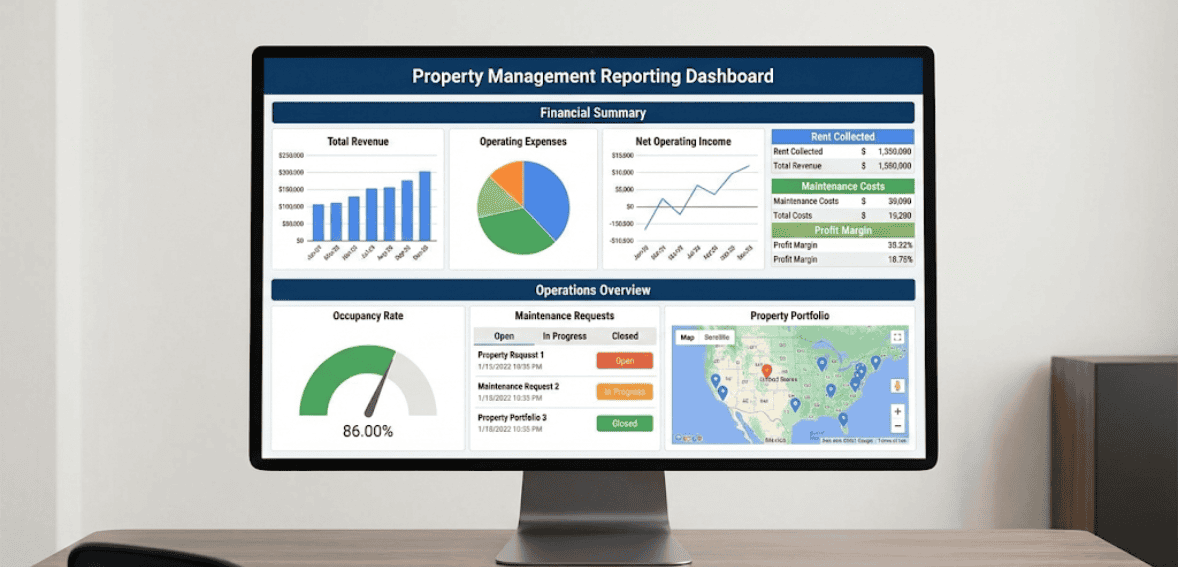
Reporting is often seen as a time drain, but done correctly, it becomes a time-saving tool. Property managers who rely on manual reporting spend hours gathering data, formatting documents, and responding to owner questions individually.
Well-structured reporting reduces inbound questions by answering them before they’re asked. When owners receive clear, consistent updates, they are less likely to request ad-hoc explanations. This alone saves significant time.
Time management for property managers improves when reporting becomes a proactive communication strategy rather than a reactive task. The goal is fewer conversations, not more.
Breaking the Habit of Constant Availability
Many property managers struggle with productivity because they feel obligated to be available at all times. While responsiveness matters, constant availability destroys focus and leads to burnout.
Establishing communication windows allows property managers to control interruptions. Tenants and owners still receive timely responses, but managers are no longer pulled into constant task switching.
This shift requires confidence and consistency. Once expectations are set, most stakeholders adapt quickly. The result is improved efficiency, better decision-making, and reduced stress.
Property management productivity hacks often fail when boundaries are ignored. Sustainable time management requires protecting uninterrupted work time.
Avoiding the Most Common Time Management Mistakes Property Managers Make
Even experienced property managers fall into patterns that sabotage productivity. One of the most common mistakes is treating every task as equally important. Without prioritization, urgent but low-impact work crowds out strategic tasks.
Another frequent issue is relying too heavily on memory rather than on systems. When deadlines, follow-ups, and compliance requirements live only in a manager’s head, mistakes become inevitable. Systems exist to remove this burden.
Lastly, many property managers delay process improvements because they feel “too busy” to change. Ironically, this guarantees they will stay busy. Investing time upfront to improve workflows saves exponentially more time later.
Reducing property manager workload requires intentionally breaking these cycles.
Building Long-Term Productivity Habits That Stick
Time management for property managers is not a one-time fix; it’s a habit built over time. Small changes, applied consistently, create lasting improvements.
Daily planning, weekly reviews, and monthly process evaluations ensure that inefficiencies are identified early. Property managers who regularly review how they spend their time make better adjustments and avoid burnout.
A report from ActivTrak Productivity Lab shows that workers in the logistics sector log more daily productive time than the average, suggesting that higher productivity may be linked to how work is structured rather than simply the number of hours worked.
The Real Goal of Time Management in Property Management
Ultimately, time management for property managers is about more than saving hours. It’s about regaining control over the role. When time is managed well, stress decreases, service quality improves, and growth becomes sustainable.
Efficient property managers are better leaders, better communicators, and better decision-makers. They build businesses that support their lives rather than consume them.
Property management productivity tips only work when they align with real-world demands. The strategies outlined here focus on systems, structure, and sustainability because those are what busy property managers actually need.
Conclusion: Working Smarter, Not Longer, as a Property Manager
Time management for property managers is no longer optional in a fast-moving, high-demand industry. The workload will not shrink on its own, but with the right strategies, it becomes manageable.
By structuring the day intentionally, reducing reactive work, delegating effectively, and eliminating repetitive manual tasks, property managers can dramatically improve efficiency without sacrificing service quality.
Reducing property manager workload is not about shortcuts. It’s about designing smarter systems that enable professionals to thrive, not just survive.
FAQs
How can busy property managers improve time management quickly?
Start by identifying repetitive tasks and introducing structure. Blocking focused work time and reducing reactive communication alone can free several hours per week.
What is the biggest productivity mistake property managers make?
Trying to handle everything personally. Failing to delegate or systematize routine work leads to overload and inefficiency.
Does automation reduce the quality of property management service?
No. Automation improves consistency and reliability, allowing property managers to focus on issues that require human judgment and care.
How do boundaries help property manager productivity?
Boundaries reduce interruptions and protect focus time. Clear expectations prevent burnout while maintaining professional responsiveness.
Can time management strategies support portfolio growth?
Yes. Strong time management systems allow property managers to scale without increasing working hours, making growth sustainable.