

by Rinki Pandey December 24, 2025
Growing a property management company in 2025 is more than adding units and hoping systems adapt. The industry has matured. Owners expect transparency, speedy service, better communication, and professional reports. Meanwhile, competition has increased, margins are slimmer, and inefficiencies become apparent more quickly as portfolios grow. To succeed, companies must pursue deliberate strategy, operational discipline, and controlled growth.
Many property managers reach a point where growth feels harder than expected. Adding doors starts to create stress instead of profit. Emails pile up, maintenance coordination becomes reactive, owners demand more visibility, and teams feel stretched. This is usually not a people problem; it’s a systems-and-strategy problem. Scaling successfully means building a business that can grow predictably, sustainably, and profitably without relying on constant firefighting.
This guide covers growth strategies that work in 2025. It explains how leading companies scale operations, expand their portfolios, and open new doors while maintaining service and financial clarity. The goal is not just growth, but controlled, confident expansion.
Understanding Property Management Growth Strategies in 2025

Effective property management growth strategies begin with a clear understanding of what “scaling” really means. Scaling is not the same as growth. Growth is adding more doors. Scaling is adding more doors without proportionally increasing cost, chaos, or risk. In 2025, the difference between companies that stall and those that scale lies in how intentionally they approach this distinction.
Key takeaways: Property managers must shift from relationship-based, manual practices to scalable, standardized models that rely on repeatable processes, clear service packages, and data-driven decisions to meet rising owner expectations and tighter service benchmarks.
Another key shift is owner behavior. Investors increasingly compare management companies based on professionalism, reporting quality, responsiveness, and operational sophistication. They expect scalable partners who can grow with their portfolios. Companies that cannot demonstrate operational readiness for scale often miss out on opportunities that competitors can seize.
Scaling in 2025 also means choosing the right kind of growth. Not all doors are equal. Adding poorly performing properties, difficult owners, or non-standard asset types can slow growth rather than accelerate it. Strategic growth focuses on alignment, matching your systems, team strengths, and market positioning with the properties you manage.
Before expanding, successful companies evaluate their current operations honestly. They ask whether their processes are documented, whether tasks rely too heavily on specific individuals, and whether service quality can remain stable as volume increases. These self-assessments are foundational to scaling responsibly.
Building a Scalable Operational Foundation Before Expanding
One of the most overlooked steps in scaling a property management business is strengthening the operational foundation before adding new doors. Many companies pursue expansion prematurely, only to realize later that weak internal systems create bottlenecks, burnout, and owner dissatisfaction. True scalability starts internally. Takeaway: Operational readiness is the foundation for stress-free expansion.
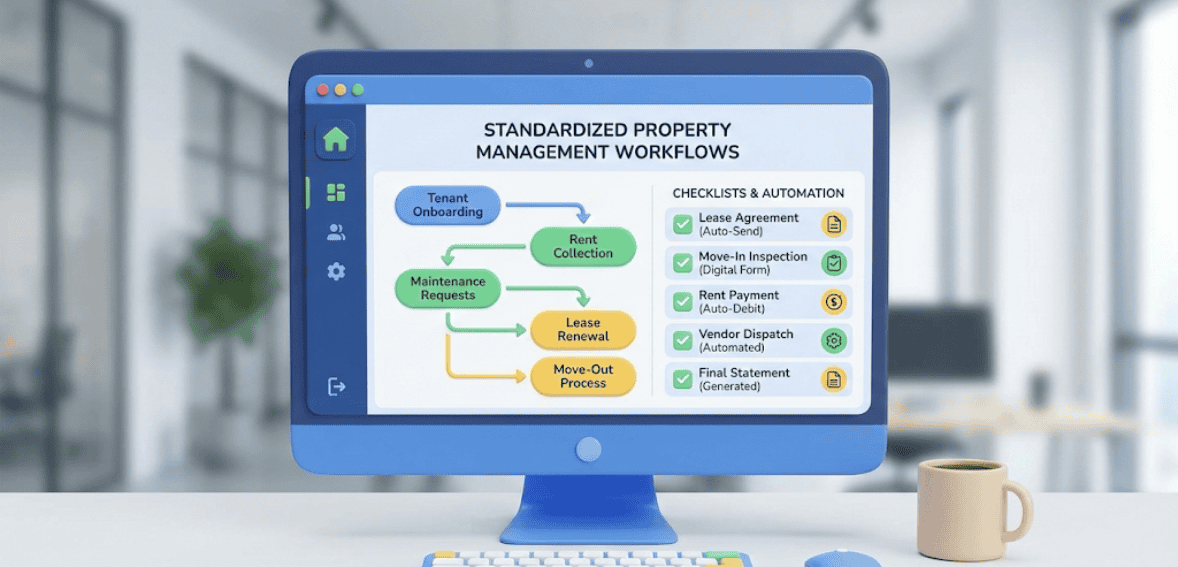
A scalable operation relies on clearly defined workflows. Every recurring task, including leasing, rent collection, maintenance coordination, owner reporting, renewals, and move-outs, should follow a documented process. This ensures consistency and reduces dependence on tribal knowledge. When tasks are standardized, new team members can be onboarded faster, and service quality remains consistent as volume grows.
Technology plays a central role in this foundation. Manual tracking systems, spreadsheets, and disconnected tools may work at a small scale but quickly break down as portfolios expand. Scalable businesses centralize data, automate repetitive tasks, and ensure real-time visibility across teams. This reduces errors and allows managers to focus on oversight rather than execution.
Role clarity is equally important. As companies grow, responsibilities must be defined. Scaling companies avoid role overlap and accountability gaps. Roles are designed around workflows, so each task has a clear owner and an escalation path, which is crucial as teams and coverage expand.
Another pillar is service standardization. This doesn’t mean generic service; it means clear client expectations at each tier. Well-defined packages enable consistent value and prevent scope creep. They also clarify pricing and make growth profitable instead of reactive.
Companies that invest time in operational readiness find that growth becomes smoother and less stressful. Expansion no longer feels like juggling more work; it feels like plugging new properties into an existing system that already works.
Expanding Your Rental Portfolio Without Losing Control
Expanding a rental portfolio is a visible sign of growth, but it is also where many property managers lose control. Growing too quickly without operational readiness can strain teams, reduce service quality, and damage owner relationships. Effective property management strategies focus on controlled expansion rather than rapid accumulation.
The first step is defining an ideal property profile. This includes property type, size, condition, owner expectations, and geographic location. Companies that grow sustainably are selective. They understand which properties align with their systems and expertise and which introduce unnecessary complexity. Saying no to misaligned opportunities is often what protects long-term growth.
Geographic expansion requires special attention. Managing properties across wide areas can increase travel time, maintenance costs, and response delays. Scalable companies expand geographically only when they can support it operationally, often by clustering properties or establishing regional support structures. This keeps service levels consistent while controlling costs.
Onboarding is another critical factor. A structured onboarding process ensures new properties are integrated smoothly into systems, with clear documentation, owner expectations set upfront, and maintenance baselines established early. Poor onboarding often leads to long-term inefficiencies and owner dissatisfaction that are difficult to reverse.
Owner communication during expansion is vital. As portfolios grow, owners expect proactive updates, clear reporting, and transparency. Scaling companies use strong communication frameworks so owners feel supported as volume increases.
Expanding a rental portfolio should be intentional, not chaotic. Aligned systems, teams, and communication turn growth into business enhancement, not strain.
Positioning Your Business to Increase Doors Under Management Strategically
Increasing the number of doors under management is a common growth goal, but the most successful companies focus on strategic growth rather than numerical targets alone. In 2025, adding doors is as much about positioning and reputation as it is about marketing.
Strategic positioning starts with clarity. Property managers must clearly articulate what makes their business different. This could be operational excellence, superior reporting, technology-driven transparency, or specialized expertise in certain asset types. Owners are more likely to choose companies that communicate a clear value proposition rather than generic service claims.
Referral growth plays a major role here. Satisfied owners, real estate professionals, and investors become powerful growth channels when service quality is consistent. Scaling companies invest in systems that make it easy for clients to refer others and for teams to onboard new properties seamlessly when referrals arrive.
Credibility matters. Owners considering switching look for professionalism and stability. Solid processes, branding, and communication build trust. Growth accelerates when prospects trust the company can add doors without losing quality.
Pricing strategy also affects door growth. Companies that scale well price their services to sustainably support margins, allowing reinvestment in staff, systems, and service quality. Underpricing may attract new doors, but it often undermines long-term growth.
Increasing the number of doors under management is not about chasing every opportunity. It is about attracting the right opportunities through strong positioning, consistent service delivery, and operational confidence.
Structuring Your Team for Scalable Property Management Growth

As a company grows, people, not properties, often become the biggest bottleneck. One of the most important property management growth strategies in 2025 is building a team structure that supports scale rather than resisting it. Many businesses struggle here because they grow reactively, adding staff only when things feel overwhelming. By then inefficiencies are already baked in.
Scalable companies think about team design early. They separate strategic oversight from day-to-day execution. Instead of relying on a single “do-everything” manager, they define roles by function, including leasing coordination, maintenance oversight, owner communication, and financial reporting. This functional clarity prevents burnout and ensures accountability as the portfolio expands.
Hiring for scale also means hiring for systems. Employees who thrive in scalable environments are comfortable following documented processes, using software consistently, and communicating clearly within defined frameworks. While experience is valuable, adaptability and process discipline are often more important as businesses grow.
Training is another important component. Scaling companies invest in structured onboarding and ongoing training to help new hires become productive quickly. This reduces dependence on senior staff and allows leadership to focus on growth rather than constant supervision. Over time, this approach creates a team that can absorb growth smoothly without sacrificing service quality.
Using Data and Performance Metrics to Guide Expansion
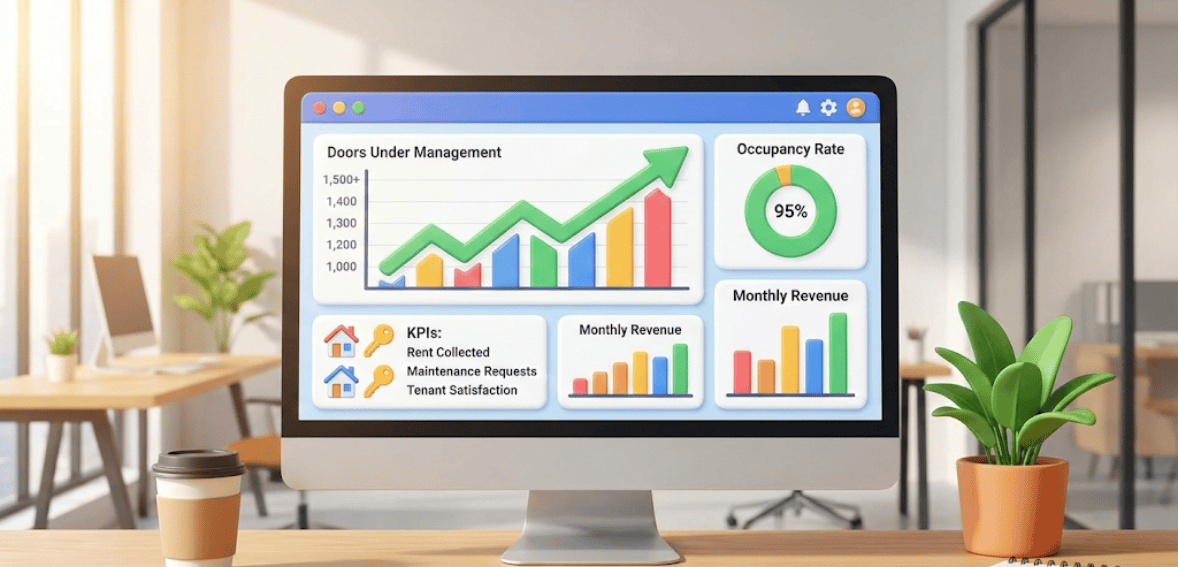
In 2025, scaling without data is a gamble. Successful companies rely on performance metrics to inform every major growth decision. Data reveals where growth is sustainable, where margins are strong, and where operational strain is emerging.
Key indicators such as response times, maintenance resolution speed, owner satisfaction trends, and portfolio profitability help leaders understand whether systems are holding up under increased volume. Rather than waiting for complaints or crises, data-driven companies identify pressure points early and proactively address them.
Metrics also guide hiring decisions. Instead of reacting emotionally to workload stress, leaders can see when service levels dip or when workloads exceed capacity. This allows for timely staffing adjustments that support growth rather than hinder it.
Financial data plays an equally important role. Scaling requires capital, whether for hiring, technology, or market expansion. Companies that track unit-level profitability and cost trends are better positioned to grow responsibly. They know which doors contribute to healthy margins and which introduce disproportionate risk or workload.
Data transforms scaling from guesswork into strategy. It provides clarity, confidence, and control qualities that separate growing companies from struggling ones.
Expanding into New Markets Without Overextending

Geographic expansion is a common goal for property managers seeking growth, but it carries unique risks. Entering new markets without preparation can strain teams, dilute service quality, and increase operational complexity. Smart scaling property management business strategies approach market expansion cautiously and methodically.
Successful companies expand into markets that share operational similarities with their existing portfolio. This might include comparable property types, owner expectations, or regulatory environments. Familiarity reduces the learning curve and helps maintain service consistency across locations.
Another key factor is infrastructure. Expanding geographically requires systems that support remote oversight, standardized communication, and centralized reporting. Without these, distance quickly becomes a liability. Scalable companies ensure their operational backbone can support growth before expanding across geographic boundaries.
Local partnerships also matter. Reliable maintenance vendors, inspectors, and service providers help maintain response times and quality in new markets. Building these relationships early reduces friction and protects service standards during expansion.
Market expansion should feel like extending a proven model, not reinventing operations. When done strategically, it becomes a powerful growth lever rather than a source of instability.
Managing Risk While Scaling Your Property Management Business
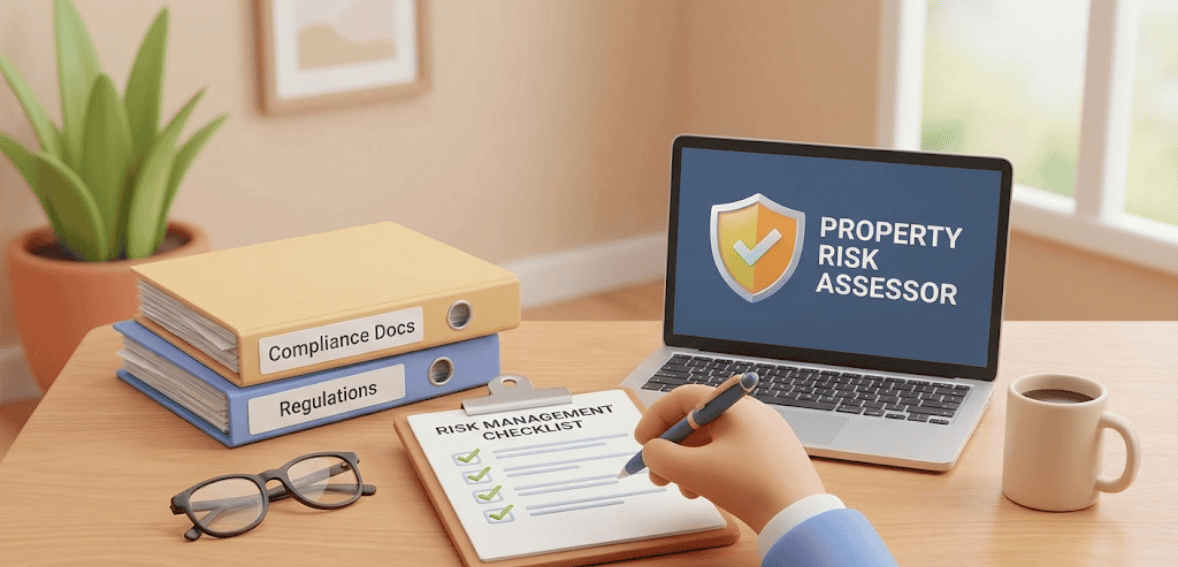
Growth inevitably introduces risk. More doors mean more owners, more tenants, more maintenance issues, and more regulatory exposure. One of the most important property management growth strategies is learning how to manage these risks proactively rather than reactively.
Standardization is the first line of defense. Documented policies, consistent lease templates, and uniform communication practices reduce errors and legal exposure. When everyone follows the same playbook, risk becomes easier to control.
Insurance, compliance checks, and vendor vetting also become more critical as portfolios expand. Scaling companies review these safeguards regularly to ensure they evolve alongside growth. What worked for a small portfolio may not be sufficient at a larger scale.
Equally important is communication. Transparent communication with owners builds trust and reduces conflict when issues arise. As businesses grow, maintaining this transparency requires systems that deliver consistent, timely updates without manual effort.
Risk management is not about avoiding growth; it’s about creating guardrails that allow growth to happen safely and sustainably.
Sustaining Long-Term Growth Beyond 2025

True success in scaling property management is not measured by how fast a company grows, but by how well it sustains that growth. The most resilient businesses view scaling as an ongoing process rather than a one-time milestone.
Sustainability comes from balance. Companies must continuously reinvest in people, systems, and service quality as they expand their portfolios. Neglecting any of these eventually undermines the others.
Leadership mindset also matters. Growth-focused leaders remain adaptable, open to change, and willing to refine strategies as markets evolve. They recognize that scaling is dynamic and requires ongoing evaluation rather than rigid adherence to past practices.
Ultimately, the companies that thrive in 2025 and beyond are those that treat growth as a discipline. They build intentionally, measure continuously, and prioritize operational excellence alongside expansion.
Conclusion
Scaling a property management business in 2025 is both an opportunity and a challenge. The market rewards companies that combine strategic growth with operational discipline, strong teams, and data-driven decision making. By focusing on sustainable property management growth strategies, managers can expand their portfolios, increase doors under management, and strengthen profitability without sacrificing service quality.
Growth done right feels controlled, confident, and repeatable. It transforms property management from a reactive service into a scalable, resilient business built for the future.
FAQs
How fast should I scale my property management business?
Growth should match your operational capacity. Scaling too quickly without systems in place often leads to service breakdowns, while steady, controlled growth tends to be more profitable long term.
Is technology necessary to scale property management in 2025?
Yes. Modern portfolios require centralized data, automation, and real-time visibility. Without these tools, scaling becomes inefficient and error-prone.
What’s the biggest mistake companies make when expanding?
Chasing doors without evaluating fit. Taking on misaligned properties or owners often creates more problems than revenue.
Should I expand geographically or deepen my current market first?
Deepening your existing market is usually safer. Geographic expansion works best once systems and teams can support distance without sacrificing service.
How do I know if my business is ready to scale?
If your workflows are documented, performance metrics are stable, and service quality remains consistent as volume increases, you’re likely ready to scale.