
by Rinki Pandey March 25, 2026
Collections in HOAs—Are They Legally Sound?
Homeowners’ Associations (HOAs) are vital to the success of residential communities by ensuring that the community is well-financed. When homeowners cease to meet these obligations, then the HOA has to put in place a collections process that is not only consistent with contract enforcement and statutory requirements but also consumer protection laws. Collections in HOAs are not a simple administrative undertaking and are legally sensitive.
A properly designed collections workflow must protect homeowners’ due-process rights while also protecting the community, including its owners, against any financial risk. This may include an understanding of the factors, such as a delinquency policy, proper notice, and attorneys.
Federal law, including Regulation F under the Fair Debt Collection Practices Act (FDCPA) and Florida Statute §720.3085. It is just a few of the legal guidelines that should be understood by HOA board members, property managers, and individuals advising them.
The Legal Framework Governing HOA Collections
What HOAs can do to collect money is outlined in a mix of legal documents, state laws, and federal rules. The association’s declaration, bylaws, and rules outline the contract that all homeowners have signed to pay and allow the HOA to charge a fee, collect the money, and take action against anyone who doesn’t pay.
State law further supports this contractual right, providing associations with additional power. Specifically, §720.3085 says associations have a “lien on each parcel for any unpaid assessments, authorized by a declaration of covenants, bylaws, or other governing documents” (Florida Senate). This statutory lien secures not only the unpaid assessments but also any interest, late fees, and reasonable costs for collection.

Understanding HOA Delinquency
Delinquency Policy and Procedure
Delinquency is when a homeowner fails to pay their assessment by the due date stated in the governing documents. This might start as an honest mistake, but if not corrected promptly, it can quickly become a legal situation.
Delinquency has effects beyond the individual homeowner. Associations depend on assessment income to pay their obligations. Unpaid dues can take away from the budget, which results in deferred maintenance, higher fees for other homeowners, and/or the need for special assessments.
Finally, from a governance perspective, it is important to enforce delinquency policies consistently. Selective enforcement of delinquency can not only lead to legal action but also erode trust within the community. A delinquency policy that has clear guidelines and is applied strictly will help avoid problem situations.
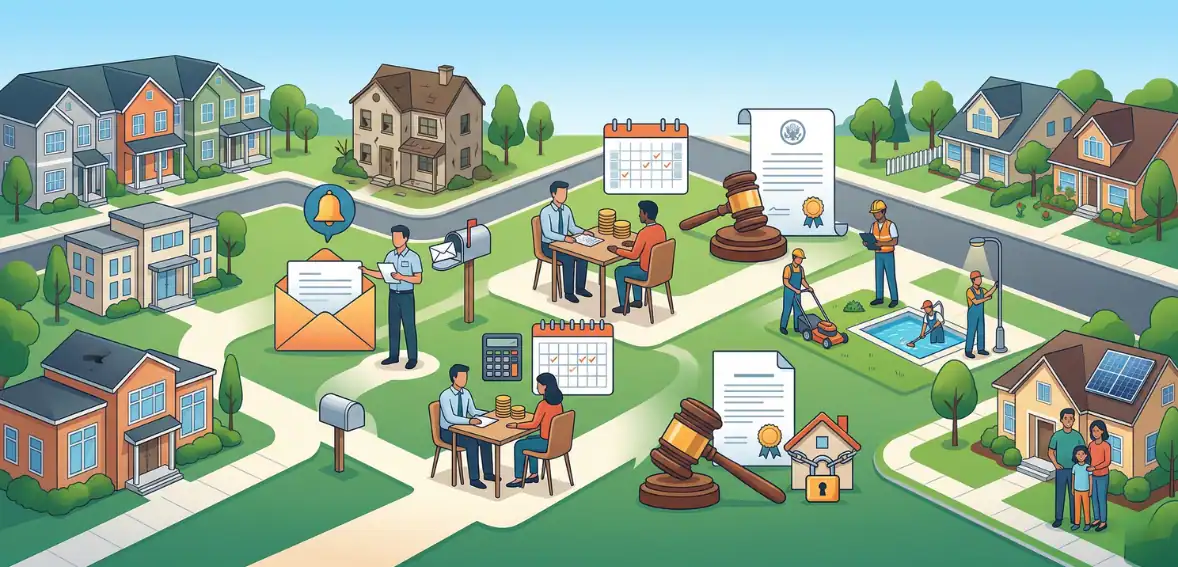
The Due-Process Workflow for HOA Collections
Collections workflow is designed to allow homeowners multiple chances to cure delinquency prior to the use of higher-level enforcement actions. The workflow reflects legal requirements and best practices to ensure fairness in collection actions by the HOA.
The collections workflow starts with normal billing but escalates to delinquency when payment is missed. At the initial stage of delinquency, typical notices may be courtesy notices/reminders, which do not necessarily make the situation urgent.
At later stages of delinquency, the association is required to send statutory notices to the homeowner. In Florida, for example, the association is not allowed to file a lien without first sending a written demand with at least 45 days for the homeowner to correct the delinquency.
Notice Requirements and Compliance
Notice requirements are a crucial part of due process in HOA collections. They keep homeowners aware of their duties and the consequences of turning down a dues-paying house. Additionally, notice requirements keep a record of what was said to homeowners in support of enforcement actions.
Florida law requires a notice of intent to record a lien to be sent before a lien is filed. The notice must give 45 days of payment and itemize the amounts due. The lien will be void if that notice is not given, and the association will not be able to recover attorney fees.
Notice must also be given in an enforceable manner. Most commonly, this means certified mail. This is a key to maintaining accurate recordkeeping on the part of homeowners and associations.
Regulation F adds notice requirements at the federal level for third-party collectors. These include a validation notice, explaining costs, and the consumer’s rights.
Regulation F and the Validation Notice
Regulation F is an important step forward in debt collection. Collectors must now send debt validation notices that disclose all the details of the debt—the amount, the identity of the creditor, and an itemized breakdown of charges.
The notice also triggers a 30-day “debtor dispute” period, during which collection efforts must be paused if the consumer wants to dispute the debt. This requirement allows consumers to have their debts fully verified before creditors can take enforcement action.
Our community has discussed the practical implications of these rules, and one user explained that Regulation F requires collectors to send a “validation notice that gives the consumer significantly more information” and “options to dispute the debt.”
The HOA Lien Process Under Florida Statute §720.3085
The lien process is an integral part of HOA collections. Under Florida law, the association’s lien is an effective tool that holds the unpaid assessments and costs.
A credible claim of lien must identify the property, the owner’s name, the association’s name, and the amount owing. The lien covers the current debts as well as future assessments that accrue before the claim is resolved.
Once documented, the lien is in the public record and can hinder the owner from selling or refinancing the association’s property. It is also the basis of further enforcement procedures, including foreclosure.
Florida law also allows for the contesting of liens. The homeowner may file a notice of contest, in which case the association must bring a suit within a period of time. This keeps the lien active and prevents a lien from remaining unchallenged for years.
Payment Plans and Loss Mitigation
Payment plans are a common tool for avoiding litigation and resolving delinquency. They enable homeowners to pay off balances, easing financial hardship and giving the association a better chance of recovery.
A well-structured payment plan should be in writing and establish payment amounts, due dates, and the penalties for default. It should also establish whether interest and fees will continue to accrue during the repayment period.
The importance of clarity is illustrated in this anecdote: “I was misinformed by a conflict of interest and was given a payment plan that was never documented, which meant they kept collecting on my account and added fees.”
Offering payment plans can also help the association’s legal position by establishing good faith and reasonableness. Courts are more likely to be favorable to enforcement actions when the association has attempted to accommodate the homeowner.
Vendor Oversight and Third-Party Collections

Many HOAs will use outside vendors to manage delinquent accounts. These may be property managers, collecting agencies, and law firms. While this could be more efficient, it adds risk.
The association is ultimately responsible for ensuring that all collection activities are in compliance with applicable law and governing documents. That means being able to actively monitor vendor performance and having clear expectations set out in the contract.
Missteps in vendor-managed collections often involve improper fees, lack of communication, and failure to comply with notice requirements. These are common themes in community discussions of this issue, and governance is a key consideration.
A collection policy is extremely important. It ensures fair treatment. This is to advocate for having a clear policy that guides vendor action and increases consistency.
Financial Implications of HOA Collections
Delinquency can have major financial consequences for the association and its members. Unpaid assessments can result in budget shortfalls, requiring the association to defer maintenance or increase fees levied on other homeowners.
Collection costs can also be high.
Attorney fees, administrative costs, and other collection-related expenses can add up. Although these costs can potentially be recovered under state law, they can still divert cash flow from the association.
For homeowners, the financial impact can add up rapidly. Interest, late fees, and collection costs can increase the amount owed dramatically. Sometimes, these costs accumulate to the point where the homeowner is risking foreclosure.

Best Practices for HOA Collections
The foundation of a successful HOA collections program is clarity, consistency, and compliance. Associations should create and implement delinquency policies that clearly define each step of the process, from initial notice through enforcement.
Recordkeeping matters. Consistent and detailed documentation of notices, payments, and communication provides a platform for enforcement and helps to avoid disputes.
Communication is key. Engaging homeowners early often helps avoid escalation. Providing payment plans and openness helps to maintain relationships and improve results.
Technology can help too. Billing, tracking, and communication technology help to streamline the process and reduce room for error.
Conclusion
Collections, liens, and enforcement are legal processes that require strict compliance and due process. Enforce collection and preserve the association’s finances. Establish clear policies and enforce them. Maintain accurate records to protect the association and its leaders. Oversee the vendors to ensure compliance.
Florida Statute §720.3085 requires collections to have a due-process workflow from notice sent to enforcement of liens. Reg F requires additional transparency for the consumer. Collecting, filing a lien, and enforcement are more than just collecting but require due process and transparency.
FAQs
1. What is the proper first step in handling HOA delinquency?
The first step is early identification and clear communication. As soon as a homeowner misses a payment, the HOA should send a polite reminder notice outlining the balance due, due date, and any applicable late fees. This initial step should focus on resolution, not enforcement. Providing clear account statements and easy payment options helps prevent escalation. Documentation is essential—every notice, email, and interaction should be recorded. Acting early reduces the likelihood of long-term delinquency and sets a professional tone for the collection process.
2. How should an HOA structure its notice and escalation process?
An HOA should follow a structured, step-by-step notice process. This typically begins with a friendly reminder, followed by a formal late notice, and then a demand letter if the balance remains unpaid. Each notice should clearly state the amount owed, deadlines, and consequences of non-payment. Timelines between notices must comply with governing documents and local laws. Consistency is critical to ensure fairness across homeowners. A well-documented escalation process protects the HOA legally and ensures homeowners are given an adequate opportunity to resolve their balances.
3. What makes an effective HOA payment plan?
An effective payment plan is realistic, clearly documented, and mutually agreed upon. It should outline the total balance, installment amounts, due dates, and any conditions for remaining in good standing. Flexibility can help homeowners catch up while maintaining a steady cash flow for the HOA. The agreement should also include consequences for missed payments, such as plan termination or escalation. Keeping communication open throughout the plan encourages compliance. Proper documentation ensures transparency and helps avoid disputes while providing a structured path to resolving delinquent accounts.
4. When and how should an HOA proceed with liens?
Liens should be considered only after multiple notices and reasonable attempts to resolve the delinquency have failed. Before filing a lien, the HOA must ensure compliance with state laws and governing documents, including providing proper notice to the homeowner. The lien secures the unpaid balance against the property, protecting the HOA’s financial interest. Documentation is critical, including payment history and all communication records. Filing too early can create conflict, while delaying too long may risk recovery. A balanced, compliant approach ensures fairness and legal protection.
5. How can HOAs effectively manage collection vendors and attorneys?
Managing vendors and attorneys requires clear expectations and regular oversight. The HOA should define the scope of work, fee structures, and reporting requirements upfront. Regular updates on account status, legal actions, and costs help maintain transparency. Boards should review vendor performance and ensure compliance with laws and community policies. Communication between the HOA and vendors must be consistent to avoid errors or delays. Proper documentation and accountability ensure that collection efforts remain professional, cost-effective, and aligned with the HOA’s goals and homeowner relationships.