

by admin January 27, 2026
Property management staff are the backbone of every successful property management business. Systems matter, software matters, and processes matter, but at the end of the day, it is people who deal with tenants, owners, vendors, and problems at odd hours. When the team is strong, everything feels manageable. When the team is weak or constantly changing, even simple tasks become stressful.
In 2026, building a reliable property management staff is harder than it used to be. The job is demanding. Tenants are more vocal. Owners expect faster responses. Regulations keep changing. And good people have options. That means hiring, training, and retaining the right staff is no longer just an HR issue. It is a business survival issue.
Many property managers rush hiring when they feel overwhelmed. Someone quits, workloads pile up, and suddenly the goal becomes filling a seat instead of finding the right fit. That approach almost always leads to burnout, mistakes, and more turnover. Building a dream team takes intention, not panic.
This article is written for people who actually run property management operations. About how to hire property managers who fit the role, train property staff so they feel confident, and retain employees so you are not constantly starting over. We are going to focus on the foundation. Understanding what makes strong property management staff and how to set them up for success from day one.
Property Management Staff Hiring Starts with Knowing the Role Clearly
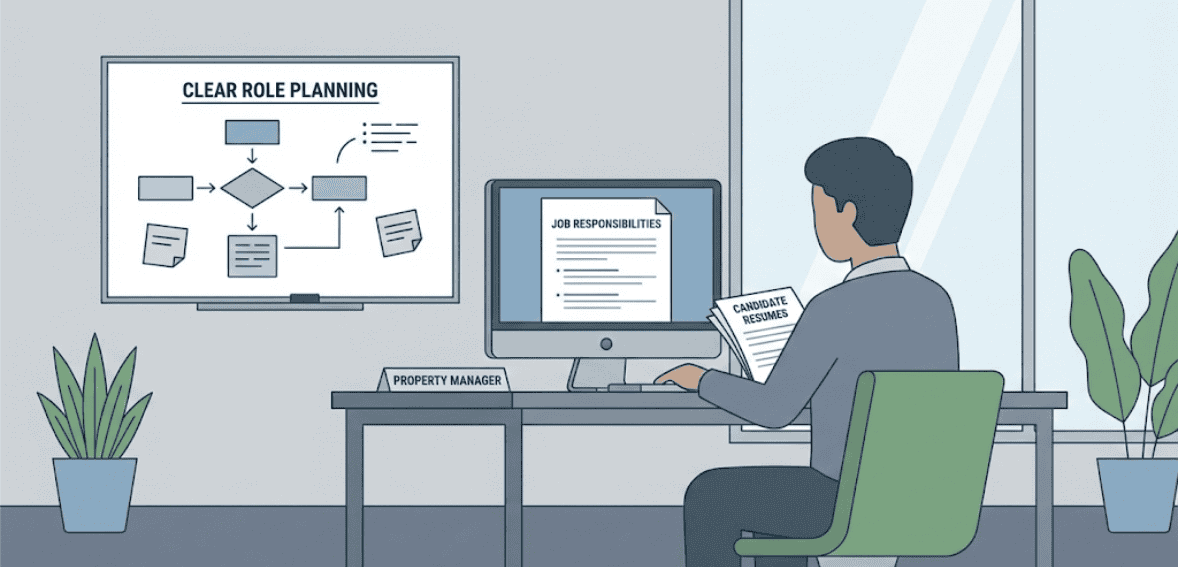
Hiring property managers becomes difficult when the role itself is unclear. Many property management businesses expect one person to handle leasing, maintenance coordination, owner communication, accounting support, and tenant conflict all at once. Then they wonder why burnout happens so fast.
Before hiring property management staff, it is critical to understand what the role actually involves day to day. Not the job title, but the real work. Success in this role comes from handling calls, emails, follow-ups, documentation, deadlines, and stress.
Hiring property managers based only on resumes often leads to mismatches. Experience matters, but mindset matters more. Some people are technically capable but emotionally drained by constant communication. Others thrive in problem-solving and chaos. Knowing which type you need changes everything.
A clear role definition also sets expectations early. When property management staff know what they are signing up for, there is less disappointment later. Transparency during hiring builds trust and reduces early turnover.
In 2026, successful teams are built by hiring intentionally, not urgently. When the role is clear, the right people find it, rather than the wrong people surviving it temporarily.
Why Attitude Often Matters More Than Experience in Property Management Staff
Experience helps, but it is not everything. Many of the best property management staff members did not have years of industry experience. They started with the right attitude. Calm under pressure. Willingness to learn. Empathy without being a pushover.
Property management is people-heavy work. Technical tasks can be taught. Systems can be learned. But patience, communication style, and emotional resilience are harder to train. That is why hiring property managers based solely on experience often disappoints.
Staff members who approach problems with curiosity instead of defensiveness adapt better. They ask questions. They seek clarity. They do not panic when things go wrong. These traits make training property staff much easier later.
Attitude also affects team dynamics. One negative or disengaged employee can drain the energy of an entire office. On the other hand, someone with a steady, positive approach often becomes the glue that holds things together.
Property management staff who care about doing things right, even when no one is watching, create long-term stability. Experience without accountability does not.
Training Property Staff Is About Confidence, Not Information Overload

Training property staff is where many businesses unintentionally fail. They throw new hires into the deep end with manuals, software logins, and vague instructions, then expect performance immediately. When mistakes happen, frustration follows on both sides.
Good training property staff focuses on building confidence first. Understanding workflows. Knowing who to ask for help. Learning how decisions are made. When staff feel supported, learning accelerates naturally.
Staff need to know not just what to do, but why it matters.
Training should also be paced. Dumping everything in the first week overwhelms most people. Property management roles are layered. Let staff master one area before adding another. That approach reduces errors and builds competence faster.
In 2026, training property staff is not about perfection. It is about creating a safe environment where learning happens without fear. Confident staff perform better and stay longer.
Property Management Staff Retention Starts Earlier Than Most Think

Employee retention does not start after someone has been with you for years. It starts during hiring and training. The first few months decide whether someone sees a future with your business or just a paycheck.
Property management staff leave when expectations fail to align with reality. When support disappears after onboarding. When workloads increase without recognition. When communication feels one-sided. Retention problems often show up early, not suddenly.
Clear feedback helps. Let staff know what they are doing well and where they need improvement. Silence creates uncertainty. Uncertainty leads to disengagement.
Respect also matters. Property management staff deal with difficult situations daily. Acknowledging effort, not just results, builds loyalty. People stay where they feel valued.
In 2026, employee retention is about culture more than perks. A supportive, organized environment keeps good people longer than fancy titles ever will.
Property Management Staff Retention Is About Daily Experience, Not Big Promises
Most employee retention problems do not stem from a single major issue. They come from daily frustration piling up quietly. Property management staff rarely quit because of a single bad day. They quit because every day feels harder than it should.
In property management, stress is unavoidable. Emergencies happen. Tenants complain. Owners pressure. What makes the difference is how supported staff feel while dealing with it. When people feel like they are constantly absorbing stress alone, burnout comes fast.
Employee retention improves when daily workflows make sense. Clear processes. Reasonable workloads. Access to decision-makers. When staff know they are not stuck handling everything without backup, their tolerance for difficult situations increases.
Property management staff also need permission to set boundaries. Expecting people to be available emotionally and mentally all the time leads to exhaustion. Retention improves when leadership models healthy boundaries instead of glorifying overwork.
In 2026, the teams that last are not the ones working the longest hours. They are the ones working in environments where effort is noticed and pressure is shared.
Also read: How to Find and Hire the Best Property Managers in Your Area
Why Leadership Style Directly Impacts Property Management Staff Loyalty

People do not leave companies. They leave managers. This saying exists for a reason, and it applies strongly in property management. Leadership style shapes how property management staff experience their work every day.
Micromanagement is one of the fastest ways to lose good staff. Property management requires judgment. When employees feel constantly second-guessed, confidence erodes. Over time, capable people stop taking initiative because it feels safer to do nothing than to be corrected.
On the other hand, lack of guidance is just as damaging. Telling staff to “figure it out” without support creates anxiety. Strong leadership balances autonomy with availability. Staff should know they can make decisions and also know when help is available.
Communication tone matters more than most leaders realize. Short, stressed messages get interpreted as anger. Silence gets interpreted as disapproval. Property management staff read between the lines constantly because their job involves managing emotions.
Leaders who explain decisions, admit mistakes, and listen build loyalty. Not because they are perfect, but because they are human. That humanity keeps teams together when things get messy.
Training Property Staff Never Really Ends, and That’s a Good Thing
Many property management businesses treat training as something you finish and then move on. Once onboarding is done, learning stops. That is unrealistic in a field that is constantly changing. Laws change. Systems change. Expectations change. People change.
Ongoing training of property staff does not mean constant formal sessions. It means creating space for questions, updates, and reflection. It means checking in after difficult situations and asking what could be handled better next time.
Property management staff gain confidence when they see growth paths. When learning feels supported rather than judged, people lean into responsibility rather than avoid it. That growth mindset reduces turnover significantly.
Training also helps retention by reducing fear. Fear of making mistakes. Fear of being blamed. When staff know learning is expected and supported, they are more willing to stay through challenging periods.
In 2026, strong teams are not the ones who know everything. They are the ones who are still learning together.
How Recognition and Feedback Shape Employee Retention
Property management staff hear complaints all day. Tenants complain. Owners complain. Vendors complain. If feedback from leadership only shows up when something goes wrong, morale drops quickly.
Recognition does not need to be dramatic. Acknowledging effort. Thanking someone for handling a tough call. Noticing improvement. These small moments matter more than annual reviews.
Feedback should be specific and timely. Vague praise feels empty. Delayed feedback feels irrelevant. Property management staff benefit most when feedback connects directly to real situations they just handled.
Balanced feedback matters too. Only praising without guidance feels shallow. Only correcting without encouragement feels harsh. The mix builds trust.
Employee retention improves when people feel seen. Not just as workers, but as people carrying responsibility. In property management, that emotional burden is heavy. Recognition lightens it.
Career Growth Keeps Property Management Staff From Looking Elsewhere
One of the quiet reasons property management staff leave is stagnation. When people cannot see where they are going, they start looking around. Even if they like the job, uncertainty pushes them to explore options.
Career growth does not always mean promotions. It can mean skill expansion. More responsibility. Specialization. Mentorship. Property management offers many paths, but only if leadership talks about them openly.
Training property staff with future roles in mind shows investment. It tells employees they are not just filling a gap, but building a career. That message changes how people approach their work.
Retention improves when growth conversations happen early, not after someone threatens to leave. Waiting too long makes growth feel reactive instead of intentional.
In 2026, property management staff want to know they are building something, not just surviving each day.
Why Culture Matters More Than Compensation Alone

Pay matters. Fair compensation is non-negotiable. But pay alone does not keep people in property management long term. Culture does.
Culture shows up in how problems are handled. How mistakes are treated. How success is defined. How people talk to each other when things go wrong.
A toxic culture drains energy even when pay is competitive. A supportive culture keeps people through hard seasons even when budgets are tight. Property management staff notice these differences quickly.
Culture also affects how staff treat tenants and owners. Teams that feel respected internally pass that respect outward. That improves service quality and reduces conflict.
In 2026, culture is a competitive advantage. Property management businesses that invest in healthy environments keep good people, while others constantly rehire.
Conclusion
Building your dream team is not about finding perfect people. It is about creating conditions where good people can do good work without burning out. Hiring property managers with the right mindset, training property staff with patience, and focusing on employee retention through daily support creates stability that no software can replace. Property management staff who feel confident, respected, and supported stay longer, perform better, and build stronger relationships with tenants and owners. In the end, your team is not just part of the business. They are the business.
FAQs
Why is it so hard to retain property management staff?
Because the job is emotionally demanding and often under-supported, leading to burnout.
Is experience or attitude more important when hiring?
Attitude usually matters more because skills can be taught, but mindset is harder to change.
How long should training property staff last?
Training should be ongoing, with structured onboarding followed by continuous learning.
What causes early turnover in property management roles?
Unclear expectations, lack of support, and overwhelming workloads early on.
Can small property management companies retain staff effectively?
Yes, small teams often retain staff better when communication and support are strong.