
by Rinki Pandey December 8, 2025
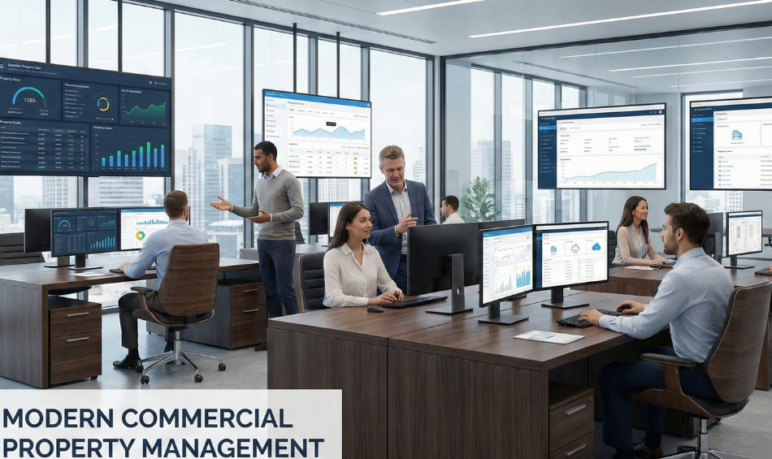
The commercial real estate world is evolving rapidly, and the shift is unmistakable. Property managers are moving away from traditional paper files, disconnected spreadsheets, and manual tracking systems toward integrated digital ecosystems that enhance accuracy, profitability, and tenant satisfaction. Today, operations across office buildings, retail centers, industrial spaces, and mixed-use developments demand a level of complexity and speed that old methods can’t sustain. As leasing structures become more sophisticated, tenant expectations rise, and portfolios expand, commercial property management software has emerged as the backbone of efficient and transparent operations empowering teams to work smarter, not harder.
Managing a commercial property is not just about collecting rent and fixing maintenance requests. It requires overseeing intricate lease obligations, monitoring building systems, managing vendors, reconciling shared operating expenses, analyzing performance data, and maintaining positive relationships with business tenants who rely on the property as a functional environment for their livelihood. Unlike residential tenants, who typically sign standard leases and require more predictable support, commercial tenants operate on diverse schedules, have varying space requirements, and depend heavily on property managers’ responsiveness to keep their businesses running smoothly. In this environment, digital transformation is not a luxury, it has become an operational necessity.
Modern commercial property management software, combined with workflow automation and data analytics, brings structure to complexity by centralizing operations, providing visibility across a portfolio, improving decision-making, and ultimately supporting better financial outcomes. With technology now redefining property management, understanding the tools and strategies shaping the digital era is essential for every commercial property manager aiming to stay competitive.
Commercial vs. Residential: Why Commercial Property Management Needs a Different Approach
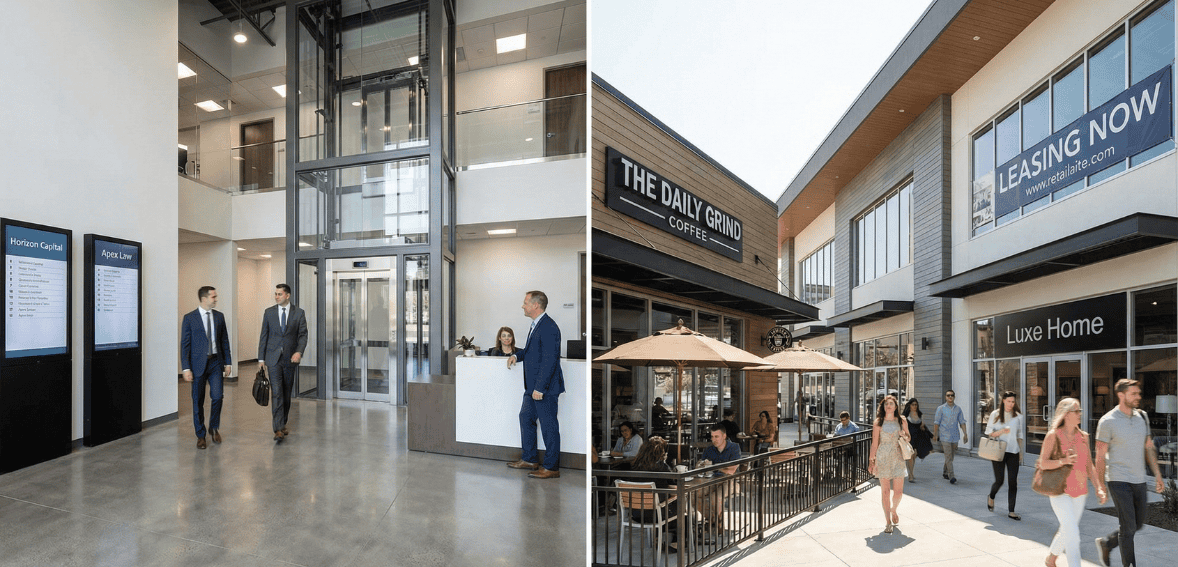
While residential and commercial property management share some foundational responsibilities, the operational demands differ significantly. Residential tenants typically have standardized lease lengths, fixed rental structures, and predictable service needs. On the other hand, commercial properties involve highly individualized lease agreements that may include terms such as percentage rent tied to retail sales performance, multi-year escalation schedules, multi-suite occupancy under a single business tenant, and complex reimbursement frameworks, such as CAM, insurance, and tax pass-throughs.
Managing these elements manually can easily lead to inconsistencies and costly oversights. A single missed escalation clause or incorrect billing calculation can cause substantial revenue loss, while poor documentation trails create risk if disputes arise. Commercial properties also require greater coordination among facility maintenance teams, vendors, equipment schedules, and safety compliance procedures particularly in buildings that support essential systems such as elevators, fire panels, HVAC networks, and security access controls. Businesses rely on those systems to operate without disruption, raising the stakes for timely, proactive management.
The introduction of commercial property management software provides clarity and structure to these operations, giving managers a complete snapshot of lease obligations, tenant activity, property performance, and facility management needs in one accessible platform. This digital foundation offers the reliability and scalability missing from manual or residential-focused tools, enabling property managers to oversee complex buildings and larger portfolios with far greater confidence.
Digital Lease Administration Tools: Managing Complexity Without Manual Errors
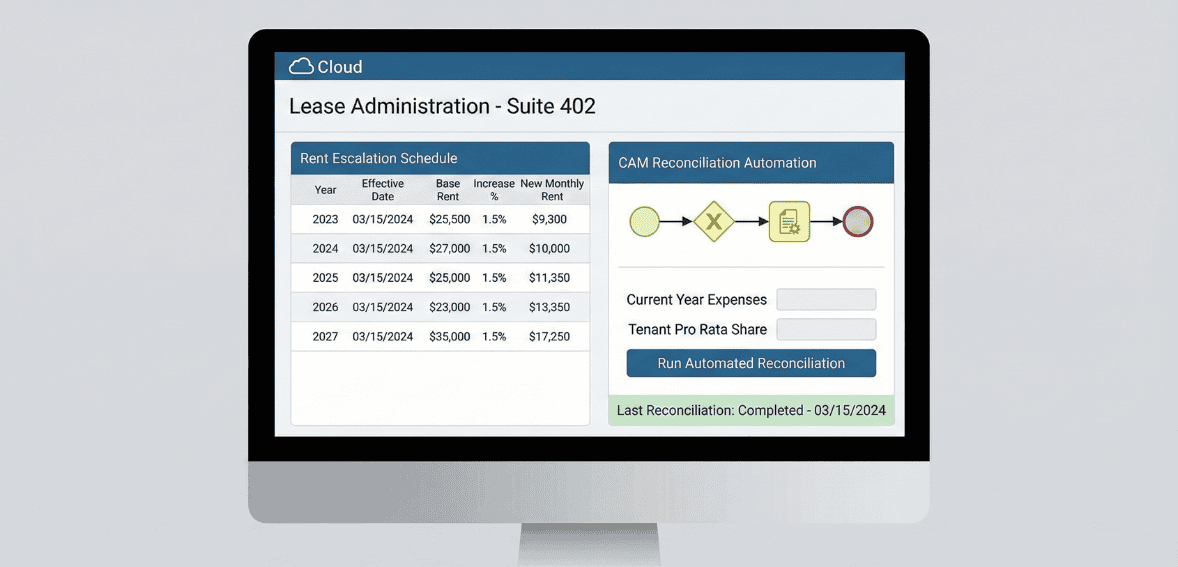
Lease administration is at the heart of commercial management, and technology has drastically improved this historically challenging area. Commercial leases include more nuanced financial commitments, scheduled rent increases, consumer price index adjustments, and expense reconciliation responsibilities that often span hundreds of pages of documentation. Trying to track these details manually or through spreadsheets exposes operations to errors, missed deadlines, and compliance risks.
Modern software designed specifically for commercial portfolios automates core functions, including escalation tracking, renewal notifications, and billing adjustments. Instead of relying on reminders scattered in calendars, every critical date renewal options, rent reviews, insurance expirations, and maintenance obligations are automatically stored and triggered in the system. This guarantees nothing falls through the cracks and ensures billing accuracy, building trust with tenants and investors.
Besides workflow efficiency, digital lease administration strengthens financial governance. Automated calculations reduce human error, generate professional lease abstracts for quick reference, and align accounting, leasing, and property management teams through shared data visibility. Whether a tenant occupies one suite or multiple units across multiple properties, the platform consolidates records into a unified ledger, simplifying reporting and providing a clean audit trail for internal and stakeholder reviews.
Maintenance and Facility Management in the Digital Era
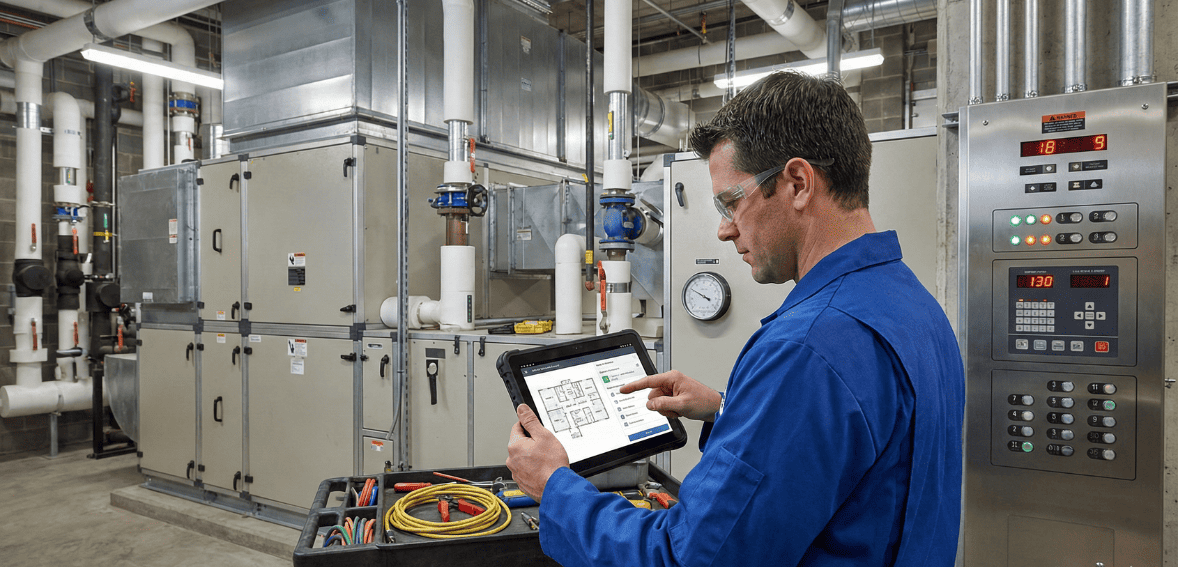
One of the biggest challenges in commercial property management is coordinating maintenance across large spaces with numerous systems and service providers. Facility assets such as HVAC systems, electrical infrastructure, elevators, and plumbing networks require strict preventive maintenance to avoid costly failures and business interruptions. Delayed responses or disorganized vendor communication can lead to tenant frustration, productivity disruption, and financial loss outcomes modern property managers cannot afford.
Technology now enables real-time insight into building performance and maintenance needs. Commercial property management software provides structured workflows for work orders, vendor coordination, preventative maintenance cycles, and capital improvements. Digital ticketing systems ensure that service requests are tracked from submission through resolution, eliminating the uncertainty associated with phone-based or email-based maintenance communication.
Increasingly, commercial buildings are also leveraging IoT devices and smart sensors to monitor asset performance and environmental conditions. Automated alerts such as HVAC fault detection or water-use anomalies enable predictive maintenance, enabling managers to respond to issues before they escalate into failures. A digital maintenance strategy supports longer equipment lifespan, lower repair costs, and more predictable budgeting, while providing transparent communication that helps retain tenants who depend on reliable building operations.
Tenant Communication & Digital Experience Platforms
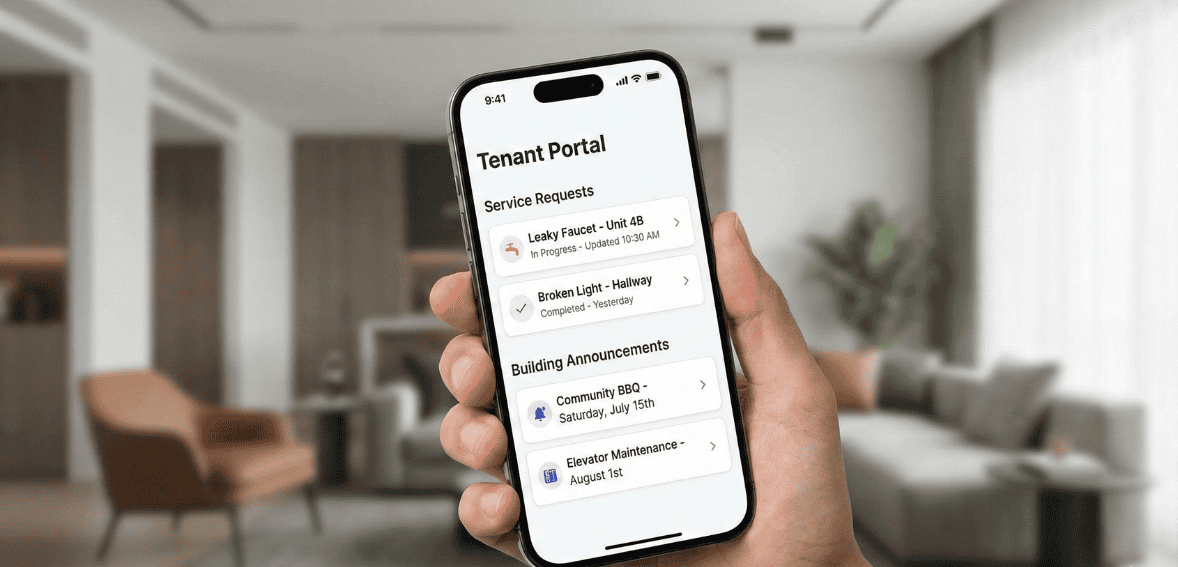
Modern tenants expect seamless communication and convenient self-service. Businesses operate with strict timelines, and delays in approvals, responses, or service updates can disrupt entire operations. To meet these expectations, commercial managers are increasingly implementing communication tools integrated directly into their management systems portals where tenants can request service, check progress, download documents, or receive building-wide announcements instantly.
Digital engagement tools enhance daily operations and foster long-term relationships. Building apps that facilitate booking conference rooms, reserving parking spaces, or registering guests adds value beyond basic property service. Emergency notifications and safety protocols delivered through centralized platforms ensure that all tenants are informed at once, reducing confusion in time-sensitive situations.
Financial Analytics and Owner Reporting: Turning Data Into Smart Decisions
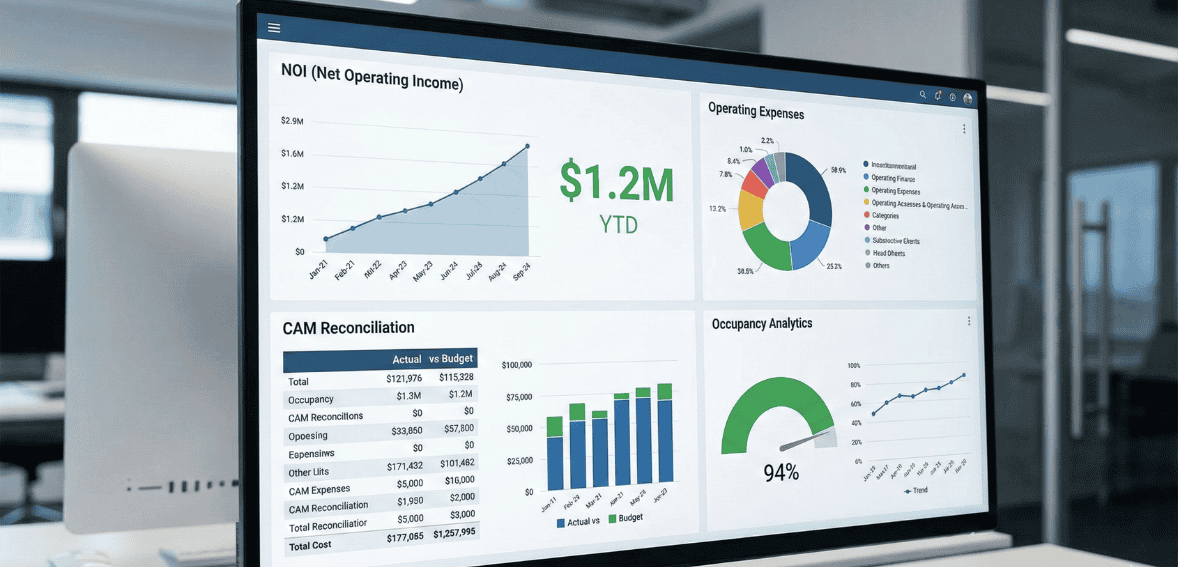
Strong financial oversight is one of the greatest expectations of commercial property managers. Investors, building owners, and stakeholders demand detailed transparency not only a basic view of rent collected and expenses paid, but complete insight into operating performance, projected budget accuracy, vacancy impact, capital needs, and long-term value. In the past, generating these reports manually meant hours of compiling spreadsheets from different sources, reconciling inconsistencies, and hoping no formulas broke or numbers were missed. A single mistake could misrepresent property performance or damage credibility.
Today, commercial property management software changes that reality entirely by providing real-time financial analytics directly from operational data. Every work order, lease charge, tenant payment, and vendor invoice flows into a central monetary system that supports clean reporting at any moment. Instead of waiting for monthly closing or manually assembling files, managers can generate reports within seconds rent rolls, budget vs actuals, CAM reconciliation summaries, vacancy metrics, and net operating income performance.
For owners managing multiple assets or multi-property portfolios, the ability to consolidate and compare performance across locations is critical to strategic decisions: where to invest, where to cut costs, and which buildings are outperforming or struggling. Automated dashboards give a clear picture of health without requiring a finance background. Property managers can confidently walk into owner meetings with data-backed answers rather than approximations.
The shift from spreadsheet-based guesswork to transparent financial reporting builds trust and elevates property managers from task operators to strategic partners, an essential transformation in the digital era.
Tech Enabled Security, Access Control, and Operational Safety
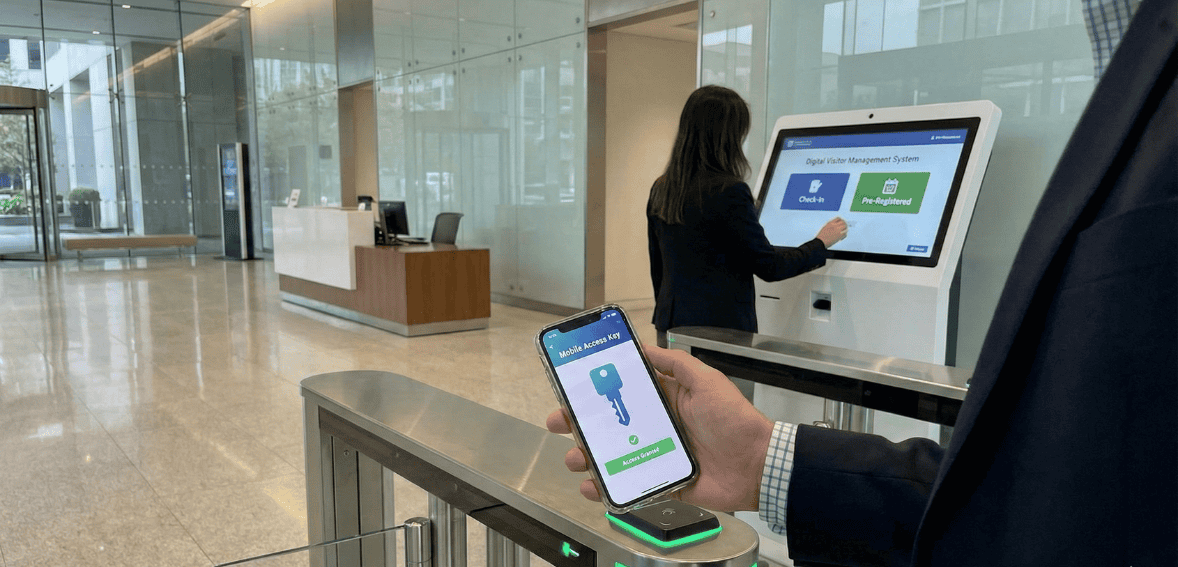
Commercial buildings today must balance tenant convenience with safety expectations. Whether managing an office tower, a retail plaza, or an industrial warehouse, secure access and controlled entry are non-negotiable requirements. Traditional key systems or paper visitor logs offer little security oversight and create administrative friction. Lost keys require expensive rekeying, and there’s no way to track who entered a building and when.
Digital access control solutions integrated with commercial property management software provide a modern alternative. Keycards and mobile-entry systems allow tenants to access buildings using centrally managed, secure credentials rather than physical locks. Entry permissions can be adjusted instantly in response to tenant changes, staff turnover, or emergencies. Logged entry records help resolve disputes and support compliance requirements.
This technology also enhances the tenant experience providing convenience for guest registration, package deliveries, after-hours access, and the reservation of shared amenities. For retail centers or industrial sites, improved security can protect businesses from property loss or liability claims. Combined with building notifications and emergency broadcast systems, digital access solutions help managers maintain safer, more responsive environments.
In commercial settings where every delay impacts business operations, security efficiency is not just a safety measure it is a competitive advantage.
Connected Systems: Integrating Property Management Software With Other Business Tools
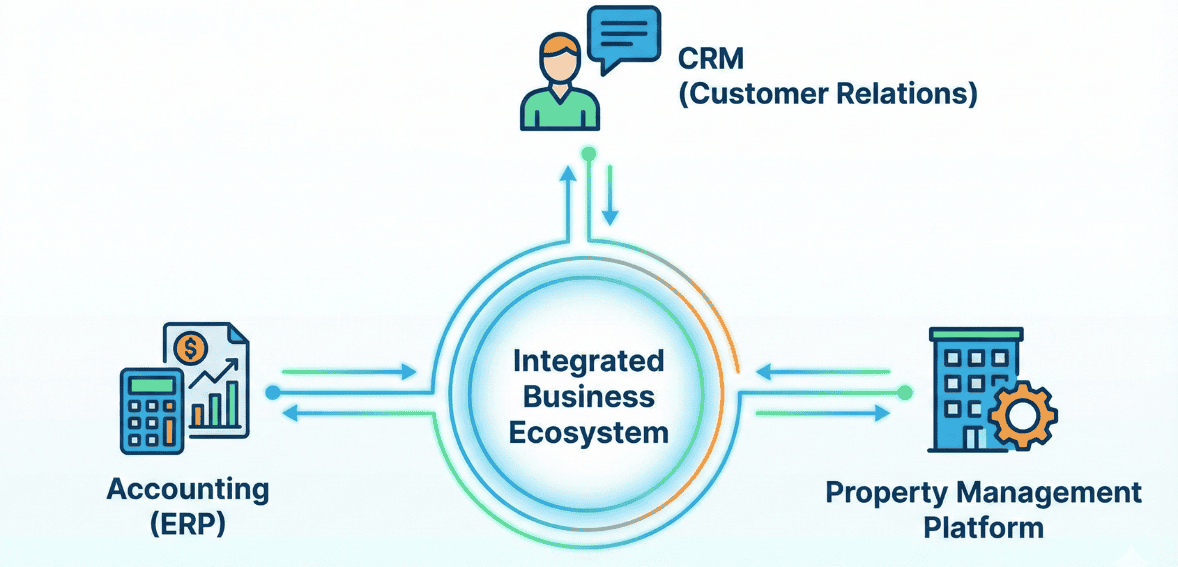
One of the most powerful advantages of digital transformation in commercial real estate is the ability to integrate multiple platforms into one connected environment. Running disconnected systems one for accounting, another for leasing, another for maintenance creates inefficiencies and requires entering the same information repeatedly. Not only does this waste time, but it also increases the likelihood of conflicting or outdated records.
Modern commercial property management software solves this by supporting integrations with accounting platforms, CRM systems, build-out project management tools, payment processors, facility automation systems, and analytics dashboards. With everything connected, organizations eliminate duplicated work, maintain cleaner financial data, and streamline cross-team collaboration. For example, when a lease amendment update rent or CAM percentages, those changes automatically flow into the accounting ledger with no re-entry required.
These integrations allow property management teams to operate with the same sophistication as enterprise-level commercial real estate firms. Even smaller management companies can now run scalable operations, supported by digital tools once reserved for large corporate groups. Technology becomes the equalizer, enabling growth without adding large administrative teams or drowning in paperwork.
Future Forward Strategies: Preparing Commercial Property Teams for the Next Era
Commercial real estate keeps changing rapidly. The property managers succeeding today are those who invest in future ready thinking rather than reacting to challenges after they arise. Digital workflows, automation, and predictive analytics are shaping a new standard of operational excellence. Data-driven forecasting helps teams anticipate maintenance costs, market demand, and tenant turnover patterns. Communication tools strengthen tenant relationships and reduce service response times. Remote building management supports hybrid work environments and geographically dispersed portfolios.
Success in the digital era is less about replacing people than empowering them. Technology takes on the repetitive, error-prone tasks, freeing property managers to focus on strategy, relationships, and asset performance. The strongest teams combine human experience and digital capability, an approach that delivers reliability, accountability, and competitive advantage.
For many organizations, the next step is not a major transformation but a commitment to incremental adoption: starting with digital lease tracking, then adding tenant communication portals or maintenance automation, and gradually building a fully connected platform.
As tenant expectations continue to evolve, commercial properties that embrace technology gain stronger retention, better financial outcomes, and reputations built on professionalism and responsiveness. Those who continue to rely on manual systems will struggle to keep pace.
Conclusion
Commercial real estate management is entering a new era, one driven by transparency, automation, and data intelligence. The complexity of managing office buildings, retail spaces, and industrial properties demands precision, real-time visibility, and consistent communication. Spreadsheets, paper files, and fragmented systems cannot support the expectations of modern tenants, owners, or investors.
By adopting commercial property management software, organizations gain the structure, automation, and insight necessary to manage large portfolios efficiently and deliver exceptional tenant experiences. From lease administration and CAM reconciliation to predictive maintenance and financial reporting, technology serves as the foundation for reliability and growth.
The future of commercial property management belongs to those who embrace digital transformation and build operations that can scale confidently.
FAQs
Why is commercial property management more complex than residential?
Commercial properties involve multi-year leases, specialized clauses, complex billing structures, and larger facility systems requiring coordinated maintenance. Tenants also depend on smooth operations for their business continuity, making delays far more costly than in residential settings.
What features should commercial property management software include?
Look for tools supporting automated lease tracking, rent escalations, CAM and pass-through billing, work order management, financial analytics, and tenant communication portals. These capabilities simplify large portfolios and eliminate manual errors.
Can technology improve tenant satisfaction in commercial buildings?
Absolutely. Faster maintenance response, digital service request tracking, communication portals, and access-control tools all contribute to smoother daily operations and stronger long-term tenant relationships.
How does digital software support transparency for owners and investors?
Real-time dashboards and automated financial statements give stakeholders instant insight into property performance, helping them assess NOI, occupancy trends, expenses, and profitability without waiting for manual reporting cycles.
What is the most significant advantage of transitioning from manual systems to technology?
The combination of time savings, clean data accuracy, and scalable workflow efficiency allows property managers to expand portfolios, improve service quality, and increase profitability without adding significant administrative overhead.