

NSPIRE Readiness for Affordable Housing Managers: Building a Pre-Inspection System That Prevents Score Surprises
by Rinki Pandey March 26, 2026
National Standards for the Physical Inspection of Real Estate (NSPIRE) is one of the biggest changes to affordable housing compliance regulations in the past decade. For the asset managers, property managers, and compliance teams, NSPIRE is not just another inspection program but a novel and much more nuanced way of scoring property conditions.
The previous UPCS and HQS inspection programs, in contrast to the resident-centric NSPIRE approach, tended to focus on identifying observable deficiencies. These programs had a fairly predictable scoring structure and an easier ability to prepare for an inspection in advance. With NSPIRE, the focus shifts toward health, safety, and functional defects. This has presented an opportunity for housing providers to develop new pre-inspection systems to score for and prevent surprises in the inspection results.
The NSPIRE compliance timeline has also been in flux in recent years. Though many programs began compliance with NSPIRE at the same time, each HUD program has moved the date for compliance at least once in the past few years. Currently, Community Planning and Development programs are slated a compliance date of October 1, 2026.
Voucher-based NSPIRE, or NSPIRE-V, was pushed back to February 1, 2027, to give HUD agencies more time to prepare for the transition. (NAHRO)
In this constantly changing environment, the best housing managers are not simply defensively responding to inspections but proactively developing pre-inspection systems that will prevent score surprises and guarantee compliance.
Understanding NSPIRE: A Shift Toward Health and Safety

NSPIRE embodies a philosophical change in what is considered a quality of housing. Rather than focusing on structural or cosmetic deficiencies, the new standards focus on areas that impact resident health and safety—such as ventilation, electrical hazards, fire safety, and other environmental concerns.
HUD’s “affirmative requirements” is a 100% reflection of this change. These include smoke detectors, carbon monoxide alarms, adequate lighting, and working, safe electrical systems. Although some of these items (such as fire alarms) are not yet scored due to phase-in, they are still cited and must be compliant within required timeframes. (HUD)
Now that the August 2022 category of affirmative requirements will not be scored until October 1, 2026, property managers have had more time to prepare. However, that does not mean that there is a grace period. Properties are still expected to be up to standard, and a deficiency can still trigger corrective action even if it has no effect on scores.
For managers, that means that readiness is no longer about preparing for an event; it’s about ongoing readiness.
Changing NSPIRE Timeline and What It Means for Managers
One of the biggest challenges of NSPIRE implementation has been the fluid compliance schedule, with HUD extending deadlines multiple times in response to industry concerns, operational challenges, and a need for clearer guidance.
Initially, many programs were expected to achieve compliance by 2023 or 2024. Those deadlines were further extended to 2025, and in some cases, even beyond. Community planning and development programs now have a compliance date of October 1, 2026. The voucher-based NSPIRE system has been extended through February 1, 2027.
These extensions are a necessary reality of the complexity of the transition to NSPIRE, but they also pose a risk to housing providers. Delayed deadlines may make organizations complacent, leaving them with little time to prepare, leading to rushed inspections and incomplete documentation and unexpected scores.
Proactive managers, however, use extensions to their advantage, treating the additional time as a chance to develop robust systems, train staff, and standardize processes. By the time the deadline arrives, they already have a compliant, NSPIRE-ready organization.
Why Score Surprises Happen Under NSPIRE
One of the biggest questions that affordable housing managers have is how unpredictable the scores are in NSPIRE. Properties that have scored well on UPCS or HQS may have unexpected score changes under the new system.
Realizing a “score surprise” often is due to insufficient alignment between what an organization does internally and what NSPIRE requires. Many organizations continue to use legacy checklists or rely on outdated assumptions of what inspectors are looking to see. This can lead to critical deficiencies being missed until the inspection.
Another contributing factor is inconsistent recordkeeping and documentation. NSPIRE relies heavily on documented compliance. Without proper documentation of maintenance, repairs, or inspections, a property may not be able to prove compliance even if it has been addressed.
Staff training is another issue. NSPIRE has new terminology, scoring criteria, and inspection protocols. If maintenance or site staff is not trained, they may not understand what is a deficiency or how to prioritize repairs.
To avoid score surprises, a systematic approach is required to align internal processes with the new NSPIRE expectations.
Building a Pre-Inspection System That Works
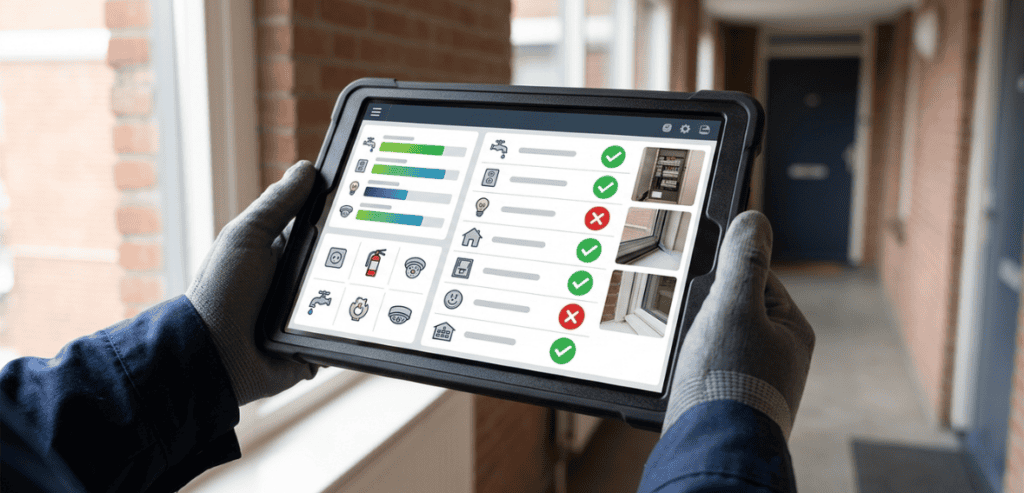
A pre-inspection system is the cornerstone of NSPIRE readiness. It converts compliance from ad-hoc and reactive to proactive and continuous.
Essentially, a pre-inspection system is a series of internal inspections that mimic NSPIRE standards conducted at regular intervals, well documented and designed to catch deficiencies before HUD inspectors see them.
The foundation of this process is a standardization of inspection processes, checklists, and documentation across the portfolio. With a high degree of standardization, you minimize variability and maximize accountability.
Technology plays a critical role in pre-inspections, as it enables you to manage, track, assign, and monitor deficiencies while creating a digital audit trail in support of compliance.
Developing an Effective NSPIRE Checklist
An effective NSPIRE checklist is a tool that reflects the priorities and purposes of the NSPIRE framework, not just a simple list of items to be inspected.
It must cover all of the key inspection areas, from units and common areas to building systems, and include the criteria required by HUD guidance.
While there should be room for customization, the core checklist should be standardized across the portfolio.
It is also critical that the checklist be updated as HUD releases new guidance or adjusts requirements.
NSPIRE Scoring: Understanding How Properties Are Evaluated
NSPIRE scoring is severity-based. Scoring methods used in the past often focused on quantity of deficiencies, whereas NSPIRE focuses more on deficiencies that have potentially serious health and safety consequences.
In the NSPIRE system, more serious deficiencies will result in greater deductions to the property’s score. Therefore, a few serious deficiencies can negatively impact the score more than many less serious defects.
The delayed scoring of some affirmative requirements until 2026 has, in the short-term, lessened the negative impact of some deficiencies on overall scores. Nevertheless, those items are still cited and must be corrected within a certain period of time. (NAHRO)
Managers must understand the scoring methodology to allocate resources wisely and prioritize repairs. Paying attention to the high-impact deficiencies will allow organizations to achieve a higher score and maintain the safety of residents.
HCV NSPIRE Administrative Procedures and Operational Impact
The adoption of NSPIRE for Housing Choice Voucher programs adds another layer of administrative work. HUD has published detailed guidance on procedures for inspections, compliance, and reporting under NSPIRE.
These procedures are required by all public housing agencies that administer voucher programs and are establishing a common set of standards for inspections. The compliance deadline for these programs has been extended several times and is currently scheduled for February 1, 2027. (HUD)
What does this mean for them? They must assess voucher units using NSPIRE standards, even if full compliance will not be due for some time. There is a transition period to make the changes, train staff, and update policies.
The change from HQS to NSPIRE also involves changes in documentation and reporting. Agencies need to make sure they can capture and store the information required in the new system.
Recordkeeping and Documentation: The Backbone of Compliance

Good recordkeeping is a cornerstone of NSPIRE readiness. It is the documentation required to prove compliance and provide support for decision-making throughout the organization.
This includes inspection reports, maintenance records, work orders, and corrective actions. Records should be accurate, complete, and readily available.
Digital systems are especially useful for documentation. They enable an organization to centralize information, monitor progress, and create reports. This boosts efficiency but also transparency and accountability.
Good recordkeeping also involves consistency. All staff should use the same processes to record information so that the data is comparable across properties.
Training and Culture: Creating a Compliance-Driven Organization
No pre-inspection system is useful without trained staff. Training should include all aspects of NSPIRE, from inspection standards and scoring rubrics to documentation guidelines.
Culture is also important. Organizations need to develop a culture of compliance, one that sees inspections as a critical part of operations, that holds people accountable, and that rewards all staff for maintaining property standards.
Leaders play a key role in developing a culture of compliance. By making compliance a high priority and giving staff the resources they need, leaders can help achieve NSPIRE readiness.
Conclusion: From Reactive Inspections to Proactive Readiness
NSPIRE has fundamentally changed the way that we conduct inspections in affordable housing. The challenge for managers is not just to be prepared for NSPIRE but to do so in a predictable, consistent way.
The only way to achieve that goal is to build a pre-inspection system. Aligning internal standards with NSPIRE standards, keeping our documentation up to date, and investing in staff training will eliminate surprises at score time and ensure compliance.
The extended timelines for NSPIRE give us an advantage in our preparation, but they should not be used as a justification to delay action. They give us a unique opportunity to build systems that will sustain NSPIRE readiness.
NSPIRE readiness is about more than passing inspections. It’s about creating safe, high-quality housing for our residents and establishing the highest standard of excellence we can.
Frequently Asked Questions (FAQs)
What is NSPIRE, and why is it important for affordable housing managers?
NSPIRE (National Standards for the Physical Inspection of Real Estate) is a HUD inspection model designed to assess the safety, functionality, and habitability of affordable housing units. It replaces older inspection systems with a stronger focus on resident health and safety. For housing managers, NSPIRE is critical because inspection scores directly impact funding, compliance status, and reputation. A poor score can lead to corrective actions or financial risk. Understanding NSPIRE standards helps managers proactively maintain properties, prioritize repairs, and ensure units meet required conditions before official inspections occur.
What is a pre-inspection system, and how does it help?
A pre-inspection system is an internal process used to evaluate property conditions before an official NSPIRE inspection. It involves routine checks, standardized inspection checklists, and staff training to identify and fix issues early. This system helps managers catch deficiencies such as safety hazards, maintenance gaps, or compliance issues in advance. By addressing problems proactively, housing teams can avoid last-minute surprises and improve overall inspection outcomes. A well-structured pre-inspection system also promotes accountability, ensures consistency across units, and builds confidence in maintaining inspection readiness year-round.
What are the key components of an effective NSPIRE readiness plan?
An effective readiness plan includes regular unit inspections, clear documentation processes, and defined maintenance workflows. Staff should be trained on NSPIRE standards and understand how to identify deficiencies. A tracking system for repairs and follow-ups is essential to ensure no issue is overlooked. Communication with residents also plays a role, encouraging them to report concerns promptly. Scheduling periodic mock inspections helps simulate real conditions and prepare teams. Combining these elements creates a structured approach that reduces risk and ensures properties consistently meet inspection requirements.
How often should pre-inspections be conducted?
Pre-inspections should be conducted regularly, not just before official inspections. Many organizations adopt quarterly or biannual inspection cycles to maintain consistent property standards. High-risk units or properties with past deficiencies may require more frequent checks. Additionally, spot inspections can help ensure ongoing compliance. Regular inspections allow managers to identify patterns, address recurring issues, and prevent small problems from becoming major violations. Maintaining a consistent schedule ensures that properties remain inspection-ready at all times, rather than relying on last-minute fixes before NSPIRE evaluations.
How can managers prevent score surprises during NSPIRE inspections?
Preventing score surprises requires proactive planning and strong internal systems. Managers should implement routine inspections, maintain detailed records, and ensure timely completion of repairs. Using standardized checklists aligned with NSPIRE criteria helps identify issues early. Training staff and clearly assigning responsibilities improves accountability. Leveraging technology for tracking and reporting can streamline the process. Engaging residents in reporting maintenance concerns also adds an extra layer of oversight. By staying organized and consistent, managers can reduce uncertainty, improve inspection outcomes, and maintain high-quality housing standards.