
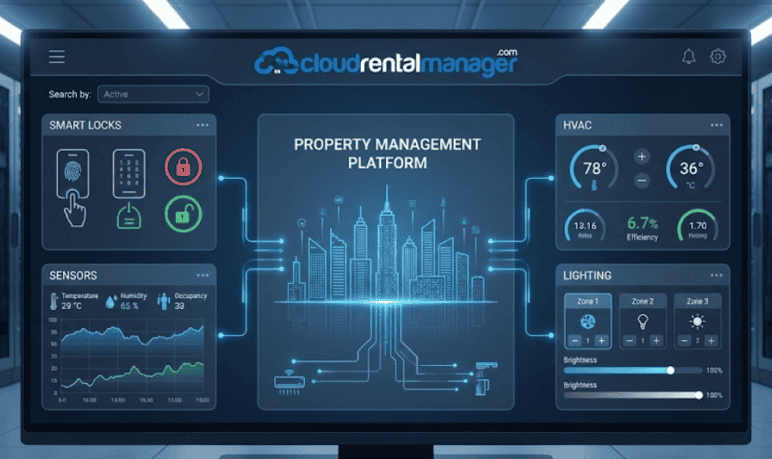
Smart Buildings Meet Smart Management: Integrating IoT Devices with Property Management Systems
by Rinki Pandey December 12, 2025
The property management industry is undergoing a major transformation, led by IoT technology. Connected devices, once limited to luxury or futuristic buildings, are now common in rentals, multifamily housing, commercial spaces, and single-family homes. Smart locks, leak sensors, HVAC monitors, occupancy trackers, air-quality sensors, and energy tools are quickly becoming standard features.
Yet the true value of smart apartment technology isn’t in the devices. It lies in how these devices connect to property management and streamline operations. A smart lock alone is useful, but one integrated with leasing and maintenance workflows is transformative. A leak detector is helpful, but one that automatically creates work orders, notifies the right technician, and logs incidents, prevents losses and reduces liability. The property manager’s role is evolving, with digital tools, automation, and real-time data supporting, not replacing, good judgment and customer care. This article discusses how smart buildings and IoT tools are reshaping property operations, boosting tenant satisfaction, improving energy efficiency, and changing how managers work.
Understanding IoT in Property Management: The Foundation of Smart Building Operations
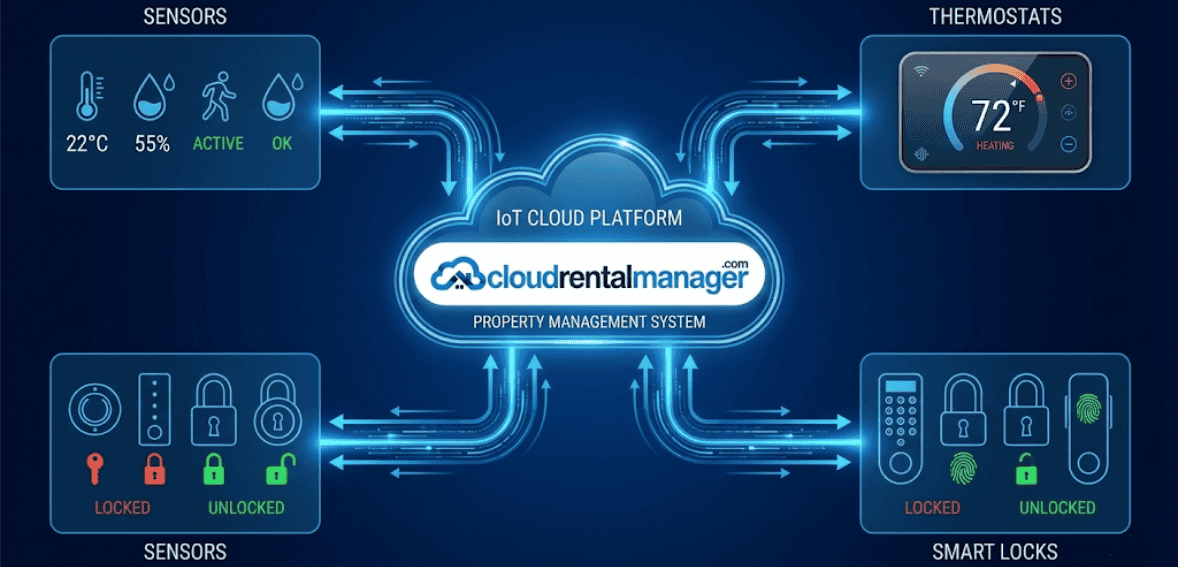
Before discussing advanced integrations, it’s key to define IoT property management. IoT, or the Internet of Things, refers to connected devices communicating with each other and software. In property settings, these devices collect data or automate actions, such as thermostats adjusting temperature, sensors detecting moisture, locks recording entries, or lights responding to occupancy.
For property managers, shifting from traditional to IoT-driven workflows transforms decision-making. Rather than relying on tenant reports, routine inspections, or building performance assumptions, managers gain real-time property insights. Buildings become more transparent, predictable, and controllable.
Historically, property management has been reactive: managers respond to breakdowns, complaints, or cost spikes. IoT enables a proactive approach, preventing issues, optimizing energy use, and anticipating maintenance needs before they escalate. Integrated IoT and software form the backbone of modern building performance.
Smart Apartment Technology Integration: Moving From Devices to Ecosystems
Many buildings use smart devices as standalone tools: a thermostat not synced with turnover workflows, a smart lock managed manually, or a sensor sending alerts to just one staffer instead of routing information system-wide.
True smart operations mean integrating devices into a single platform. This turns independent tools into an ecosystem where data flows into leasing, maintenance, vendor management, and reporting.
For example, consider the unit turnover workflow. With IoT integration:
- The property manager can remotely revoke old passcodes once the lease ends.
- A cleaning vendor receives automated temporary access credentials through the smart lock system.
- HVAC runtimes, utility usage, and environmental conditions are automatically recorded.
- If the water sensor detects moisture during cleaning, a maintenance task is created instantly.
Automated coordination reduces manual steps, ensures accountability, and speeds up unit readiness. It moves property managers from reactive roles to strategic oversight supported by technology.
Streamlining Maintenance Operations With IoT Sensors and Automated Alerts
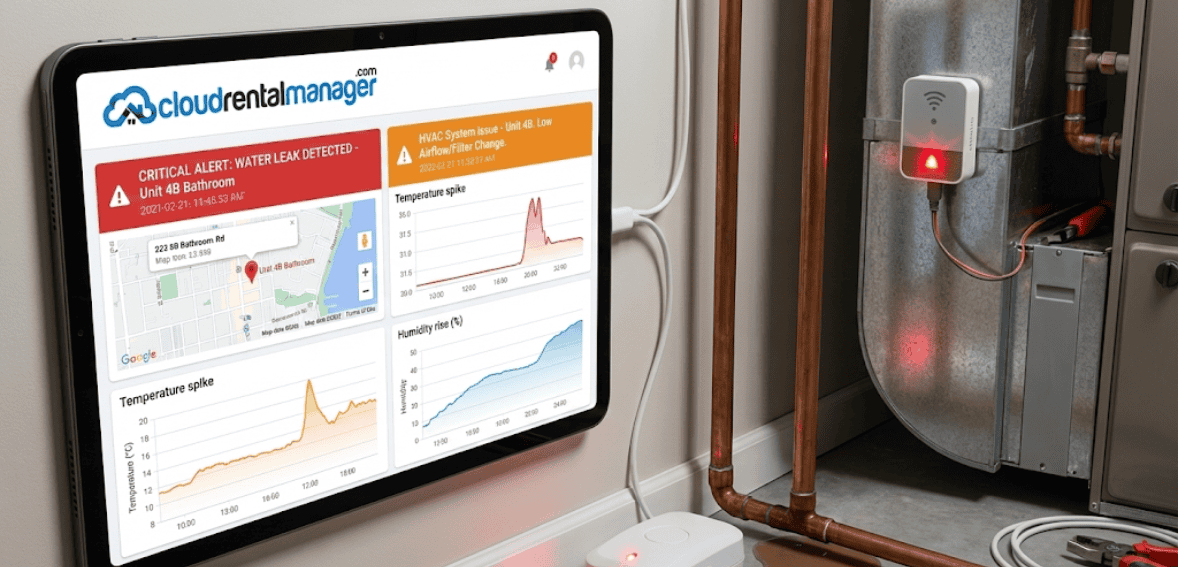
Maintenance benefits most from IoT advancements. Traditional maintenance relies on tenant reports or inspections, which may miss issues. IoT sensors let buildings self-monitor and spot problems early.
Water leak sensors detect early moisture, preventing mold and structural damage. HVAC sensors monitor airflow, temperature changes, or compressor strain, warning before outages. Smart meters track energy anomalies indicating failing equipment. Occupancy sensors reveal inefficient lighting schedules. Air-quality monitors alert staff to ventilation issues before tenant comfort is affected.
The key benefit is integration with property management systems. Instead of manually forwarding alerts, the system auto-creates work orders, assigns technicians, updates logs, and documents incidents. This closed-loop process eliminates bottlenecks and prevents issues from slipping through.
Over time, data from these sensors reveals trends in recurring HVAC issues, high-humidity areas, or fast-responding vendors, enabling better decisions about upgrades, contracts, maintenance, and capital planning.
Smart Locks and Access Control: Security, Convenience, and Operational Efficiency
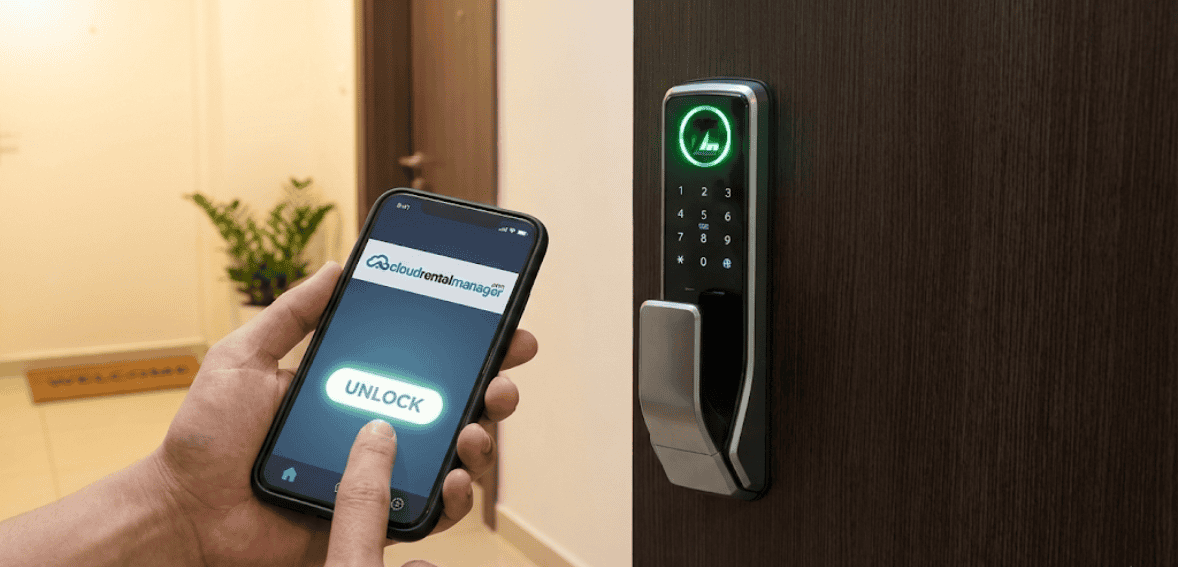
Smart locks are the most common IoT tool in property management for good reason. They offer keyless entry, temporary codes, and app-based control, increasing tenant convenience. For property managers, benefits extend far beyond tenant satisfaction.
When smart locks are fully integrated with property management software, access control becomes a powerful operational tool. Managers can automatically generate access codes for showings, maintenance visits, cleaning services, and vendor appointments. This eliminates the need for physical key exchanges, reduces lockouts, and increases security by logging and tracing every access event.
During leasing, self-guided tours become effortless. Prospective tenants receive a time-bound code that allows them to view the unit without a leasing agent present. This increases tour availability and often results in faster lease-ups. For maintenance teams, access control ensures that technicians enter only when authorized and provides a clear digital record for accountability.
In emergencies such as fires, leaks, or gas incidents, smart locks grant first responders’ temporary access, improving safety and response time. As more IoT and smart devices connect to management systems, locks become key nodes in the operational network.
Energy Efficiency and Cost Savings Through Smart Building Automation
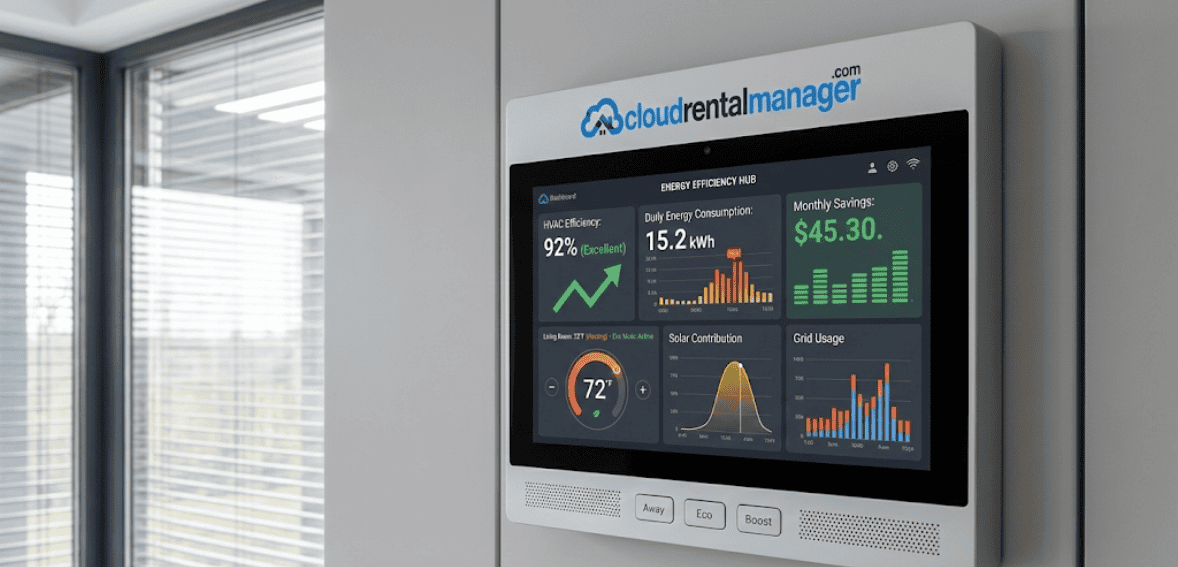
Energy consumption has always been a major operating expense for property managers, especially in larger buildings or mixed-use portfolios. Traditional utility management relies heavily on estimated usage patterns and manual adjustments, leaving a significant margin for waste. IoT property management transforms this by giving managers real-time control over energy systems.
Smart thermostats, occupancy sensors, lighting automation, and HVAC monitoring tools create an environment in which buildings respond dynamically to how they’re actually used. A vacant hallway no longer stays illuminated for hours. A unit that sits empty between tenants no longer runs at full capacity for heating or cooling. Common areas with fluctuating foot traffic can automatically adjust temperature and airflow to maintain comfort without overspending.
When all these devices integrate with the property management system, the data becomes even more powerful. A manager can see building-level energy consumption trends, track unit-specific anomalies, and identify long-term inefficiencies. This can lead to smarter capital planning decisions, such as replacing older HVAC systems earlier if the data shows increasing strain or inconsistent output.
Smart building automation doesn’t just reduce utility bills; it also aligns with the growing demand for sustainability. Tenants increasingly value eco-friendly living, and property managers who embrace IoT tools can demonstrate measurable environmental performance. This can become a differentiator in competitive markets, especially in multifamily buildings or commercial spaces where sustainability may influence tenant retention or leasing decisions.
Turning Data Into Decisions: IoT Analytics as a Core Property Management Tool
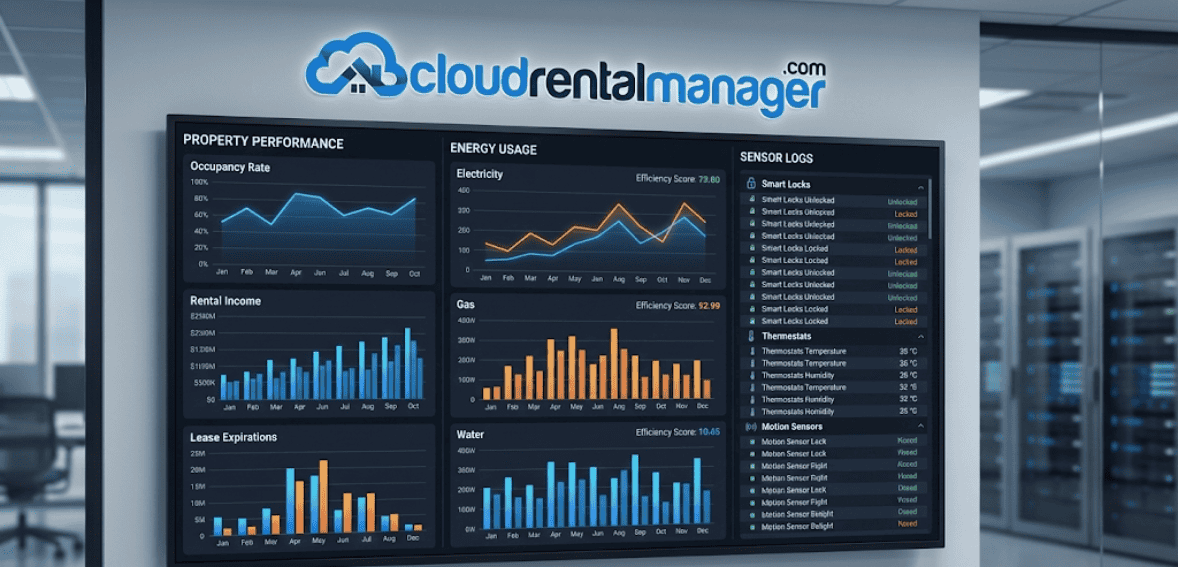
As smart devices collect thousands of data points daily, the real transformation comes from how that data gets interpreted. Property managers once made decisions based on experience, instinct, and limited historical records. Today, IoT-enabled analytics dashboards give managers a full picture of how their buildings operate.
This transition from anecdotal management to data-driven strategy is one of the defining characteristics of modern property operations. Managers can identify which unit types experience more maintenance issues, which floors use the most energy, which vendors perform most reliably, and which amenities are underused.
Smart apartment technology integration also helps managers plan and optimize long-term strategies. For instance, data from water sensors might show that certain plumbing systems need preventive replacement. Temperature data might reveal insulation weaknesses in older buildings. Access logs might show that amenity spaces are underutilized during the week, suggesting opportunities to repurpose the space or offer new services.
The property manager’s role becomes much more analytical. Instead of reacting to maintenance requests or complaints, managers can forecast needs, allocate budgets more effectively, and present owners with quantifiable insights. This elevates the profession and turns property managers into strategic partners rather than simply operational overseers.
Tenant Experience in a Smart Building: Convenience, Comfort, and Trust
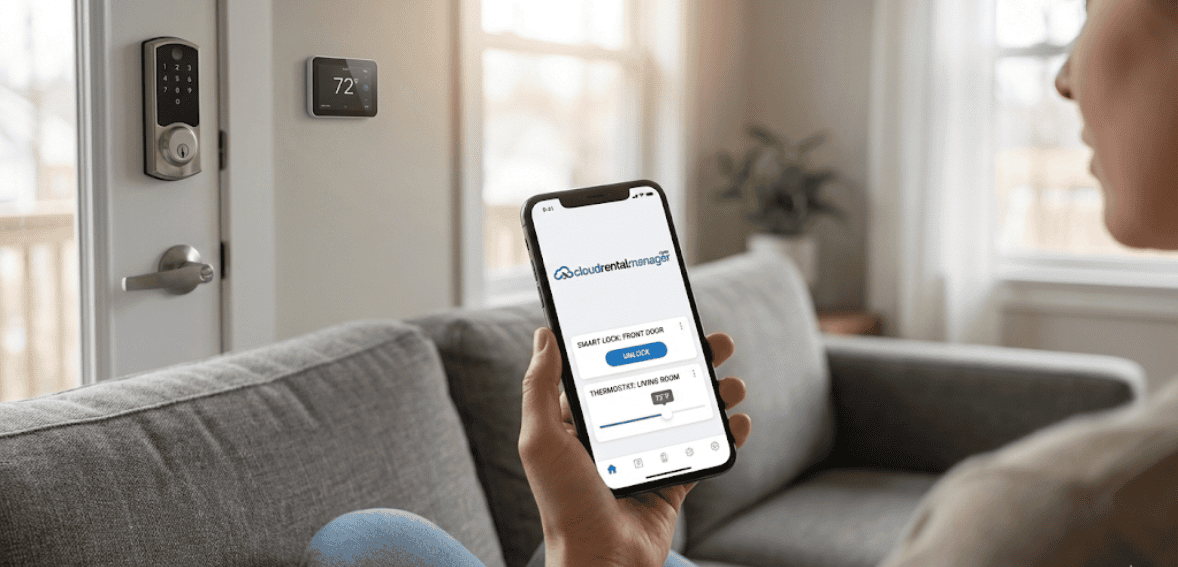
Modern renters expect technology to simplify their lives, and IoT property management aligns perfectly with those expectations. Smart locks allow tenants to grant temporary access to guests or service providers. Smart thermostats let you remotely control temperature. Sensors maintain better indoor air quality, detect issues faster, and ensure a more comfortable environment.
For tenants, IoT isn’t just about gadgets; it’s about living in a building that feels responsive. Detecting a leak early prevents damage to personal belongings. Automatically adjusting lighting enhances safety in hallways and parking garages. Buildings that maintain stable temperatures create a more consistent living experience.
When these smart devices integrate with the tenant portal in the property management system, the experience becomes even more seamless. Tenants can monitor their utility usage, receive alerts about package deliveries, request services, or manage access permissions from a single interface.
This creates a stronger sense of trust. Tenants feel their building is being actively managed, not just maintained. In competitive markets where renters have many choices, a cohesive smart building experience can significantly improve retention rates. A tenant who feels cared for and who sees the tangible benefits of smart technology is far more likely to renew.
Preparing for the Future: How IoT Is Redefining the Property Manager’s Role
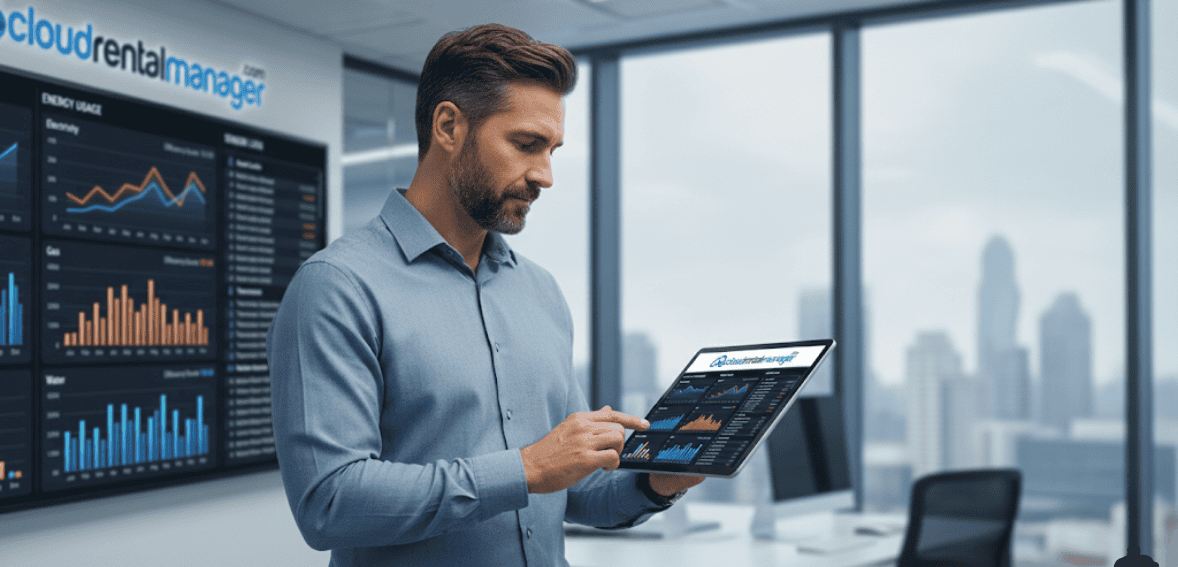
The integration of IoT property management tools is not just changing workflows; it’s reshaping the role of the property manager at a fundamental level. Managers are no longer simply responsible for collecting rent, coordinating repairs, and enforcing lease terms. They are becoming technology interpreters, data analysts, automation strategists, and tenant experience designers.
As IoT becomes standard in residential and commercial spaces, managers must understand how connected devices interact with software platforms, how data informs operations, and how technology can improve resident satisfaction. This doesn’t mean managers need to become engineers, but it does mean they need to embrace a more digital-first mindset.
Instead of spending hours on repetitive administrative tasks, managers will increasingly rely on automation to handle scheduling, alerts, access control, and reporting. This frees them to focus on high-value tasks like tenant relationships, owner communication, and strategic planning.
The industry is moving toward a world where property managers act more like experienced managers. They design tech-driven services, analyze building performance data, implement sustainability goals, and coordinate smart upgrades. IoT is not eliminating the human side of property management; it’s enhancing it by allowing managers to focus their energy where human judgment truly matters.
Conclusion: Smart Buildings Are Here, and Smart Management Is the Future
The rise of IoT property management has ushered in a new era of building operations. Smart locks, sensors, thermostats, access systems, and automation workflows are no longer fringe technologies; they are becoming foundational tools for delivering better service, reducing operational risk, enhancing building performance, and elevating the tenant experience.
When integrated with a property management system, these devices transform buildings into intelligent ecosystems where maintenance is proactive, energy use is optimized, access is controlled seamlessly, and data supports every strategic decision.
Property managers embracing this shift are positioning themselves for long-term success. They are moving beyond traditional roles and into a future where their work is more efficient, more impactful, and more aligned with the expectations of modern renters and building owners.
Smart buildings need smart management, and IoT is the bridge connecting the two.
FAQs
What is IoT in property management?
IoT refers to connected devices like smart locks, thermostats, and sensors that gather data and automate building operations. When integrated with property management software, they streamline workflows and improve real-time decision-making.
How do smart devices improve maintenance?
Sensors detect issues early, such as leaks or HVAC strain, and automatically trigger work orders. This prevents expensive damage, reduces emergency repairs, and keeps buildings more reliable.
Are smart locks secure for rental properties?
Yes. Smart locks use encrypted, time-bound access codes and maintain digital entry logs. They are safer than physical keys and provide better control for managers and tenants.
Does IoT reduce energy costs?
Smart thermostats, occupancy sensors, and automated building controls reduce unnecessary energy consumption. Over time, this significantly reduces utility expenses and improves efficiency.
Do property managers need advanced tech skills to use IoT?
Not at all. Modern systems are designed for non-technical users. Property managers mainly interpret alerts and use dashboards. The platform handles the heavy technical work.