
by Rinki Pandey March 23, 2026
The worldwide transition to hybrid work arrangements has completely transformed how companies design their workspaces. The traditional office model requires employees to work within a fully occupied space, whereas a flexible work environment allows employees to work from home. Companies find themselves implementing both remote and in-office work processes, treating managing office properties as a strategic initiative.
The company forces office asset managers, real estate teams, and business executives to develop new approaches to office management. Employees actively seek workspaces that support their ability to perform tasks, maintain their health, and collaborate with others.
Current hybrid office management systems give vital tools for operational decisions through data analysis. They let employees work from different office locations. Organizations must create office strategies that meet tenant needs across spaces. Real estate players need competitive advantages in service and experience, not just location and pricing.
The article examines how managing office properties has transformed during the hybrid work era. The research investigates methods through which organizations can use real estate investments to meet present-day workforce requirements in their business operations.
Understanding Managing Office Properties in a Hybrid Work Model
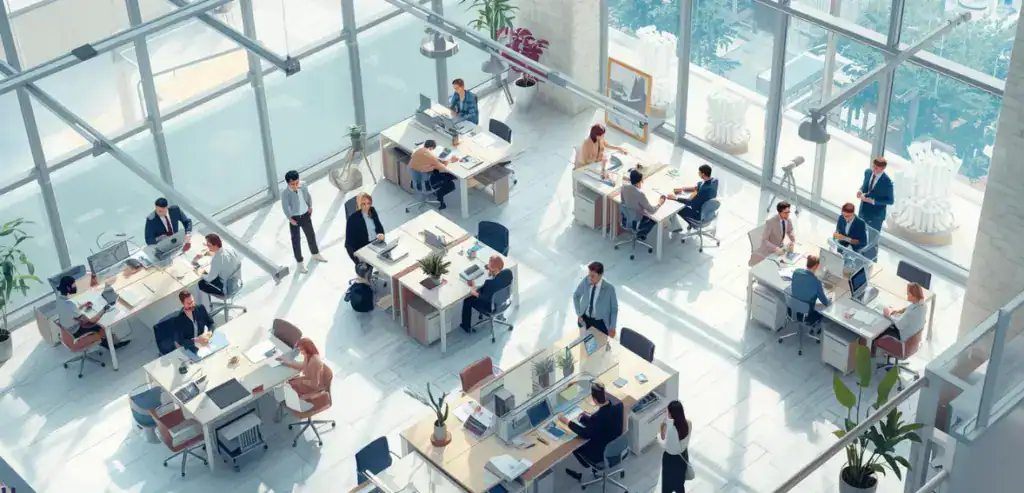
Managing office properties in hybrid work environments needs new operational methods. This is because the existing static planning process fails to capture workforce and space requirements. Organizations need to handle workforce changes and varied work patterns as they cannot rely on fixed occupancy rates or permanent space assignments.
Real estate for hybrid workspaces requires businesses to create flexible workspaces. Employees work every week for several days remotely, reducing daily office attendance. However, when they do visit, they expect spaces that support collaboration, focus, and social interaction.
The need for two different types of office space creates challenges for organizations in managing their space effectively. Organizations use space measurements to determine which parts of their offices reach maximum occupancy and the need for operational space.
This process needs technology as its essential enabler. Sensors, booking systems, and analytics platforms provide real-time insights into patterns. The firm uses these tools to create better office layouts to improve its operational efficiency.
Hybrid office management requires organizations to establish cooperative relationships with various groups. Facilities, HR departments, and IT leaders need to establish policies and define infrastructure requirements. This collaboration ensures that physical spaces enable the organization to achieve its broader strategic objectives.
Office property management needs to find a balance between controlling operational costs and delivering satisfactory experiences for employees. The organizations that succeed in shifting their operational methods and maintain their operational effectiveness in future hybrid work environments.
Designing a Flexible Workspace Strategy for Modern Offices
Implementing flexible workspace strategies is essential for managing office properties in a hybrid working setup. Today, the employees do not need static layouts with permanent seating. This is why organizations must create workspaces that can shift between work styles throughout the day.
A flexible workspace strategy typically includes a mix of different space types. The available spaces include areas for collaboration, quiet work, meetings, and social interaction. Employees select their working environment from the different spaces designed for specific functions. The key parts of a strong, flexible workspace plan are activity-based zones for various tasks, such as:
- Desk sharing, with no fixed desks for each employee.
- Modular furniture that can be easily rearranged.
- Technology-enabled meeting spaces for hybrid collaboration between remote and in-office participants.
This method increases office space efficiency by optimizing space throughout the workday. It eliminates common office waste by preventing employees from using it. Organizations must check if they can expand their operations. Workspace design relies on employee experience. Comfortable conditions, natural light, and well-designed furniture foster employees’ satisfaction.
Organizations must focus on these elements to boost work output and retain employees. A flexible workspace strategy helps firms adjust real estate to fit hybrid work. This keeps costs down and prepares the managing office properties for future needs.
Leveraging Data for Office Space Utilization Optimization
Data-driven decisions are now crucial for managing office properties. Hybrid work produces unpredictable patterns that instinct alone cannot handle. Agencies need accurate data on office space usage.
Office space utilization metrics provide insights into occupancy patterns and usage trends. The metrics help the system identify underused areas, peak demand times, and areas that need improvement. They commonly utilize occupancy sensors, access control systems, and desk booking platforms as their main data sources.
A structured approach to data utilization involves several steps:
| Data Collection | Gather real-time and historical usage data from multiple sources. |
| Analysis | Identify patterns, inefficiencies, and trends. |
| Decision-Making | Adjust layouts, reduce space, or repurpose areas. |
| Continuous Monitoring | Track changes and refine strategies over time |
Managing office properties in a hybrid way receives its main advantages from this method of operation. The organization transforms underused meeting spaces into teamwork areas when data indicates low utilization. The company saves money by reducing operational costs through combining unutilized floors into a single space.
The need for predictive analytics has increased. Advanced tools help organizations predict space needs by analyzing historical data and current employee patterns. This ability enables organizations to better organize operations and prevents excessive real estate spending.
Sharing insights with stakeholders aligns operations and decision-making. The company transforms managing office properties into a strategic system by using data analysis. Hence, making real estate decisions relies on data as its primary basis.
Enhancing Tenant Experience in Hybrid Workplace Real Estate

Office strategies for tenant experience have emerged as the essential element that sets hybrid workplaces apart in real estate. Property owners need to deliver value that extends beyond their actual physical properties to meet the growing demands of competition. Tenants now expect services and experiences that match the standards of hospitality environments.
Managing office properties places user experience at the core of its operations. User experience encompasses both employees and tenants occupying multi-tenant spaces. A positive experience boosts satisfaction, increases retention, and raises overall property value. Key elements of tenant experience office strategies include:
- Digital platforms for booking spaces and accessing services.
- On-demand amenities such as food services and wellness facilities.
- Community-building events that foster engagement.
- Responsive support services for maintenance and operations.
Hybrid office management requires complete integration of physical and digital experiences to operate successfully. Employees experience smooth navigation through the office, desk reservation, and meeting joining processes. The system provides users with effective services that improve work performance and increase contentment.
Property managers must treat tenants as customers and should receive their full attention. Feedback mechanisms serve as a vital tool that enhances tenant satisfaction. Surveys, usage data, and direct communication channels help identify areas for improvement.
The tenant experience remains an essential focus area that will continue to develop through hybrid work. Agencies that prioritize this aspect gain a competitive advantage in the market while improving overall workplace satisfaction.
Balancing Cost Efficiency and Value in Hybrid Office Management
The need for managing office properties in hybrid work environments requires them to establish a balance between two opposing objectives, which are cost reduction and value creation. Organizations need to achieve their goal of decreasing real estate costs while creating workspaces that support their employees.
The primary factor increasing office management expenses is the presence of vacant office areas. The hybrid work model leads to decreased office usage, which creates operational challenges. The agencies achieve substantial cost savings by reducing space through consolidation and subleasing. Organizations should prioritize enhancing their valuable assets instead of cutting operational costs.
Several strategies can help achieve this balance:
- Portfolio optimization to align space with actual demand.
- Flexible leasing models that reduce long-term commitments.
- Shared spaces that maximize utilization across teams.
- Energy efficiency initiatives that lower operational costs.
The hybrid workplace real estate sector receives advantages from its strategic location selection processes. Organizations choose smaller offices in multiple locations rather than a single large headquarters. The method enables teams to work from various locations while minimizing travel.
The technology investment represents a critical factor that organizations must assess. The implementation of office space utilization tools will deliver long-term financial advantages to agencies. Managing office properties requires decision-makers to assess options before making a final choice and develop effective workplace strategies.
Integrating Technology for Seamless Hybrid Office Operations
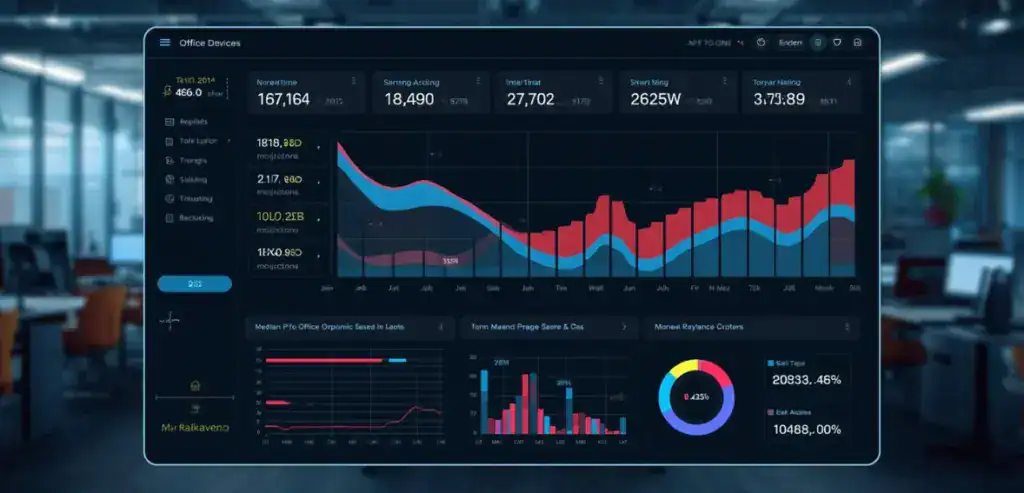
Technology integration serves as the fundamental element that supports managing office properties hybridly. The lack of proper tools creates difficulties in handling a change to manage resources and provide uniform service to customers.
The hybrid office system requires a range of digital solutions to operate effectively. The system consists of workplace management systems, IoT devices, and collaboration platforms. These components work together to provide organizations with operational control of their office activities. Key technologies commonly used in hybrid workplace real estate include:
- Desk and room booking systems for managing shared spaces.
- Occupancy sensors for tracking real-time usage.
- Workplace analytics platforms for data-driven insights.
- Integrated communication tools for hybrid collaboration.
The technologies achieve higher efficiency because they automate standard work activities, which decreases the requirement for human workers.
The automated scheduling systems enable organizations to achieve maximum meeting room usage while eliminating all scheduling conflicts. Organizations consider compatibility as a key factor during the implementation of their technology solution. The systems need to work together seamlessly to deliver a single user experience.
The existence of multiple tools results in operational difficulties because it creates uncertainty among users. Organizations treat security and privacy as essential components of their operations.
They ensure that all workplace system data is handled with proper data-handling methods. Technology projects achieve success through user adoption. Employees require tools that are simple to use and deliver actual advantages.
Future Trends Shaping Managing Office Properties
The future of managing office properties depends on two factors, which include evolving work patterns and technological advancements. Industries need to track emerging trends to stay competitive in their operations. The primary trend of hybrid office management serves as the system’s future development path. The transformation leads to modifications in design, usage, and investment methods.
The trend toward experience-driven real estate development has become increasingly important. Office spaces need to provide additional value through their amenities and services, which enhance employee contentment beyond their essential operations. The current developments match the changes in tenant experience and office expectations that occurred after that period.
Sustainability has become the main focus area for developing hybrid workplaces in real estate. Companies operate their activities through three major functions, which involve enhancing energy efficiency, minimizing carbon emissions, and developing environmentally friendly building solutions. The current programs enable organizations to achieve sustainability goals while decreasing their operational expenses.
Organizations will maintain their focus on data and analytics to enable users to gain comprehensive knowledge of office space usage and worker activities. Future office strategies will maintain their flexible nature as a fundamental aspect.
Organizations develop their future-proofed managing office properties strategies through understanding these trends. The proactive business strategy enables this approach to help companies prosper when they face exceptional challenges.
Conclusion
Organizations need to change their fundamental thinking and operational approaches to operate their office spaces in the hybrid work environment. Businesses need to adopt flexible operations that allow them to transition away from their current inflexible operational systems. The present-day workforce requirements of real estate assets need to undergo this transformation.
Organizations face both advantages and disadvantages from managing office properties hybridly. The system enables better space management by creating challenges for space planning. Through technology and analytics, organizations achieve visibility into office space utilization, enabling them to make informed decisions.
Tenant experience office strategies are becoming increasingly important in differentiating properties. The company boosts its value through high-quality customer experiences, which lead to higher customer satisfaction and better customer retention rates. Organizations need to balance their operational costs with their requirements to fulfill employee needs.
Managing office properties remains strategically important because workplaces continue to develop. Organizations that approach it thoughtfully can unlock significant value and build resilient, future-ready environments.
FAQs
What does managing office properties mean in a hybrid work environment?
The process of managing office properties in hybrid environments requires office space optimization for multiple workstyles. The project comprises three main components: design modifications, data utilization, and technology application.
How does hybrid office management improve office space utilization?
The implementation of a hybrid office management system leverages data and adaptable design methods to reduce the amount of unoccupied space. The system empowers organizations to modify their office space according to real-time usage patterns.
What is a flexible workspace strategy?
The flexible workspace strategy creates office spaces that enable people to work in different ways through their design and space-sharing capabilities. The system uses hot desking, modular furniture, and activity-based zones. The flexible workspace solution enables different work styles while boosting operational performance.
Why is tenant experience important in hybrid workplace real estate?
Tenant experience influences satisfaction, retention, and property value. Users in hybrid workplaces demand both effortless access and premium services. Improving experience quality helps properties maintain their market competitiveness while keeping their appeal to potential customers.
What technologies support managing office properties effectively?
The system relies on three core technologies: occupancy sensors, booking systems, and analytics platforms. It delivers usage data that helps organizations boost their operational performance and enhance decision-making processes.