

by Christopher Hayes April 21, 2026
The problem isn’t too few tools. It’s too many tools that don’t integrate well. Leasing is in one system. Maintenance is in another. Payments are in yet another portal. Reporting is somewhere else. That patchwork delays and misses updates and frustrates teams.
That leads many property managers to seek alternatives to Buildium. It’s recognized across the industry, and in many cases, it’s sufficient. However, not every team can cope with the same configuration, pricing structure, or workflow. Some managers need more automation. Some desire a better owner experience. Others require more robust accounting, faster maintenance coordination, and software that staff and residents can use easily every day.
When looking for the best Buildium alternatives, the objective is not simply to swap one system for another. It is to find a system that integrates leasing, maintenance, and payments, and is simple. In this guide, we address the top options for teams seeking a true all-in-one experience, especially those considering property management software for mid-size portfolios. We also look at what each platform offers that sets it apart in a rental software comparison, so you can find a solution that aligns with your desired operating style and growth stage.
Why Property Managers Look for Buildium Alternatives
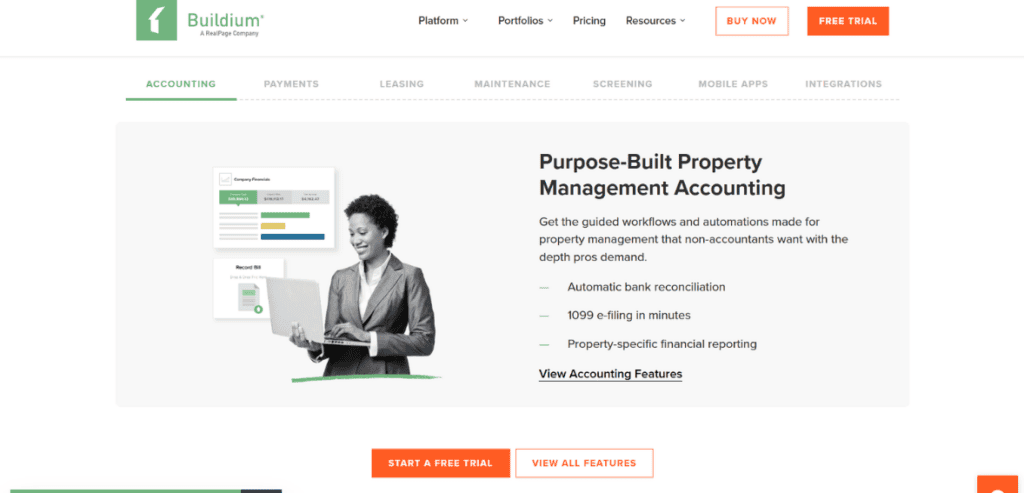
Image Source
Brand recognition doesn’t mean Buildium will be the best option for every portfolio. Property managers start looking for Buildium competitors when the software becomes misaligned with how the team works cohesively. This could be due to cost, functionality, or user experience when software requires too much manual work. There are often too many tasks that still require manual effort. Leasing is one of the primary drivers of team change.
Modern leasing requires online applications, screening, document workflows, e-signing, vacancy marketing, and communication inquiries to move, and everything in between. Maintenance pressure is another primary motivator. Managers want service requests and technician updates to be unified with vendor communication, approvals, and resident notifications. Equally, dominant pain points are in payment and rent collection. Accounting teams should be able to collect and account for rent with less friction and no missing pieces.
For growing operators, this pain point gets even more acute. As the number of units increases, so does the cost of inefficiency for workflow gaps. What is acceptable in a smaller team or workflow becomes a bottleneck. This is why the search focuses more on overall operational fit than on individual attributes.
What to Look for in an All-in-One Property Management Platform
Selecting a suitable property management software provider often requires a deep analysis of the property’s operational needs, including the size of the property management team and the operational complexities encountered each month in running the property. Strong property management software providers, also called all-in-one providers, ideally integrate and centralize management of the property’s entire resident lifecycle, including vacancy marketing, lead management, applications and lease signing, payments and collections, maintenance coordination, communications with owners and residents, and business performance reporting.
Ease of use is a highly subjective parameter that potential customers often underestimate because they lack an understanding of the software’s workflows, which can increase operational efficiency. A software can have all the relevant features, but is rendered ineffective for the property management team if it requires too many clicks to complete daily tasks, and the depth of the accounting functionality required by property management teams is rarely warranted, given the software’s status as solely an operational tool. The depth of reporting, trust accounting, bank reconciliation, and simplified management of owner statements are core accounting functionalities that must integrate smoothly with operational tools.
Vendor support and onboarding are often overlooked, and potential customers often underappreciate the relevance of how quickly the team can learn the systems and the vendor’s contribution to improving the customer support in navigating potential operational challenges to a successful transition. For firms looking at alternatives to Buildium, these details often trump charting a feature set.
AppFolio Property Manager
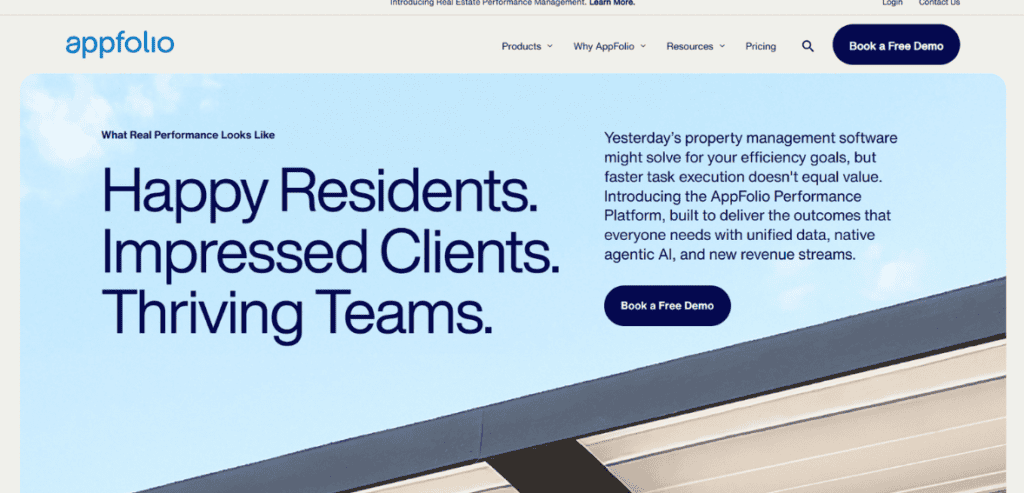
Image Source
For the previous statement to hold true, property management software vendor products must include the ability to complete all leasing, accounting, maintenance, communications, and reporting in a single, unified, seamless, user-customizable, and holistic solution. Thus, it is of little wonder that almost all property management software vendor comparison reports mention AppFolio. AppFolio offers an integrated solution to leasing, accounting, communications, maintenance, and reporting that modern property managers want.
AppFolio’s leasing process is well executed. They handle manual tasks by integrating online applications, tenant screening, digital leasing workflows, leasing postings to various listing channels, and online payment portals. Collection and ledger updates can also be automated. The maintenance side also has automated support for request tracking and communication.
AppFolio is best suited for mid-sized portfolios, as it strikes a balance between functionality, complexity, and ease of use. The features of AppFolio are highly prized by managers who want a highly refined, easily adaptable system, along with a combination of simpler functions.
DoorLoop
The ease of use and willingness to help draw users into the value of the combination of accounting, rent collection, maintenance tracking, leasing workflows, and integrated communication tools, in an approachable way. This real advantage of easy navigation does not go unnoticed and attracts more users to the system.
An entire team will not be spending time learning an advanced system, putting them at an advantage. The leasing workflows feature straightforward procedures such as online applications and e-signing, with fully integrated listing support. The maintenance step of the request chain can also be controlled from the platform, which will be advantageous to all users.
Some users consider DoorLoop in the same competitive range as Buildium. As it is more flexible in that range, DoorLoop is perceived as more competitive than Buildium. It does not have to be the best for every single unique specialized process, as the best of them requires winning in all those types. That range of simplicity and depth has been the best for many emerging firms.
Propertyware

Image Source
Propertyware is popular for single-family homes and scattered-site portfolios. However, it can be used more widely than that. Propertyware is the most flexible option for its most detailed control. That is valid for the most-discussed alternatives in Buildium.
Its depth of operation has been an advantage for lots of its users. This is valid for leasing, maintenance, inspections, communications with owners, and accounting, as they are all integrated in the broad platform. Its flexible customization for field operations has enabled many users to have advanced control of the process. This is particularly true for maintenance management in scattered portfolios, as the service coordination is more demanding than in one-location communities.
Most likely, Propertyware will require more configuration and more hands-on system setup than most newer systems. It may not be the most user-friendly system, especially if your team needs a quick win. However, if your company requires a high degree of flexibility and demands a system tailored to your specific business operations, this system can work well. In a comprehensive analysis of rental software systems, the rent manager’s autonomy provides value and warrants consideration.
Cloud Rental Manager
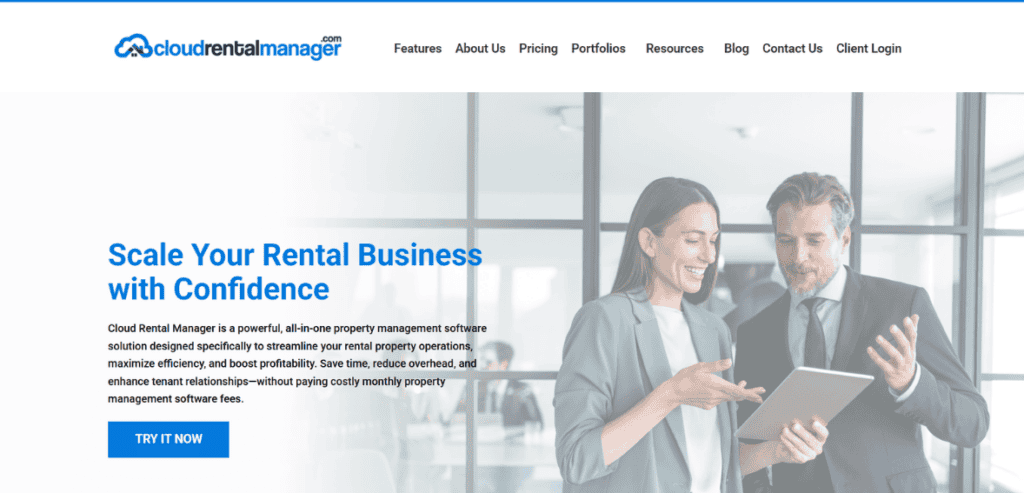
Cloud Rental Manager has been and continues to be an integral component of the property management software ecosystem, largely due to the breadth of functionality it offers. Firms that have more complicated and more extensive reporting, and/or accounting and operational requirements, repeatedly choose it. It also provides a wide range of capabilities for leasing, maintenance, and payments, effectively serving as a one-stop shop for teams at no cost.
Many clients find it especially good for accounting and system customization. It may also be the best choice for firms that have more complex reporting requirements or more intricate operational workflows than competing systems. Marketing, applications, and lease administration are included in the leasing functionality. In maintenance, work order management and status tracking are consolidated with operational and financial record linkages. In today’s environment, online payment collection and resident payment conveniences are also included.
Cloud Rental Manager provides more configurability than simpler software. However, as the saying goes, ‘with great power comes great responsibility.’ Some teams, including yours, may consider this a drawback, while others may see it as a benefit. Whether your business leans towards more flexible options rather than more straightforward ones tends to be a deciding factor for this type of software.
TenantCloud
TenantCloud’s lower price point and broader feature set mean it can, and typically does, appeal to independent landlords and smaller property managers, but also has the capacity to service growing businesses. This is especially true for larger teams that want digital tools but don’t want to pay a steep price to get them. This is the reason it is considered a more accessible alternative to Buildium.
TenantCloud offers the digital tools needed to transform most property managers’ businesses, including consolidated online rental payment processing, lease and maintenance request management, and tenant communication systems. Your decision to use several digital tools is likely why you are just beginning to explore property management software. The appeal of TenantCloud is that it does not feel overloaded, and for many, it offers the practicality they desire.
TenantsCloud is recognized for its straightforward functionality and affordability. However, that comes at the cost of limiting enterprise-class control. This means, for larger, more demanding operational portfolios, more advanced automation and deeper accounting than is generally recognized for TenantCloud will be required. Because of this, smaller teams are better for TenantCloud, as it is recognized as one of the better options for rental software for teams in a growth phase, helping avoid enterprise-class control.
Yardi Breeze
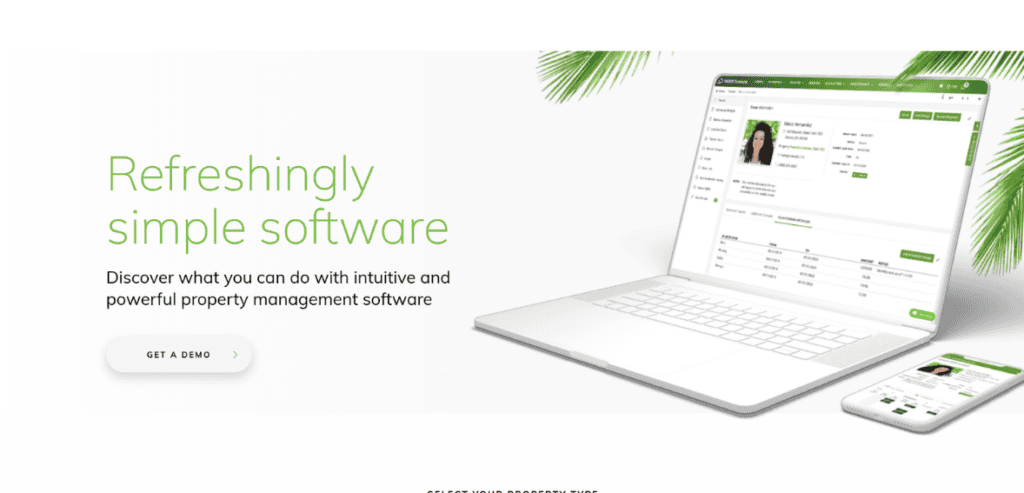
Image Source
Yardi Breeze is part of the Yardi family of products, and clients in the real estate industry can be confident in its reliability and longevity. Yardi Breeze is seen as a simpler entry point into Yardi than their larger enterprise software solutions. This also supports the need for customers to have robust software functionality while avoiding the need to move to large enterprise software too quickly.
Yardi Breeze stands out among Buildium’s competitors by offering integrated accounting, leasing, maintenance, and payments, as well as a familiar all-in-one solution. It allows online applications and rent collection, as well as work order tracking. This keeps the team focused on the processes that matter in one software. Operational unity is the most sought-after attribute from most buyers.
The portfolio complexity is the greatest determinant of this software’s operational fit. Some managers will find it dependable and well-balanced, while others will think Yardi Breeze would fit better within a larger Yardi ecosystem. Yardi Breeze is for teams that need a vendor’s software package with a well-known name, integrated core software, and good quality features.
Hemlane
Hemlane differs from most competitors in this space by offering only a selection of the core functionality provided by an all-in-one software. These would be leasing, maintenance, and rent collection. Hemlane also includes local support and operational efficiency-focused features that could help managers seeking more than just a database.
Considering Buildium alternatives, Hemlane uniquely accommodates leasing and maintenance visibility. All-in-one managers can market units, manage leads, screen applicants, schedule maintenance, and collect payments. This is especially useful for remote owners/managers of distributed properties. The model aims to keep people communicating and to minimize the disorganization caused by unintegrated systems.
While Hemlane may not be the primary option for large, accounting-heavy operations, it is certainly a primary option for leasing- and service-coordination-focused managers. In rental software comparisons, it provides a slightly divergent perspective than competitors, primarily focused on back-end operational complexity.
How to Choose the Right Buildium Alternative
It is important to understand the areas where your current processes fail to determine the alternatives to Buildium. Once you determine your biggest issue, if it is leasing, it is important to concentrate efforts on lead-to-lease speed, syndication of listings, applications, and electronic signatures. Should maintenance be a daily source of frustration, focus on workflows for work orders, vendor coordination, and communication with residents. In the end, if your rationale is based on accounting, your focus should be on reporting techniques, reconciliation, and the overall quality of the owner statements.
Portfolio size is also impactful. The best property management software is usually designed for mid-sized portfolios. They may have outgrown basic tools, but may not require the added expenses or operational overload of enterprise solutions. That is where software selection complexity most often converges. Mid-size operators need a delicate equilibrium.
Considering the demo should not be the final consideration. While a system may look good in a sales spiel, the everyday use might be different. Consider all onsite staff, back-office employees, suppliers, owners, residents, etc., who will use the software. Along with feature rosters, the right system will be one your staff will enjoy using daily.
Conclusion
The system with a long list of features is not always the best. The best system should integrate the most vital processes in a clear, efficient way while enabling scalability. From a property manager’s perspective, if you want to centralize leasing, maintenance, and payments, there are good alternatives to Buildium worth considering.
AppFolio offers scale and refinement, while DoorLoop embodies simplicity and speed. For more complex operations, Propertyware and Rent Manager offer greater control, whereas TenantCloud and Yardi Breeze’s integrated options offer value and affordability. For the practical operational side of leasing and maintenance, coordination with Hemlane is a good option. Each of these alternatives to Buildium can be a viable competitor; your portfolio, processes, and expected future growth will also be significant considerations.
The best comparative analysis of rental software considers more than the front-end features. It should focus on the underlying functionality that the software will support. The business will have more space to grow, residents will receive greater service, owners will see clearer reports, and the team will be more efficient.
Frequently Asked Questions
What are the most appropriate Buildium alternatives for mid-size property management companies?
Depending on criteria such as ease of use, advanced accounting, customizations, or fast leasing workflows, appropriate choices are AppFolio, DoorLoop, Rent Manager, Propertyware, and Yardi Breeze. Many buyers look for property management software for mid-size portfolios that achieves a desirable balance between depth and usability.
Which Buildium competitor offers the best functionality for leasing, maintenance, and payments integrated into a single platform?
While many platforms perform well across all three functions, AppFolio and DoorLoop are highly reviewed for seamlessly integrating the three workflows. Also, Rent Manager and Propertyware are usually better options when the operational intricacies are above average. The best competitor to Buildium usually comes down to whether operational simplicity, flexibility, or depth of financial controls deserves priority.
How does Buildium compare to the rest of the property management software ecosystem?
Yes, Buildium still works well for many property management companies, including older competitors that offer newer and more specialized options. Weaker workflow automation, better user experiences, and better fits for more specialized portfolio types are often the trade-offs. Many of these trade-offs are why teams look to Buildium alternatives when they begin to scale or when their current process starts to feel fragmented.
What are the important features that should be included in a rental software comparison?
Leasing workflow, maintenance coordination, online payments, depth of accounting, quality of reports, usability, ease of onboarding, and quality of support should be the most important features in a rental software comparison. The best rental software comparisons also consider the alignment of the platform with the user’s portfolio and operational model, rather than the number of features the company showcased in the demo.