
by Christopher Hayes May 26, 2026
The property management industry is evolving rapidly, and software has become the backbone of efficient rental operations. From tenant communication and rent collection to maintenance coordination and accounting automation, property managers now depend heavily on technology to streamline daily tasks and scale their businesses effectively. While DoorLoop has established itself as a recognizable name in the property management software space, many landlords and property managers are now actively seeking stronger, more flexible solutions that better meet the demands of growing portfolios.
The rising interest in DoorLoop alternatives reflects a broader shift in the industry where property managers want deeper automation, improved reporting, better integrations, and pricing structures that support long-term expansion rather than limiting it.
Small to mid-sized property management companies face specific challenges when choosing property management software. They look for a solution that is versatile enough to handle different operational workloads and cost-effective. In entry-level software, user licenses can scale; however, it does not address the issues a company may face with finances, maintenance, and stakeholder management. For this reason, a number of companies are now looking to compete in the rapidly growing budget property management systems market. This means that DoorLoop’s competitors are likely to make their first moves to improve their key operational focus areas. Today, selecting software is no longer simply about finding a solution that enables companies to manage and collect dues and rent online or replace Excel. Instead, it is about having a tool that will provide the company with its core operational structure in support of company growth, stakeholder satisfaction, and the attainment of stable, sustained gains over the long run.
Why Property Managers Are Searching for DoorLoop Alternatives
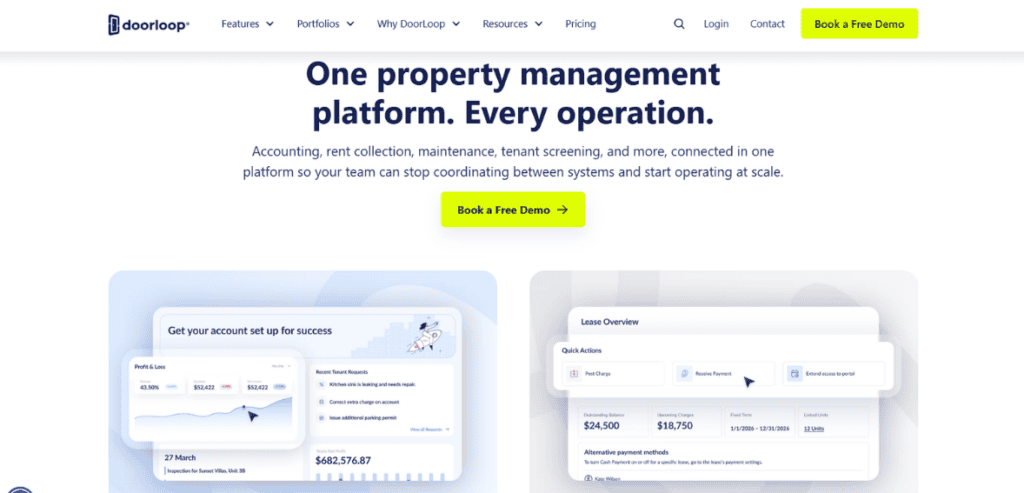
Image Source
Features like a simple interface and beginner-friendly usability contribute to DoorLoop’s ability to attract beginner property managers. For larger businesses, feature scalability becomes an issue. Users have differing needs, such as detailed transactions for their accounting systems, reporting integrated directly to a banking platform, or a third-party vendor for maintenance. Inevitably, as a business grows and expands the number of units and services that it manages, DoorLoop’s pricing structures become a concern.
Technology for property management has been changing rapidly, and much of that change has occurred in payment collection and the automation of daily operations. Property managers are seeking systems that relieve their staff of repetitive tasks, enhance communication and tenant retention, provide robust financial analytics, and integrate easily via a mobile channel. The use of AI and predictive analytics in property management systems helps forecast tenant turnover and assess the likelihood of maintenance and other operational issues, streamlining operations. Understandably, property management teams look for these features and carefully compare DoorLoop alternatives to select the best option.
Another factor influencing the choice of software is its scalability. Many property managers start out with a smaller number of tenants, say 50, but a few years later, they can grow to 500 or even 5,000 tenants. If such rapid growth occurs, changing software can cause significant disruption for staff and wasted management time. Because of this, property managers’ interest has developed in the more mature platforms that provide advanced automation, sophisticated financial management, and customized workflows to accommodate the growth associated with property management.
Cloud Rental Manager
Cloud Rental Manager is a free alternative to DoorLoop: the full platform is included with no monthly software fees and no long-term contracts. It covers online rent collection by credit card, debit card or ACH through Host Merchant Services, online applications with background and credit checks, lease management with digital signatures, maintenance requests and work orders, and accounting and owner reporting with QuickBooks sync, with admin, staff, tenant and vendor apps on iOS and Android. For a wider side-by-side, see our comparison of the top 10 property management software options.
Buildium
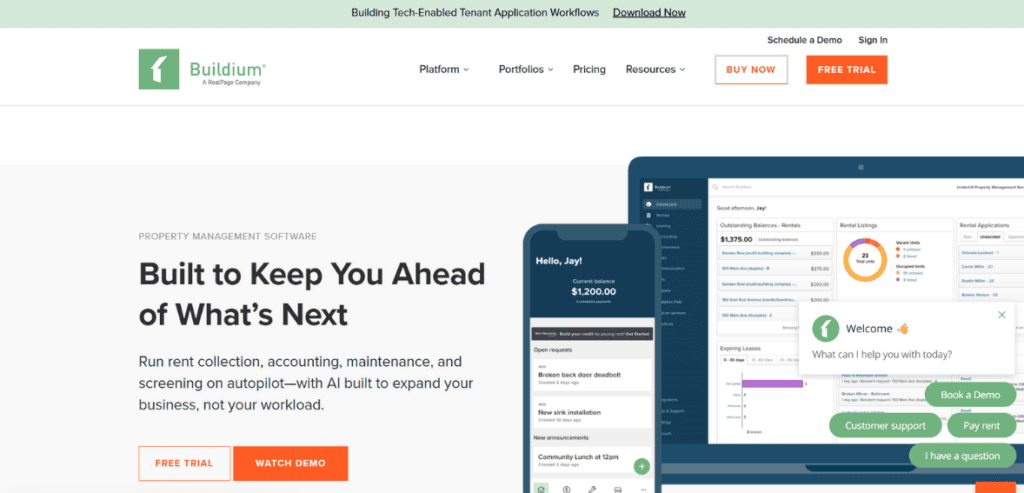
Buildium has consistently ranked among the top property management software platforms for growing residential portfolios. The platform is especially popular with small- to mid-sized property management companies that need reliable accounting systems and operational tools without stepping into the expensive territory of enterprise software. One of Buildium’s biggest advantages is its balance between usability and functionality. Many property managers appreciate that the platform remains relatively easy to learn while still offering powerful features that support large portfolios.
Buildium is a major player in financial management and reporting. Based on user feedback and reviews, financial reporting, owner statements, expenditure and budgeting tools, and tools that aid in bank reconciliations are the best available on the market for their capabilities in these areas. A few of these features can help relieve property managers with multiple investment and owner properties from repetitive tasks. The solution even allows property managers to view property financials and, by automating accounting tasks, provides greater transparency and reduces workload.
In addition to the financial features, Buildium offers online rent payments, lease management and tracking, tenant communication, maintenance management, and tenant screening. Buildium brings all the separate features into a single solution and helps property managers with almost every task. Buildium’s design is flexible and scalable, a big plus for property management firms anticipating growth. For these reasons, Buildium’s financial solutions are excellent, reliable, and more efficient than those of other platforms in this space.
AppFolio Property Manager
AppFolio has superior property management compared to competitors for multiple reasons. AppFolio enables property management that is almost entirely hassle-free for the user when the business portfolio is highly active. Fast-growing property management companies value the technology AppFolio employs, which quickly simplifies administration. Property management tasks such as communication and maintenance are easily handled by AppFolio’s extensive automation.
AppFolio uses machine learning and AI tools to automate processes and improve the app’s efficiency. While automation is just starting to be recognized in the property management industry as a helpful aspect of property management software, AppFolio is leading the charge. Property management firms using AppFolio no longer need to employ as many workers and can provide higher-quality, faster services.
User experience is a big reason AppFolio is one of the top alternatives to DoorLoop. Mobility, ease of use, and simplicity make the AppFolio dashboard a great choice for property managers who wish to oversee operational activities from anywhere. Owners benefit from this as well, thanks to improved, real-time, and transparent operational and fiscal reporting. AppFolio is priced higher than most competitors; however, because of its positive impact on property management firms’ ability to improve and grow their businesses over time, they are willing to pay the price.
Rent Manager
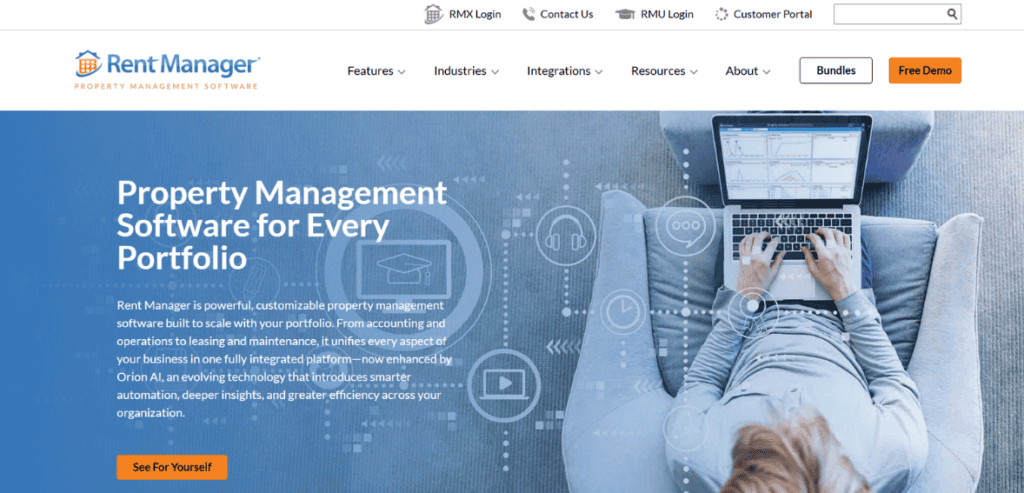
Rent Manager stands out to property managers who appreciate customizable daily operations. Simple apps don’t stand a chance against Rent Manager’s client-driven flexibility. Businesses formulate their rules, create systems, and tweak the reports according to their preferences. For companies with a diversified/complex portfolio, especially a mixed-use or commercial portfolio, this software is essential.
Rent Manager is considered one of the better alternatives to DoorLoop. Without a doubt, flexibility plays the most crucial role in the software. Property management firms grow by introducing their distinctive workflows, and Rent Manager accommodates such uniqueness. This flexibility is reflected when dealing with financial reports, maintenance, CRM, and communication.
With accounting, the flexibility is outstanding. Rent Manager provides customizable financial reports, detailed financials, and complex owner accounting. This is perfect for growing property management businesses. The mobile app enables field staff to manage tenant communications, inspections, and maintenance requests while out of the office. While it may take longer to learn than other, simpler options, Rent Manager offers incredible value for businesses with greater complexity.
TenantCloud
For small property management businesses and individual landlords, TenantCloud is affordable, feature-rich, and one of the best platforms on the market. With the continued increase of operating costs, property managers want more powerful software that isn’t expensive. TenantCloud provides this by giving several tiered plans that let property management businesses scale with their needs.
The platform includes online rent collection, maintenance request management, tenant screening, digital lease management, and communication tools that simplify everyday property management tasks. One of the key strengths of TenantCloud is its accessibility. The software is cloud-based, mobile-friendly, and relatively easy to implement, with minimal onboarding requirements and no extensive technical expertise required.
TenantCloud also emphasizes automation in ways that appeal to smaller landlords who may not have dedicated administrative staff. Automated reminders, online applications, payment tracking, and centralized tenant communication can significantly reduce the time spent on repetitive management tasks. For property managers seeking cost-effective DoorLoop alternatives, TenantCloud remains one of the strongest options available.
Propertyware
Propertyware targets single-family rental management, which can be very convenient for companies in that space. Property management platforms are usually generalists, but Propertyware focuses on the challenges of managing large single-family rental portfolios. The software provides better workflow adaptability and alignment, and closely fits the operational needs of companies within that space.
Propertyware provides users with an advanced toolkit for managing large-scale operations, including highly customizable dashboards, advanced accounting, maintenance management, and owner communication tools. This capability is highly valued by property managers of large single-family portfolios as Propertyware can automate inspections, manage maintenance requests, and produce detailed financial reports.
This platform supports operational growth and enables scalable expansion of financial data management, which is increasingly important for companies anticipating growth. Considering the multitude of DoorLoop alternatives, Propertyware is among the most popular recommendations for companies needing extensive, highly customizable solutions for overall operational management.
Yardi Breeze
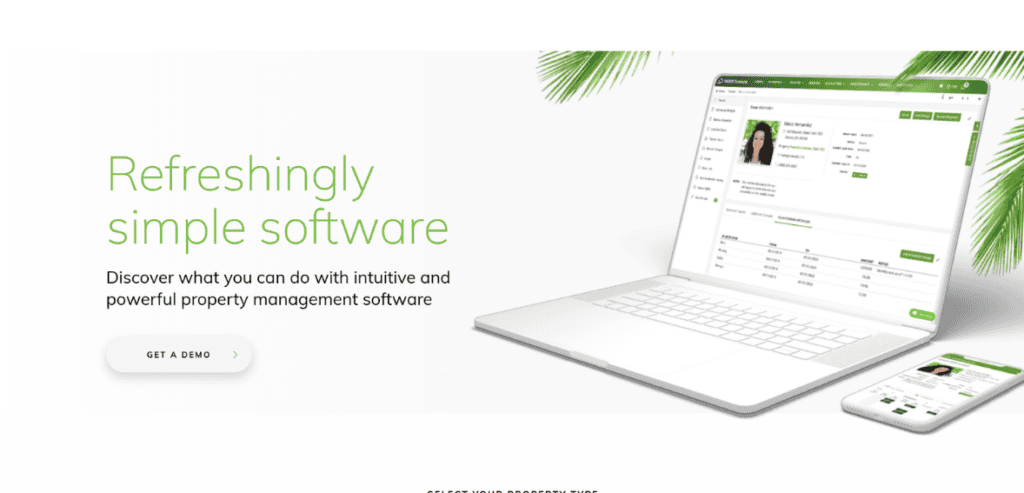
Breeze is likely a more adaptable module within the Yardi Ecosystem, particularly for small- to medium-sized property management companies that seek enterprise-class reliability and flexibility without the burden of larger systems. Yardi Breeze is a fully integrated software solution that includes accounting, maintenance, online payments, leasing, and workflow tools that property management firms will find very useful.
This software solution scales with your business. If your business is growing beyond the limits of Yardi Breeze, you can then access more of Yardi’s systems, which helps establish Yardi’s focus on integrated workflow systems for growing property management companies.
Yardi Breeze also prioritizes financial reliability and reporting accuracy. Property managers responsible for handling owner funds and trust accounting often appreciate the platform’s robust accounting framework and its established reputation in the real estate industry. As more businesses prioritize future scalability and financial oversight, Yardi Breeze continues to rank among the most respected DoorLoop alternatives.
Conclusion
The property management software market has become far more competitive and sophisticated. While DoorLoop continues to serve many property managers effectively, growing portfolios often require deeper automation, stronger accounting systems, improved customization, and more scalable operational infrastructure. This has led many businesses to explore alternatives that better align with long-term growth objectives and evolving operational demands.
Platforms like Buildium, AppFolio, Rent Manager, TenantCloud, Propertyware, and Yardi Breeze each offer distinct advantages depending on portfolio size, management style, and business priorities. Some platforms focus on affordability and simplicity, while others emphasize advanced automation, customization, or enterprise-grade financial reporting. The best choice ultimately depends on the operational challenges property managers need to address today while preparing for future expansion.
As technology continues transforming the real estate industry, selecting the right property management platform has become one of the most important strategic decisions property managers can make. Businesses that invest in scalable, efficient, and automation-focused software solutions will be better positioned to improve tenant experiences, increase operational efficiency, and compete successfully in an increasingly digital property management environment.
Frequently Asked Questions
What are the best DoorLoop alternatives?
Some of the best DoorLoop alternatives include Buildium, AppFolio, Rent Manager, TenantCloud, Propertyware, and Yardi Breeze. Each platform serves different portfolio sizes and operational needs.
Which property management software is best for growing portfolios?
Buildium, AppFolio, and Rent Manager are excellent choices for growing portfolios because they provide advanced accounting tools, automation features, and scalable operational infrastructure.
Is DoorLoop suitable for small property managers?
DoorLoop can work well for smaller property managers because of its simplicity and user-friendly design. However, some users eventually seek alternatives with deeper accounting systems and broader customization capabilities.
What should property managers look for in software?
Property managers should prioritize automation, accounting reliability, mobile accessibility, tenant communication tools, reporting capabilities, scalability, and integration flexibility when selecting property management software.