
by Christopher Hayes May 21, 2026
Property management software has become one of the most important investments for landlords, property investors, and growing real estate businesses today. As the rental market becomes increasingly competitive and operational efficiency is essential for profitability, many property managers are carefully comparing platforms that promise automation, accounting tools, tenant communication systems, maintenance workflows, and financial reporting in a single dashboard. However, one of the biggest concerns that continues to influence purchasing decisions is pricing transparency, especially when comparing platforms that charge separately for premium features against those that offer bundled pricing models.
This is where the debate concerning Buildium add-on costs versus alternatives has become increasingly relevant. Many landlords want affordable software options that can scale with them. While Buildium is one of the most well-known property management software options, users are starting to look at their competitors like Cloud Rental Manager, which offers more inclusive pricing and can be more cost-effective than Buildium as additional paid features continue to expand.
It is critical to understand the true costs of software to maintain predictable, manageable operational costs. Subscription fatigue is becoming common among many small- to medium-sized businesses in the US. In this analysis, we will compare Buildium and the Cloud Rental Manager add-on in terms of inclusive costs to determine which offers better value, flexibility, and operational efficiency.
Buildium
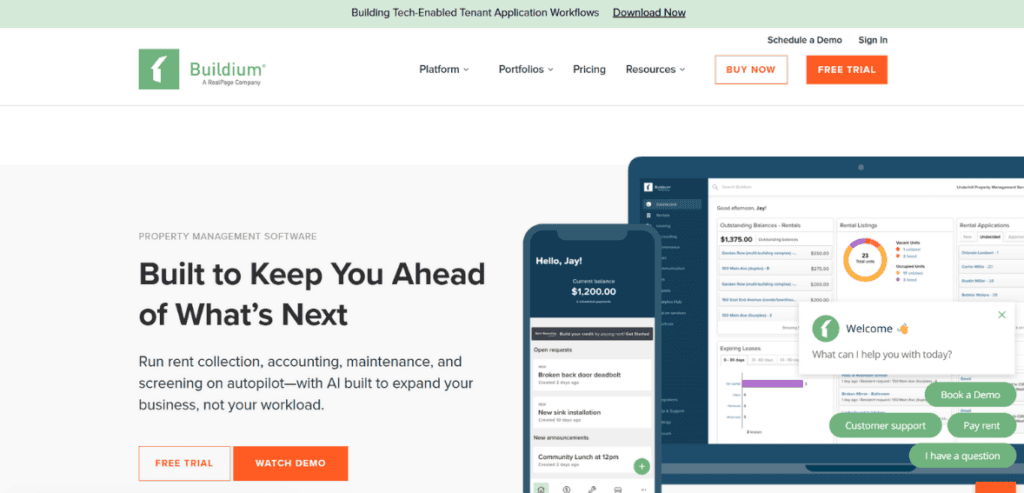
Image Source
Buildium is a property management solution for residential landlords and property managers. Users can leverage the platform’s accounting tools, tenant portals, online rent collection, maintenance coordination, leasing workflows, and various built-in reports. This solution is frequently recommended for medium-sized or larger property management companies that require more specialized operational management.
Users report limitations because Buildium’s core subscription lacks some advanced property management capabilities, and even fewer are available. Many of these advanced offerings can only be accessed through optional upgrades, transaction fees, or premium service tiers. These limitations have contributed to an influx of searches among landlords for “Buildium add-on cost vs alternative” over the past year, as they seek a property management solution while attempting to pare down their costs.
Buildium currently advertises a variety of pricing options based on portfolio size, and users are often frustrated to discover that the low price advertised at the base subscription level is misleading and does not reflect the total investment required to maximize the platform’s use. Depending on the plan and usage, costs may apply for premium tenant screening, electronic lease signing, reporting, maintenance contact center services, and various business communication tools.
For property managers with larger portfolios, the total cost of ownership for additional add-ons may be within a reasonable range, as the operational efficiencies gained can outweigh the costs. However, for smaller property managers, landlords, and independent investors, the additional costs of multiple add-ons can be significant, especially if a fee is charged for each property management function.
Cloud Rental Manager

Cloud Rental Manager differs from many software providers that build in gaps into their products and charge for different modules. Budgeting and unexpected costs are less of a concern now that there is an all-in-one platform. Independent landlords and small- to medium-sized property managers are especially attracted to a product that provides predictable costs and feature-rich functionality without an upselling model.
Cloud Rental Manager provides pricing that is a breath of fresh air to an increasingly segmented world of software products. Many essential operational services are included in the standard pricing, which means the company charges based on ease of use. For potential customers evaluating long-term software costs, this is very important.
The all-inclusive pricing model is a direct response to the Buildium add-on cost-versus-alternative-platform challenge, and its introduction signals a growing trend in the market. The new software model shows a frustrating departure from transactional service costs. This model provides a new service that property managers can use to estimate costs and better align their monthly service costs with their business scaling goals.
Additionally, Cloud Rental Manager values and prioritizes intuitive software, fully integrated accounting systems, automated tenant management, online rent collection, maintenance request tracking, vacancy monitoring and tracking, and digital document storage. All of this is accomplished without constricting customers with absurd pricing structures. For landlords managing small portfolios, this model provides professional management tools and significant financial rewards.
The Real Difference Between Add-On Pricing and All-Inclusive Pricing
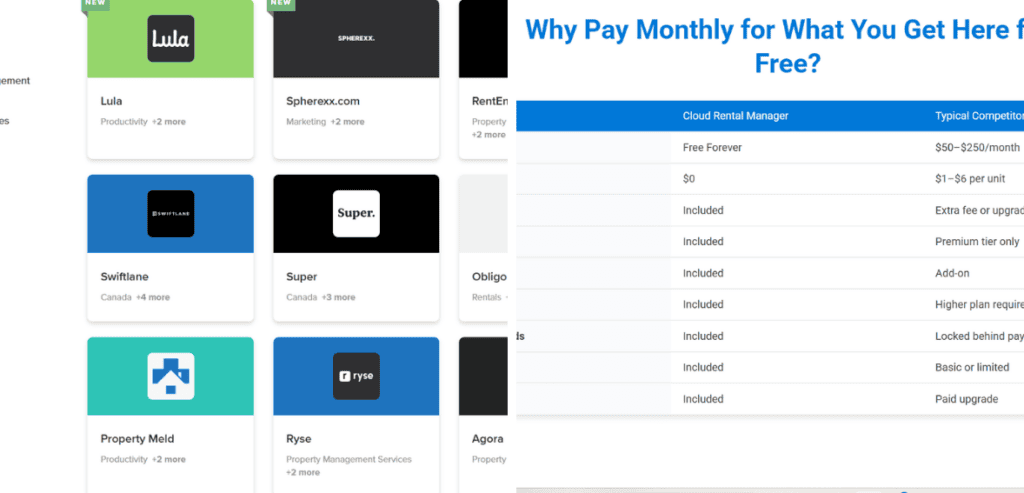
The primary distinction between Buildium and Cloud Rental Manager is not necessarily functionality alone, but rather how each platform structures access to those features. This difference directly impacts budgeting, scalability, and long-term operational planning.
Buildium’s pricing structure is tiered, with advanced features charged separately. This structure can give the impression of benefits, as users only pay for features they use. However, the negative effects become apparent as portfolios grow and as operations become more complex. What may look like affordable entry-level pricing can quickly become significantly more expensive due to the higher costs of required premium features and services.
Unlike the Buildium pricing structure, Cloud Rental Manager offers a subscription package that bundles the essential core features of property management. At the very least, this pricing model reduces most of the ambiguity around the costs landlords will incur in the future, as they will gain clarity and eventually know what the costs will be as they need to grow the property management software.
Although the choice becomes, for the greater good of all property owners, the philosophy of spending. This includes whether to opt for the modular options and features of Buildium, or whether to choose the value offering of the all-in-one property management platform and software, whose costs will be lower and whose offerings will be more predictable.
Why the “Buildium Add-On Cost vs Alternative” Debate Matters
International interest in Buildium add-on costs versus other platforms is becoming apparent. There are economic reasons for this interest that pertain to landlords in the United States. Increasing costs for maintenance, taxes, insurance, and financing have compelled landlords to analyze all business expenses more rigorously.
Software subscriptions are not as minor as they once were and can significantly affect landlords who manage fewer units. A platform that charges for screening services, e-signatures, communication, payment, and reporting tools can be more costly than anticipated in the long run.
At the same time, operational efficiency remains essential because tenants now expect faster communication, digital payment options, online maintenance requests, automated reminders, and seamless leasing experiences. Property management software must therefore deliver both affordability and modern functionality simultaneously.
This balance explains why many landlords are increasingly exploring alternatives that provide broader feature inclusion without requiring multiple upgrades or separate premium services.
User Experience and Operational Simplicity

One potentially harmful impact of pricing complexity is often overlooked when evaluating property management software. When users are repeatedly demanding feature upgrades tied to subscription limits, the software can be both irritating and financially distressing.
Buildium is a decent option, but many users have noted that understanding which optional and service features cost money and what pricing looks like, depending on how extensively the software is used, requires far too much effort.
This is less of a concern for the larger, more professional management companies that have their own accounting systems. However, for independent landlords, this becomes an obstacle because they prefer a clearer, simpler financial management system.
The appeal of Cloud Rental Manager’s simplicity is that users can see how clear the operations are. Early access to an extensive suite of tools, all available through a single pricing layer, makes the onboarding process more seamless and helps alleviate the fatigue of making too many software decisions. This level of simplicity is valuable in the SaaS world, especially for small business owners who juggle multiple responsibilities.
Scalability and Long-Term Value
Scalability concerns should also be taken into account when comparing Buildium add-on costs with those of other platforms. Property management businesses are dynamic, and Software perceived as affordable now can increase costs as portfolios expand.
Buildium is an ideal solution for property management businesses, as the complexity and size of these businesses need to be incorporated. Pricing depends on service levels, and costs can increase as portfolios grow due to the need for accounting and systems integration modules.
Because most features are included as the business grows, Cloud Rental Manager can be a better choice for users who do not require advanced enterprise features. Buildium is more complex, but Cloud Rental Manager is a better solution for property managers working with a budget.
The final choice rests on the company’s size, growth, operational complexity, and budget.
Which Platform Offers Better Value?
With its user-friendly accounting and industry-specific tools, Buildium puts together a solid property management platform. Larger property management companies may justify Buildium’s higher monthly management fees by citing better customization than competitors, as they can manage and customize tasks more professionally.
At the same time, Buildium costs may be hard to justify for smaller companies. For independent landlords and smaller property management companies, Cloud Rental Manager is a very good choice. Cloud Rental Manager allows you to estimate your monthly costs, making budgeting much easier. Cloud Rental Manager’s interface is easy to use and extremely functional.
When considering Buildium’s add-on costs versus other property management platforms, landlords should also examine what they get for the tier they purchase, how much that tier costs, and what other companies offer in their base-tier subscriptions. For many property management companies, Buildium may ultimately be the more cost-effective option, but that becomes clear only after they adopt Cloud Rental Manager’s advanced tools.
Conclusion
The property management software landscape is increasingly shaped by transparency, scalability, and long-term affordability. While Buildium remains a respected and feature-rich platform that supports sophisticated property management operations, its add-on pricing structure can lead to higher cumulative costs for landlords who require multiple premium features.
Cloud Rental Manager’s all-inclusive approach offers a simpler, often more predictable alternative for property managers who want essential tools bundled into a single, consistent pricing model. As operational expenses continue rising across the real estate industry, more landlords are carefully analyzing total software ownership costs rather than relying solely on advertised starting prices.
Ultimately, the best decision depends on the size of your portfolio, your operational priorities, and your tolerance for modular pricing structures. For landlords seeking transparency and cost predictability, the conversation about Buildium add-on costs vs. alternative solutions will likely remain one of the most important software comparisons in the property management industry for years to come.
Frequently Asked Questions
Is Buildium more expensive than Cloud Rental Manager?
Buildium can become more expensive over time, depending on the number of premium features, integrations, and optional services a property manager requires. Cloud Rental Manager typically offers more predictable pricing because many features are included in its standard subscription.
Why are landlords searching for “Buildium add-on cost vs alternative”?
Landlords are increasingly comparing Buildium with alternatives because recurring SaaS expenses have become a major business concern. Many property managers want software with transparent pricing and fewer unexpected upgrade costs.
Is Cloud Rental Manager suitable for large property portfolios?
Cloud Rental Manager works well for many small- to medium-sized property management businesses, especially those prioritizing affordability and ease of use. However, very large enterprise-level operations may still prefer Buildium’s advanced customization and accounting infrastructure.
Which property management software is better for small landlords?
Small landlords often prefer all-inclusive platforms like Cloud Rental Manager because they provide predictable monthly expenses and bundled functionality. Buildium may still be beneficial for users who need advanced enterprise-grade tools and are comfortable with the additional cost of features.