Category Archives: Uncategorized

Preventive Maintenance Planning

Preventive Maintenance Planning: Save Money with Proactive Upkeep 

Property maintenance costs account for the largest share of operational expenses for real estate managers to maintain their properties. Property owners and managers adopt a reactive approach to solve the problems that emerge when HVAC systems malfunction. Preventive maintenance planning operates as an essential requirement for this situation. It combines scheduled equipment inspections with routine maintenance tasks. 

Property managers use a proactive solution to extend their assets and cut down the maintenance cost through better handling of unexpected breakdowns. Implementing structured property management and preventive maintenance programs helps safeguard residential and commercial properties. 

The article dives into the financial advantages of preventive and proactive maintenance through management tools that assist in developing scalable maintenance programs. 

What Is Preventive Maintenance Planning? 

The process of scheduling routine inspections, servicing, minor repairs, and property deterioration is called preventive maintenance planning. It serves as the opposite of reactive maintenance (performing repairs only after a failure). The following preventive maintenance focuses on anticipating problems before they develop into costly emergencies: 

  • HVAC system servicing. 
  • Plumbing inspections. 
  • Roof and gutter repairs. 
  • Electrical system repairs. 
  • Appliances servicing. 
  • Safety systems testing. 

Having a well-defined preventive maintenance checklist and property management plan ensures maintenance at scheduled intervals. Hence, this allows the property manager to detect problems early and keep the systems well-maintained. 

Why Preventive Maintenance Saves Money? 

Preventive maintenance planning is one of its best features because it reduces costs. Unplanned or emergency repairs tend to be more costly than the regular maintenance schedule due to factors such as: 

  • Urgent service call. 
  • Over time, labor costs. 
  • Replacement of large repairs. 
  • Downtime of your property or rental interruptions. 

To the contrary, proactive maintenance helps fix small issues before they become larger ones. 

Cost Comparison Example 

Reactive Approach: 

  • No regular maintenance. 
  • Compressor breaks. 
  • Fully replacing all components of the HVAC system. 
  • Cost $5,000-$10,000 

Preventive Approach

  • Preventive seasonal checks. 
  • Limited parts replaced. 
  • The lifetime of the system increased. 
  • Costs $200-$500 annually. 

Long-term preventive planning reduces overall maintenance costs while increasing property value. 

Benefits of Property Management: Preventive Maintenance 

Implementing well-defined preventive maintenance planning for property management yields operational and financial benefits. 

1. Lower Long-Term Repair Costs 

Regular servicing of mechanical systems and other building elements keeps them in good working order. This reduces the probability of small issues from becoming problems that require extensive repairs to the structure of the building. 

2. Extended Equipment Lifespan 

A properly completed preventive service plan for mechanical systems will last longer than one that is less well-maintained. Preventive maintenance prolongs the use of mechanical systems while reducing the wear on assets, and allowing them to operate more efficiently. 

3. Improved Tenant Satisfaction 

Safe, comfortable, and well-maintained buildings are desirable to tenants. A preventive approach to property maintenance has a greater chance of having problems addressed in priority basis. This leads to: 

  • Higher tenant retention. 
  • Fewer complaints 
  • Lower vacancy rates with no preventive maintenance planning. 

4. Reduced Emergency Maintenance 

Emergency maintenance work is costly and disruptive. Developing a scheduled structure for the completion of maintenance work on rental properties reduces the likelihood of an unexpected failure. It also schedules necessary repairs at a time convenient for both management and the tenant. 

5. Better Property Value Protection 

Real estate is generally considered a long-term investment. If a property is not properly maintained, it will deteriorate quickly. Thus, the property suffers from a reduction in the market value and an increase in the cost required for any renovations. The complete preventive maintenance planning protects the structure and the long-term value of the building. 

Key Components of Preventive Maintenance Planning 

Creating a preventative maintenance plan successfully requires the following basic components.  

  1. Asset Inventory 

The initial step in preventive maintenance planning includes taking inventory of all the essential systems and components of your facility. The essential building systems include: 

  • Heating, ventilating & air conditioning systems 
  • Plumbing 
  • Electrical system 
  • Appliances 
  • Roofs 
  • Elevators (for larger facilities) 
  • Fire life safety equipment 

Maintaining a complete unit of measure and model number, property managers manage servicing and maintaining the systems on time. 

  1. Maintenance Scheduling 

After determining the assets, managers need to set up a schedule for maintaining rental properties. Types of schedules would be as follows: 

Monthly 

  • Security alarm inspections. 
  • Lighting in common areas. 
  • Piping and plumbing fixtures 

Quarterly 

  • Changing out the HVAC filter. 
  • Pest control inspections. 
  • Check for safety equipment. 

Seasonally 

  • HVAC system servicing. 
  • Cleaning gutters. 
  • Inspect the roof. 

Annually 

  • Flush the water heater. 
  • Inspecting the electrical system. 
  • Inspect for structural integrity.  

A structured schedule forms the backbone of preventive maintenance planning. 

Preventive Maintenance Checklists

Checklists make sure that property owners consistently complete the general and ongoing maintenance projects. Some of the typical preventive maintenance checklists for property management include the following items: 

1. HVAC Maintenance 

  • Replace air filters. 
  • Inspect ductwork. 
  • Clean condenser coils. 
  • Test thermostat operation 

2. Plumbing Maintenance 

  • Check for leaks. 
  • Inspect water pressure. 
  • Test shutoff valves. 
  • Inspect water heater performance. 

3. Electrical Maintenance 

  • Inspect wiring connections. 
  • Test circuit breakers. 
  • Check lighting fixtures. 
  • Inspect electrical panels. 

4. Exterior Property Maintenance 

  • Inspect roofing materials. 
  • Clean gutters and drains. 
  • Check siding and exterior paint. 
  • Inspect landscaping and drainage. 

Maintenance Documentation 

Proper documentation supports effective preventive maintenance planning. The property managers need to keep the following records: 

  • History of all maintenance performed. 
  • Service records from all vendors. 
  • All inspection reports have been performed. 
  • Any costs associated with repairs. 
  • Property equipment that needs to be replaced in the future. 

Keeping accurate records can help identify issues that repeat constantly and help determine how to best allocate funds into maintenance budgets. 

Creating a Proactive Property Maintenance Strategy 

The preventative maintenance planning is much broader than just planning repairs. It is establishing a management system for property maintenance, becoming a part of ongoing operational functions. This carries the following steps: 

Step 1: Evaluate the Condition of the Property. 

A thorough inspection is included in this assessment. The inspection will enable you to identify: 

  • Older infrastructure. 
  • Equipment at greatest risk. 
  • Characteristics of having to maintain or repair regularly. 

Knowing the condition of the property allows the property managers to make educated decisions regarding the priority of maintenance completion. 

Step 2: Establish Maintenance Priorities 

All maintenance tasks have varying degrees of urgency. The following guides the property managers in determining the order of priority: 

  • Safety systems. 
  • Critical infrastructure such as HVAC, plumbing, and electrical. 
  • Structural components. 
  • Tenant-facing amenities. 

This methodology allows property managers to focus the majority of their time and energy on the maintenance of critical systems. 

Step 3: Develop Vendor Partnerships 

In order to successfully manage properties and maintain them with preventive maintenance, it requires reliable vendors. Building rapport with vendors that are trusted, to receive the following: 

  • Quality of service that is consistent. 
  • Maintenance costs that remain predictable. 
  • Quicker response times. 

Many property managers establish a long-term service contract for routine inspections and maintenance. 

Step 4: Automate Maintenance Management 

The essential function of technology has grown throughout the process of developing preventive maintenance schedules. Property management software can automate: 

  • Maintenance scheduling. 
  • Tenant maintenance requests. 
  • Vendor coordination. 
  • Inspection tracking.  

The use of automation allows property managers to handle their extensive property holdings with greater efficiency. 

Common Preventive Maintenance Mistakes 

Maintenance programs are designed to succeed, but they fail when the performance is inadequate. The following list shows the main errors that people should not make:  

  • Ignoring Small Repairs 

Small issues, such as minor leaks or cracked seals, develop into major structural problems when people choose to ignore them. The main goal of preventive maintenance planning requires organizations to initially detect small problems.  

  • Inconsistent Maintenance Scheduling 

Failing to perform routine maintenance on equipment leads to system failures. Having a scheduled and regular maintenance program for rental properties ensures the regular care and maintenance of systems. 

  • Lack of Documentation 

Property managers need proper records to track their maintenance work and find maintenance patterns. The process of maintaining facilities needs accurate documentation to achieve optimal results in the future. 

  • Delaying Equipment Replacement 

Preventative maintenance planning helps to extend the life of the equipment, but eventually, it will reach its end of life. The delay in replacing equipment will incur expensive emergency repair costs. 

Technology Tools for Preventive Maintenance 

Modern property management platforms enable organizations to create preventive maintenance planning that is executed through expanded operational capacity. The software provides various features: 

  • Automatic systems for scheduling maintenance. 
  • Checklists are used in conducting inspections. 
  • Systems for tracking maintenance requests. 
  • Systems used to manage vendors. 
  • Reports that detail maintenance expenses. 

Property managers use these functions to operate extensive property collections while reducing their work activities. 

The Long-Term Financial Impact of Preventive Maintenance Planning 

A strong, proactive property maintenance program provides long-term financial savings. Some of these financial savings include: 

  • Lower costs associated with unplanned repairs or preventive maintenance. 
  • Extended time frames for the replacement of equipment. 
  • Less turnover of tenants. 
  • Increased property values. 
  • Predictable property management budget for maintenance activities. 

Property managers who oversee large portfolios generate significant savings through moderate reductions in the cost of property maintenance.  

For example, a reduction of just 20% in emergency maintenance incidents across a portfolio of 200 units can yield substantial savings, equal to $10,000 of a year. 

This illustrates why developing a preventive maintenance plan is not only an operational approach, but also a strategic financial strategy. 

Conclusion 

Property managers who implement effective preventive maintenance planning achieve the benefits of decreased operational expenses and increased property value maintenance. They achieve cost savings through decreased emergency repairs and enhance tenant satisfaction. Preventive maintenance requires organizations to implement early equipment repairs, which develop sustainable systems that maintain asset value. 

The property management system needs to include proactive upkeep to decrease the maintenance expenses of a property manager. Modern property management should adopt a maintenance approach as a core requirement for property management operations. 

FAQs 

What is meant by preventive maintenance planning in property management?

The process of preventive maintenance planning involves creating a schedule for regular inspections and maintenance work to stop equipment and property damage.

How does preventive maintenance reduce costs? 

The implementation of preventive maintenance programs helps organizations to decrease expenses through discovering minor problems at an early stage and avoiding costly emergency repairs. 

What should be included in a preventive maintenance checklist? 

The property management plan requires a preventive maintenance checklist, which includes HVAC servicing requirements, plumbing inspection needs, electrical system assessment procedures, roof assessment methods, and safety equipment evaluation processes.  

How often should rental property maintenance be scheduled? 

The schedule for maintaining rental properties depends on their specific systems, yet most software programs provide monthly, quarterly, seasonal, and annual property inspections. 

Why is preventive maintenance important for property managers? 

The practice of preventive maintenance in property management enhances tenant satisfaction, decreases emergency repair needs, and supports consistent management of operational expenses.

tenant retention

The Art of Tenant Retention: Strategies to Keep Great Tenants in 2026 

Tenant retention has become a vital aspect of success in property management. It is not that finding tenants is difficult anymore; it is more about keeping the right ones. In 2026, the properties that truly stand out are not necessarily those with flashy listings or intense marketing. They are the places where tenants want to live. A small boost in tenant satisfaction can reduce the possibility of that renter moving out and improve the likelihood of a lease renewal by roughly 8%. The message is straightforward: contented tenants stay, saving you money and stabilizing the revenue from your property. 

So, how can you, as a landlord, ensure a tenant’s commitment? Let’s have a look. 

Listening Builds Trust Over Time: Feedback is important 

Retaining tenants is a process that never really ends. The best property managers think that finding ways to keep tenants happy is something that always needs to be worked on. They know that what works today might not work tomorrow so they must stay on top of things. To do this you need to get information from your tenants about what they like and what they do not like. Then you must do something about it. If you talk to your tenants and listen to what they have to say you can find out about problems before they get bad.  

Begin by establishing a method to frequently assess tenant satisfaction. This might range from casually discussing with tenant contacts monthly to more formally distributing quarterly satisfaction surveys. The next thing to do is act based on the feedback from tenants. This shows the tenants that you care about what they have to say about the feedback. When tenants give you feedback you should take it seriously. This way the tenants will know that you are listening to them and that you value their feedback. 

Essentially, create a continuous cycle of enhancement. Request input, evaluate information, make adjustments, and inform residents about the actions taken. This not only addresses issues but also fosters significant goodwill. Tenants feel valued when they notice their recommendations acknowledged. Eventually, they will understand that being with you ensures their needs are consistently fulfilled, even as those needs change. That trust in your flexibility can guarantee extended contracts and potentially transform tenants into promoters for your property. 

Maintenance Is One of the Strongest Signals of Care 

Maintenance is really important for keeping tenants happy. Tenants do not expect everything to be perfect all the time. Things are going to break and people get that. What tenants really care about is how fast problems get fixed and if they are told what is going on. When a small issue is fixed right it can make tenants trust the maintenance team more than if a big problem is handled poorly. Maintenance is key to keeping tenants. If maintenance is done well tenants will be happy. Maintenance, like fixing things and telling tenants what is happening is very important. 

In the year 2026 maintenance that is proactive really stands out. This is because regular inspections and doing work to prevent problems and being honest about when things will be done helps to avoid surprises for everyone.  

Excellent Communication Works Like Magic 

Communication is really important for tenant relationships. When tenants feel like someone is listening to them and they know what is going on they are more likely to want to stay in the place they are renting. If the communication is bad, it can make tenants very frustrated. A lot of tenants, more than half, say that they do not like the way their landlord or property manager communicates with them. The good thing is that it is not that hard to get better at communicating with tenants. You just must try a bit and use some tools to help you do it. Communication with tenants is the key to making them happy. That is what you want. Good communication with tenants can make a difference. 

Start by making sure you have a way to talk to your tenants and keep them updated. Your tenants should not be the ones to know what is going on with the building. You need to tell them about things that will affect them. This includes things like when you are going to fix something or make changes to the building. You should also tell them when you are going to test the fire alarm or add things to the building. You should even tell them if you are going to change any rules. 

In the world we live in today most tenants really like to get updates on their phones or computers. If you use a modern tenant communication app it will meet the tenants’ expectations. Keep the tenants and the landlords on the same page. The tenant communication app is a way to keep the tenants informed and the tenants will like that the landlords are using a modern tenant communication app to communicate with the tenants. 

Being responsive is really important. Even if you cannot fix a problem away you should still let the tenant know that you got their message. When you are responsive it shows that you respect the tenants and it helps build trust. One good way to do things is to ask tenants what they think on a basis.  

When you talk to people a lot and are honest with them you make a place where nobody gets surprised or feels like they are not being heard. The people who rent offices or labs want to know what is going on that can affect their work like when the elevator’s being fixed or when the cleaning people are coming. The people who have stores also like to know about things that are happening like events that might bring people to the area. 

If you tell people things before they happen, they will think that the people in charge are doing a job and are not hiding anything. This makes the people who rent spaces feel better about staying in your building for a time. The tenants will feel good about the management of the building and the tenants will be happy to stay in the building term. Simply put, when you treat tenants as valued partners keeping them informed and responding to their needs, they feel more loyal to your property. 

Community Is Created Through Stability 

Some tenants do not want a lot of organised events. To be around people all the time. What most tenants really want is to live in a place that feels stable and is well managed. It is the things that make a big difference. For example, the common areas should be clean. The rules should be clear, so everyone knows what to do. These things help to create a sense of order. When the property feels respectful and everything runs smoothly tenants tend to feel at ease at the property. The property feels like a place to live when it is respectful and predictable. 

People need to feel like they’re part of something. Building a community is an idea when it makes sense. One way to do this is to have events or activities that bring tenants together. In an office building you can have breakfast once a month. You can also have parties for holidays. Some people like to exercise so you can have fitness sessions. You can have lunch.  

But a strong community does not always have to be visible or loud. Often, it is felt in the background. When things run smoothly, when issues do not turn into frustrations, tenants stop thinking about leaving. Sometimes the best sign of a healthy community is simply the absence of friction. 

Rent Increases Are About Perception as Much as Price 

Rent hikes are tough for tenants. Even if the landlord has to raise the rent, how they do it can make a difference. Rent hikes are something that tenants know will happen at some point. They like to know ahead of time so they can get ready. This way tenants have time to think about what they want to do about the rent hike. Rent hikes can be a problem for tenants if they are not handled well. 

Clear explanations are important. They make a difference. When tenants know why something is changing, they are more likely to accept it. This is especially true for tenants who have been around for a time. They notice when the fact that they have been loyal is acknowledged. Little things can make a difference here.  

Retention is not about keeping rent unrealistically low. It is about handling changes in a way that feels fair and reasonable. When tenants feel respected and communicated with, they are far more open to talking through renewals instead of immediately thinking about leaving. 

Consistency Matters More Than Occasional Effort 

Tenant retention is something that people often get wrong. They try hard to do big things to keep tenants happy. Tenants really notice the little things that happen every day. They see how quickly someone gets back to them. They check if people do what they say they will do. They even pay attention to the way people talk to them on a basis. When a property is consistent tenants start to feel safe and trust the people in charge. They do not have to try hard to make tenants happy. When things are all over the place tenants get nervous. Tenant retention is not about doing one thing that is great. It is about doing lots of things well repeatedly. Tenant retention is built slowly one interaction at a time with lots of small well managed interactions with the tenants. 

The thing is people only think about keeping tenants when the lease’s almost up.. By that time it is usually too late. Tenants form opinions about the place they live every day. This happens when they ask for things to be fixed, get emails, talk to people and see how they are treated in general. If you think about the term, you will probably have a better chance of tenants staying without you having to try too hard. Properties that wait until the last minute often have a time even with tenants who seemed happy with the place. Retention works best when it is part of daily routines, not something you worry about once or twice a year. 

Final Thoughts 

By 2026 tenant retention is not really about all the things you can offer to tenants anymore. It is mostly about being reliable. Tenants like to stay in places where things are working properly where they can easily understand what is going on and where they feel they are being treated fairly by the people in charge of the property. The properties that do well are not always the ones that look the most impressive or the ones that cost the amount of money. Retention of tenants used to be something that property managers did after they finished all their work. That is not the case anymore. Now retention of tenants is a part of managing properties, in the long term. When tenants decide to leave it is usually not because of one problem. Most of the time it is a lot of things that add up over time. Putting effort into tenant retention in 2026 is one of the smartest moves you can make.  

At the end of the day, it does not really matter whether you manage offices, retail spaces, labs or industrial properties. People want the same things everywhere. They want to feel heard; they want to know someone is paying attention. And when tenants feel valued instead of managed, they respond with loyalty. In a market that is as challenging as this one that kind of loyalty isn’t just helpful it is essential. 

Disaster Emergency Preparedness for Property Managers

When Disaster Strikes: Emergency Preparedness for Property Managers

Natural disasters, fires, floods, cyberattacks, and infrastructure failures are no longer uncommon occurrences. Disruptive hurricanes are threatening coastal portfolios, while winter storms are locking down the operation of multi-family properties. Due to these new realities, today’s risks call for more than just a reactive management approach. Emergency preparedness for property managers is no longer an option, but a core operational requirement.

Preparedness will impact the safety of tenants, asset protection, and business continuity, even if you manage residential, commercial, or mixed-use properties. If you do not have a structured plan in place to deal with a disruption, it will result in potential liability, financial loss, and reputational damage.

This guide explains how to create a practical and actionable framework for emergency preparedness for property managers by integrating emergency management and planning, and structured disaster recovery for property managers.

Why Disaster Emergency Preparedness Matters in Property Management?

Property managers need to control safety requirements and business operations while maintaining effective communication with others. Tenants expect instant assistance when emergencies occur. Property owners want fewer financial losses. The following consequences will occur when any of these areas suffer from failure:

  • Tenant injuries or fatalities.
  • Major property damage.
  • Insurance claim disputes.
  • Legal exposure.
  • Extended vacancy rates.
  • Brand and reputation damage.

The preparedness for property manager provides emergency response coordination while safeguarding stakeholder safety and maintaining business operations. Planning for effective emergency response needs to start well before an actual crisis emerges.

Understanding Risk Management in Property Management

Understanding Risk Management in Property Management

Property managers should assess their risk exposure before establishing a strategy to deal with any disruptions. Risk management in property management includes identifying, assessing, and reducing the hazards that could disrupt operations.

1. Risk Identification

To begin a risk assessment for each property:

  • Natural disasters (hurricanes, earthquakes, floods, and wildfires). 
  • Infrastructure failures (power outages and plumbing bursts).
  • Human threats (sabotage and active shooters).
  • Cyber threats (breach of tenant data).
  • Public health emergencies.

Each asset will have varying vulnerabilities based on the property location, type of building, age of building, and occupant.

2. Risk Assessment

When evaluating risk, these should be determined:

  • The probability that the hazard will occur. 
  • Potential financial, legal, and operational impact.
  • The amount of time it takes to recover.
  • Any gaps in insurance coverage. 

Quantifying the risk will also help determine where to allocate time and resources to prepare for each risk in the planned responses.

3. Risk Mitigation

Possible mitigative strategies include, but are not limited to the following:

  • Backup generators. 
  • Fire suppression systems. 
  • Partially reinforced roofing. 
  • Improving existing drainage. 
  • Cyber security controls. 
  • Updated insurance policies. 

Using risk management in property management improves the basis for emergency preparedness for property managers.

Building a Comprehensive Emergency Response Plan for Rental Properties

Building a Comprehensive Emergency Response Plan for Rental Properties

A comprehensive emergency response plan for rental properties contains specific instructions that give facility managers the guidance to manage a crisis. A formalized document outlining the plan must be available to all employees, that are easily accessible and reviewed regularly.

Components for Emergency Response Plan

1. Emergency Contact Information

Every plan must have a list of consolidated and updated records for emergency services, utility companies, insurance companies, and all other emergency contacts. The tenants should also be aware of where to find emergency contact information (e.g., via posted signs, tenant portal, onboarding documentation). 

2. Defining Roles and Responsibilities

Clear responsibilities should be defined for the staff responsible for initiating evacuations, documenting the damage to the property, and communicating with tenants and vendors. For effective emergency preparedness for property managers, it is critical to have clearly established roles to complete vital tasks and decrease the risk of liability.

3. Evacuation Procedures

All multifamily and commercial buildings need to develop evacuation procedures that require both written documentation and physical implementation. The building needs to display maps in accessible locations, while emergency exits require proper signage and lighting. The building must meet ADA standards, which require special provisions to assist all disabled residents, elderly people, and children. The evacuation plan must be practiced regularly and include accessibility accommodations to be effective.

4. Communication Protocols

Crisis communication needs to provide rapid and precise information through multiple methods of communication. Preparedness for property managers should use SMS alerts together with email notifications, tenant portals, and public address systems whenever they are accessible. Clear communication enables organizations to maintain trust with their stakeholders during emergencies.

Property Management Disaster Planning: Proactive Strategies

Building a Comprehensive Emergency Response Plan for Rental Properties

The property management disaster planning process starts with disaster preparation instead of responding to emergencies. The system works to decrease operational interruptions before a disaster strikes.

1. Preventive Infrastructure Measures

The installation of preventive infrastructure measures leads to lower financial losses, which occur throughout the extended period. The backup power operates to protect tenants from experiencing extended power outages, whereas automatic fire suppression works to decrease fire destruction. The combination of flood barriers with enhanced drainage systems creates a protective system that prevents water from entering the area. The upgrades bring potential insurance discounts and the enhancement of tenant trust in the building’s security measures.
2. Vendor Partnerships

Companies need to create vendor partnerships before emergencies begin. Property managers should pre-negotiate agreements with restoration companies, water extraction specialists, debris removal contractors, and HVAC repair providers. Service providers during regional disasters give priority to their current contractual obligations. The absence of pre-existing agreements results in cost increases and operational delays for managers.

3. Documentation and Asset Records

Accurate documentation supports both response and recovery efforts. Property managers should maintain digital building plans, detailed equipment inventories, tenant lease agreements, insurance documentation, and photo records of the property’s pre-disaster condition. The cloud-based storage system maintains record access when physical office space experiences damage. Property managers establish operational strength through their documentation methods, which enable successful Emergency Preparedness operations.

Disaster Preparedness for Property Managers

Emergency response activities stabilize the situation, while disaster recovery focuses on restoring normal operations as quickly as possible. 

1. Damage Assessment

Once an emergency incident occurs, an organized damage assessment should occur immediately. Property owners should conduct inspections for safety to help determine how long they need to wait until their tenants can return to their buildings, or assist them in finding alternate housing.

2. Tenant Communication

Managers should communicate clearly with their tenants to minimize the legal liability. This means that managers should provide accurate timelines for the repairs to be completed. They should update their tenants on alternate locations if the repairs cannot be completed before, and how to file a claim with their insurance.


3. Insurance Claims Management

The insurance claims process can be very complicated and must include accurate and complete documentation of all aspects of the response. The historical data of all maintenance, repair, and organizing will assist in accelerating the process of reimbursement of the expenses incurred for the property.

4. Business Continuity

The preparedness for property managers’ response plan includes ensuring continuity of operations. This includes paying rent, ensuring their accounting systems are stored in a safe location, continuing to pay vendors for uninterrupted services, and reallocating responsibilities. Effective disaster recovery for property managers results when a property is restored quickly to minimize tenant disruption.

Technology’s Role in Emergency Preparedness

Emergency preparedness for property managers receives major improvements through the application of contemporary technological advancements. The cloud-based property management platforms enable the managers to access tenant records from any location. Smart sensors improve monitoring by identifying water leaks, smoke and fire, temperature abnormalities, and security breaches before they develop into severe damage. 

The process needs to include cybersecurity as a critical requirement for its development. Property managers should implement data storage, multi-factor authentication, routine security updates, and staff cybersecurity training as part of their risk management strategy. Emergencies in the present day encompass both physical and digital environments, which require organizations to develop their preparedness plans.

Training and Drills: Turning Plans into Action

The documented plan becomes useless when people fail to implement it. The organization achieves operational readiness through its execution of annual evacuation drills, tabletop disaster simulations, and staff emergency training sessions. The structured post-event review process enables organizations to assess their operational outcomes, their ineffective components, and necessary modifications. Property management disaster planning improves through continuous development, including emerging risk assessment and management system updates.

Financial Planning for Emergencies

Emergency preparedness for property managers requires budgeting. Yet most people fail to recognize this need because financial resources determine how quickly organizations respond to emergencies. The managers must reserve emergency funds and develop capital expenditure plans for mitigation upgrades. Estimating insurance deductibles creates temporary housing budgets for displacement events. Organizations that have adequate financial resources can handle emergencies efficiently, as they have fewer delays during emergencies.

Common Mistakes Property Managers Make

Even experienced professionals make avoidable errors. The most common errors are:

  • Failing to update emergency contact lists.
  • Depending only on their insurance coverage.
  • Ignore cybersecurity threats.
  • Do not perform regular drills.
  • Fail to record all damage during their recovery process.

The property managers who avoid these mistakes achieve better disaster recovery results, which boost their overall operational strength.

Conclusion

The emergency preparedness for property managers program operates as a complete operational system. This integrates risk management with property management, structured disaster recovery, and disaster planning processes for property managers. 

Property managers establish multiple ways to decrease their operational risks and speed up their recovery process. This covers their rental properties, investment in protective infrastructure, use of technology, and training sessions. Structured emergency management transforms chaos into coordinated action, enabling property managers to protect assets, safeguard tenants, and ensure operational continuity.

FAQs


What is emergency preparedness for property managers?  

It is a process of establishing a framework that includes planning, assessing risks, creating response protocols, and developing recovery strategies. This results in protecting tenants, property assets, and the ongoing operations during a disaster or emergency.  

Why is an emergency response plan for rental properties important?  

An emergency response plan enhances the ability to provide organized evacuation procedures, clear communication, defined roles for staff, and quicker response time, to reduce liability and property damage.  

How does risk management in property management support disaster preparedness?  

The risk management process in property management includes the identification of potential threats, assessment of the potential effect on the property, and the development of strategies for the mitigation of these threats. These activities provide the foundation for an effective emergency preparedness for property managers.  

What should be included in property management disaster planning?  

A property management disaster plan includes an assessment of risks associated with the property, vendor agreements, emergency contact lists, evacuation plans, procedures for communicating with tenants, systems for documenting incidents, and recovery plans for the building.  

How can property managers improve disaster recovery outcomes?  

The potential to recover from disasters for property managers is increased through documented procedures, coordination of insurance coverage, establishing proactive vendor partnerships, developing effective communications strategies with tenants, and executing a comprehensive routine of training exercises.

Short-Term Rentals vs Long-Term Rentals: Diversifying Your Portfolio

Current real estate investors have numerous investment options that surpass those of previous generations. They have created new ways for properties to generate revenue, while traditional leasing methods provide consistent and reliable income streams. Investors want to know which rental strategy works better for their business: short-term rentals vs. long-term rentals (STR vs. LTR).

The answer isn’t one-size-fits-all. The different models offer separate benefits and hazards, together with their unique operational requirements and potential earnings. Real estate investors need to understand the different types of assets because this knowledge helps them create strong investment portfolios. Let’s break down Short-Term Rentals vs Long-Term Rentals income further within the rental terms.

Understanding the Core Difference

The major difference between the two rentals comes down to the length of the rental. STRs are typically rented on a day-to-day or week-to-week basis. They are usually vacation homes or furnished apartments targeted at travelers or businesspeople.

The LTRs are typically leased for periods ranging from six months to 12 months or longer. The tenants sign a “standard lease” and treat the property you are leasing as their primary residence. Aside from the difference in short-term and long-term rental lease terms, these two types of rental properties operate differently.

Income Potential

Income Potential

Short-Term Rentals: Higher Revenue Ceiling

Due to their high revenue-to-month ratio, short-term rentals (STR) are a very attractive investment in both vacation and urban markets. Some advantages of STR include:

  • Higher overnight rates
  • Flexible pricing based on seasonality
  • Adjustable rates for supply and demand

At the same time, occupancy levels depend on external market conditions, such as the local tourism market, as well as local economic conditions and weather. Therefore, a successful STR investment strategy relies heavily on several different factors:

  • Location quality
  • Market Demand Analysis
  • Effective Marketing Strategy
  • Dynamic pricing software tools

Long-Term Rentals: Stable Monthly Income

Long-term rental investments often provide steady, predictable monthly income. Some key benefits are:

  • Steady income stream
  • Less tenant turnover
  • More predictable budgeting
  • More favorable terms for lenders on underwriting.

Investors focusing on long-term rental investments provide an ongoing income stream and create stable, low-volatility performance.

Operational Demands

Operational Demands

One of the biggest differences between short-term rentals vs long-term rentals is the level of day-to-day involvement.

Short-Term Rentals Are Management-Heavy

STRs are operated more like your own hotel. Management entails:

  • Communicating with guests
  • Cleaning and turnover
  • Scheduling maintenance
  • Furnishing the property (staging)
  • Reviews/platform reputation
  • Local compliance regulations

Long-Term Rentals Are More Passive

Long-term rentals require tenant screening, lease agreements, periodic maintenance, and rent collections. Once a qualified tenant has been placed in a long-term rental, the property will require very little management. With less tenant turnover, it requires less cleaning, staging, and marketing of the property. In addition, investors who want to grow their investment with minimum involvement find that long-term rentals are typically easier to create a system around.

Risk Profile: Volatility vs Vacancy Risk

Risk Profile

When investing in short-term rentals vs long-term rentals, there are always some risk factors. However, there are different types of risk.

Short-Term Rental Risks

  • Seasonal vacancy.
  • Changing local regulations.
  • The impact of economic downturns on travel.
  • Guest damaging the property.
  • Policy changes on the platform you are listing on (for example AirBnB).

Local governments are increasingly placing regulatory restrictions on short-term rentals by creating zoning laws, requiring licenses, and imposing occupancy taxes.  These changes can have a dramatic effect on the profitability of your investment. The regulatory risk is one of the greatest concerns in today’s short-term rental investment strategy.

Long-Term Rental Risks

  • Tenants’ ability to pay rent.
  • Costs associated with eviction.
  • Extended vacancies.
  • Rent control laws in certain cities.

While long-term rentals are typically less volatile, a problematic tenant can cause long-term financial stress. Therefore, it is vital to thoroughly screen all prospective tenants and to have adequate reserves.

Furnished vs Unfurnished Economics

Short-Term Rental Expenses

Short-term rentals necessitate:

  • Furniture & decor
  • Kitchen essentials and utilities to be included
  • Wi-Fi
  • Cleaning services
  • Platform service fees

Operating expenses will be significantly larger than long-term rentals. However, revenue potential could still exceed the long-term rentals with the right market.

Long-Term Rental Expenses

Basic maintenance of the property:

  • Property taxes
  • Insurance
  • Sporadic repairs to the property
  • Tenants typically pay utilities.

Start-up costs are much lower because no furnishing is needed. In terms of cost structure, long-term rentals are much simpler than short-term rentals.

Short-Term Rentals vs Long-Term Rentals Financing Considerations

Lenders view these property types differently in short-term rentals vs long-term rentals.

Short-Term Rental Financing

Typically classified as investment properties:

  • May require a larger down payment
  • Higher scrutiny on expected income
  • Difficulty finding lenders who offer STR underwriting
  • New STR loan products are emerging

Financing for Long-Term Rentals

  • Easier income verification
  • Lenders use a traditional underwriting model
  • Predictable debt service coverage ratios
  • Lenders feel safe with traditional leases

Leverage is a key part of your strategy, so financing long-term rentals is less hassle.

Market Sensitivity

In short-term rentals vs long-term rentals, economic conditions affect each model differently.

Regarding Short-Term Rentals

STRs are impacted by five main factors:

  • The travel cycle associated with tourism
  • Airline fares
  • Downturns and economic turmoil
  • Travel habits
  • Discretionary travel is typically the first to be cut during an economic downturn.

Regarding Long-term Rentals

  • Housing will always be necessary for people.
  • Demand may decrease due to a downturn, but it rarely disappears.

This helps many investors use LTRs as a strong defensive basis for diversifying their rental portfolio.

Tax Considerations

Both STRs and LTRs may qualify for depreciation, ordinary expense deductions, and mortgage interest deductions. However, tax treatment can vary based on factors such as average length of stay, services provided, and whether the activity is treated as passive or non-passive under IRS rules.

Short-term rentals may also involve local lodging/occupancy taxes and different reporting requirements. Because the rules are fact-specific and change, consult a qualified tax professional.

Which Strategy Builds Wealth Faster?

Several different factors will affect the answer to this question, depending on, but not limited to:

  • Location
  • Manager skillset
  • Risk aversion level
  • Available Capital
  • Local regulations

Given a strong tourism market, short-term rentals will generate faster cash flow and a higher return on investment than long-term rentals that yield over time, due to the instability. Because of this, many investors purchase both types of properties rather than choosing between short-term and long-term rentals.

The Power of Rental Property Diversification

Instead of deciding which model is superior for short-term vs. long-term rentals, consider where they fit in your portfolio overall. For example, a spreading-out strategy might look like 70% long-term cash flow from rental properties and 30% short-term rental property, producing better potential upside. This type of structure reduces income volatility, balances regulatory risk, provides a hedge against downturns in tourism, and offers stability and growth through diversification.

By balancing your income streams within this type of diversity, you limit the risk that travel demand will fall off, as long as you have long-term tenants paying their rent. On the flip side, if there are caps placed on rental increases, then you still benefit from the flexible revenue of STR. The combination of these two scenarios creates a very strong position.

When Short-Term Rentals vs Long-Term Rentals Make Sense?

Choose a short-term rental if:

  • You’re located in a tourist-heavy area
  • Legal restrictions favor STR development
  • Can support operation management
  • You have cash reserves
  • Can accept fluctuations in income
  • Short-term rentals reward active management of STRs.

Select a long-term rental if:

  • You want a reliable income source
  • Seek less participation in managing your property
  • Have several properties to build on
  • When simplicity in financing is important
  • You consider the stability of your investment more important than the growth potential.
  • Long-term rentals also provide steady returns over time.

Hybrid Strategy in Short-Term Rentals vs Long-Term Rentals

Investors may use multiple strategies with a single investment property for short-term rentals vs. long-term rentals.

Examples:

  • Utilizing a long-term rental during the off-season and a short-term rental during high season.
  • House hacking is living in one part of the building and renting the other part out short-term.
  • Renting out furnished units mid-term to business professionals who travel.

Hybrid strategies require investors to be flexible and to have an effective plan to optimize revenue over time in short-term vs. long-term rentals.

Conclusion

There are debates surrounding short-term rentals vs. long-term rentals, but choosing which is better is not a big issue. Instead, it depends on how they fit into your overall investment strategy.

Smart investors often do not choose between the two types of properties. They invest in both types to create a portfolio of diversified rental properties that can perform well, regardless of economic conditions or regulatory changes.

You need to thoroughly analyze the market, the resources, and your risk tolerance before developing a long-term wealth-building strategy.

FAQs

  1. Are short-term rentals better for making money than long-term ones?

In some cases, it may be profitable in high-demand locations, but income may vary with occupancy rates, operational efficiency, and the regulatory environment.

  1. Which rental strategy is safer during a financial crisis?

In general, long-term lease properties offer the greatest stability due to ongoing, consistent demand for housing.

  1. Is it possible to turn a long-term lease into a short-term lease?

In many instances, it is an option, but you must always check zoning regulations and HOA restrictions first.

  1. Does operating a short-term rental require more management than a long-term lease?

Short-term leases are more like running a hospitality-type business and generally require more turnover management, cleaning service, and guest relations than long-term rentals do.

  1. Is there a need for diversification when investing in real estate?

Diversifying your rental property portfolio helps reduce risks associated with investing in rental properties and provides for steady income streams over time. However, this is not necessary.

Property management team

From Manager to Leader: Building a High-Performing Property Management Team

Property management today looks very different from what it did even a few years ago. It is no longer limited to collecting rent on time, fixing occasional maintenance issues, or filling empty units as quickly as possible. Expectations have grown on every side. Property owners want stronger and more consistent returns while residents expect faster responses, better communication, and a living experience that feels smooth and dependable. At the same time, market conditions continue to shift, bringing new challenges and new pressures. In this kind of environment, simply managing daily tasks is not enough. What truly makes meaningful and lasting results is leadership, the ability to guide people with clarity, shape a positive and accountable culture, and build a team that can perform steadily even when situations become demanding or unpredictable.

A high-performing property management team does far more than just keep a building running. It protects the long-term value of the asset, strengthens relationships with residents, reduces costly turnover, and helps create a community where people actually want to stay. None of this happens by chance; it begins when a manager grows into a leader, someone who does not just assign responsibilities but inspires ownership, encourages accountability, and earns genuine trust from the team. A true leader aligns everyone toward shared goals, making sure each person understands not only what they need to do, but why their role matters. The sections that follow explore how this shift from managing to leading can be made, and how it can gradually shape a property management team that performs with greater consistency, confidence, and purpose every single day.

Understanding the Shift: Manager vs. Leader

High-Performing Property Management Team

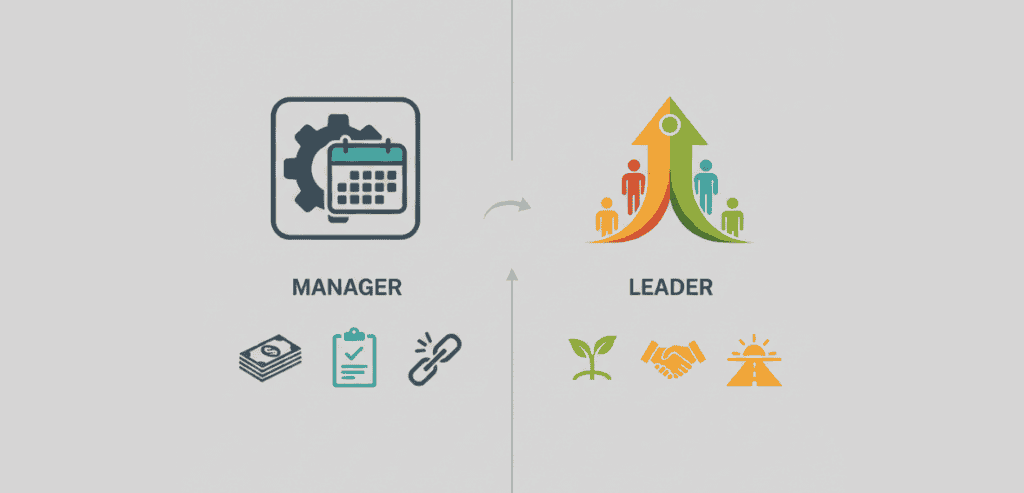
A manager is concerned with the system, schedules, and day-to-day activities. A leader is concerned with people, direction, and long-term results. While both roles are important, one is the key to the other.

Property management activities commonly involve managing work orders, rent payments, policies, and problems for the team. Leadership activities for the team include team development, a service-first culture, personal responsibility, and preparation for growth and change.

For example, a manager could pressure leasing employees to meet monthly targets. Leaders help employees realize the importance of keeping spaces occupied, improve their closing skills with added training, and support them during slow periods. One individual manages tasks. The other individual manages performance.

Build a Clear Vision for the Team

A great team starts with clarity. Without vision, even talented employees lose focus.

As a property leader, determine the kind of service experience that is desired from residents, the response of the team to challenges, and the definition of success beyond the numbers.

For example, rather than stating the need to increase resident retention, a strong leader could state our goal of “building a community in which residents feel heard, feel respected, and feel comfortable staying with us year after year.”

Such clarity of understanding affects behavior. Response to maintenance is quicker, communications in leasing arrangements are better, and the front office becomes more solution based. Performance improves when there is clarity of purpose.

Hire for Attitude, Train for Skill

Property Management Team

Technical skills are important, but mindsets are more important. In property management, everything can be taught software, procedures, compliance, and so on. It’s much more difficult to teach ownership, understanding, and accountability.

A high-performance team is created through hiring people who can communicate well, who remain cool under pressure, who care about the job of service, and who take ownership. This means the leasing agent with better people skills can outperform someone with extensive experience but a bad attitude. Moreover, the maintenance technician with better communication skills can outperform colleagues who only repair things quietly.

Once the right people are in place, structured training enables potential to be converted to performance.

Create a Culture of Accountability Without Fear

Accountability is not about pressure. It is about ownership.

Well-structured property teams have clear expectations, defined roles, quantified goals, and regular feedback. Instead of asking employees to improve their response times, establish that all service requests to residents should be acknowledged within two hours and be completed within twenty-four hours, unless parts of them are overdue.

Clarity dissolves confusion, and consistency creates trust, but accountability must come with support as well. When employees feel safe asking for support, they perform better and make fewer costly mistakes.

Strengthen Communication Across the Property Management Team

Poor communication is the root cause of most operational problems faced in property management. As a leader, implement this by providing structured communication channels that include daily or weekly team check-ins, clear handover notes between shifts, transparent reporting regarding occupancy and renewals, and an open door for all property management team concerns.

When leasing and maintenance teams are in good communication, unit turnovers happen quickly and with ease. That directly impacts revenue and resident satisfaction. Great leaders do not assume communication is happening; they design systems to ensure it does.

Invest in Training and Continuous Growth

A dormant property management team cannot produce good outcomes. The markets are changing; the residents are changing; and technology keeps changing.

Leaders of high-performing teams typically invest in leasing and closing skills, customer service development, maintenance efficiency, and practices, as well as conflict resolution. A good example is the consideration of the following case: assume that an improved technique for responding to objections by leasing agents can be learned by the team. This will result in major outcomes due to multiplying small improvements.

Growth also boosts morale. Employees who feel they are learning tend to stay longer and perform better.

Lead by Example

Culture starts at the top. Teams mirror their leader’s behavior more than their words.

If leader stays calm in crisis, is respectful with residents, remains organized and responsible, and offers support to team members during challenging times, the same standards get assimilated into the team automatically. If the leadership is reactive, inconsistent, or unavailable, the performance spirals downwards fast. Leadership is not about the title; it’s about what happens daily.

Use Data to Drive Smarter Decisions

Strong leadership requires effective human relations combined with performance data. To be effective, these individuals should have data on occupancy rates, renewal percentages, work order completion rates, satisfaction levels, and turnover duration.

The numbers tell us a story: a decline in renewals indicates a degradation in service quality, an increase in time to process work orders suggests a staffing or process issue, and information helps us prevent problems before they become real crises downstream.

Empower the Team Instead of Controlling Them

Micromanagement leads to a decrease in performance and confidence. Empowered teams move into action, and confidence grows with their ownership. Give your staff the power to handle the common problems residents encounter, clarity about the decisions you need to make, and the confidence to handle opportunities.

It can also help to avoid conflicts if the leasing agent is given some power to approve some goodwill gestures in genuine circumstances. When people feel trusted, they act with greater responsibility.

Recognize Effort and Celebrate Wins

Recognize Effort and Celebrate Wins

People perform better when valued. Recognition need not be complicated: a simple thank-you at the end of a busy week, public recognition of solid leasing performance, celebration of occupancy milestones, and recognition of maintenance excellence-all help build morale and teams.

High-performing property teams are not just efficient, they are motivated.

Handle Conflict with Calm and Fairness

In the case of property management, conflict is inevitable, and it can be between the residents and the management or the management and the residents. Leaders must listen before acting, remain neutral, and be solution-oriented rather than placing blame.

Conflict is managed properly to build trust if it is done in a fair manner, while it increases if it is not managed at all. Leaders are tested in difficult situations.

Conclusion

It is not about having authority as a property leader but about having influence. It means changing from task management to group development, from short-term solutions to long-term results, and from management to empowerment.

It takes not accidents, but solid vision, strong communication, clear accountability, and real investment in people to create a high-performance property management team. By establishing strong leadership, teams will thrive, residents will be more comfortable in their communities, and properties will succeed as natural byproducts.

As stated, in the current competitive market, properties that have strong leadership are identified not by the fact that they have avoided challenges, but rather because they have a team that is ready to face such challenges collectively, in an efficient way, and in a professional manner.

Frequently Asked Questions

  1. What is the difference between a property manager and a property leader?

    A property manager focuses on daily operations and tasks, while a leader focuses on team development, culture, and long-term performance.

  2. How can I improve my property team’s performance quickly?

    Start with clear expectations, improve communication, track performance metrics, and provide targeted training where gaps exist.

  3. What is the most important quality of a strong property leader?

    Consistency. Teams perform best when leadership is steady, fair, and clear in expectations.

  4. How do I reduce employee turnover in property management?

    Invest in training, recognize effort, create growth opportunities, and build a supportive work environment.

  5. Why is communication so important in property management teams

    Poor communication leads to delays, errors, and resident dissatisfaction. Strong communication improves coordination, efficiency, and service quality.

Property Manager

Doing More with Less: Cost-Saving Strategies for Property Managers in 2026

The role of property managers is in high demand in 2026. One of the most effective ways for property managers to cut costs is to leverage technology. Meanwhile, property management is a balance between maintaining quality and controlling costs. Property owners want stronger returns, and tenants expect faster service. By simplifying these actions, operational costs continue to grow across maintenance labor, utilities, and submission. In addition, the competition within the property management companies has increased.

The greatest challenge today and in the future is “How do you do more with less, without compromising the services and tenants’ satisfaction?”

The property managers who thrive in 2026 are those who embrace smarter systems, data-backed decisions, and forward-looking operational models. By focusing on the strategic, sustainable approaches provided in this guide, property managers can achieve financial efficiency while keeping the tenants happy.

Automating Routine Work with Technology 

property manager

Using the right digital tools will help to reduce manual tasks and errors. It will also allow you to respond faster to make good decisions. As a result, property managers can automate some of the mundane tasks associated with collecting rent, managing tenant leases/maintenance requests, etc., using automated systems. This reduces the number of administrative tasks and can improve the property manager’s efficiency in terms of how they operate.

By creating standard operating procedures to use across your portfolio of properties, property managers will have less reliance on manual monitoring. By implementing automation as a new way of operating your business, you will be able to use this automation to add more units to your portfolio without the need for increasing staff. With the use of automation, property management can be done in a more productive manner while reducing your overall costs.

Long-Term Cost Control Strategy

The property manager needs to handle maintenance costs, which represent his most significant financial obligation. The costs of maintaining properties that require emergency repairs increase because their tenants receive substandard service. The primary maintenance method for their properties, which property managers use in 2026, becomes their main business activity through preventive maintenance systems.

Organizations use regular inspections, scheduled servicing, and maintenance history tracking to identify problems that cause expensive repairs. The predictive maintenance tools create extra business value through their capacity to forecast equipment failures using operational data.

The proactive approach boosts equipment availability because it extends equipment lifespan while it reduces overall maintenance expenses. The process becomes the most efficient method to reduce property management costs because it establishes better business operation stability.

Energy and Utility Cost Optimization

Utility costs have become an increasingly important issue for both residential and commercial property managers. Poorly designed energy systems result in wasted funds, which affect a property’s overall profitability. 

In the year 2026, one property manager will view energy efficiency as a strategic investment. Energy-efficient improvements include improved insulation, smart thermostats, energy-saving light fixtures, and enhanced monitoring of usage patterns.

The reduction of wasted energy increases property management efficiency through reduced operating expenses and makes the properties more appealing to environmentally-minded tenants and owners. Energy optimization is more than just a sustainability program. It also has a financial benefit as well.

Vendor and Contract Optimization

The majority of property managers do not conduct regular assessments of their vendor relationships because these connections directly influence their operational expenses. Property managers who work with excessive vendors and use old contracts end up experiencing increased operational costs.

Property managers who aim to reduce expenses establish permanent relationships with vendors while updating their contracts to match current market rates. The process of unifying vendor services for various locations enables organizations to enhance their negotiation capacity while maintaining consistent service delivery.

Property managers can effectively reduce property management expenses through vendor management because it allows them to control their daily business activities. The organization of vendor management activities enables better service delivery through improved vendor awareness and performance tracking.

Data-Driven Decision Making

property manager

Today, property managers consider data to be one of their most valuable assets. By 2026, you won’t be able to compete unless you’re using more than just instinct when making decisions.

A property manager who utilizes a data-driven approach will evaluate all costs or expenses (such as maintenance), vacancy rates, turnover history, and operational expenses on a regular basis. By doing this, a property manager can identify any inefficiencies in the way a property is operated early enough to guide them in making smarter budgeting decisions.

By using data-driven operations, property managers create an overall operational efficiency by allocating resources where they will create the most value over time. This method of using data will ultimately reduce waste, increase the accuracy of forecasts, and improve the financial performance of the property.

Tenant Retention

Property managers face their highest-cost issues through vacant properties in the property management business today. Every vacant unit can result in lost revenue, marketing costs, cleanup costs, and/or costs associated with making a unit ready to rent, which results in financial loss to property owners.

The managers must focus on the retention of tenants to be successful in and after 2026. The combined factors of quick changes for maintenance, open communication with tenants, fair policies, and consistent performance will create happy tenants and help maintain occupancy levels.

When occupancy levels stay high, property managers can reduce their costs associated with property management by retaining their tenants. The cost of turnover will decline, and cash flow forecasting will become more precise.

Centralizing Operations

Property owners have expanded their portfolios in the real estate market, and, therefore, property managers have to efficiently manage multiple real estate properties through multiple decentralized property management systems that are decentralized. This means there are duplicate operations, inconsistent processes, and increased administrative costs.

Real estate management can achieve property portfolio management efficiencies through a centralised approach where each property management system uses standardised methods for accounting, lease administration, reporting, and maintenance scheduling. Standardising the systems will reduce the number of errors and improve visibility of the performance.

The consolidation approach allows property managers to provide service to property owners while continuing to grow the size of the portfolios without increasing the cost per unit. Consequently, as a result, this is a critical factor in achieving property management operating efficiencies.

Strategic Outsourcing to Control Labor Costs

property manager

Property management companies are experiencing many difficulties in completing their duties due to the rising costs of labor. To achieve this goal, property management businesses can rely on outsourcing strategies to increase operational flexibility and provide focused expert services.

In today’s environment, property managers are outsourcing several of the typical functions associated with property management, such as employee accounting, tenant services, meeting legal requirements, and IT services. This allows businesses to effectively convert permanent expenses into flexible spending while still achieving the service level required by their business.

With proper implementation of outsourcing, property management software companies can both reduce expenses and allow employees to concentrate on their most productive tasks.

Optimizing the Technology Stack

Just having more technology does not mean that you’re going to be more efficient. In fact, a lot of property managers pay too much for software tools that do roughly the same job or that they don’t use at all.

Property managers focused on increasing their efficiencies in the year 2026 will regularly evaluate their technology solution stacks. By removing duplicate systems and selecting single, unified systems, property managers can decrease their overall subscription fees while improving process flows.

A well-structured technology solution environment will help for improved property management efficiency through the increased user utilization of all of their technology tools and by making sure that each tool used in the company’s operations has a measurable value.

Training Teams for Smarter Operations

Managing properties involves dealing with a lot of people, from tenants to property owners and everyone in between. No system or process will ever be effective if not supported by a well-trained team.

An effective property manager should always focus on developing their team through ongoing professional development, creating clear and defined workflows, and establishing performance metric benchmarks. Trained staff complete tasks more quickly, reduce the potential for costly errors, and more easily adapt to changing technology than untrained staff.

The initial investment in training ultimately provides a return in both the operational efficiencies and cost savings associated with managing real estate.

Managing Compliance Costs Proactively

property manager

Companies incur costs because they are required to comply with regulations. Should the company not effectively manage its compliance obligations, it may face financial penalties, legal actions, and loss of its corporate reputation. For property managers in 2026, it is necessary to stay abreast of changing regulations and utilize systems that will allow automatic tracking of compliance obligations.

Companies that practice proactive compliance management can reduce their exposure to risk by reducing the likelihood of costly interruptions in operations. Every property manager should understand that maintaining compliance discipline is an important but non-visible contributor to the ongoing financial health and operational efficiency of their organization.

Conclusion

The property management profession in 2026 requires professionals to achieve results through efficient work methods and strict operational standards. Organizations achieve cost control through the creation of advanced systems that use data for operational improvements, which they implement across all company operations. 

Property managers should focus on improving property management efficiency and reducing costs through sustainable methods. This approach enables them to maintain profit margins while enhancing tenant and property owner satisfaction. Organizations need to adopt strategies that enable them to accomplish more work with fewer resources because these methods help organizations survive economic challenges. 

The property management field will progress through this operational method, which will enable early adopters to create new business models that will lead the industry forward.

FAQs

What is needed to make property management more efficient in 2026?

Growth in operating costs (cost of living) as well as heightened competition are demanding the need for property managers to find efficient ways to make a profit and provide high-quality property management services. 

How can property managers reduce costs and still provide their tenants with a positive experience?

Property managers can find ways to improve the systems they utilize, automate their workflows, and focus on preventative maintenance. 

What two expenses are the biggest areas for the property management industry to control in order to save the most money?

The two most common avenues for reducing costs in property management companies are maintenance and labor. 

How does using automation in the property management industry help save property management companies money?

Automating property management workflows will help reduce all manual processes performed in order to reduce mistakes made by the property management company, as well as help the property management company to effectively manage more properties. 

Is retaining tenants also a strategy that helps save property management companies money?

Yes, retaining tenants helps to reduce the expenses incurred by property management companies when there are tenants vacating the property as well as providing the property management company with a consistent revenue stream over a longer period of time.

Building a strong property management staff team

Building Your Dream Team: Hiring, Training & Retaining Property Management Staff

Property management staff are the backbone of every successful property management business. Systems matter, software matters, and processes matter, but at the end of the day, it is people who deal with tenants, owners, vendors, and problems at odd hours. When the team is strong, everything feels manageable. When the team is weak or constantly changing, even simple tasks become stressful.

In 2026, building a reliable property management staff is harder than it used to be. The job is demanding. Tenants are more vocal. Owners expect faster responses. Regulations keep changing. And good people have options. That means hiring, training, and retaining the right staff is no longer just an HR issue. It is a business survival issue.

Many property managers rush hiring when they feel overwhelmed. Someone quits, workloads pile up, and suddenly the goal becomes filling a seat instead of finding the right fit. That approach almost always leads to burnout, mistakes, and more turnover. Building a dream team takes intention, not panic.

This article is written for people who actually run property management operations. About how to hire property managers who fit the role, train property staff so they feel confident, and retain employees so you are not constantly starting over. We are going to focus on the foundation. Understanding what makes strong property management staff and how to set them up for success from day one.

Property Management Staff Hiring Starts with Knowing the Role Clearly

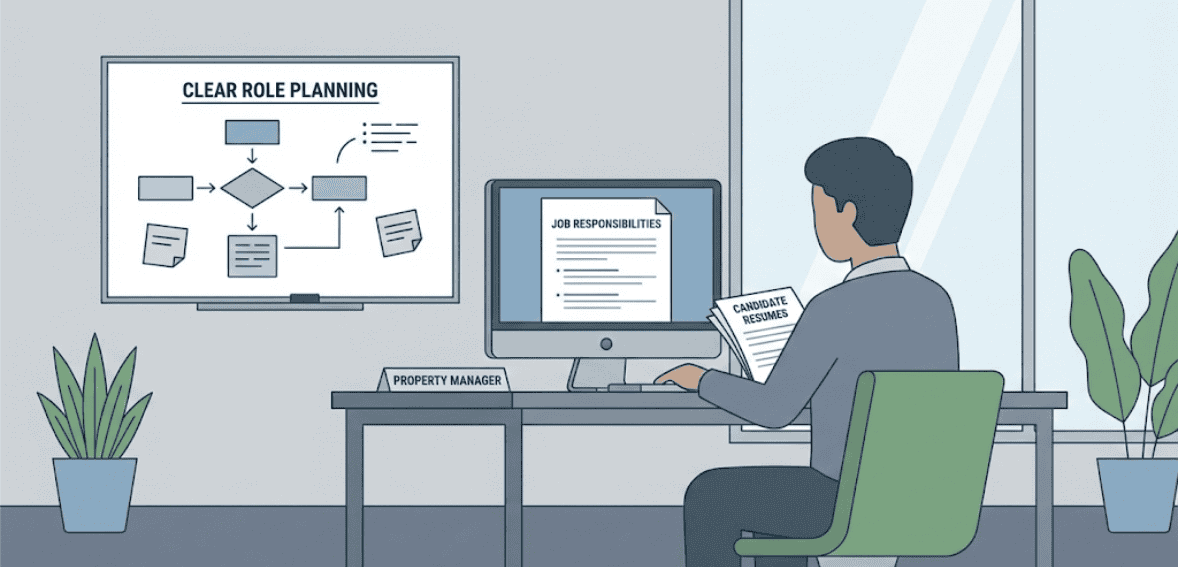
Hiring property managers with clear role expectations

Hiring property managers becomes difficult when the role itself is unclear. Many property management businesses expect one person to handle leasing, maintenance coordination, owner communication, accounting support, and tenant conflict all at once. Then they wonder why burnout happens so fast.

Before hiring property management staff, it is critical to understand what the role actually involves day to day. Not the job title, but the real work. Success in this role comes from handling calls, emails, follow-ups, documentation, deadlines, and stress.

Hiring property managers based only on resumes often leads to mismatches. Experience matters, but mindset matters more. Some people are technically capable but emotionally drained by constant communication. Others thrive in problem-solving and chaos. Knowing which type you need changes everything.

A clear role definition also sets expectations early. When property management staff know what they are signing up for, there is less disappointment later. Transparency during hiring builds trust and reduces early turnover.

In 2026, successful teams are built by hiring intentionally, not urgently. When the role is clear, the right people find it, rather than the wrong people surviving it temporarily.

Why Attitude Often Matters More Than Experience in Property Management Staff

Positive attitude shaping effective property management staff

Experience helps, but it is not everything. Many of the best property management staff members did not have years of industry experience. They started with the right attitude. Calm under pressure. Willingness to learn. Empathy without being a pushover.

Property management is people-heavy work. Technical tasks can be taught. Systems can be learned. But patience, communication style, and emotional resilience are harder to train. That is why hiring property managers based solely on experience often disappoints.

Staff members who approach problems with curiosity instead of defensiveness adapt better. They ask questions. They seek clarity. They do not panic when things go wrong. These traits make training property staff much easier later.

Attitude also affects team dynamics. One negative or disengaged employee can drain the energy of an entire office. On the other hand, someone with a steady, positive approach often becomes the glue that holds things together.

Property management staff who care about doing things right, even when no one is watching, create long-term stability. Experience without accountability does not.

Training Property Staff Is About Confidence, Not Information Overload

Training property staff to build confidence and competence

Training property staff is where many businesses unintentionally fail. They throw new hires into the deep end with manuals, software logins, and vague instructions, then expect performance immediately. When mistakes happen, frustration follows on both sides.

Good training property staff focuses on building confidence first. Understanding workflows. Knowing who to ask for help. Learning how decisions are made. When staff feel supported, learning accelerates naturally.

Staff need to know not just what to do, but why it matters.

Training should also be paced. Dumping everything in the first week overwhelms most people. Property management roles are layered. Let staff master one area before adding another. That approach reduces errors and builds competence faster.

In 2026, training property staff is not about perfection. It is about creating a safe environment where learning happens without fear. Confident staff perform better and stay longer.

Property Management Staff Retention Starts Earlier Than Most Think

Employee retention built through daily support for property management staff

Employee retention does not start after someone has been with you for years. It starts during hiring and training. The first few months decide whether someone sees a future with your business or just a paycheck.

Property management staff leave when expectations fail to align with reality. When support disappears after onboarding. When workloads increase without recognition. When communication feels one-sided. Retention problems often show up early, not suddenly.

Clear feedback helps. Let staff know what they are doing well and where they need improvement. Silence creates uncertainty. Uncertainty leads to disengagement.

Respect also matters. Property management staff deal with difficult situations daily. Acknowledging effort, not just results, builds loyalty. People stay where they feel valued.

In 2026, employee retention is about culture more than perks. A supportive, organized environment keeps good people longer than fancy titles ever will.

Property Management Staff Retention Is About Daily Experience, Not Big Promises

Most employee retention problems do not stem from a single major issue. They come from daily frustration piling up quietly. Property management staff rarely quit because of a single bad day. They quit because every day feels harder than it should.

In property management, stress is unavoidable. Emergencies happen. Tenants complain. Owners pressure. What makes the difference is how supported staff feel while dealing with it. When people feel like they are constantly absorbing stress alone, burnout comes fast.

Employee retention improves when daily workflows make sense. Clear processes. Reasonable workloads. Access to decision-makers. When staff know they are not stuck handling everything without backup, their tolerance for difficult situations increases.

Property management staff also need permission to set boundaries. Expecting people to be available emotionally and mentally all the time leads to exhaustion. Retention improves when leadership models healthy boundaries instead of glorifying overwork.

In 2026, the teams that last are not the ones working the longest hours. They are the ones working in environments where effort is noticed and pressure is shared.

Also read: How to Find and Hire the Best Property Managers in Your Area

Why Leadership Style Directly Impacts Property Management Staff Loyalty

Leadership style influencing property management staff retention

People do not leave companies. They leave managers. This saying exists for a reason, and it applies strongly in property management. Leadership style shapes how property management staff experience their work every day.

Micromanagement is one of the fastest ways to lose good staff. Property management requires judgment. When employees feel constantly second-guessed, confidence erodes. Over time, capable people stop taking initiative because it feels safer to do nothing than to be corrected.

On the other hand, lack of guidance is just as damaging. Telling staff to “figure it out” without support creates anxiety. Strong leadership balances autonomy with availability. Staff should know they can make decisions and also know when help is available.

Communication tone matters more than most leaders realize. Short, stressed messages get interpreted as anger. Silence gets interpreted as disapproval. Property management staff read between the lines constantly because their job involves managing emotions.

Leaders who explain decisions, admit mistakes, and listen build loyalty. Not because they are perfect, but because they are human. That humanity keeps teams together when things get messy.

Training Property Staff Never Really Ends, and That’s a Good Thing

Many property management businesses treat training as something you finish and then move on. Once onboarding is done, learning stops. That is unrealistic in a field that is constantly changing. Laws change. Systems change. Expectations change. People change.

Ongoing training of property staff does not mean constant formal sessions. It means creating space for questions, updates, and reflection. It means checking in after difficult situations and asking what could be handled better next time.

Property management staff gain confidence when they see growth paths. When learning feels supported rather than judged, people lean into responsibility rather than avoid it. That growth mindset reduces turnover significantly.

Training also helps retention by reducing fear. Fear of making mistakes. Fear of being blamed. When staff know learning is expected and supported, they are more willing to stay through challenging periods.

In 2026, strong teams are not the ones who know everything. They are the ones who are still learning together.

How Recognition and Feedback Shape Employee Retention

Property management staff hear complaints all day. Tenants complain. Owners complain. Vendors complain. If feedback from leadership only shows up when something goes wrong, morale drops quickly.

Recognition does not need to be dramatic. Acknowledging effort. Thanking someone for handling a tough call. Noticing improvement. These small moments matter more than annual reviews.

Feedback should be specific and timely. Vague praise feels empty. Delayed feedback feels irrelevant. Property management staff benefit most when feedback connects directly to real situations they just handled.

Balanced feedback matters too. Only praising without guidance feels shallow. Only correcting without encouragement feels harsh. The mix builds trust.

Employee retention improves when people feel seen. Not just as workers, but as people carrying responsibility. In property management, that emotional burden is heavy. Recognition lightens it.

Career Growth Keeps Property Management Staff From Looking Elsewhere

One of the quiet reasons property management staff leave is stagnation. When people cannot see where they are going, they start looking around. Even if they like the job, uncertainty pushes them to explore options.

Career growth does not always mean promotions. It can mean skill expansion. More responsibility. Specialization. Mentorship. Property management offers many paths, but only if leadership talks about them openly.

Training property staff with future roles in mind shows investment. It tells employees they are not just filling a gap, but building a career. That message changes how people approach their work.

Retention improves when growth conversations happen early, not after someone threatens to leave. Waiting too long makes growth feel reactive instead of intentional.

In 2026, property management staff want to know they are building something, not just surviving each day.

Why Culture Matters More Than Compensation Alone

Healthy culture supporting long-term property management staff retention

Pay matters. Fair compensation is non-negotiable. But pay alone does not keep people in property management long term. Culture does.

Culture shows up in how problems are handled. How mistakes are treated. How success is defined. How people talk to each other when things go wrong.

A toxic culture drains energy even when pay is competitive. A supportive culture keeps people through hard seasons even when budgets are tight. Property management staff notice these differences quickly.

Culture also affects how staff treat tenants and owners. Teams that feel respected internally pass that respect outward. That improves service quality and reduces conflict.

In 2026, culture is a competitive advantage. Property management businesses that invest in healthy environments keep good people, while others constantly rehire.

Conclusion

Building your dream team is not about finding perfect people. It is about creating conditions where good people can do good work without burning out. Hiring property managers with the right mindset, training property staff with patience, and focusing on employee retention through daily support creates stability that no software can replace. Property management staff who feel confident, respected, and supported stay longer, perform better, and build stronger relationships with tenants and owners. In the end, your team is not just part of the business. They are the business.

FAQs

Why is it so hard to retain property management staff?

Because the job is emotionally demanding and often under-supported, leading to burnout.

Is experience or attitude more important when hiring?

Attitude usually matters more because skills can be taught, but mindset is harder to change.

How long should training property staff last?

Training should be ongoing, with structured onboarding followed by continuous learning.

What causes early turnover in property management roles?

Unclear expectations, lack of support, and overwhelming workloads early on.

Can small property management companies retain staff effectively?

Yes, small teams often retain staff better when communication and support are strong.

The rise of the accidental landlord in modern real estate

The Rise of the Accidental Landlord: How Property Managers Can Adapt & Add Value

The accidental landlord is no longer a rare situation. In 2026, it became one of the most common types of rental property among market participants. These are not people who planned to build a rental portfolio or study real estate management for years. These are people who rented out a home because of a job move, an inherited property, a slow housing market, or a life change they did not expect.

Many accidental landlords never planned to be landlords at all. They kept the property because selling did not make sense at the time. Or they thought renting would be simple. Find a tenant, collect rent, and that’s it. Then reality hits. Maintenance calls. Legal notices. Late payments. Tenant complaints. Suddenly, owning a rental feel like a second full-time job.

This shift has changed the landscape for property management services. Accidental landlords do not think like long-term investors. They worry more. They ask more questions. They are often emotionally attached to the property. And they usually do not understand the rules they are now responsible for following.

This is where property managers need to adapt. Traditional management approaches do not always work for accidental landlords. These owners need education, reassurance, and structure, not just rent collection. In this article, we will discuss why accidental landlords are increasing, the challenges they face, and how real estate management professionals can add real value rather than just offer basic services.

The Accidental Landlord Is Growing Faster Than Many Expected

Growing number of accidental landlords in today’s rental market

The accidental landlord did not suddenly appear overnight. This trend has been building quietly for years. Economic uncertainty, remote work, delayed home sales, and rising interest rates have all played a role. Many rental property owners today did not plan to be in this position, but circumstances pushed them there.

Some owners moved for work and could not sell at a fair price. Others inherited property and were unwilling to sell. Some bought during a strong market and now find that selling would mean a loss. Renting became the temporary solution that turned into a long-term situation.

Unlike intentional investors, accidental landlords usually lack systems. They do not have vendor lists, maintenance plans, or legal knowledge. They may not even know the basics of landlord responsibilities. Real estate management suddenly feels overwhelming to them.

This is important for property managers to understand. Accidental landlords are not careless. They are inexperienced. And because they did not plan for this role, they often feel anxious about making mistakes. This anxiety shapes how they interact with property management services.

In 2026, this group continues to grow. Property managers who understand this shift position themselves better than those who treat all rental property owners the same.

Why Accidental Landlords Struggle with Real Estate Management

Real estate management challenges faced by accidental landlords

Real estate management is complex even for experienced investors. For accidental landlords, it can feel impossible. Laws, tenant rights, inspections, maintenance timelines, and financial tracking all land on their shoulders at once.

One major struggle is emotional attachment. Many accidental landlords are renting out what used to be their home. That makes tenant issues feel personal. Damage feels emotional, not just financial. This often leads to poor decisions, delayed repairs, or uncomfortable communication.

Another challenge is underestimating time and cost. Accidental landlords often assume rental income equals profit. They forget about vacancies, repairs, taxes, and compliance costs. When expenses appear, frustration follows.

Property management services often become a lifeline at this point. But only if those services are positioned correctly. Accidental landlords do not just need someone to collect rent. They need guidance, structure, and confidence.

Understanding these struggles helps property managers add value beyond visible tasks. It shifts the role from service provider to trusted partner.

The Gap Between Accidental Landlords and Professional Property Management

Property management services bridging the gap for accidental landlords

There is often a big gap between how accidental landlords think and how professional property management operates. Accidental landlords may want to approve every decision. They may hesitate on repairs. They may question fees without understanding the risk being managed.

This gap creates friction if not handled carefully. Property management services that focus solely on efficiency may come across as cold or dismissive. That pushes accidental landlords away instead of helping them adapt.

Real estate management professionals need to recognize this learning curve. Education becomes part of the service. Explaining why certain decisions matter, why compliance is important, and why proactive maintenance saves money builds trust over time.

According to Carter Jonas, while many accidental landlords did not originally plan to be long-term investors, they are now recognizing the value in expanding their property portfolios. Property managers who bridge this gap become indispensable.

How Property Managers Can Reframe Their Value for Accidental Landlords

Property management services adding value for accidental landlords

For accidental landlords, value is not measured only in numbers. It is measured in peace of mind. Knowing that someone else is handling issues properly, legally, and professionally changes everything for these owners.

Property management services must focus on assurance as much as performance. Clear communication, regular updates, and patient explanations go a long way. Accidental landlords want to feel informed, not overwhelmed.

Real estate management also becomes educational. Teaching owners about timelines, legal requirements, and realistic expectations reduces conflict. Over time, accidental landlords either grow into confident rental property owners or decide to exit the market in a controlled way. In both cases, good management adds value.

The rise of the accidental landlord is not a problem for property managers. It is an opportunity. Those who adapt their approach will build stronger relationships and longer-term clients.

How Property Management Services Must Shift for the Accidental Landlord

Traditional property management services were built with experienced investors in mind. Owners who already understand cash flow, tenant law, and long-term planning. The accidental landlord does not fit that model. When property managers treat them the same way, frustration builds on both sides.

Accidental landlords need more explanation, not less. When a repair is recommended, they want to know why. When a tenant issue comes up, they want reassurance that things are being handled correctly. Silence makes them anxious. Short answers feel dismissive. Property management services need to slow down slightly and communicate more clearly.

This does not mean holding hands forever. It means recognizing that education is part of the service. Explaining processes early saves time later. Once accidental landlords understand how real estate management works, they stop micromanaging and start trusting the system.

Property managers who adapt their communication style keep these clients longer. Those who do not often lose them, even when the work itself is well done.

The Role of Education in Supporting Rental Property Owners

Educating rental property owners through real estate management

Education is one of the most underrated tools in real estate management. Accidental landlords are not asking questions because they want control. They ask because they feel exposed. They suddenly carry legal and financial responsibility they never planned for.

When property managers explain tenant laws, maintenance timelines, and realistic costs, something shifts. Fear turns into understanding. Resistance turns into cooperation. Rental property owners feel more confident in their decision-making.

Education also protects property managers. When owners understand why certain actions are taken, they are less likely to blame management when things go wrong. Expectations align. Conversations become easier.

In 2026, property management services that include education as part of onboarding and ongoing communication outperform those that do not. Accidental landlords do not want to become experts, but they want to understand enough to feel secure.

Why Accidental Landlords Redefine Value in Real Estate Management

For intentional investors, value often means returns, efficiency, and scale. For the accidental landlord, value feels different. It is emotional. It is about reducing stress, avoiding mistakes, and not feeling alone.

Real estate management for accidental landlords is as much about confidence as it is about performance. When owners sleep better knowing someone else is handling issues properly, value is delivered. When they stop worrying about legal notices or midnight repair calls, value is delivered.

This is why fee conversations feel different with accidental landlords. They may question costs more at first, but once the value is clear, price becomes less of an issue. Property managers who explain what problems they prevent, not just what tasks they complete, earn long-term trust.

The accidental landlord does not want perfection. They want stability.

Also read: From Landlord to Experience Manager: How Tech Is Redefining the Property Manager’s Role

How Property Managers Can Build Long-Term Relationships with Accidental Landlords

Building long-term relationships with accidental landlords

Not all accidental landlords will stay landlords forever. Some will sell once the market improves. Others will keep renting long-term. Property managers should not fear either outcome.

Strong relationships matter more than duration. When property management services properly support accidental landlords, those owners become referral sources. They recommend managers to friends, family, and coworkers who end up in similar situations.

Real estate management professionals who focus on relationships instead of transactions build reputation over time. Accidental landlords remember who helped them through stressful periods. That memory carries weight.

In many cases, accidental landlords eventually become intentional investors. When that happens, they already have a trusted property manager in place. That transition creates long-term growth opportunities.

Conclusion

The rise of the accidental landlord is reshaping property management in 2026. These rental property owners bring different fears, expectations, and needs than traditional investors. Property management services that adapt by focusing on education, communication, and reassurance add real value. Real estate management is no longer just about operations. It is about guidance, trust, and helping people navigate roles they never planned to take on. Property managers who understand this shift will not only survive but lead.

FAQs

What is an accidental landlord?

An accidental landlord is someone who rents out a property due to life circumstances rather than as part of long-term investment planning.

Why do accidental landlords struggle with property management?

They often lack experience, systems, and legal knowledge, and may feel emotionally attached to the property.

How can property managers add value for accidental landlords?

By offering education, clear communication, and structured support instead of just basic rent collection.

Do accidental landlords usually stay in the rental market long-term?

Some do, while others sell later, but good management helps them make informed decisions anyway.

Why is this trend important for property managers in 2026?

As the number of accidental landlords grows, adapting services strengthens client relationships.

Tenant retention strategies focused on keeping great residents longer

Tenant Retention Strategies for 2026: Keeping Great Residents Longer

Tenant retention strategies matter more in 2026 than they ever did before. Finding new tenants is expensive, time-consuming, and honestly exhausting. Listings, showings, screenings, cleaning units, offering move-in incentives, and dealing with vacancy gaps all eat into profits. Most property owners already know this. What they often underestimate is how much easier it is to keep a good resident than to replace them.

In 2026, tenants have more options, more information, and higher expectations. They compare properties online. They read reviews. They talk in community groups. If something feels off, they move. This is why tenant retention strategies are no longer just a “nice to have.” They are a core part of smart property management.

Keeping great residents longer is not about offering discounts all the time. It is about how people feel living in your property. Do they feel heard? Do repairs get handled quickly? Do rules feel fair? Does the place feel like home or just a temporary stop?

This article is written for people who actually deal with tenants every day. Not theory, not fluffy ideas. Real tenant retention strategies that focus on resident satisfaction, smoother lease renewals, and long-term stability. In this first part, we will focus on the foundation. The things that quietly decide whether a tenant stays or starts looking somewhere else.

Tenant Retention Strategies Start with Resident Satisfaction, Not Discounts

Resident satisfaction as the foundation of tenant retention strategies

One of the biggest mistakes in tenant retention strategies is thinking money is the main reason people leave. Sometimes it is, but most of the time it is not the full story. Tenants usually leave because they feel ignored, frustrated, or undervalued long before rent becomes the issue.

Resident satisfaction starts with the basics. Does management respond when something breaks? Are the common areas clean? Are problems handled respectfully? These things sound small, but they shape daily experience. A tenant who feels comfortable reaching out is far more likely to stay than one who feels like a burden.

In property management, silence is dangerous. When tenants stop reporting issues, it does not mean everything is fine. It often means they have given up. Good tenant retention strategies focus on keeping communication open so small problems do not turn into reasons to move out.

Another part of resident satisfaction is consistency. Rules should be enforced fairly. Promises should be kept. If one tenant gets special treatment and others notice, trust breaks fast. In 2026, word spreads quickly, especially online.

Tenant retention strategies that focus on resident satisfaction create stability. When tenants feel respected and comfortable, lease renewals feel natural instead of forced.

Why Proactive Property Management Keeps Tenants Longer

Proactive property management supporting tenant retention strategies

Reactive property management is one of the biggest reasons tenants leave. When management only responds after problems escalate, residents feel like they are constantly fighting to get basic needs met. Tenant retention strategies work better when management is proactive instead of reactive.

Proactive property management means anticipating issues before tenants complain. Scheduling regular inspections. Addressing wear and tear early. Checking in occasionally instead of only sending notices when rent is due. These actions build trust over time.

In 2026, tenants expect speed. Waiting days or weeks for simple repairs feels unacceptable to many residents. It is not just about the repair itself. It is about feeling ignored. Tenant retention strategies that prioritize quick response times show tenants they matter.

Proactive management also means clarity. Clear communication about policies, maintenance schedules, and changes reduces frustration. Tenants do not like surprises, especially negative ones. When people know what to expect, they are more likely to stay.

Property management that stays ahead of problems creates a calmer living environment. Calm tenants are long-term tenants.

Tenant Retention Strategies Depend on Trust and Communication

Clear communication building trust in tenant retention strategies

Trust is the quiet backbone of tenant retention strategies. Without trust, even small issues feel bigger than they are. With trust, tenants are more forgiving when problems happen, because they believe management is trying to fix things.

Communication builds that trust. Not constant messages, but honest and timely ones. Letting tenants know when repairs will take time. Explaining the reasons behind changes. Acknowledging mistakes when they happen. These moments shape how tenants feel about staying.

In many properties, communication only flows one way. Notices go out. Rules are enforced. Rent reminders are sent. But tenant retention strategies work better when communication flows both ways. When tenants feel heard, they feel invested.

Technology helps, but tone still matters. Automated systems are fine, but cold messages make people feel like numbers. In 2026, tenants expect efficiency and humanity simultaneously.

Strong communication reduces misunderstandings. Fewer misunderstandings mean fewer conflicts. And fewer conflicts mean higher lease renewals.

How Maintenance Quality Impacts Lease Renewals

Maintenance quality influencing lease renewals and tenant retention

Maintenance is one of the strongest drivers behind lease renewals, even more than rent increases in many cases. Tenants can accept paying a bit more if they feel their home is well cared for. They struggle to accept poor maintenance at any price.

Tenant retention strategies treat maintenance as a long-term investment rather than a cost to minimize. Quick fixes that fail later frustrate tenants more than delayed but permanent solutions. Quality matters.

Response time also matters. Even if a repair takes time, acknowledging the issue quickly helps. Silence creates anxiety. Tenants start imagining worst-case scenarios. Property management that communicates clearly during maintenance builds confidence.

Preventive maintenance plays a role, too. When tenants see management taking care of things before they break, it signals professionalism. That feeling carries weight when lease renewal time comes.

In 2026, tenants expect their homes to function smoothly. When maintenance supports that expectation, tenant retention strategies become much easier to execute.

Tenant Retention Strategies Improve When Lease Renewals Feel Easy, Not Stressful

Smooth lease renewals as part of tenant retention strategies

Lease renewals are a moment of truth. Everything a tenant has experienced during their stay shows up right here. If the renewal process feels rushed, confusing, or cold, even happy tenants start thinking about leaving. Tenant retention strategies work best when renewals feel natural and respectful, not like a pressure tactic.

In 2026, tenants expect clarity. They want to know renewal terms early, not at the last minute. Surprising tenants with short deadlines or sudden rent changes creates stress, and stressed tenants look for exits. Good property management treats lease renewals as a conversation, not a demand.

How renewals are communicated matters. A simple message acknowledging the tenant’s time on the property goes a long way. When residents feel appreciated, they are more open to staying, even if rent changes slightly.

Tenant retention strategies also involve flexibility where possible. Longer lease options, small adjustments, or timing considerations can make renewals easier without hurting long-term goals. The key is making tenants feel like partners, not placeholders.

Why Community and Belonging Matter in Tenant Retention Strategies

Community feeling strengthening tenant retention strategies

People do not just rent spaces. They live in them. Tenant retention strategies that ignore emotional connection miss a big opportunity. According to Cove, when tenants feel heard, informed, and respected, they are much more likely to renew their lease, and fostering a sense of community does not require frequent events or large budgets. Sometimes it is as simple as friendly interactions, well-maintained shared spaces, and respectful communication. Small efforts create familiarity, and familiarity creates comfort.

In 2026, many tenants will work from home or spend more time in their living spaces. This makes the environment even more important. Noise issues, cleanliness, and shared responsibility affect daily life. Property management that actively maintains a positive atmosphere naturally supports resident satisfaction.

Tenants who feel connected are also more forgiving. Minor issues feel manageable when people feel like they belong. That emotional layer strengthens tenant retention strategies more than discounts ever could.

Tenant Retention Strategies Benefit From Fair and Transparent Pricing

Pricing plays a role in tenant retention strategies, but fairness matters more than being the cheapest option. Tenants understand that costs rise. What they struggle with is sudden or unexplained increases.

Transparency builds trust. When tenants understand why prices change, they are less likely to feel taken advantage of. Property management that communicates openly about costs strengthens long-term relationships.

In 2026, tenants can easily compare prices. They know market rates. Trying to push unreasonable increases often backfires. Tenant retention strategies focus on balance. Reasonable pricing combined with strong resident satisfaction keeps turnover low.

Fair pricing also signals respect. When tenants feel treated fairly, they are more likely to stay even when budgets tighten. Trust and fairness work together here.

Also read: Gamifying Tenant Engagement: Innovative Strategies to Boost Retention and On-Time Rent

Why Tenant Retention Strategies Must Adapt in 2026

Tenant expectations are not static. What worked five years ago may not work today. Tenant retention strategies must evolve alongside changing lifestyles, technology, and economic conditions.

In 2026, tenants expect faster responses, clearer communication, and more transparency. They value convenience but still want human interaction. Property management that adapts to these expectations stays competitive.

Adaptation also means listening. Feedback, complaints, and even move-out reasons offer valuable insight. Tenant retention strategies improve when lessons are applied instead of ignored.

Retention is not about perfection. It is about responsiveness. When tenants see that management is willing to improve, they are more likely to stay and renew their leases.

Conclusion

Tenant retention strategies in 2026 are built on experience, not gimmicks. When resident satisfaction is prioritized, property management becomes proactive, communication stays open, and lease renewals feel fair; tenants stay longer. Keeping great residents is not about doing everything perfectly. It is about doing the important things consistently and with care. Strong tenant retention strategies create stability, reduce turnover costs, and build healthier properties over time.

FAQs

Why is tenant retention more important than finding new tenants?

Keeping good tenants costs less and creates a more stable income than constantly filling vacancies.

Do tenant retention strategies always involve lowering rent?

No, most retention comes from better service, communication, and overall experience, not discounts.

When should lease renewal conversations start?

Ideally, several months before the lease ends, so tenants have time to decide without pressure.

How does maintenance affect tenant retention?

Fast, quality maintenance makes tenants feel cared for and increases the chances of lease renewals.

Can small properties effectively use tenant retention strategies?

Yes, small properties often retain tenants better because personal attention is easier to provide.

Emergency preparedness for properties focused on disaster resilience

Disaster-Proofing Your Properties: Emergency Preparedness & Resilience Planning

Emergency preparedness for properties used to feel like something you worried about only after something bad happened. A flood hits, a fire breaks out, a storm damages the roof, and then suddenly everyone is asking questions. What went wrong? Why wasn’t there a plan? Who was responsible? In 2026, that reactive mindset no longer works. Disasters are happening more often, the weather is more unpredictable, and property owners expect managers to be ready, not surprised.

Disaster-proofing properties is not about panic or fear. It is about realism. Buildings face risks every year. Power outages, fires, floods, earthquakes, extreme heat, and even cyber disruptions affect how properties operate. Emergency preparedness for properties is about accepting that things will go wrong at some point and deciding in advance how you will respond when they do.

Many property managers think emergency planning means writing a document and filing it away. That is not how real resilience works. True disaster resilience is built into daily operations, maintenance decisions, communication systems, and even tenant relationships. It is about knowing your risks, reducing them where possible, and being ready to act fast when something happens.

This article is written for people who actually manage properties, not just talk about them. We are going to look at emergency preparedness for properties in a practical way. Not perfect words, not fancy theories. Just clear thinking about how to protect buildings, people, and income during emergencies. In this first part, we will focus on understanding risks, building the foundation of emergency planning, and strengthening properties before disaster strikes.

Emergency Preparedness for Properties Starts with Knowing the Real Risks

Property risk management through emergency preparedness for properties

Emergency preparedness for properties does not begin with alarms or evacuation plans. It starts with understanding what could realistically go wrong. Every property faces different risks depending on location, building type, age, and usage. A coastal building worries about floods and storms. An urban high-rise worries about fires and power failures. An older property may face structural risks that newer buildings do not.

Property management means asking uncomfortable but necessary questions. What happens if power is lost for days? What if the water supply is disrupted? What if access roads are blocked? These are not rare scenarios anymore. They are events that property managers are dealing with more often than they want to admit.

Many properties already show warning signs. Old electrical systems, poor drainage, outdated fire safety equipment, or a lack of backup power. Emergency preparedness for properties means recognizing these weak points early, rather than hoping they never become problems.

Risk awareness also includes people. Tenants may not know emergency procedures. Staff may not be trained to respond under pressure. Vendors may not be reachable during disasters. Disaster resilience depends on both physical systems and human behavior working together.

When property managers clearly understand real risks, emergency planning becomes focused rather than generic. You stop planning everything and start preparing for what actually matters.

Why Emergency Planning Must Be Built Into Daily Property Management

Emergency planning integrated into daily property management

Emergency planning fails when it only exists on paper. Emergency preparedness for properties works best when it is woven into daily routines. Maintenance schedules, inspections, vendor relationships, and communication systems all play a role in how a property responds during a crisis.

For example, regular maintenance is not just comfort. It is about resilience. A well-maintained roof handles storms better. Clean drainage systems reduce flood damage. Updated electrical systems reduce fire risk. Emergency preparedness for properties turns daily maintenance into disaster prevention.

Communication is another daily habit that matters. During emergencies, confusion causes panic. Tenants need clear instructions. Staff need clear roles. Emergency planning should define who will communicate, how messages will be sent, and what information will be shared. In 2026, relying on a single communication method is risky. Redundancy matters.

Property risk management also includes documentation. Updated floor plans, utility shut-off locations, emergency contacts, and insurance details should be easily accessible. During disasters, time is limited. Searching for information wastes precious minutes.

When emergency preparedness for properties becomes part of daily operations, responses feel more natural. People know what to do because they have practiced awareness through routine systems.

Building Disaster Resilience Through Property Design and Upgrades

Disaster resilience upgrades supporting emergency preparedness for properties

Disaster resilience is not only about response. It is also about strength. Properties designed or upgraded with resilience in mind sustain less damage and recover faster. Emergency preparedness for properties includes making smart choices about materials, systems, and layout.

Simple upgrades can make a big difference. Backup power systems keep essential services running. Fire-resistant materials slow damage. Flood barriers protect lower levels. Smart monitoring systems alert managers to problems early. None of these eliminates risk completely, but they reduce impact.

Many property managers hesitate to invest in resilience upgrades because of cost. But emergency preparedness for properties views costs differently. It asks how much damage, downtime, and lost income will cost if nothing is done. In many cases, resilience investments pay for themselves over time.

Disaster resilience also improves property value. Buildings that can operate during emergencies attract better tenants and insurance terms. Owners see stability instead of volatility. Emergency preparedness for properties becomes part of long-term asset protection.

Upgrades do not need to happen all at once. Resilience planning works step by step. Prioritize critical systems first. Power, water, fire protection, and structural safety are usually prioritized over comfort upgrades. Over time, these decisions create stronger, safer properties.

Emergency Preparedness for Properties Protects Income and Operations

Emergency preparedness for properties protecting income and operations

One of the biggest misunderstandings about emergency preparedness for properties is that it only protects lives, not revenue. In reality, income protection is a major reason emergency planning matters. Disasters disrupt rent collection, operations, and tenant retention. Properties that cannot function quickly lose trust.

When buildings remain operational during emergencies, even at reduced capacity, financial damage is lower. Tenants are more likely to stay. Insurance claims are easier to manage. Repairs begin faster. Emergency preparedness for properties helps keep businesses running rather than shutting down completely.

Property risk management also includes recovery planning. How quickly can operations resume? Who handles repairs? How are tenants informed? These decisions affect how long income disruption lasts. Disaster resilience is not just about surviving the event, but about recovering efficiently afterward.

In 2026, owners expect property managers to think so. Emergency preparedness for properties is no longer optional planning. It is a core part of professional management and long-term profitability.

Emergency Preparedness for Properties Depends on Clear Roles and Responsibilities

Clear emergency roles supporting emergency preparedness for properties

When disasters happen, confusion is often more damaging than the event itself. Emergency preparedness for properties breaks down quickly when no one knows who is supposed to do what. Everyone looks at everyone else, time passes, and small problems grow into big ones.

Clear roles are the backbone of emergency planning. Someone must be responsible for decision-making. Someone needs to handle tenant communication. Someone needs to coordinate vendors and emergency services. Emergency preparedness for properties works best when these roles are defined well in advance of anything going wrong.

This does not mean creating complicated chains of command. It means clarity. Staff should know their responsibilities during different types of emergencies. Property managers should know when to escalate issues to owners. Vendors should know how to respond quickly when contacted.

Training also plays a role. People do not perform well under stress if they are unsure of expectations. Emergency preparedness for properties includes walking through scenarios, even informally, so responses become instinctive rather than panicked.

When roles are clear, response time improves. Decisions happen faster. Tenants feel safer. Emergencies feel more controlled instead of chaotic.

How Communication Shapes Emergency Preparedness for Properties

Emergency communication supporting emergency preparedness for properties

Communication is one of the most fragile parts of emergency preparedness for properties. When systems fail, people feel isolated. Rumors spread. Anxiety rises. Clear communication reduces fear and helps people cooperate.

Emergency planning should clearly answer basic questions. How will tenants receive updates? How often will information be shared? What channels will be used if power or the internet is down? Relying on one method is risky. Emergency preparedness for properties depends on backup communication options.

Messages should be simple and direct. During emergencies, people do not want long explanations. They want to know what is happening, what they should do, and when they will hear more. Confusing messages create more problems than silence.

Property managers also need communication plans for owners, vendors, and emergency responders. Everyone involved should receive the right information at the right time. Emergency preparedness for properties becomes much stronger when communication flows smoothly in all directions.

Emergency Preparedness for Properties and Insurance Readiness

Insurance is often treated as something you deal with after a disaster. But emergency preparedness for properties includes being ready for insurance processes before anything happens. Delays in claims can slow recovery and increase losses.

Property managers should know exactly which policies cover and which do not. They should know reporting timelines, documentation requirements, and contact points. During emergencies, missing paperwork or unclear coverage can become major obstacles.

Documentation matters. Photos of property conditions, maintenance records, and inventory lists make insurance claims easier to process. Emergency preparedness for properties includes keeping these records up to date and accessible.

Insurance readiness is part of disaster resilience. Properties that recover faster do so because claims are processed quickly and repairs begin sooner. Preparation here saves weeks or even months during recovery.

Also read: Sustainable Property Management in 2026 – Green and Profitable

Why Emergency Preparedness for Properties Must Evolve Over Time

One of the biggest mistakes in emergency planning is assuming that once a plan exists, it is done. Emergency preparedness for properties must evolve. Building age. Tenants change. Climate patterns shift. Technology improves. Risks today may not match risks from five years ago.

Plans should be reviewed regularly. Not obsessively, but intentionally. What worked last year may not work next year. Emergency preparedness for properties improves when lessons from small incidents are used to reinforce future responses.

Disaster resilience grows through experience. Minor blackouts, leaks or system failures offer valuable insights. Ignoring them wastes opportunities to improve.

In 2026, resilience is not perfection. It is about adaptability. Emergency preparedness for properties means staying alert, learning continuously, and adjusting plans as conditions change.

Conclusion

Emergency preparedness for properties is no longer about checking a box. It is about protecting people, income, and long-term value in an unpredictable world. By understanding real risks, building resilience into daily operations, strengthening communication, and planning for recovery, properties become better able to handle whatever comes next. Disaster resilience is not created in the moment of crisis. It is built quietly, over time, through thoughtful property risk management and practical emergency planning.

FAQs

What is the first step in emergency preparedness for properties?

It starts with identifying realistic risks based on location, building condition, and use, not generic assumptions.

Does emergency preparedness for properties require expensive upgrades?

Not always. Many improvements come from better planning, maintenance, and communication rather than major spending.

How often should emergency plans be reviewed?

At least once a year or after any incident that reveals weaknesses in the current plan.

Why is communication important in emergencies?

Clear communication reduces panic, keeps tenants informed, and helps everyone respond more effectively.

How does emergency preparedness for properties support long-term value?

Prepared properties recover faster, retain tenants better, and experience less financial disruption after disasters.