Author Archives: admin

The rise of the accidental landlord in modern real estate

The Rise of the Accidental Landlord: How Property Managers Can Adapt & Add Value

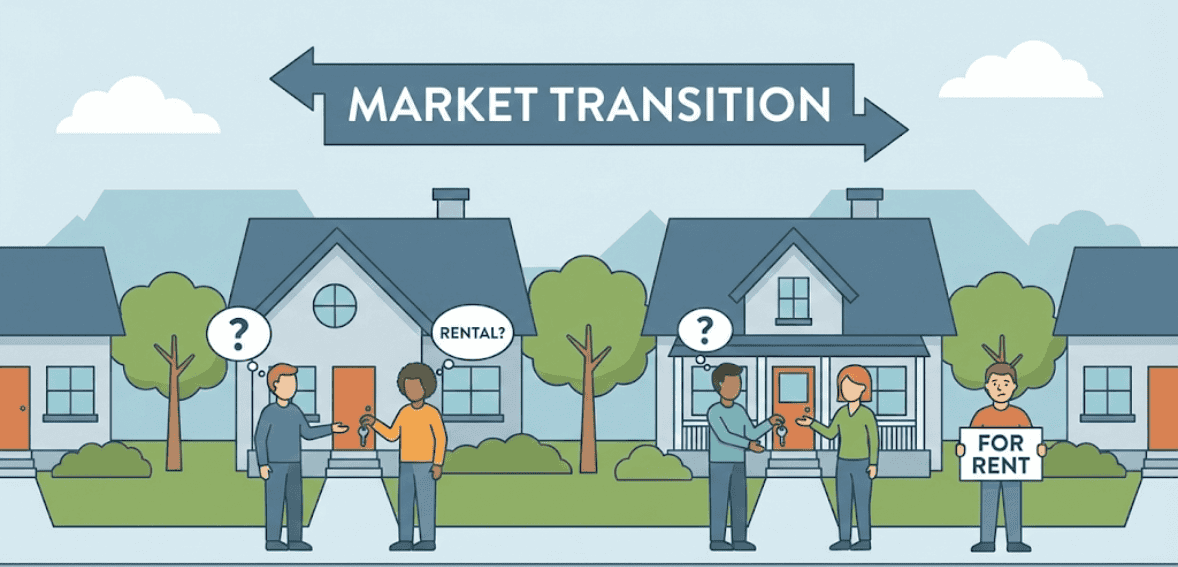
The accidental landlord is no longer a rare situation. In 2026, it became one of the most common types of rental property among market participants. These are not people who planned to build a rental portfolio or study real estate management for years. These are people who rented out a home because of a job move, an inherited property, a slow housing market, or a life change they did not expect.

Many accidental landlords never planned to be landlords at all. They kept the property because selling did not make sense at the time. Or they thought renting would be simple. Find a tenant, collect rent, and that’s it. Then reality hits. Maintenance calls. Legal notices. Late payments. Tenant complaints. Suddenly, owning a rental feel like a second full-time job.

This shift has changed the landscape for property management services. Accidental landlords do not think like long-term investors. They worry more. They ask more questions. They are often emotionally attached to the property. And they usually do not understand the rules they are now responsible for following.

This is where property managers need to adapt. Traditional management approaches do not always work for accidental landlords. These owners need education, reassurance, and structure, not just rent collection. In this article, we will discuss why accidental landlords are increasing, the challenges they face, and how real estate management professionals can add real value rather than just offer basic services.

The Accidental Landlord Is Growing Faster Than Many Expected

Growing number of accidental landlords in today’s rental market

The accidental landlord did not suddenly appear overnight. This trend has been building quietly for years. Economic uncertainty, remote work, delayed home sales, and rising interest rates have all played a role. Many rental property owners today did not plan to be in this position, but circumstances pushed them there.

Some owners moved for work and could not sell at a fair price. Others inherited property and were unwilling to sell. Some bought during a strong market and now find that selling would mean a loss. Renting became the temporary solution that turned into a long-term situation.

Unlike intentional investors, accidental landlords usually lack systems. They do not have vendor lists, maintenance plans, or legal knowledge. They may not even know the basics of landlord responsibilities. Real estate management suddenly feels overwhelming to them.

This is important for property managers to understand. Accidental landlords are not careless. They are inexperienced. And because they did not plan for this role, they often feel anxious about making mistakes. This anxiety shapes how they interact with property management services.

In 2026, this group continues to grow. Property managers who understand this shift position themselves better than those who treat all rental property owners the same.

Why Accidental Landlords Struggle with Real Estate Management

Real estate management challenges faced by accidental landlords

Real estate management is complex even for experienced investors. For accidental landlords, it can feel impossible. Laws, tenant rights, inspections, maintenance timelines, and financial tracking all land on their shoulders at once.

One major struggle is emotional attachment. Many accidental landlords are renting out what used to be their home. That makes tenant issues feel personal. Damage feels emotional, not just financial. This often leads to poor decisions, delayed repairs, or uncomfortable communication.

Another challenge is underestimating time and cost. Accidental landlords often assume rental income equals profit. They forget about vacancies, repairs, taxes, and compliance costs. When expenses appear, frustration follows.

Property management services often become a lifeline at this point. But only if those services are positioned correctly. Accidental landlords do not just need someone to collect rent. They need guidance, structure, and confidence.

Understanding these struggles helps property managers add value beyond visible tasks. It shifts the role from service provider to trusted partner.

The Gap Between Accidental Landlords and Professional Property Management

Property management services bridging the gap for accidental landlords

There is often a big gap between how accidental landlords think and how professional property management operates. Accidental landlords may want to approve every decision. They may hesitate on repairs. They may question fees without understanding the risk being managed.

This gap creates friction if not handled carefully. Property management services that focus solely on efficiency may come across as cold or dismissive. That pushes accidental landlords away instead of helping them adapt.

Real estate management professionals need to recognize this learning curve. Education becomes part of the service. Explaining why certain decisions matter, why compliance is important, and why proactive maintenance saves money builds trust over time.

According to Carter Jonas, while many accidental landlords did not originally plan to be long-term investors, they are now recognizing the value in expanding their property portfolios. Property managers who bridge this gap become indispensable.

How Property Managers Can Reframe Their Value for Accidental Landlords

Property management services adding value for accidental landlords

For accidental landlords, value is not measured only in numbers. It is measured in peace of mind. Knowing that someone else is handling issues properly, legally, and professionally changes everything for these owners.

Property management services must focus on assurance as much as performance. Clear communication, regular updates, and patient explanations go a long way. Accidental landlords want to feel informed, not overwhelmed.

Real estate management also becomes educational. Teaching owners about timelines, legal requirements, and realistic expectations reduces conflict. Over time, accidental landlords either grow into confident rental property owners or decide to exit the market in a controlled way. In both cases, good management adds value.

The rise of the accidental landlord is not a problem for property managers. It is an opportunity. Those who adapt their approach will build stronger relationships and longer-term clients.

How Property Management Services Must Shift for the Accidental Landlord

Traditional property management services were built with experienced investors in mind. Owners who already understand cash flow, tenant law, and long-term planning. The accidental landlord does not fit that model. When property managers treat them the same way, frustration builds on both sides.

Accidental landlords need more explanation, not less. When a repair is recommended, they want to know why. When a tenant issue comes up, they want reassurance that things are being handled correctly. Silence makes them anxious. Short answers feel dismissive. Property management services need to slow down slightly and communicate more clearly.

This does not mean holding hands forever. It means recognizing that education is part of the service. Explaining processes early saves time later. Once accidental landlords understand how real estate management works, they stop micromanaging and start trusting the system.

Property managers who adapt their communication style keep these clients longer. Those who do not often lose them, even when the work itself is well done.

The Role of Education in Supporting Rental Property Owners

Educating rental property owners through real estate management

Education is one of the most underrated tools in real estate management. Accidental landlords are not asking questions because they want control. They ask because they feel exposed. They suddenly carry legal and financial responsibility they never planned for.

When property managers explain tenant laws, maintenance timelines, and realistic costs, something shifts. Fear turns into understanding. Resistance turns into cooperation. Rental property owners feel more confident in their decision-making.

Education also protects property managers. When owners understand why certain actions are taken, they are less likely to blame management when things go wrong. Expectations align. Conversations become easier.

In 2026, property management services that include education as part of onboarding and ongoing communication outperform those that do not. Accidental landlords do not want to become experts, but they want to understand enough to feel secure.

Why Accidental Landlords Redefine Value in Real Estate Management

For intentional investors, value often means returns, efficiency, and scale. For the accidental landlord, value feels different. It is emotional. It is about reducing stress, avoiding mistakes, and not feeling alone.

Real estate management for accidental landlords is as much about confidence as it is about performance. When owners sleep better knowing someone else is handling issues properly, value is delivered. When they stop worrying about legal notices or midnight repair calls, value is delivered.

This is why fee conversations feel different with accidental landlords. They may question costs more at first, but once the value is clear, price becomes less of an issue. Property managers who explain what problems they prevent, not just what tasks they complete, earn long-term trust.

The accidental landlord does not want perfection. They want stability.

Also read: From Landlord to Experience Manager: How Tech Is Redefining the Property Manager’s Role

How Property Managers Can Build Long-Term Relationships with Accidental Landlords

Building long-term relationships with accidental landlords

Not all accidental landlords will stay landlords forever. Some will sell once the market improves. Others will keep renting long-term. Property managers should not fear either outcome.

Strong relationships matter more than duration. When property management services properly support accidental landlords, those owners become referral sources. They recommend managers to friends, family, and coworkers who end up in similar situations.

Real estate management professionals who focus on relationships instead of transactions build reputation over time. Accidental landlords remember who helped them through stressful periods. That memory carries weight.

In many cases, accidental landlords eventually become intentional investors. When that happens, they already have a trusted property manager in place. That transition creates long-term growth opportunities.

Conclusion

The rise of the accidental landlord is reshaping property management in 2026. These rental property owners bring different fears, expectations, and needs than traditional investors. Property management services that adapt by focusing on education, communication, and reassurance add real value. Real estate management is no longer just about operations. It is about guidance, trust, and helping people navigate roles they never planned to take on. Property managers who understand this shift will not only survive but lead.

FAQs

What is an accidental landlord?

An accidental landlord is someone who rents out a property due to life circumstances rather than as part of long-term investment planning.

Why do accidental landlords struggle with property management?

They often lack experience, systems, and legal knowledge, and may feel emotionally attached to the property.

How can property managers add value for accidental landlords?

By offering education, clear communication, and structured support instead of just basic rent collection.

Do accidental landlords usually stay in the rental market long-term?

Some do, while others sell later, but good management helps them make informed decisions anyway.

Why is this trend important for property managers in 2026?

As the number of accidental landlords grows, adapting services strengthens client relationships.

Tenant retention strategies focused on keeping great residents longer

Tenant Retention Strategies for 2026: Keeping Great Residents Longer

Tenant retention strategies matter more in 2026 than they ever did before. Finding new tenants is expensive, time-consuming, and honestly exhausting. Listings, showings, screenings, cleaning units, offering move-in incentives, and dealing with vacancy gaps all eat into profits. Most property owners already know this. What they often underestimate is how much easier it is to keep a good resident than to replace them.

In 2026, tenants have more options, more information, and higher expectations. They compare properties online. They read reviews. They talk in community groups. If something feels off, they move. This is why tenant retention strategies are no longer just a “nice to have.” They are a core part of smart property management.

Keeping great residents longer is not about offering discounts all the time. It is about how people feel living in your property. Do they feel heard? Do repairs get handled quickly? Do rules feel fair? Does the place feel like home or just a temporary stop?

This article is written for people who actually deal with tenants every day. Not theory, not fluffy ideas. Real tenant retention strategies that focus on resident satisfaction, smoother lease renewals, and long-term stability. In this first part, we will focus on the foundation. The things that quietly decide whether a tenant stays or starts looking somewhere else.

Tenant Retention Strategies Start with Resident Satisfaction, Not Discounts

Resident satisfaction as the foundation of tenant retention strategies

One of the biggest mistakes in tenant retention strategies is thinking money is the main reason people leave. Sometimes it is, but most of the time it is not the full story. Tenants usually leave because they feel ignored, frustrated, or undervalued long before rent becomes the issue.

Resident satisfaction starts with the basics. Does management respond when something breaks? Are the common areas clean? Are problems handled respectfully? These things sound small, but they shape daily experience. A tenant who feels comfortable reaching out is far more likely to stay than one who feels like a burden.

In property management, silence is dangerous. When tenants stop reporting issues, it does not mean everything is fine. It often means they have given up. Good tenant retention strategies focus on keeping communication open so small problems do not turn into reasons to move out.

Another part of resident satisfaction is consistency. Rules should be enforced fairly. Promises should be kept. If one tenant gets special treatment and others notice, trust breaks fast. In 2026, word spreads quickly, especially online.

Tenant retention strategies that focus on resident satisfaction create stability. When tenants feel respected and comfortable, lease renewals feel natural instead of forced.

Why Proactive Property Management Keeps Tenants Longer

Proactive property management supporting tenant retention strategies

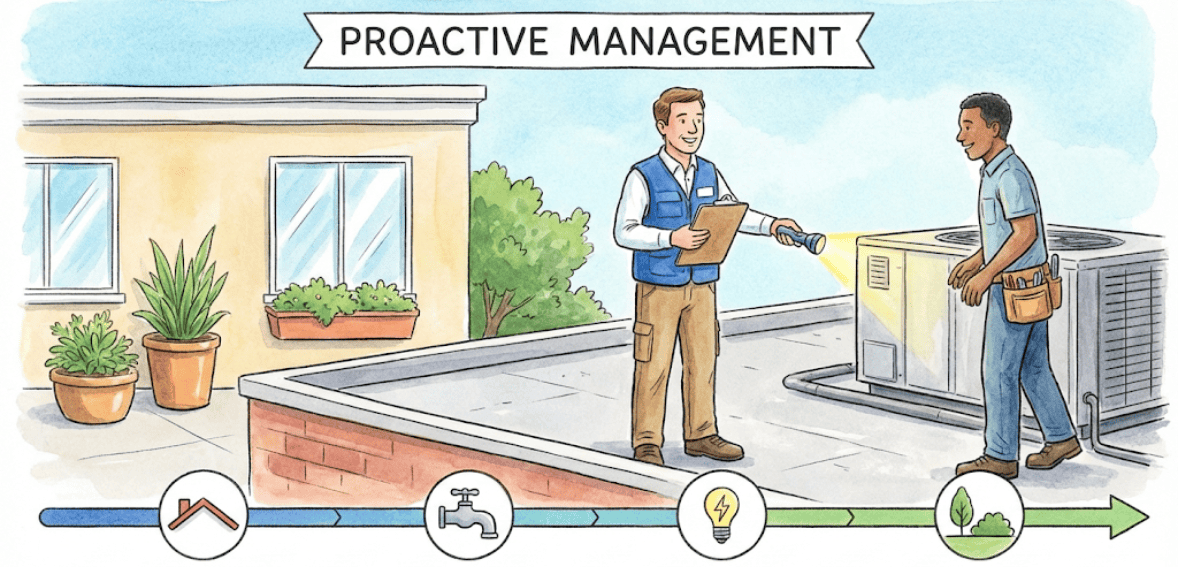
Reactive property management is one of the biggest reasons tenants leave. When management only responds after problems escalate, residents feel like they are constantly fighting to get basic needs met. Tenant retention strategies work better when management is proactive instead of reactive.

Proactive property management means anticipating issues before tenants complain. Scheduling regular inspections. Addressing wear and tear early. Checking in occasionally instead of only sending notices when rent is due. These actions build trust over time.

In 2026, tenants expect speed. Waiting days or weeks for simple repairs feels unacceptable to many residents. It is not just about the repair itself. It is about feeling ignored. Tenant retention strategies that prioritize quick response times show tenants they matter.

Proactive management also means clarity. Clear communication about policies, maintenance schedules, and changes reduces frustration. Tenants do not like surprises, especially negative ones. When people know what to expect, they are more likely to stay.

Property management that stays ahead of problems creates a calmer living environment. Calm tenants are long-term tenants.

Tenant Retention Strategies Depend on Trust and Communication

Clear communication building trust in tenant retention strategies

Trust is the quiet backbone of tenant retention strategies. Without trust, even small issues feel bigger than they are. With trust, tenants are more forgiving when problems happen, because they believe management is trying to fix things.

Communication builds that trust. Not constant messages, but honest and timely ones. Letting tenants know when repairs will take time. Explaining the reasons behind changes. Acknowledging mistakes when they happen. These moments shape how tenants feel about staying.

In many properties, communication only flows one way. Notices go out. Rules are enforced. Rent reminders are sent. But tenant retention strategies work better when communication flows both ways. When tenants feel heard, they feel invested.

Technology helps, but tone still matters. Automated systems are fine, but cold messages make people feel like numbers. In 2026, tenants expect efficiency and humanity simultaneously.

Strong communication reduces misunderstandings. Fewer misunderstandings mean fewer conflicts. And fewer conflicts mean higher lease renewals.

How Maintenance Quality Impacts Lease Renewals

Maintenance quality influencing lease renewals and tenant retention

Maintenance is one of the strongest drivers behind lease renewals, even more than rent increases in many cases. Tenants can accept paying a bit more if they feel their home is well cared for. They struggle to accept poor maintenance at any price.

Tenant retention strategies treat maintenance as a long-term investment rather than a cost to minimize. Quick fixes that fail later frustrate tenants more than delayed but permanent solutions. Quality matters.

Response time also matters. Even if a repair takes time, acknowledging the issue quickly helps. Silence creates anxiety. Tenants start imagining worst-case scenarios. Property management that communicates clearly during maintenance builds confidence.

Preventive maintenance plays a role, too. When tenants see management taking care of things before they break, it signals professionalism. That feeling carries weight when lease renewal time comes.

In 2026, tenants expect their homes to function smoothly. When maintenance supports that expectation, tenant retention strategies become much easier to execute.

Tenant Retention Strategies Improve When Lease Renewals Feel Easy, Not Stressful

Smooth lease renewals as part of tenant retention strategies

Lease renewals are a moment of truth. Everything a tenant has experienced during their stay shows up right here. If the renewal process feels rushed, confusing, or cold, even happy tenants start thinking about leaving. Tenant retention strategies work best when renewals feel natural and respectful, not like a pressure tactic.

In 2026, tenants expect clarity. They want to know renewal terms early, not at the last minute. Surprising tenants with short deadlines or sudden rent changes creates stress, and stressed tenants look for exits. Good property management treats lease renewals as a conversation, not a demand.

How renewals are communicated matters. A simple message acknowledging the tenant’s time on the property goes a long way. When residents feel appreciated, they are more open to staying, even if rent changes slightly.

Tenant retention strategies also involve flexibility where possible. Longer lease options, small adjustments, or timing considerations can make renewals easier without hurting long-term goals. The key is making tenants feel like partners, not placeholders.

Why Community and Belonging Matter in Tenant Retention Strategies

Community feeling strengthening tenant retention strategies

People do not just rent spaces. They live in them. Tenant retention strategies that ignore emotional connection miss a big opportunity. According to Cove, when tenants feel heard, informed, and respected, they are much more likely to renew their lease, and fostering a sense of community does not require frequent events or large budgets. Sometimes it is as simple as friendly interactions, well-maintained shared spaces, and respectful communication. Small efforts create familiarity, and familiarity creates comfort.

In 2026, many tenants will work from home or spend more time in their living spaces. This makes the environment even more important. Noise issues, cleanliness, and shared responsibility affect daily life. Property management that actively maintains a positive atmosphere naturally supports resident satisfaction.

Tenants who feel connected are also more forgiving. Minor issues feel manageable when people feel like they belong. That emotional layer strengthens tenant retention strategies more than discounts ever could.

Tenant Retention Strategies Benefit From Fair and Transparent Pricing

Pricing plays a role in tenant retention strategies, but fairness matters more than being the cheapest option. Tenants understand that costs rise. What they struggle with is sudden or unexplained increases.

Transparency builds trust. When tenants understand why prices change, they are less likely to feel taken advantage of. Property management that communicates openly about costs strengthens long-term relationships.

In 2026, tenants can easily compare prices. They know market rates. Trying to push unreasonable increases often backfires. Tenant retention strategies focus on balance. Reasonable pricing combined with strong resident satisfaction keeps turnover low.

Fair pricing also signals respect. When tenants feel treated fairly, they are more likely to stay even when budgets tighten. Trust and fairness work together here.

Also read: Gamifying Tenant Engagement: Innovative Strategies to Boost Retention and On-Time Rent

Why Tenant Retention Strategies Must Adapt in 2026

Tenant expectations are not static. What worked five years ago may not work today. Tenant retention strategies must evolve alongside changing lifestyles, technology, and economic conditions.

In 2026, tenants expect faster responses, clearer communication, and more transparency. They value convenience but still want human interaction. Property management that adapts to these expectations stays competitive.

Adaptation also means listening. Feedback, complaints, and even move-out reasons offer valuable insight. Tenant retention strategies improve when lessons are applied instead of ignored.

Retention is not about perfection. It is about responsiveness. When tenants see that management is willing to improve, they are more likely to stay and renew their leases.

Conclusion

Tenant retention strategies in 2026 are built on experience, not gimmicks. When resident satisfaction is prioritized, property management becomes proactive, communication stays open, and lease renewals feel fair; tenants stay longer. Keeping great residents is not about doing everything perfectly. It is about doing the important things consistently and with care. Strong tenant retention strategies create stability, reduce turnover costs, and build healthier properties over time.

FAQs

Why is tenant retention more important than finding new tenants?

Keeping good tenants costs less and creates a more stable income than constantly filling vacancies.

Do tenant retention strategies always involve lowering rent?

No, most retention comes from better service, communication, and overall experience, not discounts.

When should lease renewal conversations start?

Ideally, several months before the lease ends, so tenants have time to decide without pressure.

How does maintenance affect tenant retention?

Fast, quality maintenance makes tenants feel cared for and increases the chances of lease renewals.

Can small properties effectively use tenant retention strategies?

Yes, small properties often retain tenants better because personal attention is easier to provide.

Emergency preparedness for properties focused on disaster resilience

Disaster-Proofing Your Properties: Emergency Preparedness & Resilience Planning

Emergency preparedness for properties used to feel like something you worried about only after something bad happened. A flood hits, a fire breaks out, a storm damages the roof, and then suddenly everyone is asking questions. What went wrong? Why wasn’t there a plan? Who was responsible? In 2026, that reactive mindset no longer works. Disasters are happening more often, the weather is more unpredictable, and property owners expect managers to be ready, not surprised.

Disaster-proofing properties is not about panic or fear. It is about realism. Buildings face risks every year. Power outages, fires, floods, earthquakes, extreme heat, and even cyber disruptions affect how properties operate. Emergency preparedness for properties is about accepting that things will go wrong at some point and deciding in advance how you will respond when they do.

Many property managers think emergency planning means writing a document and filing it away. That is not how real resilience works. True disaster resilience is built into daily operations, maintenance decisions, communication systems, and even tenant relationships. It is about knowing your risks, reducing them where possible, and being ready to act fast when something happens.

This article is written for people who actually manage properties, not just talk about them. We are going to look at emergency preparedness for properties in a practical way. Not perfect words, not fancy theories. Just clear thinking about how to protect buildings, people, and income during emergencies. In this first part, we will focus on understanding risks, building the foundation of emergency planning, and strengthening properties before disaster strikes.

Emergency Preparedness for Properties Starts with Knowing the Real Risks

Property risk management through emergency preparedness for properties

Emergency preparedness for properties does not begin with alarms or evacuation plans. It starts with understanding what could realistically go wrong. Every property faces different risks depending on location, building type, age, and usage. A coastal building worries about floods and storms. An urban high-rise worries about fires and power failures. An older property may face structural risks that newer buildings do not.

Property management means asking uncomfortable but necessary questions. What happens if power is lost for days? What if the water supply is disrupted? What if access roads are blocked? These are not rare scenarios anymore. They are events that property managers are dealing with more often than they want to admit.

Many properties already show warning signs. Old electrical systems, poor drainage, outdated fire safety equipment, or a lack of backup power. Emergency preparedness for properties means recognizing these weak points early, rather than hoping they never become problems.

Risk awareness also includes people. Tenants may not know emergency procedures. Staff may not be trained to respond under pressure. Vendors may not be reachable during disasters. Disaster resilience depends on both physical systems and human behavior working together.

When property managers clearly understand real risks, emergency planning becomes focused rather than generic. You stop planning everything and start preparing for what actually matters.

Why Emergency Planning Must Be Built Into Daily Property Management

Emergency planning integrated into daily property management

Emergency planning fails when it only exists on paper. Emergency preparedness for properties works best when it is woven into daily routines. Maintenance schedules, inspections, vendor relationships, and communication systems all play a role in how a property responds during a crisis.

For example, regular maintenance is not just comfort. It is about resilience. A well-maintained roof handles storms better. Clean drainage systems reduce flood damage. Updated electrical systems reduce fire risk. Emergency preparedness for properties turns daily maintenance into disaster prevention.

Communication is another daily habit that matters. During emergencies, confusion causes panic. Tenants need clear instructions. Staff need clear roles. Emergency planning should define who will communicate, how messages will be sent, and what information will be shared. In 2026, relying on a single communication method is risky. Redundancy matters.

Property risk management also includes documentation. Updated floor plans, utility shut-off locations, emergency contacts, and insurance details should be easily accessible. During disasters, time is limited. Searching for information wastes precious minutes.

When emergency preparedness for properties becomes part of daily operations, responses feel more natural. People know what to do because they have practiced awareness through routine systems.

Building Disaster Resilience Through Property Design and Upgrades

Disaster resilience upgrades supporting emergency preparedness for properties

Disaster resilience is not only about response. It is also about strength. Properties designed or upgraded with resilience in mind sustain less damage and recover faster. Emergency preparedness for properties includes making smart choices about materials, systems, and layout.

Simple upgrades can make a big difference. Backup power systems keep essential services running. Fire-resistant materials slow damage. Flood barriers protect lower levels. Smart monitoring systems alert managers to problems early. None of these eliminates risk completely, but they reduce impact.

Many property managers hesitate to invest in resilience upgrades because of cost. But emergency preparedness for properties views costs differently. It asks how much damage, downtime, and lost income will cost if nothing is done. In many cases, resilience investments pay for themselves over time.

Disaster resilience also improves property value. Buildings that can operate during emergencies attract better tenants and insurance terms. Owners see stability instead of volatility. Emergency preparedness for properties becomes part of long-term asset protection.

Upgrades do not need to happen all at once. Resilience planning works step by step. Prioritize critical systems first. Power, water, fire protection, and structural safety are usually prioritized over comfort upgrades. Over time, these decisions create stronger, safer properties.

Emergency Preparedness for Properties Protects Income and Operations

Emergency preparedness for properties protecting income and operations

One of the biggest misunderstandings about emergency preparedness for properties is that it only protects lives, not revenue. In reality, income protection is a major reason emergency planning matters. Disasters disrupt rent collection, operations, and tenant retention. Properties that cannot function quickly lose trust.

When buildings remain operational during emergencies, even at reduced capacity, financial damage is lower. Tenants are more likely to stay. Insurance claims are easier to manage. Repairs begin faster. Emergency preparedness for properties helps keep businesses running rather than shutting down completely.

Property risk management also includes recovery planning. How quickly can operations resume? Who handles repairs? How are tenants informed? These decisions affect how long income disruption lasts. Disaster resilience is not just about surviving the event, but about recovering efficiently afterward.

In 2026, owners expect property managers to think so. Emergency preparedness for properties is no longer optional planning. It is a core part of professional management and long-term profitability.

Emergency Preparedness for Properties Depends on Clear Roles and Responsibilities

Clear emergency roles supporting emergency preparedness for properties

When disasters happen, confusion is often more damaging than the event itself. Emergency preparedness for properties breaks down quickly when no one knows who is supposed to do what. Everyone looks at everyone else, time passes, and small problems grow into big ones.

Clear roles are the backbone of emergency planning. Someone must be responsible for decision-making. Someone needs to handle tenant communication. Someone needs to coordinate vendors and emergency services. Emergency preparedness for properties works best when these roles are defined well in advance of anything going wrong.

This does not mean creating complicated chains of command. It means clarity. Staff should know their responsibilities during different types of emergencies. Property managers should know when to escalate issues to owners. Vendors should know how to respond quickly when contacted.

Training also plays a role. People do not perform well under stress if they are unsure of expectations. Emergency preparedness for properties includes walking through scenarios, even informally, so responses become instinctive rather than panicked.

When roles are clear, response time improves. Decisions happen faster. Tenants feel safer. Emergencies feel more controlled instead of chaotic.

How Communication Shapes Emergency Preparedness for Properties

Emergency communication supporting emergency preparedness for properties

Communication is one of the most fragile parts of emergency preparedness for properties. When systems fail, people feel isolated. Rumors spread. Anxiety rises. Clear communication reduces fear and helps people cooperate.

Emergency planning should clearly answer basic questions. How will tenants receive updates? How often will information be shared? What channels will be used if power or the internet is down? Relying on one method is risky. Emergency preparedness for properties depends on backup communication options.

Messages should be simple and direct. During emergencies, people do not want long explanations. They want to know what is happening, what they should do, and when they will hear more. Confusing messages create more problems than silence.

Property managers also need communication plans for owners, vendors, and emergency responders. Everyone involved should receive the right information at the right time. Emergency preparedness for properties becomes much stronger when communication flows smoothly in all directions.

Emergency Preparedness for Properties and Insurance Readiness

Insurance is often treated as something you deal with after a disaster. But emergency preparedness for properties includes being ready for insurance processes before anything happens. Delays in claims can slow recovery and increase losses.

Property managers should know exactly which policies cover and which do not. They should know reporting timelines, documentation requirements, and contact points. During emergencies, missing paperwork or unclear coverage can become major obstacles.

Documentation matters. Photos of property conditions, maintenance records, and inventory lists make insurance claims easier to process. Emergency preparedness for properties includes keeping these records up to date and accessible.

Insurance readiness is part of disaster resilience. Properties that recover faster do so because claims are processed quickly and repairs begin sooner. Preparation here saves weeks or even months during recovery.

Also read: Sustainable Property Management in 2026 – Green and Profitable

Why Emergency Preparedness for Properties Must Evolve Over Time

One of the biggest mistakes in emergency planning is assuming that once a plan exists, it is done. Emergency preparedness for properties must evolve. Building age. Tenants change. Climate patterns shift. Technology improves. Risks today may not match risks from five years ago.

Plans should be reviewed regularly. Not obsessively, but intentionally. What worked last year may not work next year. Emergency preparedness for properties improves when lessons from small incidents are used to reinforce future responses.

Disaster resilience grows through experience. Minor blackouts, leaks or system failures offer valuable insights. Ignoring them wastes opportunities to improve.

In 2026, resilience is not perfection. It is about adaptability. Emergency preparedness for properties means staying alert, learning continuously, and adjusting plans as conditions change.

Conclusion

Emergency preparedness for properties is no longer about checking a box. It is about protecting people, income, and long-term value in an unpredictable world. By understanding real risks, building resilience into daily operations, strengthening communication, and planning for recovery, properties become better able to handle whatever comes next. Disaster resilience is not created in the moment of crisis. It is built quietly, over time, through thoughtful property risk management and practical emergency planning.

FAQs

What is the first step in emergency preparedness for properties?

It starts with identifying realistic risks based on location, building condition, and use, not generic assumptions.

Does emergency preparedness for properties require expensive upgrades?

Not always. Many improvements come from better planning, maintenance, and communication rather than major spending.

How often should emergency plans be reviewed?

At least once a year or after any incident that reveals weaknesses in the current plan.

Why is communication important in emergencies?

Clear communication reduces panic, keeps tenants informed, and helps everyone respond more effectively.

How does emergency preparedness for properties support long-term value?

Prepared properties recover faster, retain tenants better, and experience less financial disruption after disasters.

Sustainable property management practices in modern green buildings

Sustainable Property Management in 2026 – Green and Profitable

Sustainable property management is no longer a niche idea reserved for luxury buildings or eco-obsessed owners. In 2026, it has become a very real part of running properties in a smart, practical way. And no, this is not just about saving the planet or looking good on marketing brochures. This is about money, efficiency, long-term value, and survival in a changing market.

Property managers today are under pressure from all sides. Owners want better returns. Tenants want lower utility bills and healthier living spaces. Governments want compliance with environmental rules. And maintenance costs keep going up. Sustainable property management sits right in the middle of all this. When done right, it helps reduce costs, increase tenant satisfaction, and preserve the property’s value over time.

The biggest misunderstanding is that sustainable property management is expensive and only makes sense for big buildings. That idea is outdated. In 2026, sustainability is not just about fancy systems. It is about smarter decisions, better planning, and using resources in a way that makes financial sense. Green buildings today are often more profitable than traditional ones, not less.

This article won’t lecture you or use fancy sustainability buzzwords. We are going to talk like real property managers talk. About bills, repairs, tenant complaints, and owner expectations. We will look at how sustainable property management actually works on the ground and why it has become one of the strongest strategies for profitable property management going forward.

Sustainable Property Management Starts With Smarter Building Operations

Sustainable property management through smarter building operations

Sustainable property management begins with how a building is operated every single day. Not with big promises, but with small decisions that add up over time. Lighting schedules, water usage, maintenance routines, and equipment choices all play a role here.

In many properties, energy is wasted simply because systems are outdated or poorly managed. Lights stay on when no one is around. Heating and cooling systems run longer than needed. Water leaks go unnoticed until the bill arrives. Sustainable property management focuses on tightening these gaps.

Energy efficiency is one of the biggest wins here. When buildings use energy more efficiently, operating costs go down. That is not a theory. That is math. Lower utility bills mean higher net income for owners. This is why green buildings are becoming more attractive from a business perspective.

Another part of smarter operations is preventive maintenance. Instead of waiting for things to break, sustainable property management focuses on regular checks and early fixes. This reduces emergency repairs, which are always more expensive and disruptive. Over time, this approach saves money and extends the life of building systems.

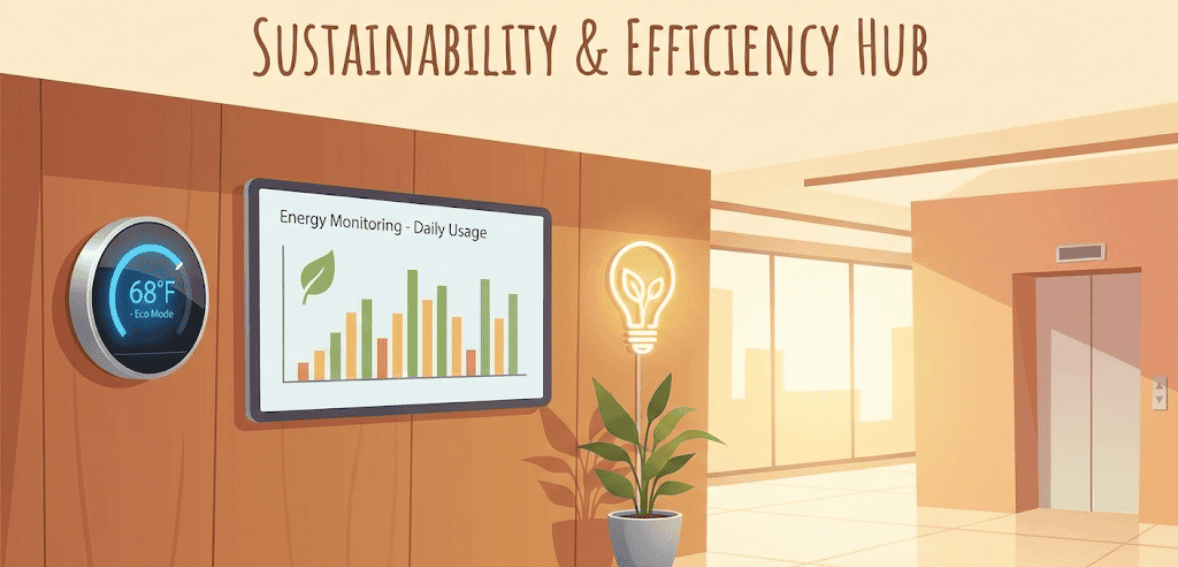
Sustainable property management is also about using data. In 2026, many buildings track energy and water usage in real time. This helps property managers spot unusual spikes and fix problems early. You no longer need a massive budget to do this. Many tools are affordable and easy to use.

Why Green Buildings Are More Valuable in 2026

Green buildings increasing property value in sustainable property management

Green buildings are no longer just about environmental certifications. In 2026, they are about market value. Properties that are designed and managed sustainably tend to attract better tenants, retain them longer, and command stronger rents.

Tenants today care about how much they pay every month, not just for rent, but for utilities too. When a building is energy efficient, tenants feel the difference. Lower electricity and water bills make a property more attractive, even if the rent is slightly higher.

From an owner’s perspective, green buildings also hold value better over time. Regulations are getting stricter, not looser. Buildings that already meet higher environmental standards are less likely to need costly upgrades later. Sustainable property management helps future-proof assets.

There is also the reputation factor. Buildings known for being well-managed and environmentally responsible tend to stand out in crowded markets. This helps with leasing and reduces vacancy periods. Fewer vacancies mean more stable income, a key factor in profitable property management.

In many cases, investors are actively looking for green buildings. They see sustainability as a sign of good management and as a way to lower long-term risk. This makes sustainable property management a selling point, not just an operational choice.

Energy Efficiency Is the Core of Sustainable Property Management

Energy efficiency systems used in sustainable property management

If there is one area where sustainable property management delivers fast results, it is energy efficiency. Heating, cooling, lighting, and appliances account for a large part of operating costs in most properties. Improving efficiency in these areas directly impacts the bottom line.

Energy efficiency does not always mean replacing everything at once. In reality, sustainable property management often works step by step. Switching to efficient lighting, improving insulation, upgrading controls, and maintaining equipment properly can make a big difference.

In 2026, technology plays a huge role here. Smart thermostats, automated lighting systems, and energy-monitoring tools help buildings use energy only when needed. These tools also provide data that helps property managers make better decisions.

What makes energy efficiency so important is that it benefits everyone. Owners see lower expenses. Tenants see lower bills. And the property becomes easier to market. That is why energy efficiency is at the heart of sustainable property management strategies today.

How Sustainable Property Management Reduces Long-Term Costs

Sustainable property management reducing long-term operating costs

One of the strongest arguments for sustainable property management is the long-term cost control it enables. While some upgrades may require upfront investment, the savings over time often outweigh the initial costs.

Efficient systems last longer because they are not constantly overworked. Preventive maintenance reduces breakdowns. Water-saving fixtures reduce the risk of leaks and associated damage. All of this adds up to fewer surprises and more predictable expenses.

This stability is crucial for profitable property management. Owners want consistent returns, not sudden spikes in costs. Sustainable property management creates a more controlled environment, making expenses easier to forecast.

It also reduces risk. Buildings that are poorly maintained and inefficient are more likely to face compliance issues, tenant complaints, and emergency repairs. By focusing on sustainability, property managers reduce these risks and create a stronger foundation for the future.

Sustainable Property Management Improves Tenant Satisfaction and Retention

Tenant satisfaction improved through sustainable property management

One thing that often gets overlooked in sustainable property management is how much it affects tenants on a daily basis. When a building is managed sustainably, tenants feel it even if they do not know the technical details behind it. The air feels better. Temperatures are more stable. Water pressure is consistent. Bills are more predictable. All of this adds up to a better living or working experience.

In 2026, tenants are more informed than ever. They ask questions about energy usage, waste management, and overall building efficiency. They also talk to each other online. Properties that ignore these concerns risk higher turnover. Sustainable property management helps reduce that churn.

Retention matters because finding new tenants is expensive. Vacancies and marketing cost money. Turnovers lead to wear and tear. When tenants stay longer, owners save money, and income becomes more stable. This directly supports profitable property management.

There is also a trust factor. When tenants see that a property is managed responsibly, they are more likely to report issues early and cooperate with building policies. That makes daily management smoother and less stressful.

The Role of Technology in Sustainable Property Management

Technology has become one of the strongest tools in sustainable property management. In 2026, managing properties without digital systems puts you at a disadvantage. Technology helps track energy use, water consumption, maintenance schedules, and even tenant behavior patterns.

Smart systems enable property managers to identify problems before they escalate. A sudden increase in water usage might signal a leak. Unusual energy spikes might point to faulty equipment. Sustainable property management uses this data to act early, not after damage is done.

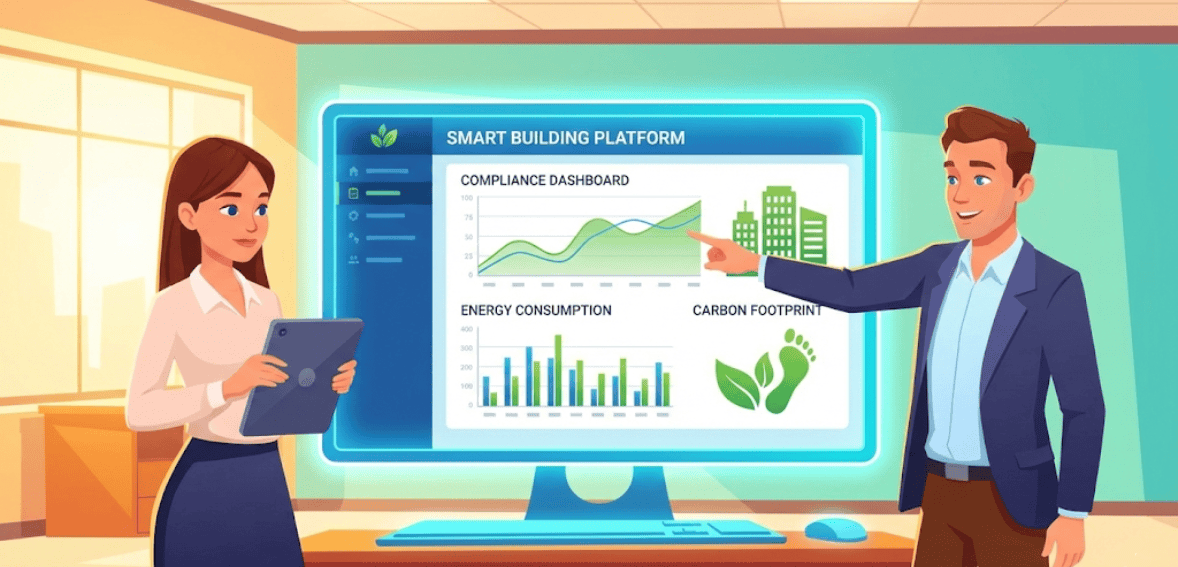
Technology also helps with reporting. Owners want to see results. They want proof that sustainability efforts are working. Clear data on reduced costs, lower energy use, and improved efficiency helps build confidence and justify decisions.

For green buildings, technology is not optional. It is what keeps systems running efficiently and ensures that sustainability goals align with financial goals. When technology and management work together, sustainable property management becomes much easier to maintain.

Sustainable Property Management and Regulatory Compliance in 2026

Technology supporting sustainable property management and compliance

Regulations around buildings are becoming stricter every year. Energy standards, water usage rules, and environmental reporting requirements are expanding. Sustainable property management helps property managers stay ahead rather than constantly react.

Buildings that are already energy efficient and well-maintained face fewer compliance surprises. They require fewer rushed upgrades and fewer last-minute fixes. This saves money and reduces stress.

In many markets, incentives and rebates are available for properties that meet certain sustainability standards. Sustainable property management helps identify and capitalize on these opportunities. Over time, these benefits can significantly improve returns.

Compliance is not just about avoiding penalties. It is about positioning properties for the future. Green buildings that already meet higher standards are easier to sell, refinance, and insure. This strengthens long-term value and supports profitable property management.

Why Sustainable Property Management Is a Smart Business Strategy

At its core, sustainable property management is about running properties in a way that makes sense in the long term. It balances cost control, tenant needs, and asset value. In 2026, this balance is no longer optional. It is expected.

Owners who focus only on short-term savings often end up paying more later. Deferred maintenance, inefficient systems, and unhappy tenants create bigger problems down the line. Sustainable property management takes a different approach. It looks at the full lifecycle of the property.

This approach leads to steadier cash flow, lower risk, and stronger market positioning. That is why sustainable property management and profitable property management are no longer opposites. They work together.

Conclusion

Sustainable property management in 2026 is about more than being green. It is about being smart. By focusing on green buildings, improving energy efficiency, and managing resources responsibly, property managers can reduce costs, keep tenants satisfied, and protect long-term value. When done right, sustainable property management is not just good for the environment. It is good for business.

FAQs

Is sustainable property management only for large properties?

No, even small residential and commercial properties can benefit from better energy efficiency and smarter operations.

Does sustainable property management increase costs?

While some upgrades require upfront investment, long-term savings usually outweigh those costs through lower utility and maintenance costs.

How do green buildings support profitable property management?

They attract better tenants, reduce operating expenses, and hold value longer, which improves overall returns.

What role does energy efficiency play in sustainability?

Energy efficiency reduces operating costs and environmental impact while improving tenant comfort.

Is sustainable property management required by law in 2026?

Requirements vary by location, but regulations are increasing, making sustainable practices more important than ever.

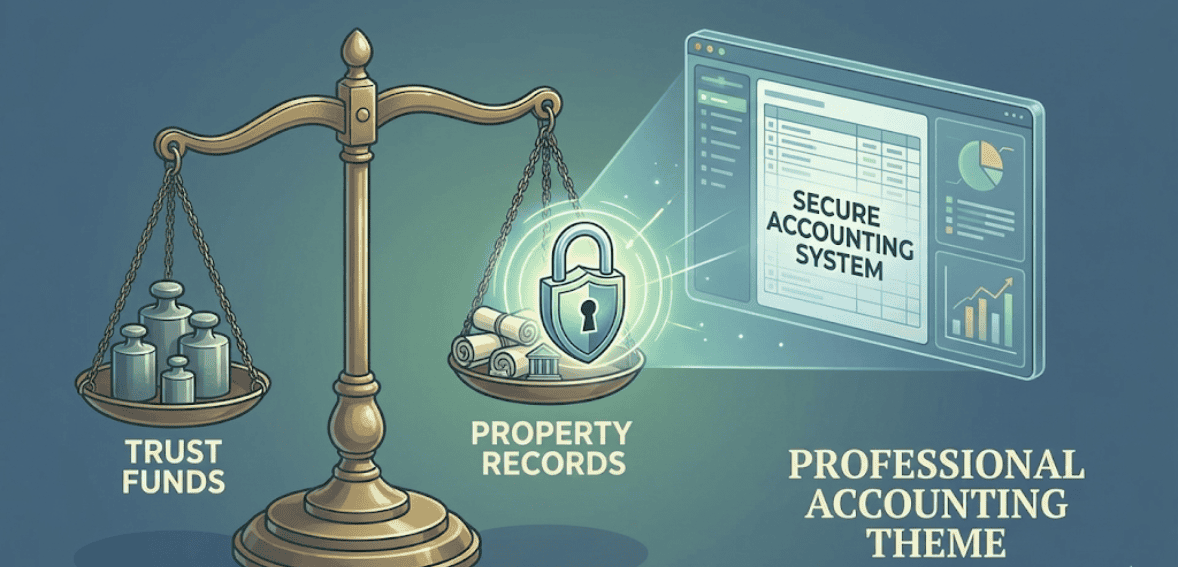
“Property management accounting dashboard showing trust accounts and financial reports”

Mastering Property Management Accounting: From Trust Accounts to Financial Reports

Property management accounting is one of those things that people think is simple until they actually start doing it. On the surface, it feels like just collecting rent, paying some bills, and giving the owner a report at the end of the month. But once you are inside a real property management business, you quickly realize it is a whole different world. You are handling other people’s money. You are responsible for keeping tenants, owners, vendors, and sometimes even government auditors happy. And one small mistake in property management accounting can quickly turn into a huge problem.

What makes property management accounting different from regular business accounting is the trust element. You are not just tracking your income and expenses. You are also holding funds that belong to property owners and, sometimes, tenants in special trust accounts. These funds must be handled very strictly. You cannot mix them with your own business money. You cannot spend them on your own needs. And you must always be able to show exactly where every dollar came from and where it went.

Learning property management accounting correctly is essential. Errors can lead to legal trouble, lost clients, or license loss. Done properly, it becomes a business strength. Owners trust you, reports make sense, and you truly know your business health.

This guide breaks property management accounting down practically, not as a textbook. We’ll discuss how money flows through a company, how trust accounts work, how rental income is tracked, and how this supports the financial reports owners rely on. The first part covers the foundation, because nothing else makes sense without it.

Property Management Accounting Starts with Trust Accounts

Trust accounting system used in property management accounting

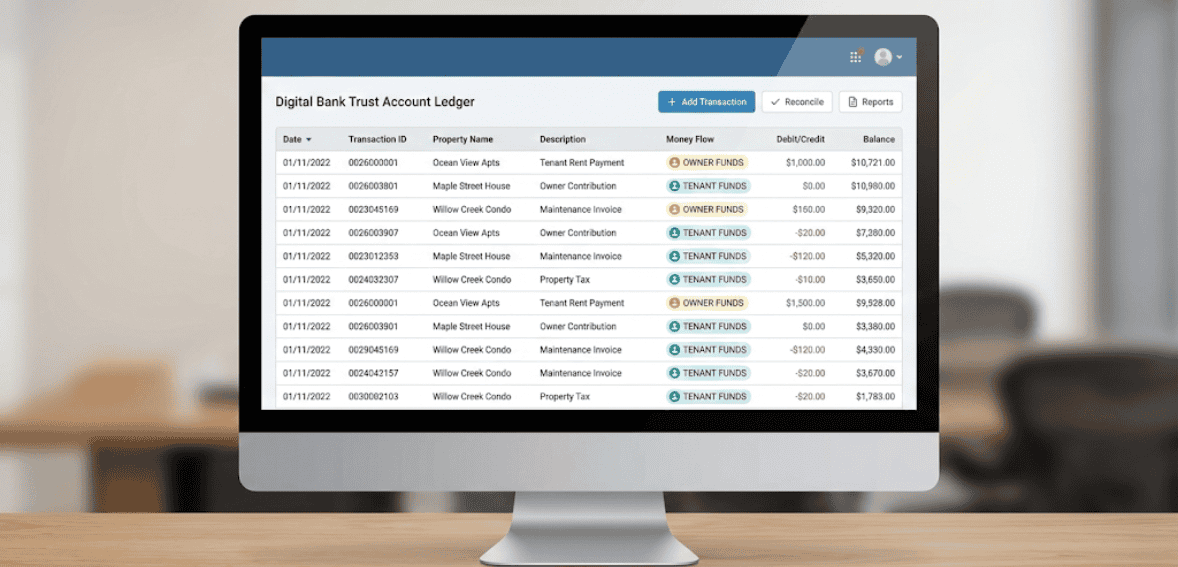
Property management accounting starts with trust accounts. Without understanding trust accounts, the rest remains confusing. A trust account holds money not owned by your company funds belonging to property owners or tenants. You simply manage this money.

Tenant rent and security deposits are placed in a trust account. Owner funds for repairs or reserves also go into a trust account. The operating account, where management fees are deposited, is separate. Mixing these accounts is one of the biggest mistakes new property managers make.

Strict rules govern trust accounts to ensure compliance with legal and ethical standards. Many states require that owner and tenant funds remain separate from business funds. Accidentally spending trust money, even briefly, can be misappropriation—a serious matter.

In real life, rent goes into the trust account. Later, you transfer your management fee to your operating account. The remaining funds stay in trust until used for expenses, such as maintenance, utilities, or owner distributions.

Property management accounting systems track trust balances, not just income. You must always know how much belongs to each owner or property. This isn’t just an organization; it protects you and your clients.

Done right, trust accounting lets you instantly see money available for repairs, each owner’s balance, and security deposit reserves. That clarity keeps your business smooth.

How Rental Income Tracking Works in Property Management Accounting

Rental income tracking inside property management accounting software

Rental income tracking is critical because rent is typically a property’s primary source of income. Tracking rent means not only recording payments, but also following where that money goes, when it’s earned, and how it affects trust balances.

When a tenant pays rent, that payment is recorded in the system and deposited into the trust account. But in property management accounting, that money is not fully available right away, as many people think. Some of it may be allocated to the owner, some to future expenses, and some to your management fee.

Let’s say a tenant pays $1,000 in rent. Maybe $100 is your management fee. Maybe two hundred is set aside for upcoming maintenance. The rest belongs to the owner. Good rental income tracking makes sure that every part of that thousand dollars is assigned correctly.

This is where many small property managers get into trouble. They see money in the bank and assume it is all free to use. But in property management accounting, bank balance and available balance are not the same thing. You might have fifty thousand dollars in the trust account, but only ten thousand might actually be available for spending, because the rest belongs to owners and tenants.

Rental income tracking also helps you spot problems early. If one tenant is always late, you can see that pattern. If a property is not producing enough income to cover its expenses, you can see that too. Without proper tracking, these issues stay hidden until they become serious.

This is also why modern property management accounting software is so important. Spreadsheets can work for a very small number of properties, but once you grow, you need a system that automatically tracks rent, allocates it correctly, and keeps your trust balances accurate.

Why Trust Accounting Is the Backbone of Property Management Accounting

Trust accounting protecting owner funds in property management accounting

Trust accounting is more than a feature it’s the foundation. Every report, payment, and transfer relies on accurate trust accounting.

At its core, trust accounting is about accountability. You are responsible for money that is not yours. Owners trust you to handle it properly. Tenants trust you to return their deposits. Vendors trust you to pay them on time. And regulators trust you to follow the rules.

This is why trust reconciliation is important. A reconciliation is when you compare your trust account bank statement to what your property management accounting system says you should have. They must match. If they do not, something is wrong. Maybe a payment was entered incorrectly. Maybe a transfer was missed. Or maybe someone made a serious mistake.

Regularly doing trust reconciliations is not optional. It is how you catch problems early before they grow. A small error this month is easy to fix. A six-month-old error can be a nightmare.

Good trust accounting also makes financial reporting much easier. When your trust balances are correct, your owner statements make sense. Your cash flow reports are accurate. And you do not have to guess where the money went.

Many property managers think accounting is just paperwork. But in property management accounting, it is actually about control. Control over your money, your risks, and your reputation.

How Property Management Accounting Connects to Financial Reporting

Financial reporting generated by property management accounting

Everything we talked about so far leads to one thing: financial reporting. Financial reporting is where all your work in property management accounting finally becomes useful. This is what owners see. This is what helps them decide whether to keep a property, sell it, or invest more money.

When your rental income tracking is clean and your trust accounting is accurate, your financial reporting becomes powerful. You can show owners exactly how much money came in, how much went out, and what their net income really is. You can also show them where their trust balance stands, so they know how much cash is available to them.

Financial reporting in property management is not only about profit and loss but also about transparency. Owners need to see that their money is managed properly to build confidence in your services.

This is also where you protect yourself. If an owner ever questions a payment or a balance, you have the records to back it up. Your property management accounting system becomes your proof.

In the next part, we will go deeper into financial reporting itself, owner statements, expense tracking, and how all of this turns into real-world decisions. That is where property management accounting really shows its value.

How Property Management Accounting Handles Expenses and Vendor Payments

Expense tracking and vendor payments in property management accounting

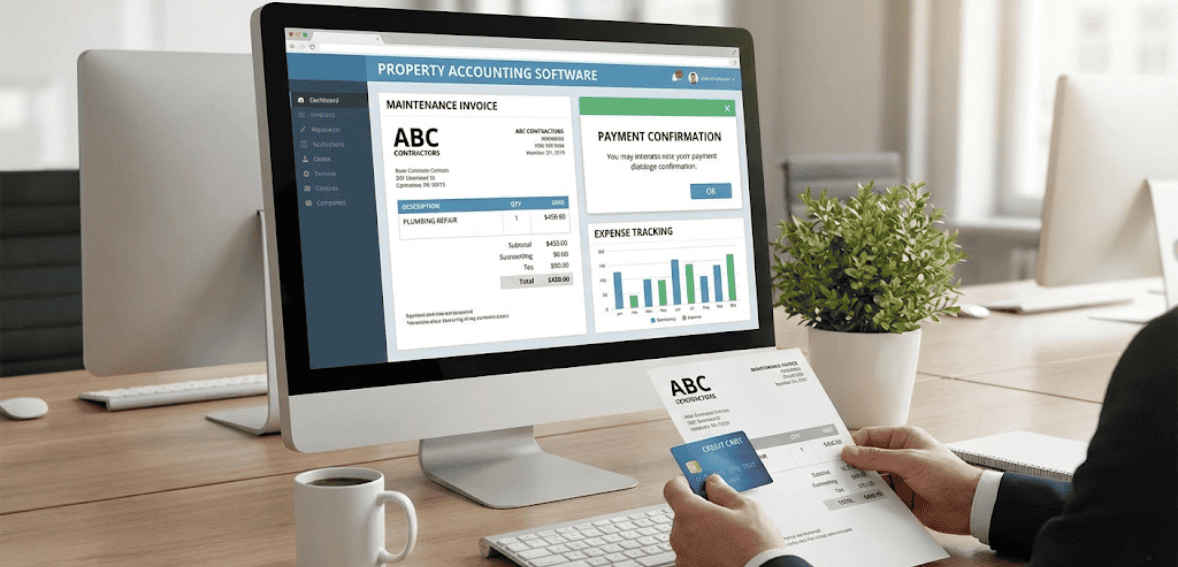
Once rental income starts coming in, the next big thing property management accounting has to deal with is expenses. This is where things can get messy if the system isn’t set up correctly. Every property has expenses. Repairs, cleaning, utilities, landscaping, insurance, taxes, and emergency fixes. All that money usually comes out of the trust account because it belongs to the property owner, not the management company.

So when a vendor sends an invoice, property management accounting must check a few things before paying it. First, is the expense actually for this property? Second, is there enough money in that property’s trust balance to cover it? Third, has the owner approved it, if approval is required? Only after these items are confirmed should the payment be issued.

This is where many managers make mistakes. They pay bills first and worry about balances later. That is dangerous. If you pay a vendor using money that belongs to a different owner or property, you are breaking trust accounting rules. Even if you plan to fix it later, it is still a violation.

In a good property management accounting setup, every expense is tied to a specific property and owner. The system automatically reduces that property’s trust balance when the bill is paid. That way, you always know exactly how much money is left for that property.

Vendor payments must also be properly recorded. You are not just paying a bill. You are creating a financial record that will appear in the owner’s financial reporting. If a plumber fixed a leak, the owner will see that cost in their statement. If the amount is wrong or missing, it creates confusion and mistrust.

This is why property management accounting is not just data entry. It is a process of checking, verifying, and recording so that everyone involved can trust the numbers.

Also read: Ensuring Legal Compliance in Property Management: Software Tools for Landlord-Tenant Law and Accounting

Owner Statements and Financial Reporting in Property Management Accounting

Owner statements created through property management accounting

Owner statements are one of the most important outputs of property management accounting. This is where everything comes together. Rent collected, expenses paid, management fees, and remaining trust balances all appear in this one document.

A good owner statement tells a clear story. It shows the amount of rental income received during the period. It shows what was spent and why. It shows the fees the management company charged. And it shows how much money is left for the owner. When property management accounting is done right, the owner can review that statement and understand what happened without having to call and ask questions.

Financial reporting is not just one statement. It includes reports such as profit and loss statements, cash flow summaries, and trust balance reports. These help owners see trends over time. Maybe property is doing better this year than last year. Maybe maintenance costs are rising. Maybe rental income tracking shows vacancies increasing. All this information comes from property management accounting.

For the management company, financial reporting is also a way to measure performance. You can see which properties are profitable, which ones are high-maintenance, and which ones might not be worth keeping as clients.

The key is that financial reporting only works if the underlying data is correct. Bad trust accounting leads to bad reports. And bad reports lead to bad decisions.

Why Reconciliations Keep Property Management Accounting Honest

Reconciliation is one of those words that sounds boring but is actually very powerful in property management accounting. It simply means checking that your records match reality. In this case, it means ensuring that your trust account balance in the bank matches what your accounting system shows it should be.

This should be done regularly, usually every month. You take the bank statement for the trust account and compare it line by line with your property management accounting records. Every deposit, every payment, and every transfer should match.

When they do not match, it means something is wrong. Maybe a payment was entered twice. Maybe a deposit was not recorded. Or maybe money was moved without being documented. These are not just small issues. In trust accounting, even a small mismatch is serious.

Reconciliations are what protect you. They catch mistakes early. They also protect owners because their money is being checked and verified. In many places, regulators can seek these settlement reports. If you cannot provide them, you can face penalties.

So even though reconciliations feel like extra work, they are actually what keep property management accounting clean and safe.

How Property Management Accounting Supports Better Business Decisions

When property management accounting is done properly, it becomes more than just compliance. It becomes a business tool. You can see which properties are making money and which are struggling. You can see where expenses are going. You can see how much cash is sitting in trust and how much is flowing out.

This helps you make smarter decisions. Maybe you see that one property has constant repair costs and low rental income. That tells you something. Maybe another property has a strong trust balance and steady rent. That tells you something else.

Owners also use this information to make decisions. They might decide to raise rent, sell a property, or invest in improvements based on the financial reporting you provide.

This is why property management accounting is not just bookkeeping. It is about giving everyone a clear picture of what is really happening.

Conclusion

Property management accounting is the foundation of a successful property management business. It starts with trust accounts, flows through rental income tracking, and ends with financial reporting that owners rely on. When it is done right, it creates transparency, builds trust, and helps everyone make better decisions. When it is done wrong, it leads to confusion, legal risk, and unhappy clients.

By understanding trust accounting, correctly tracking rental income, handling expenses carefully, and producing clear financial reporting, you turn property management accounting into a strength rather than a headache.

FAQs

What makes property management accounting different from regular accounting?

Property management accounting involves trust funds belonging to owners and tenants, not just the company, so it has much stricter rules and tracking requirements.

Why is trust accounting so important?

Trust accounting ensures that owner and tenant funds are kept separate and protected, as required by law in most jurisdictions.

How does financial reporting help property owners?

Financial reporting shows owners how much money their property is generating, what has been spent, and how much cash is available, helping them make better decisions.

How often should trust accounts be reconciled?

Trust accounts should be reconciled at least once a month to catch errors early and protect owner funds.

What if property management accounting is done incorrectly?

Mistakes can lead to legal issues, unhappy property owners, and even the loss of a license, because trust money must be handled very strictly.

Mastering rental listing marketing using online rental marketing tools to fill vacancies faster

Mastering Rental Listing Marketing: Fill Vacancies Faster with Online Tools

In today’s rental market, filling a vacancy is no longer just about putting up a sign or posting a short ad. Property owners and managers who want consistent cash flow and high-quality tenants must master rental listing marketing in a digital-first world. Renters now search for homes online, compare listings instantly, and expect detailed information before they ever reach out. If your listing does not stand out on screens, it gets skipped, no matter how great the property is in real life.

Rental listing marketing has become a strategic discipline that combines pricing, photography, digital placement, response speed, and data-driven optimization. With the right online tools, landlords and property managers can dramatically reduce vacancy days, attract higher-quality tenants, and keep their portfolios performing at peak efficiency. The difference between a unit sitting empty for weeks and one filling in days often comes down to how well that listing is presented, distributed, and managed across digital channels.

This article explores how modern online rental marketing tools have reshaped the leasing process. We will look at how listings get discovered, what makes renters click, how digital systems accelerate communication, and how data can be used to fine-tune marketing performance. The goal is simple: help you fill vacancies faster while protecting long-term rental value.

Why Rental Listing Marketing Is the Foundation of Vacancy Control

Rental listing marketing with high-quality photos to increase tenant lead generation

Rental listing marketing is no longer a side task in property management. It is the engine that drives occupancy. Every empty unit represents lost revenue, increased carrying costs, and growing pressure on cash flow. Strong online rental marketing shortens vacancy time by placing the right property in front of the right renter at exactly the right moment.

Today’s renters start their search online. They compare dozens of listings in minutes, filter by price, location, amenities, and move-in dates, and only reach out to a small number of properties that truly match their needs. That means your listing must do more than exist; it must compete. If the photos are dark, the description is vague, or the listing is hard to find, your vacancy lasts longer, even in a high-demand market.

Effective rental listing marketing works like a funnel. First, your property must appear on the platforms where renters are searching. Then it must catch attention with strong visuals and clear details. Finally, it must make it easy for renters to take the next step, asking a question, booking a tour, or applying. When all three elements are aligned, vacancy fill speed increases dramatically.

Modern tools automate much of this process. They distribute listings across multiple channels, track where leads come from, and allow managers to respond quickly. Instead of guessing why a unit is not leasing, you can see the data and adjust. That control is what turns marketing into a predictable, repeatable system rather than a stressful waiting game.

How Online Rental Marketing Changes the Way Renters Find Homes

Online rental marketing has completely reshaped renter behavior. Instead of driving around neighborhoods, people now open a browser or an app and instantly view hundreds of available homes. Listings are sorted by price, photos, location, and even move-in availability. Renters form opinions in seconds, long before they ever speak to a property manager.

This shift means digital presentation is as important as the physical property itself. The first impression happens on a screen. Clear photos, accurate floor plans, detailed descriptions, and transparent pricing are what convince renters to keep reading. A listing that lacks detail or looks unprofessional gets ignored even if the property itself is attractive.

Online rental marketing tools also give renters more control. They can save listings, share them with roommates, compare similar units, and return later. This means your listing must stay visible and memorable throughout the decision process. A strong headline, high-quality visuals, and a clear value proposition make a property easier to recognize when renters come back to make their final choice.

Online search speed also means renters expect fast responses. When someone clicks “contact” or “request a tour,” they are often contacting multiple properties simultaneously. The property that replies first usually wins. This is where technology becomes critical. Automated lead routing, instant notifications, and digital scheduling enable managers to respond when interest is highest.

Also read: Digital Marketing for Property Managers: How to Attract Property Owners in 2026

Optimizing Property Listings to Drive Tenant Lead Generation

Online rental marketing generating tenant leads for faster vacancy fill speed

Tenant lead generation is directly tied to how well a listing is built. Every element of a rental ad, from the title to the photos to the way amenities are described, influences how many inquiries it receives. Small improvements in listing quality can lead to large increases in vacancy fill speed.

The title of a listing should be clear, descriptive, and focused on what renters care about most. Instead of vague phrases, it should highlight the unit’s location, size, and key features that set it apart. This helps your listing stand out in search results and gives renters a reason to click.

Photos are often the strongest lead driver. Bright, clean, well-composed images allow renters to imagine themselves living in the space. Poor lighting or cluttered rooms send the opposite message. High-quality images increase both the number of inquiries and the seriousness of those leads.

Descriptions should be honest, informative, and easy to read. Renters want to know what they are getting without having to guess. Details about utilities, parking, pets, and lease terms reduce back-and-forth communication and attract renters who are actually a good fit. That leads to fewer wasted showings and stronger applications.

Online rental marketing platforms allow managers to update listings in real time. If something changes price, availability, or features, it can be reflected instantly across all channels. This prevents confusion and ensures that every inquiry is based on accurate information, thereby improving conversion rates and reducing frustration on both sides.

How Data and Automation Improve Vacancy Fill Speed

Vacancy fill speed is not just about exposure; it is about efficiency. The faster you can turn interest into action, the shorter your vacancy lasts. Digital rental marketing tools provide both the data and the automation needed to make that happen.

Every listing generates performance data. You can see how many people viewed it, clicked, and contacted you. This reveals what is working and what is not. If a unit gets a lot of views but few inquiries, the issue might be pricing, photos, or description. If it gets inquiries but no applications, the problem might be response time or tour availability.

Automation eliminates delays. When a renter submits an inquiry, the system can instantly notify the right team member, send a confirmation message to the renter, and even offer a self-scheduling link for tours. This removes manual steps that slow the process.

The result is a smoother experience for renters and a faster path to occupancy for owners. Instead of juggling emails and phone calls, managers can focus on showing units, screening applicants, and closing leases. That efficiency transforms rental listing marketing from a passive activity into a powerful vacancy-control system.

How Digital Scheduling and Tour Tools Convert Interest into Leases

Online scheduling supporting rental listing marketing and faster vacancy fill speed

Once rental listing marketing generates interest, the next challenge is turning that interest into real leases. This is where digital scheduling tools become incredibly powerful. Renters today expect speed and convenience. If they have to wait hours or days just to schedule a tour, they often move on to another property that responds faster.

Online scheduling systems allow renters to instantly choose available tour times. Instead of phone calls and email chains, the renter selects a slot that works for them and receives an automatic confirmation. This creates a friction-free experience that feels professional and organized. It also reduces no-shows because automated reminders go out before the appointment.

From the property manager’s perspective, digital tour scheduling creates structure. It prevents double bookings, shows availability gaps, and allows staff to plan efficiently. This means more tours per day and fewer wasted hours. As more tours occur, more applications follow, directly improving vacancy fill speed.

In competitive markets, being the easiest property to tour often matters as much as being the best one. Online rental marketing tools ensure that when a renter is ready to take the next step, there is nothing slowing them down.

Using Online Applications to Shorten the Leasing Cycle

Online rental marketing with digital applications to improve tenant lead generation

One of the biggest time drains in traditional leasing is the gap between showing and applying. In older systems, renters had to request an application, fill it out manually, and submit documents separately. Every extra step increased the chance they would abandon the process or choose another property.

Modern rental listing marketing platforms integrate online applications directly into the listing. When a renter finishes a tour or even before they visit, they can submit everything digitally. Income verification, ID uploads, and credit checks occur within a single streamlined workflow.

This dramatically speeds up the leasing process. Property managers can review qualified applicants within hours instead of days. Renters appreciate the convenience, and high-quality applicants are more likely to move forward quickly when the process feels easy and professional.

Faster applications mean fewer days vacant. That makes online applications one of the most powerful tools for improving vacancy fill speed.

The Role of Reputation and Reviews in Rental Listing Marketing

Online rental marketing supported by reviews to increase tenant trust and conversions

In the digital rental market, reviews and reputation are part of your listing, even if they are not physically on the page. Renters often search the property or management company name before contacting anyone. What they see influences their decision more than many owners realize.

Strong online rental marketing includes managing your reputation. Responding to reviews, maintaining accurate business information, and presenting a consistent brand all build trust. A renter is far more likely to apply to a property when they feel confident the manager is professional and responsive.

Good reviews also boost listing performance on many platforms. Properties with higher ratings are shown more often, leading to more tenant leads without increasing marketing spend.

In this way, reputation becomes part of your vacancy control strategy. Every positive experience today helps fill future vacancies faster.

How Multi-Channel Distribution Expands Your Reach

Rental listing marketing across multiple platforms to improve vacancy fill speed

One of the biggest advantages of modern rental listing marketing tools is the ability to distribute listings across multiple channels at once. Instead of manually posting the same ad on multiple websites, a single system can automatically post to them all.

This multiplies exposure while keeping information consistent. If the price or availability changes, it updates everywhere at once. That prevents confusion and ensures renters always see accurate data.

Multi-channel distribution also provides performance insights. You can see which platforms generate the most tenant lead generation and which ones waste time. Over time, this allows managers to focus effort where it produces the best vacancy fill speed.

The goal is not to be everywhere; it is to be everywhere that matters.

Why Speed Is the Most Valuable Asset in Modern Leasing

In digital rental markets, speed wins. The property that responds first, schedules fastest, and processes applications quickest usually secures the best tenants.

Rental listing marketing is not just about being visible. It is about being ready. Automated replies, instant scheduling, and online applications remove the delays that allow competitors to step in.

When these tools are combined into one system, vacancy fill speed becomes predictable. Instead of hoping a unit will lease quickly, managers can actively drive the process forward.

That control is what separates high-performing portfolios from struggling ones.

The Long-Term Value of Smart Online Rental Marketing

Beyond filling today’s vacancy, strong rental listing marketing builds long-term stability. Faster leasing improves cash flow. Better leads reduce turnover. Data helps refine pricing and presentation.

Over time, these advantages compound. A property that consistently fills faster and attracts better tenants generates more income and requires less effort to manage. That is the true power of combining technology with marketing strategy.

Modern online rental marketing does not just help you lease units. It helps you build a more resilient, scalable rental business.

Conclusion

Mastering rental listing marketing is no longer optional for property owners and managers who want to compete in today’s rental market. Online rental marketing tools transform how listings are created, distributed, and managed, enabling professionals to attract better tenants and reduce vacancy fill speed with precision.

From optimized listings and digital tours to automated applications and data-driven performance tracking, technology now controls every step of the leasing journey. When used correctly, these tools transform vacancy management from a stressful guessing game into a reliable, efficient process.

The future of leasing belongs to those who embrace speed, transparency, and digital convenience. And that future starts with smarter rental listing marketing.

FAQs

How does rental listing marketing reduce vacancy time?

It increases visibility, improves lead quality, and speeds communication. When listings are optimized and supported by automation, renters move faster from search to lease.

Are online rental marketing tools expensive?

Most tools are affordable compared to the cost of even one extra week of vacancy. Return on investment typically comes quickly through faster leasing.

Do better listings really attract better tenants?

Yes. Clear photos, accurate details, and a professional presentation attract serious, qualified renters who are more likely to stay long term.

Is automation impersonal for renters?

No. It removes delays and confusion, which renters appreciate. Managers still provide personal service during tours and leasing.

Can small landlords use these tools effectively?

Absolutely. Even small portfolios benefit from faster leasing, fewer mistakes, and better tenant lead generation.

Digital marketing for property managers in 2025

Digital Marketing for Property Managers: How to Attract Property Owners in 2026

The property management industry continues to evolve at breakneck speed, with 2026 representing an inflection point for property managers in terms of winning new owner clients. Growth fueled by organic referrals alone is no longer sufficient. Today’s property owners search, compare, and screen management companies online well before they reach out. They’re seeking professionalism, transparency, assurance of competency, and trust that their assets are in good hands.

Digital marketing for property managers is no longer about just “having a website” or running the occasional ad. It’s a strategic system of trust-building, value demonstration, and positioning, a property management company not just as a service provider but as a long-term partner. Owners have complex questions: How will this manager protect my income? How do they reduce vacancy? How do they handle all the issues that pop up related to legal compliance, maintenance, and tenant matters? Your digital presence has to answer those questions well before that first phone call ever happens.

By 2026, owners will be better informed about the information available to them. They are more risk-averse and more discriminating. They are also more comfortable transacting with businesses online. Clearly, there is a huge benefit for a property manager who can effectively use the online space to convey their knowledge in a clear, informative, and owner-centric way. Online marketing done right becomes a projection of what you are as a company.

In this report, we will examine how property managers can effectively leverage online marketing to attract property owners in 2026.

Digital Marketing for Property Managers in a Changing Owner Landscape

Long-term digital marketing strategy for property managers

Digital marketing for property managers starts with understanding the mindsets and behaviors of today’s property owners. The property owner in the year 2026 is no longer the traditional landlord seeking a person to collect the rent. Instead, the owner is likely to be an investor seeking to diversify their portfolio or a busy professional needing easy-to-understand output and risk management.

The majority of property owners have started their search online. They thoroughly read websites, examine how service explanations are presented, assess credibility indicators, and analyze how well services are described. An ill-structured website, ambiguous service information, and outdated messages indicate that the company is operationally incompetent regardless of its actual competence. A well-developed website presupposes competence, stability, and professionalism regardless of actual performance.

Digital marketing is also where owners evaluate specialization. They will want to know whether you understand their specific condition. If it is single-family, multi-unit, long-distance, and so on. This is exactly where you must aim through digital media. Their message will not reach everyone. Messages that appeal to everyone will appeal to no one.

Another change is that the focus is put equally on the value of education and advancement. A business will appeal to the owner if it understands the processes thoroughly and provides information on regulatory concerns or market trends. Including educational information tends to boost confidence and transform the property manager into a strategic resource.

In 2026, online marketing to property managers becomes non-negotiable. It becomes the key source for first impressions, short-listing, and qualifying individuals for a call. The objective is not to sell hard but to be top-of-mind, credible, and relevant when the owner seeks advice.

Why Authority-Based Marketing Attracts Better Property Owners

Future of digital marketing for property management companies

To attract property owners, it is not just about numbers; it is about quality. Authority-based online marketing focuses on attracting property owners who value professionalism, processes, and long-term relationships. These are the type of property owners who are less likely to turn over, appreciate processes, and appreciate managed processes.

A reputation is created by clarity and consistency. When you have a clear website, articles, and messages that detail how properties are handled, risks are managed, and properties are protected to safeguard owner income, it demonstrates experience. The property owner is comforted by reading well-thought-out ideas instead of advertising copy.

This also relates to content. In-depth educational pages, high-quality guide content, and service descriptions effectively communicate to the owner what sets your service apart. This takes focus away from price and leads to discussions about value and results. Owners who engage with authoritative content are likely to have higher levels of questioning and expectations.

Authority marketing also helps automatically qualify leads. Owners who are not ready to invest in proper management tend to opt out early, while genuine owners proceed with confidence. This leads to better quality clients and smoother processes in the later stages.

Additionally, long-term visibility is another advantage associated with this process. Search engines are keen to display information that is considered expert, has many tiers, and is in-depth. Establishing your presence for education and simplicity brings residual benefits for months to years after posting.

In 2026, authority-based marketing for property managers is no longer about personal branding or aggressive self-promotion. It is about establishing your company as an informed operator with whom significant financial stakes are safe.

Building a Website That Speaks Directly to Property Owners

Your website will be central to your online marketing efforts. For property management companies, it needs to be more than an online brochure; it must be a decision-making tool for property owners.

The best property management websites in 2026 are organized around owner concerns, not corporate ego. Rather than promoting generic benefits, they describe how things are done: how new owners are brought on board, how reporting is handled, how maintenance is decided, and how risks of noncompliance are mitigated. Owners are interested in how things work.

Clarity is also a crucial factor. Pages should be written in simple, professional language that is neither technical nor overly technical, yet that still reflects expertise. Matters such as rent optimization, legal issues, and maintenance schedule management can be described in a composed and logical manner. This will help reassure owners that you are working in a planned way.

Trust factors are more important than ever. “A clean listing with complete contact information, good design, fresh content, and clear explanations will carry more weight,” says Gabriela. “Nothing undermines trust as quietly as an outdated blog or links that are no longer functional or explanations that are ‘vague or inscrutable.’”

Your website should also guide your owners to act seamlessly. Your website should encourage owners to learn more, have a chat, or inquire about specific information, rather than aggressive calls to action. This appeals to how modern-day owners want to interact after they have become informed.

A website in 2026 is more than a sales tool for a property manager. It is the operation’s electronic face. And owners read it, whether they say they did or not.

Content Marketing as a Trust-Building Engine

“Content marketing is one of the most effective means at a property manager’s disposal to attract owners organically. In 2026, it is no longer just publishing a lot of material online. It is a matter of publishing material that has meaning.”

Property owners will respond to content that helps them think clearly about their property assets. They will respond to content that differentiates management issues, legal matters, trends, or best practices. This establishes recognition and trust before anyone from the company reaches out.

Long-form educational content is particularly effective because it reflects how owners research. They are not searching for a tip, but information. When your content provides a solution to their inquiry, it shows you are patient, competent, and confident.

The content also enables long-term visibility on the digital platform. This is because high-quality content attracts many visitors over the long term, especially when it focuses on topics that concern the owner in perpetuity, such as regulatory issues, tenant quality, maintenance costs, and investment returns.

Another benefit of pet sitting for owners like yours will be alignment. Those who share your views will understand your philosophy.

For property managers in 2026, content marketing is not something you do on the side. It is how you establish trust discreetly, attract the right property owners, and enhance your reputation.

How Search Visibility Shapes Owner Trust in 2026

Property management digital marketing and search visibility

By 2026, search behavior will become one of the most robust indicators of credibility in property management. Property owners do not just search to find names; they search to validate competence. When an owner types questions about management fees, compliance risks, or vacancy reduction, the companies that appear and answer those questions clearly are perceived as more trustworthy.

Visibility in search is no longer about gaming algorithms; rather, it’s about matching intent. Homeowners looking for a property manager are very often in a state of mind to make a decision. They consider risk, cost, and long-term consequences. This means digital marketing for property managers should focus on aligning content with these concerns rather than generic promotional language.

When a property management company keeps showing up in search results for educational queries, familiarity gets built. Even if the owner didn’t contact you right away, the repeated exposure leads to recognition. By the time they are ready to engage, your brand already feels known and trustworthy.

Search visibility also reinforces authority indirectly. Owners assume companies that show up regularly must be established and credible. That perception affects trust long before a word is spoken. In 2026, being invisible online can be equated with being inexperienced or obsolete, even if it is not true.

The key is to focus on clarity, relevance, and depth. Content that explains how property management works, why certain decisions matter, and how risks are handled tends to perform better than superficial marketing copy. Search visibility becomes a byproduct of usefulness, not manipulation.

Relationship-Focused Digital Marketing Instead of Lead Chasing

Relationship-based digital marketing for property managers

One of the biggest pitfalls for property managers is treating online marketing as a way to generate leads rather than a relationship-building tool. In 2026, property owners are increasingly averse to aggressive sales methods. They like to be engaged when they feel educated and respected.

Relationship-driven digital marketing emphasizes building trust rather than immediate conversions. Here, brands develop content and messages to educate, reassure, and show process maturity. The owner wants to know you understand his concerns before you ask for his business, which is essential for effective online marketing.

This approach is also leading to a different definition of success. Instead of analyzing traffic or inquiries alone, relationship-building marketers are analyzing the quality of engagement. Are homeowners spending time reading what you have to say? Do they come back for more? Are conversations smarter and better-informed?

There is also reduced friction during onboarding. It is likely that owners who grasp your strategy will avoid questioning every procedure. Digital marketing acts as a filter, attracting owners who appreciate structure and professionalism.

In 2026, property managers who rely on relationship-based communication through digital media are more likely to achieve sustainable growth. This is because their clientele would retain longer, communicate well, and help advance their reputation through recommendations and reviews.

Also read: Marketing & Lead Management for Rentals: Integrating Property Management Software with Digital Tools

Educating Owners Without Overwhelming Them

Educational content for property management marketing

A challenge property managers face in digital marketing is balancing educational content with complexity. Property owners want simplicity. The objective is to end up on the side of enlightenment without being confusing.

“Smart” educational technology in education should emphasize outcomes and logic rather than minutiae. For instance, instead of listing all the compliance guidelines, you could describe the methods your technology uses to minimize risk and safeguard the owner. This presents risk not as something to be managed by the owner but rather by you.

Tone is important here. The information should be reassuring, organized, and polite. Fear tactics should not be used. The key to influencing the owner may be to keep the information level-headed and down-to-earth.

Another key is sequencing. Not all content has to be educational. Digital marketing is most successful when information is layered. “Introduction” pages introduce understanding, while longer “articles” introduce owners who wish to learn more.

In 2026, property managers who teach owners thoughtfully will earn trust faster. Owners will feel cared for, not sold.

Ethical Persuasion and Conversion Without Pressure

In digital marketing, conversion is not about forcing a call to action. For property managers, ethical persuasion is about helping owners make a bold decision. In 2026, owners would rather be convinced than forced.

Clarifying next steps would provide greater understanding. Pet owners need to know the process they must follow to reach out and what will be covered during the discussion. This would increase their sense of security to participate.

Transparency is an effective persuasive technique. When the owners are aware of the pricing structures, responsibilities, and limitations from the start, it is easier for them to trust you. The role of digital marketing is not to hide the complexity but to present it effectively.

“Calls to action must have a natural feel. The best persuasive language is that which invites response or clarifies or suggests exploration,” because this is better “than language that demands immediate action.” Owners desire freedom and respect.

Ethical persuasion is also good for your brand. When owners are coerced, they will eventually disengage or become troublesome owners. Online marketing strategies that value simplicity and ethics will help you become better owners.

Measuring What Actually Matters in Digital Marketing

Property management digital marketing analytics

2026 will require a different mentality when measuring the success of digital marketing for property managers. While information such as page views or clicks may paint part of the picture, improved client quality ranks higher.

Important indicators include the types of questions they tend to ask, the level of preparation they bring to conversations, and the extent to which they understand your process. It is important that online marketing be educational.

Another key metric to watch is consistency. Are you attracting owners at a steady rate over time or in sporadic peaks? A steady flow of interested parties is an indication of success.

Also, feedback can be important. There can be ownership of ideas or concepts read in articles or gained before making contact. This shows that your online marketing efforts are working to prepare owners for a fruitful relationship.

Ultimately, a successful online marketing effort has to be a support function of a healthy business. In 2026, property managers who are measuring success both qualitatively and quantitatively are making better strategic decisions.

Conclusion

The digital marketing of property managers in 2026 is no longer about making a loud distinction but about making a clear one. The property owner is now more educated, more cautious, and more discerning than ever. They are seeking someone with structure, expertise, and foresight.

The most effective online marketing approaches are authority, education, and trust. They teach, they address actual concerns, and they offer opportunities to participate without obligation. The website becomes a resource for reaching decisions. Content becomes the silent trust-builder. Visibility is an indicator of trust, not buzz.

“Property managers who adopt this philosophy will attract better clients, develop better relationships, and grow their business in a healthy manner. Online marketing, when integrated with reality, becomes one of the most compelling tools any property management company has at its disposal.”

FAQs

How long does it take for digital marketing to show results for property managers?

Digital marketing is a long-term investment. Though some visibility may appear in months, owner trust and regular inquiries generally take longer to build as the content base builds authority.

Does digital marketing help small property managers?

Indeed, clear digital communication often helps small firms compete with the larger firms, indicating their expertise, responsiveness, and specialization without large advertising budgets.

Is paid advertising required to attract property owners?

Paid ads can help, but they work best when paired with strong educational content and a clear website. Organic trust-building often delivers higher-quality owner relationships.

How much content should a property manager publish?

Quality trumps quantity. A smaller number of well-crafted, owner-focused resources will outrank less frequent and shallow content any day.

What is the number one mistake property managers make online?

Emphasis on promotion, not education. Owners are best reached through clarity, transparency, and explanations that enable informed decision-making.

AI in property management transforming modern rental operations

AI in Property Management: From Chatbots to Predictive Maintenance

Artificial intelligence is no longer a future concept in property management. It is already reshaping how properties are operated, how tenants are supported, and how decisions are made. What once required manual oversight, repetitive follow-ups, and reactive maintenance is increasingly handled through intelligent systems that learn from data and improve over time.

AI in property management is not about replacing people. It is about reducing friction, improving accuracy, and freeing property managers to focus on higher-value work, such as tenant relationships, portfolio strategy, and asset growth. From automated tenant communication to forecasting equipment failures before they happen, AI is quietly becoming a core operational layer in modern property management.

This article explores how AI is being used today, from chatbots to predictive maintenance, and what it means for property managers who want to operate more efficiently, competitively, and responsibly.

Understanding AI in Property Management Operations

Before diving into specific use cases, it’s important to clarify what AI actually means in a property management context. Artificial intelligence refers to software systems that analyze large volumes of data, identify patterns, and make recommendations or take actions without constant human input.

In property management, AI typically works behind the scenes. It analyzes leasing data, maintenance histories, tenant behavior, financial trends, and operational workflows. Based on this data, AI systems help managers anticipate issues, automate routine decisions, and respond faster to changing conditions.

Unlike traditional software, which follows fixed rules, AI systems adapt. For example, an AI-powered platform may notice that certain maintenance issues tend to follow specific warning signs, or that tenant inquiries spike at particular times of day. Over time, the system becomes more accurate and useful.

Importantly, AI in property management is most effective when paired with human oversight. The technology provides insights and automation, while property managers apply judgment, empathy, and local knowledge. This balance ensures that efficiency improves without sacrificing service quality or compliance.

AI Chatbots and Virtual Assistants for Tenant Communication

AI chatbot improving tenant communication in property management

One of the most visible AI applications in property management is tenant communication through chatbots and virtual assistants. These tools are designed to handle common questions, requests, and updates without requiring staff intervention for every interaction.

Tenants often need quick answers about rent due dates, maintenance request status, parking rules, or move-in procedures. AI chatbots provide instant responses at any time of day, reducing wait times and improving tenant satisfaction. This is especially valuable outside normal business hours, when traditional support is unavailable.

For property managers, chatbots significantly reduce the volume of repetitive inquiries. Instead of answering the same questions repeatedly, staff can focus on more complex or sensitive matters. The chatbot acts as a first point of contact, escalating issues to humans only when needed.

Modern AI chatbots also learn from interactions. If tenants frequently ask about a specific issue, the system improves its responses or proactively provides information. Over time, communication becomes smoother, more consistent, and less resource-intensive.

Crucially, effective chatbot use does not feel robotic. When implemented thoughtfully, AI-driven communication feels helpful and responsive rather than impersonal. The goal is to enhance accessibility, not replace meaningful human engagement.

AI-Driven Leasing and Applicant Screening

Leasing is another area where AI is transforming property management workflows. From managing inquiries to evaluating applicants, AI tools help streamline processes that traditionally required significant manual effort.

AI-powered leasing systems can respond to prospect inquiries instantly, schedule tours automatically, and guide applicants through digital applications. This reduces response delays that often cause prospective tenants to look elsewhere. Faster engagement leads to higher conversion rates and shorter vacancy periods.

In applicant screening, AI assists by analyzing application data consistently and objectively. It helps flag incomplete applications, verify information, and identify patterns that align with established screening criteria. This improves efficiency while supporting fair and consistent decision-making.

For property managers handling high application volumes, AI reduces administrative burden and speeds up leasing timelines. However, human oversight remains essential to ensure compliance with fair housing laws and local regulations. AI supports decisions; it does not replace responsibility.

When used correctly, AI-driven leasing tools create a smoother experience for both applicants and managers, while maintaining transparency and accountability.

Also read: AI-Powered Property Management: Automation and Intelligence in Real Estate Operations

Predictive Maintenance: Moving from Reactive to Proactive Operations

Predictive maintenance powered by AI in property management

Predictive maintenance represents one of the most impactful uses of AI in property management. Traditionally, maintenance has been reactive, with issues addressed only after something breaks or a tenant complains. AI changes this model by identifying problems before they escalate.

AI systems analyze maintenance records, equipment performance data, sensor readings, and usage patterns. Based on this information, they can predict when systems like HVAC units, elevators, or plumbing components are likely to fail. Property managers receive alerts early, allowing them to schedule repairs proactively.

This approach reduces emergency repairs, minimizes downtime, and lowers long-term maintenance costs. It also improves tenant satisfaction, as residents experience fewer disruptions and faster resolutions.

Predictive maintenance also supports better budgeting and planning. Instead of reacting to unexpected expenses, managers can anticipate costs and allocate resources more effectively. Over time, properties become more reliable, and asset lifespans are extended.

Importantly, predictive maintenance does not eliminate the need for skilled technicians or inspections. It enhances their effectiveness by providing actionable insights that guide decision-making and prioritization.

AI-Powered Rent Optimization and Financial Forecasting

AI-driven rent optimization and financial forecasting for properties

Beyond daily operations, AI in property management plays a powerful role in financial decision-making. One of the most impactful applications is rent optimization using data to set rental prices that balance market demand, occupancy goals, and long-term revenue.

AI systems analyze local market trends, historical leasing data, seasonal demand, vacancy rates, and even economic indicators. Instead of relying solely on intuition or static market comparisons, property managers gain dynamic pricing insights that reflect real-time conditions. This helps avoid underpricing units during high demand or overpricing them during slower periods.

Financial forecasting is another area where AI adds value. Predictive models can estimate future cash flow, anticipate budget shortfalls, and flag properties that may require closer financial attention. For portfolio managers, this provides early visibility into performance trends across multiple assets.

Importantly, AI does not make financial decisions in isolation. It equips managers with clearer insights, enabling them to make informed, strategic choices. This results in more stable revenue, better planning, and improved investor confidence.

Data-Driven Portfolio Insights and Strategic Decision Support

Data-driven insights for property management decision-making

As property portfolios grow, managing them effectively becomes increasingly complex. AI helps cut through this complexity by turning large volumes of operational data into actionable insights.

AI platforms aggregate information from leasing, maintenance, accounting, and tenant interactions into unified dashboards. Patterns that would be difficult to detect manually, such as recurring maintenance issues at specific properties or early warning signs of tenant dissatisfaction, become visible.

This level of insight allows property managers to move from reactive problem-solving to proactive strategy. Decisions about capital improvements, staffing allocation, vendor performance, or asset disposition are supported by data rather than guesswork.

For senior leaders and owners, AI-powered reporting improves transparency. Instead of static reports, they receive forward-looking insights that explain not just what happened, but why it happened and what may happen next. This elevates property management from task execution to strategic asset management.

Ethical, Legal, and Privacy Considerations of AI Use

Tenant data privacy and ethical AI use in property management

While AI offers significant benefits, its use in property management also raises important ethical and legal considerations. Tenant data is sensitive, and property managers have a responsibility to protect privacy and ensure fairness.

AI systems must be configured to follow data protection regulations and fair housing laws. For example, screening tools should not introduce bias or discrimination, even unintentionally. Transparency in how AI-driven decisions are made is essential to maintaining trust with tenants and regulators.

Privacy is another key concern. AI platforms often process large amounts of personal and operational data. Property managers must ensure that this data is securely stored, accessed only by authorized users, and used for legitimate purposes.

Responsible AI adoption means setting clear policies, maintaining human oversight, and regularly reviewing system behavior. When managed thoughtfully, AI enhances trust rather than undermining it.

Adopting AI Responsibly in Property Management

Successful AI adoption does not happen overnight. It requires a deliberate approach that aligns technology with operational goals and with the organization’s culture.

Property managers should begin by identifying pain points where AI can deliver immediate value, such as communication bottlenecks, maintenance inefficiencies, or reporting delays. Starting small allows teams to build confidence and refine workflows before expanding AI use.

Training is equally important. Staff must understand how AI tools work, what they can and cannot do, and how to interpret their outputs. AI should be positioned as a support system, not a replacement for human expertise.

Finally, continuous evaluation is critical. AI systems improve over time, but only when monitored and adjusted. Property managers who treat AI as an evolving partner rather than a one-time solution gain the most long-term value.

The Future of AI in Property Management

Future of AI in property management and smart buildings

Looking ahead, AI will continue to deepen its role in property management. Integration with smart building systems, more advanced predictive models, and increasingly personalized tenant experiences are already emerging.

However, the core principle remains unchanged: technology should serve people. The most successful property managers will be those who use AI to enhance efficiency while preserving empathy, accountability, and trust.

AI is not redefining property management by removing the human element; it is redefining it by giving humans better tools to do their jobs well.

Conclusion

AI in property management is no longer optional for forward-thinking operators. From chatbots that improve tenant communication to predictive maintenance that prevents costly failures, artificial intelligence enables smarter, faster, and more resilient operations.

When adopted responsibly, AI reduces administrative burden, improves financial performance, and elevates the tenant experience. The property managers who embrace this evolution thoughtfully will be better positioned to manage complexity, scale sustainably, and remain competitive in a rapidly changing industry.

FAQs

Is AI in property management only for large portfolios?

No. Many AI tools are scalable and can benefit small and mid-sized property managers by automating routine tasks and improving decision-making efficiency.

Does AI replace property managers?

No. AI supports property managers by handling data-heavy and repetitive work, allowing humans to focus on judgment, relationships, and strategy.

Is predictive maintenance expensive to implement?

Costs vary, but predictive maintenance often reduces long-term expenses by preventing major failures and extending equipment life.

How can managers ensure that AI tools follow regulations?

By choosing compliant platforms, maintaining human oversight, and regularly reviewing system outputs for fairness and accuracy.

What is the first step to adopting AI in property management?

Start by identifying operational bottlenecks and implementing AI where it can deliver clear, measurable improvements.

Streamlining rent collection with fintech using online payments and automation

Streamlining Rent Collection with Fintech: Online Payments, Auto-Debits, and More

Rent collection has always been one of the most time-sensitive and stress-prone responsibilities in property management. Late payments, manual follow-ups, check handling, and reconciliation errors don’t just slow operations; they directly affect cash flow and owner confidence. As the rental industry modernizes, fintech solutions are reshaping how landlords and property managers collect rent, making the process faster, more predictable, and far less labor-intensive.

Fintech-powered rent collection systems replace outdated methods with digital payments, automated debits, real-time tracking, and smart reminders. Instead of reacting to missed payments, managers can proactively design rent workflows that reduce friction for tenants while protecting revenue. This shift isn’t about convenience alone; it’s about operational resilience, financial visibility, and scalability.

This article explores how fintech is transforming rent collection, starting with the limitations of traditional methods and moving into the practical advantages of modern digital systems.

Why Streamlining Rent Collection with Fintech Has Become Essential

Online rent payments replacing manual rent collection

Streamlining rent collection with fintech is no longer a “nice to have” feature; it has become essential to running a financially healthy rental operation. Traditional rent-collection methods were designed for a slower, smaller-scale environment. Paper checks, cash drop-offs, and manual bank deposits simply cannot keep up with modern rental portfolios, especially when tenants expect digital-first experiences.
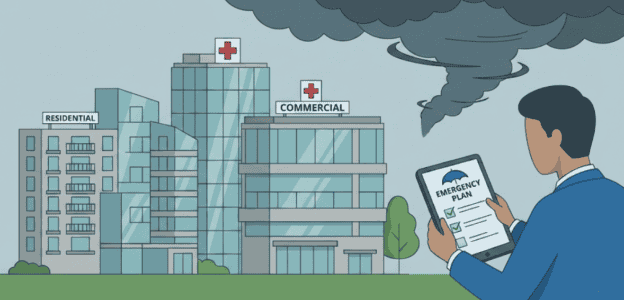
From a financial standpoint, delayed rent directly impacts cash flow predictability. Mortgage payments, vendor invoices, maintenance expenses, and owner disbursements all depend on timely rent receipts. When rent arrives late or, worse, requires repeated follow-ups, the entire financial ecosystem becomes reactive rather than planned.

Fintech solutions introduce structure and automation into rent collection. Digital payment systems allow rent to be scheduled, processed, tracked, and recorded without human intervention. This eliminates ambiguity around payment status and creates a consistent monthly rhythm. Managers no longer wonder who has paid and who hasn’t; the system provides real-time clarity.

From the tenant’s perspective, fintech simplifies compliance. Instead of remembering due dates or mailing checks, renters can rely on automated debits, saved payment methods, and reminders. This reduces accidental late payments and friction in landlord-tenant relationships. When paying rent becomes effortless, on-time payment rates naturally improve.

Most importantly, fintech-based rent collection scales. Whether managing ten units or ten thousand, the same automated workflows apply. This scalability makes fintech foundational for any property management business planning to grow.
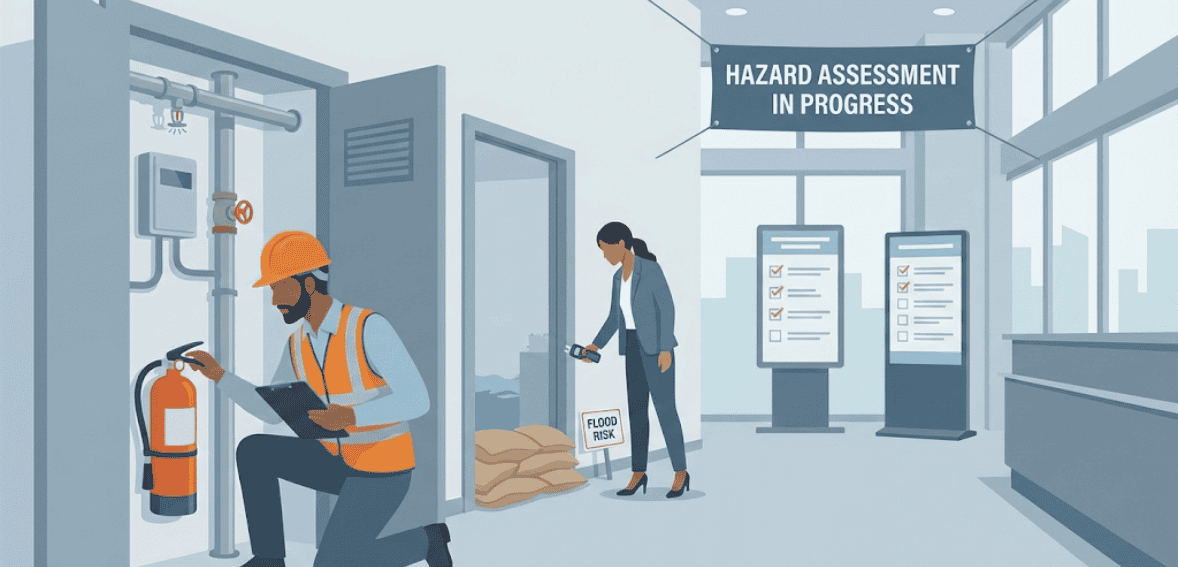
The Hidden Costs of Traditional Rent Collection Methods

Many property managers underestimate the true cost of traditional rent collection. While paper checks and manual transfers may appear inexpensive on the surface, they carry high hidden costs in time, labor, errors, and tenant dissatisfaction.

Manual rent collection requires physical handling, receiving checks, endorsing deposits, visiting banks, and reconciling statements. Each step consumes staff time that could be redirected toward leasing, tenant support, or asset optimization. Over a year, these small inefficiencies add up to hundreds of lost hours.

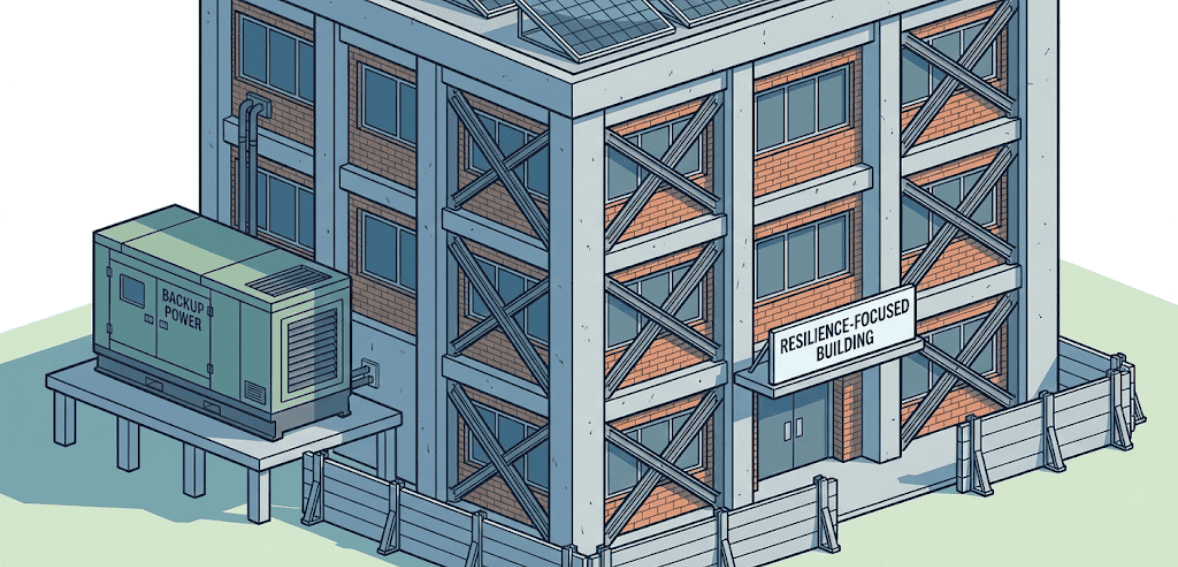
Manual systems also exhibit a higher error rate. Misapplied payments, data entry mistakes, and reconciliation gaps are common when rent is processed outside an integrated digital workflow. These errors lead to disputes, delayed owner reports, and compliance risks during audits.

Traditional methods also increase delinquency risk. Tenants paying by check are more likely to miss deadlines due to mail delays, forgotten schedules, or insufficient funds at the time of deposit. Once rent becomes late, managers must shift into collection mode, sending reminders, making calls, and documenting communications.

Another overlooked cost is tenant experience. Rent payments are among the most frequent interactions tenants have with property management. When the process feels outdated or inconvenient, it negatively shapes the tenant’s perception of professionalism and efficiency. Over time, this can affect retention and renewal decisions.

Fintech removes these inefficiencies by centralizing payments, automating records, and reducing dependency on human intervention. What once required multiple steps and manual oversight becomes a streamlined, predictable workflow.

Also read: Automating Rent Collection: How Cloud Software Reduces Late Payments

Online Rent Payments: The Foundation of Fintech-Driven Collection

Online rent payments form the backbone of modern rent collection systems. At their core, they enable tenants to pay rent digitally via secure portals using bank transfers, debit cards, or credit cards. This simple shift fundamentally changes how rent moves through a property management operation.

One of the immediate benefits of online rent payments is speed. Digital transactions eliminate mailing delays and reduce processing time. Funds are initiated instantly, and payment confirmations are recorded in real time. This accelerates cash availability and improves financial forecasting.

Online systems also enhance transparency. Both tenants and managers can see payment histories, timestamps, and receipts without relying on emails or paper trails. This shared visibility reduces disputes and builds trust. When questions arise, the data is readily available and verifiable.

From an operational standpoint, online rent payments integrate directly with accounting workflows. Payments are automatically posted to tenant ledgers, categorized correctly, and reflected in financial reports. This eliminates the need for duplicate data entry and reduces reconciliation errors.

Security is another critical advantage. Fintech platforms use encryption, authentication protocols, and secure payment gateways to protect sensitive financial data. Compared to handling physical checks or storing banking information offline, online payments significantly reduce the risk of fraud and data loss.

Importantly, online rent payment systems are adaptable. Tenants can choose payment methods that align with their preferences, while managers maintain consistent oversight. This flexibility supports diverse renter demographics without complicating internal processes.

Auto-Debits and Recurring Payments: Creating Predictable Cash Flow

Auto-debits and recurring rent payments for predictable cash flow

Auto-debits represent the most powerful tool in fintech-enabled rent collection. By allowing tenants to authorize recurring payments, property managers transform rent from a monthly task into an automated financial event.

With auto-debits, rent is pulled from the tenant’s selected account on a predetermined date. This eliminates reliance on memory, manual action, or last-minute scrambling. Once set up, payments occur consistently unless interrupted by insufficient funds or changes in authorization.

For property managers, auto-debits dramatically improve cash flow predictability. Rent arrives on schedule, making it easier to plan owner distributions, maintenance budgets, and reserve funding. Instead of monitoring collections daily, managers can focus on higher-value activities.

Auto-debits also reduce late payments. Many delinquencies occur not because of inability to pay, but because of forgetfulness or poor timing. Automated payments remove these variables. Tenants are more likely to stay current when the process is invisible and effortless.

Another advantage is reduced administrative workload. Automated systems handle payment initiation, confirmation, posting, and receipts without staff involvement. Exceptions, such as failed payments, are automatically flagged, allowing managers to intervene only when necessary.

From a relationship standpoint, auto-debits lower tension. Rent collection becomes a system-driven process rather than a personal interaction. This minimizes uncomfortable conversations and maintains a more professional, neutral landlord-tenant dynamic.

When implemented thoughtfully, auto-debits benefit all parties. Tenants enjoy convenience and consistency, while managers gain reliability and efficiency, making recurring payments a cornerstone of modern rent collection.

Smart Payment Reminders and Notifications That Reduce Delinquencies

Even with online payments and auto-debits in place, communication remains a critical layer of successful rent collection. Smart payment reminders powered by fintech systems act as gentle nudges that prevent missed payments before they happen, rather than reacting after rent becomes overdue.

Modern rent collection platforms allow managers to schedule reminders before the due date. Tenants receive notifications via email, text, or app alerts to remind them of upcoming payments. These reminders are not intrusive; instead, they function like calendar prompts that help tenants stay organized. When reminders are consistent and automated, they reduce the likelihood of accidental late payments without creating tension.

What makes fintech reminders especially effective is their timing and personalization. Notifications can be triggered at key moments before rent is due, on the due date, and immediately after a missed payment. The tone remains neutral and professional, preserving tenant relationships while reinforcing expectations.

From an operational perspective, automated reminders replace manual follow-up work. Property managers no longer need to track who to contact or when to contact them. The system does this automatically, ensuring consistency across the portfolio. This uniform approach also helps with compliance, as every tenant receives the same notices under the same conditions.

Over time, reminders create behavioral consistency. Tenants expect and rely on them, which improves payment habits and reduces chronic delinquency. In this way, communication becomes a preventative tool rather than a corrective one.

Handling Failed Payments, Partial Payments, and Exceptions Smoothly

Automated rent payment reminders reducing late payments

No rent collection system is complete without a plan for exceptions. Even the most automated fintech workflows must handle failed payments, partial payments, and unexpected disruptions efficiently and fairly.

When a payment fails due to insufficient funds or authorization issues, fintech systems immediately flag the problem. This real-time visibility allows managers to act quickly, notifying tenants before the situation escalates. Instead of discovering missed rent days later, managers can address the issue while there is still time to resolve it.

Some systems allow tenants to retry failed payments automatically or update payment methods without manager involvement. This self-service approach reduces back-and-forth communication and empowers tenants to fix issues independently. It also speeds up resolution, minimizing cash flow disruptions.

Partial payments can be more complex, especially in jurisdictions with strict tenant protection laws. Fintech tools help by clearly tracking balances, outstanding amounts, and payment histories. This transparency ensures that any follow-up actions are documented and consistent with local regulations.

Importantly, handling exceptions through a system rather than personal judgment reduces emotional friction. When policies are enforced automatically and evenly, tenants are less likely to feel singled out or unfairly treated. This consistency protects both the manager-tenant relationship and the manager.

A well-designed fintech rent collection system doesn’t assume perfection; it anticipates issues and resolves them with clarity and structure.

Compliance, Fees, and Tenant Protections in Digital Rent Collection

Rent collection compliance and tenant protection through fintech

As rent collection becomes more automated, compliance and tenant protections become even more important. Fintech systems must align with local laws regarding fees, payment methods, notices, and dispute resolution.

One major advantage of fintech-based rent collection is built-in compliance safeguards. Payment rules, grace periods, and late fee limits can be configured according to jurisdictional requirements. Once set, these rules are applied automatically, reducing the risk of human error.

Transparency plays a key role here. Tenants can clearly see due dates, fees, and payment histories within their portal. This openness reduces disputes and supports fair housing practices by ensuring everyone receives the same information and treatment.

Digital records also simplify audits and legal inquiries. Every payment, reminder, and notice is timestamped and stored securely. If questions arise, managers can produce accurate records without relying on memory or scattered paperwork.

Another compliance benefit is flexibility in payment methods. Many jurisdictions require landlords to offer reasonable payment options. Fintech platforms accommodate this by supporting multiple digital methods while maintaining consistent internal workflows.

When used responsibly, fintech enhances, not replaces, ethical property management. Automation supports fairness, consistency, and accountability across all rent collection activities.

Scaling Rent Collection Across Portfolios Without Adding Workload

Scaling rent collection across multiple properties with fintech

One of the strongest arguments for fintech-driven rent collection is scalability. As portfolios grow, manual systems quickly become unmanageable. Fintech allows property managers to scale rent operations without scaling stress.

Whether managing a handful of units or hundreds, the same automated workflows apply. Payment schedules, reminders, and reporting are replicated across properties with minimal configuration. This uniformity reduces complexity and prevents operational bottlenecks.

For growing businesses, scalability also means consistency. Owners expect predictable cash flow and accurate reporting regardless of portfolio size. Fintech systems deliver this by standardizing rent-collection processes and improving financial visibility.

Staff efficiency improves as well. Teams spend less time processing payments and more time on strategic work such as leasing, maintenance planning, and tenant engagement. This shift supports growth without increasing headcount at the same pace.

Scalable rent collection also supports geographic expansion. Managers overseeing properties across multiple locations can rely on centralized systems rather than juggling local processes. This flexibility is especially valuable for remote and multi-state portfolios.

In essence, fintech transforms rent collection from a limiting factor into a growth enabler.

The Future of Rent Collection: Where Fintech Is Headed Next

Future of rent collection powered by fintech and automation

Rent collection continues to evolve alongside financial technology. The future points toward even deeper integration, smarter automation, and more tenant-centric experiences.

Predictive analytics may soon help identify payment risk before delinquency occurs. Integrated financial insights could allow managers to proactively offer payment plans or reminders based on behavior patterns.

Seamless integrations with accounting, reporting, and budgeting tools will further reduce manual oversight. Rent data will automatically flow into broader financial systems, enabling real-time decision-making.

Tenant expectations will continue to shape innovation. As digital-native renters enter the market, demand for frictionless, mobile-first payment experiences will grow. Fintech will meet these expectations while maintaining compliance and security.

Ultimately, rent collection will become less visible but more reliable, an automated backbone supporting the entire rental operation.

Conclusion: Turning Rent Collection into a Strategic Advantage

Rent collection no longer has to be a reactive, stressful process. Fintech solutions transform it into a predictable, transparent, and scalable system that benefits tenants, managers, and owners alike.

By adopting online payments, auto-debits, smart reminders, and automated exception handling, property managers gain control over cash flow while reducing administrative burden. Compliance becomes easier, disputes become rarer, and tenant relationships improve.

In a competitive rental landscape, efficient rent collection is not just operational hygiene; it is a strategic advantage. Fintech provides the tools to achieve that advantage with confidence and consistency.

FAQs

How does fintech improve rent collection efficiency?

Fintech automates payments, reminders, and records, reducing manual work and late payments while improving cash flow predictability.

Are online rent payments secure for tenants?

Yes. Modern fintech systems use encryption and secure gateways to better protect sensitive financial information than traditional methods.

Do auto-debits reduce tenant control?

No. Tenants authorize payments and can update or cancel them as needed, maintaining flexibility while enjoying convenience.

Can fintech systems handle multiple properties?

Absolutely. They are designed to scale across portfolios by applying consistent rent-collection rules regardless of size or location.

Is fintech rent collection suitable for small landlords?

Yes. Even small portfolios benefit from automation, reduced errors, and improved tenant experience.

property

The Integrated Tech Stack: Linking Property Management Software with Accounting, CRM, and More

Property management is much more than collecting rent or calling a plumber. As portfolios grow and tenants expect more, managers have to juggle efficiency, clear communication, and accurate reporting to owners. The right mix of connected technology, known as an integrated tech stack, makes life easier. Instead of jumping between separate apps for accounting, leasing, maintenance, and reports, more managers are linking these systems together so everything just works.

An integrated tech stack links your property management software with accounting, CRM, communication, and other tools you use every day. When these systems talk to each other, data moves automatically, mistakes drop, and your team spends less time on tedious work. That means faster decisions, more trust from owners, and happier tenants. Let’s explore how building the right tech stack can turn a patchwork of tools into a smooth, stress-free operation.

Why Property Managers Need an Integrated Tech Stack Today

Why an integrated tech stack matters in property management operations

One big reason property managers need an integrated tech stack is that running properties is complicated. You have to keep track of rent payments, security deposits, repair bills, lease renewals, owner payouts, tenant messages, and all sorts of compliance paperwork. If you’re doing all this in different apps or spreadsheets, it’s easy for things to slip through the cracks. Miss an invoice, forget to update a tenant balance, or send an owner report late, and suddenly your reputation takes a hit.

A connected tech stack solves this by giving you one reliable place to find the truth. When your property management system links with accounting and CRM tools, updates happen automatically. Record a rent payment in one place and it shows up everywhere it should. Renew a lease, and both the tenant’s file and the owner’s forecast get updated. You don’t have to double-check everything by hand. You just know it’s right.

Another big plus: scalability. The way you handle ten units won’t work for fifty, and it definitely won’t work for two hundred. Manual work just doesn’t scale, but integrated tech does. With connected systems, you can grow your portfolio without drowning in admin. Setting up integration early keeps things running smoothly as you add more doors.

Linking Property Management Software with Accounting Systems

Property management software integration with accounting systems

Accounting is the backbone of any property management business. It is also one of the most error-prone areas when systems are disconnected. When property management software and accounting tools operate separately, teams often duplicate data entry. Rent payments are entered once in the property system and again in accounting. Vendor bills are tracked in emails or spreadsheets before finally being recorded in financial software. This duplication wastes time and increases the risk of mistakes.

By integrating property management software with accounting systems, financial data is automatically and consistently moved. Rent income, late fees, credits, and refunds sync directly into general ledgers. Maintenance expenses and vendor invoices are displayed in real time, allowing managers to track profitability at both the property and portfolio levels. Owner statements become easier to generate because income and expenses are already categorized and reconciled.

Integration also makes compliance and audits easier. When financial records are synced and time-stamped, it’s simple to answer questions from owners, tax professionals, or regulators. There’s a clear record of when each transaction happened and how it was handled. Property managers can rely on their data instead of scrambling to explain errors.

Connecting CRM Systems to Improve Tenant and Owner Relationships

CRM integration improving tenant and owner relationships in property management

Customer relationship management systems, or CRMs, are often overlooked in property management, but they are key for communication and keeping tenants and owners happy. A CRM keeps track of information about tenants, owners, prospects, and vendors, including past conversations, preferences, and follow-up tasks. If the CRM isn’t connected to property management software, important details can be missed.

Integrating CRM systems with property management software allows teams to see the full relationship picture in one place. When a tenant submits a maintenance request, the interaction can be automatically logged in the CRM. When an owner asks about income performance, the CRM shows past conversations alongside up-to-date financial data. This makes communication more informed and personal.

CRM integration is especially useful for leasing and growth. Prospective tenants who reach out online can be tracked from their first contact through application, screening, and signing a lease. Automatic follow-ups prevent lost leads. This increases occupancy and reduces vacancies. The same approach helps with owner acquisition, making sure every conversation and step is tracked so no opportunity is missed.

How Integrated Systems Reduce Manual Work and Human Error

Real-time reporting and analytics from an integrated property management tech stack

One of the biggest benefits of an integrated tech stack is less manual work. Entering data by hand takes a lot of time and can be tiring. When staff spend hours copying information between systems, they have less time and energy to solve problems, help customers, or plan ahead. Integration takes care of routine updates automatically.

Human error is another major concern. Even careful staff can make mistakes when entering the same data repeatedly. One wrong decimal or missed update can lead to reporting problems, tenant disputes, or unhappy owners. Integrated systems help prevent these issues by making sure data entered once is shared everywhere it’s needed. This builds trust. Tenants receive accurate statements. Owners see reliable reports. Internal teams work with confidence instead of constantly double-checking numbers. The tech stack becomes a quiet but powerful support system that keeps operations running smoothly in the background.

Integrating Maintenance, Vendor, and Workflow Tools into One System

Integrated maintenance and vendor workflows in property management software

Maintenance is often where property management operations struggle. Requests may arrive by email, phone, text, or portal, and are then passed around by hand to vendors or staff. If maintenance systems aren’t connected to the main property management software, information can be lost, responses slow down, and it’s harder to know who is responsible.

An integrated tech stack puts maintenance tracking in the same system as leases, tenant records, and accounting. When a tenant makes a request, a work order is created and linked to their unit, lease, and history. This work order can be sent to vendor management tools so approved contractors are notified, job status is updated, and invoices are sent online. Once approved, the invoice goes straight into accounting without being entered again.

This kind of integration does more than improve efficiency; it also builds trust. Tenants get quicker updates and clearer timelines. Owners can see exactly where maintenance money goes. Property managers can spot recurring problems and track vendor performance, helping them make better decisions about preventive maintenance and controlling long-term costs.

One of the biggest advantages of linking property management software with accounting, CRM, and operational tools is the ability to provide unified reporting. When systems operate in silos, reporting becomes a manual exercise of exporting spreadsheets, reconciling numbers, and hoping nothing was missed. This not only consumes time but also delays insight.

With an integrated tech stack, reporting becomes real-time and reliable. Financial performance, occupancy rates, maintenance costs, tenant communication history, and owner distributions can all be viewed through connected dashboards. Managers no longer have to wait until month-end to understand how a property is performing. They can spot issues early and act before problems grow.

For property owners, this transparency is powerful. Clear, accurate reports build confidence and strengthen relationships. Owners are more likely to trust managers who provide consistent, easy-to-understand data without delays or discrepancies. Over time, this transparency becomes a competitive advantage, helping property managers retain clients and win referrals.

Also read: Integrating Accounting Features in Property Management Software

Security, Permissions, and Data Governance in Integrated Systems

Security and data governance in integrated property management systems

As systems become more connected, security and access control are even more important. An integrated tech stack should have clear permissions so users only see what they’re allowed to see. Leasing agents, maintenance staff, accountants, and owners all need different access levels, and a good system automatically sets these boundaries.

Integrated platforms also support data governance by consolidating sensitive information into fewer locations. Instead of tenant data being spread across emails, spreadsheets, and personal devices, it stays in secure, access-controlled systems. This lowers the risk of data leaks and compliance issues, and makes audits and record-keeping easier.

When property managers take security seriously and use integrated systems with strong controls, they protect not only their business but also their reputation. In an industry built on trust, data protection is no longer optional; it is part of professional responsibility.

Best Practices for Building and Scaling an Integrated Tech Stack

Best practices for building and scaling an integrated property management tech stack

Building an integrated tech stack doesn’t mean adding every tool right away. The best property managers start with the basics and add more tools as needed. Property management software should be the foundation, with accounting and CRM integrations added early. Maintenance, communication, and analytics tools can be added later as the business grows.

It is also important to focus on adoption, not just implementation. A perfectly integrated system only delivers value if teams actually use it correctly. Training, documentation, and clear workflows ensure that staff understand how systems connect and why consistency matters. Over time, this creates a culture in which technology supports people rather than frustrates them.

Scalability should always be part of your planning. The right tech stack grows with your business, handling more units, users, and complexity without problems. By selecting systems that integrate well and can adapt, property managers ensure their operations are ready for the future.

Conclusion

The integrated tech stack is no longer a luxury for property management; it is a necessity. Linking property management software with accounting, CRM, maintenance, and reporting tools transforms scattered workflows into a cohesive operation. It reduces errors, saves time, improves communication, and builds trust with tenants and owners alike.

As portfolios grow and expectations rise, property managers who invest in integration gain a clear advantage. They operate with clarity rather than chaos, insight rather than guesswork, and confidence rather than constant reconciliation. In a competitive market, the ability to connect systems and data seamlessly is what separates reactive management from strategic leadership.

FAQs

What is an integrated tech stack in property management?

It is a connected set of software tools in which property management systems, accounting, CRM, and operational tools share data automatically rather than operate separately.

Why is integration better than using multiple standalone tools?

Integration reduces manual data entry, minimizes errors, and ensures consistency across financials, tenant records, and reporting.

Can small property managers benefit from an integrated tech stack?

Yes. Even small portfolios benefit from automation and accuracy, and integration makes it easier to scale without adding administrative burden.

Does integrating systems require advanced technical skills?

Most modern platforms are designed for non-technical users, with built-in integrations and guided setup processes.

What is the biggest mistake to avoid when building a tech stack?

Adding tools without ensuring they integrate well. Disconnected systems recreate the same problems technology is meant to solve.