Category Archives: Uncategorized

property management software ROI dashboard analysis

Calculating the ROI of Property Management Software: A Practical Guide for Real World Decision Makers

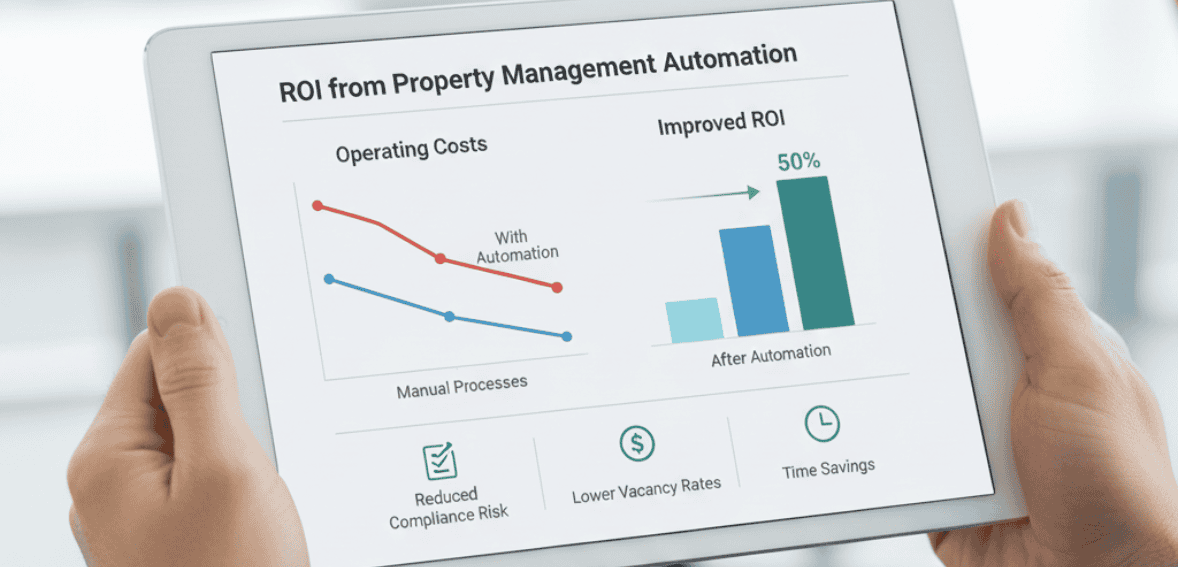
In the modern rental landscape, efficiency is no longer a luxury, it’s a requirement for survival. Property managers and landlords today face rising operational costs, increasing tenant expectations, and higher pressure to maintain profitable properties while keeping overhead under control. In this environment, calculating the ROI of property management software is essential. Owners and managers need more than just a digital tool. They need a measurable return that justifies the investment and improves financial performance across their portfolio.

For many property managers, the turning point often comes when responsibilities begin to stretch beyond what manual processes can support: tracking rent payments across multiple tenants, following up on maintenance requests, resolving communication delays, and managing turnover timelines. When tasks multiply, spreadsheets and paper systems become bottlenecks. Email threads get lost, expired notices slip through cracks, and errors begin to cost real money. Property management software is designed to eliminate that friction but its value shouldn’t be measured solely by convenience. It should be quantified in precise financial results.

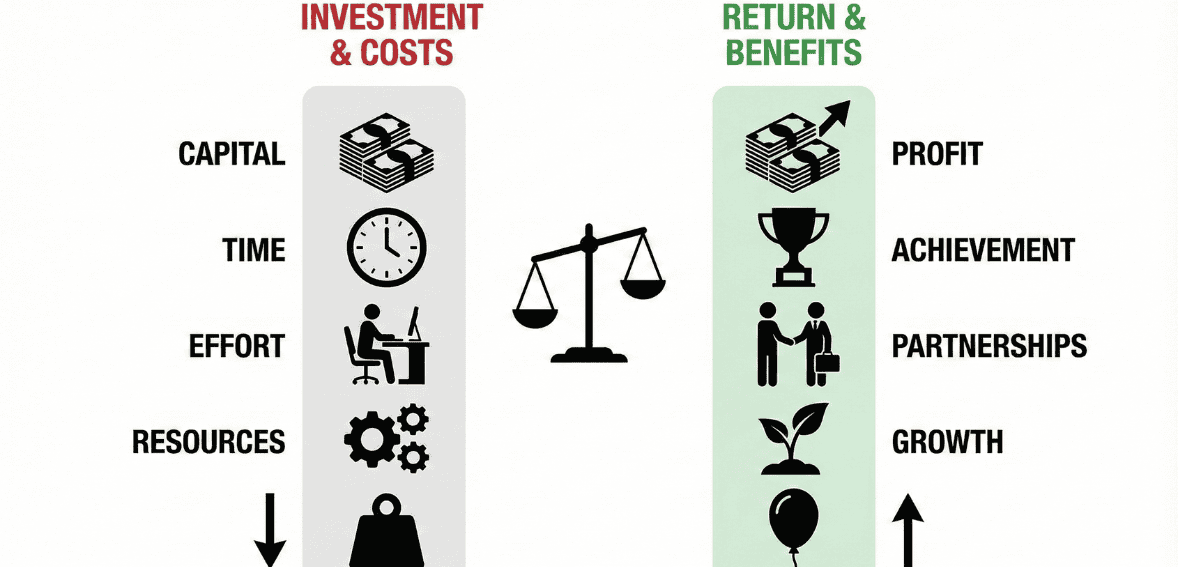
Understanding the return on investment means carefully balancing software costs with measurable gains, such as time savings, lower labor costs, fewer vacancies, faster rent collection, and reduced legal disputes. This article explores how to evaluate ROI using a straightforward financial approach and how to recognize both the direct and indirect benefits that property management software delivers. When you understand how to assign real numbers to efficiency improvements, adopting the right software becomes not just a technological upgrade, but a strategic financial decision.

Why ROI Calculation Matters for Property Managers

understanding property management software ROI calculation

The decision to adopt new technology must be guided by analysis, not impulse. Some managers hesitate to invest in software because they worry about subscription fees, training time, or adoption challenges. Others assume that software is only helpful for large portfolios, when in reality, even small landlords gain significantly from automation.

The truth is that every minute spent on manual tasks is a hidden cost and those costs accumulate silently. Time spent entering spreadsheet data, chasing late payments, searching for documents, coordinating maintenance by phone, or repeatedly answering tenant questions represents labor value that could be allocated toward revenue-producing work. When calculated honestly, the cost of inefficiency often exceeds the price of software many times over.

That is why property management software ROI must be understood not only as a cost question but as an investment strategy. The right system becomes a long-term asset that increases financial predictability, stabilizes cash flow, and supports scalable growth. Knowing how to calculate ROI helps decision-makers determine when it’s time to move beyond manual management and how quickly the investment will repay itself.

Understanding the Total Cost of Software Investment

cost-benefit analysis rental software investment comparison

Before calculating returns, property managers must first understand the actual cost of implementing software. Evaluating cost means looking beyond the monthly subscription price and considering the whole financial picture. That includes user seats, setup time, onboarding labor, potential hardware updates, or temporary productivity adjustments during transition.

However, unlike fixed expenses such as rent or insurance, software costs typically decrease in relative weight over time as efficiency expands across the organization. While initial implementation may require effort, the long-term savings far outweigh the learning period. For example, many property managers discover that once the system is in place, the amount of manual administrative labor drops dramatically. The software automates repetitive tasks such as sending rent reminders, updating records, logging maintenance activity, and generating financial reports.

Understanding initial cost is important because the accuracy of ROI depends on honest inputs. But focusing solely on subscription price without considering total organizational impact leads to missed opportunities. Software isn’t just a tool; it’s a shift in how the business operates. The investment should be viewed with the same seriousness as upgrading equipment infrastructure, hiring staff, or renovating a unit except that this investment multiplies performance without increasing physical resources.

Measuring Time and Labor Efficiency Gains

efficiency gains property management through software automation

One of the most critical areas of ROI evaluation lies in measuring how much time property managers and staff save by replacing manual work with digital automation. Time is the most valuable resource in property management, and inefficient processes drain it quickly. When employees spend hours tracking down late rent payments, coordinating maintenance via text messages, reconciling lease documents, or performing duplicate data entry, they have less time to focus on growth and tenant experience.

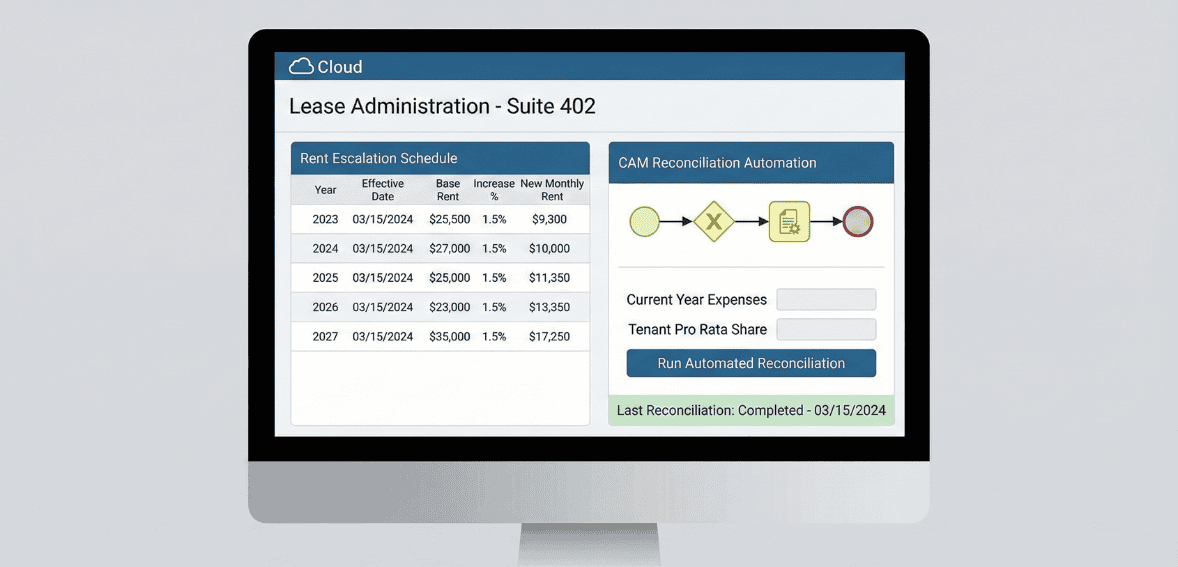
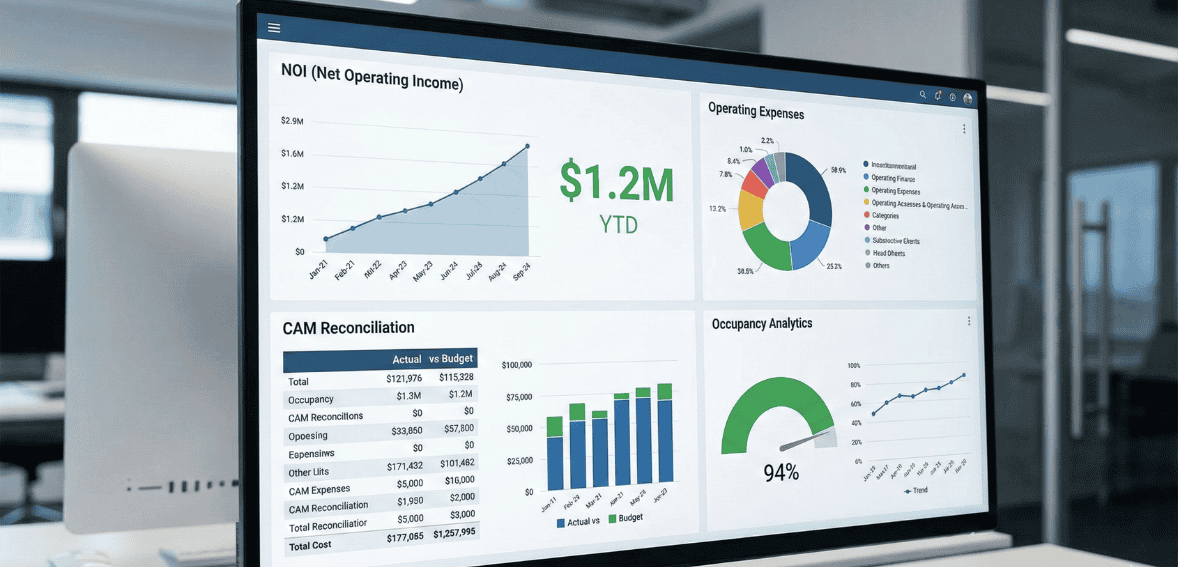
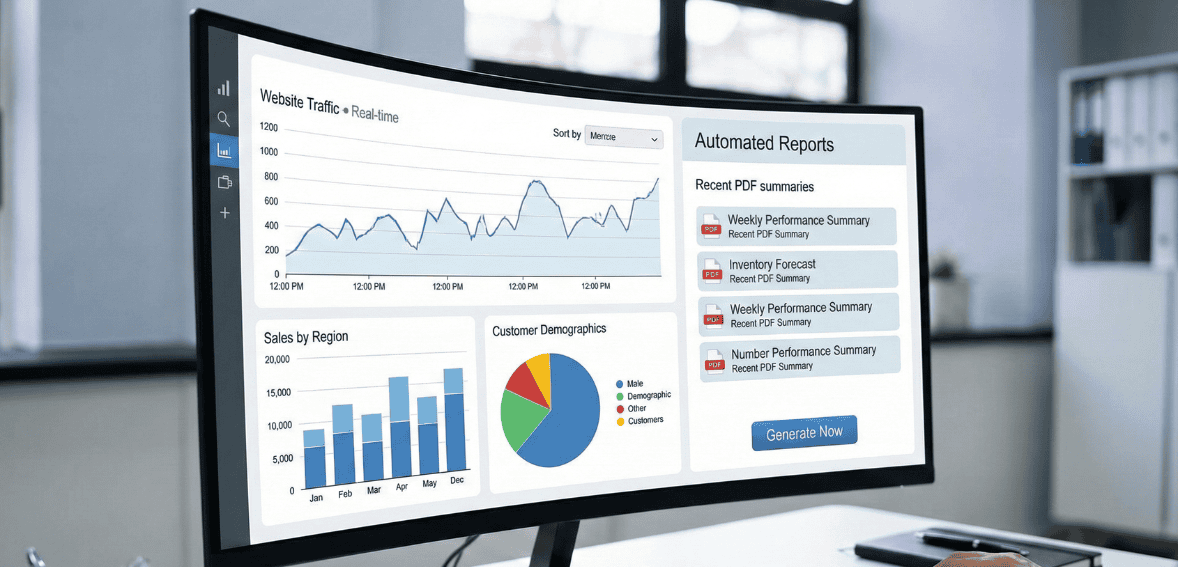
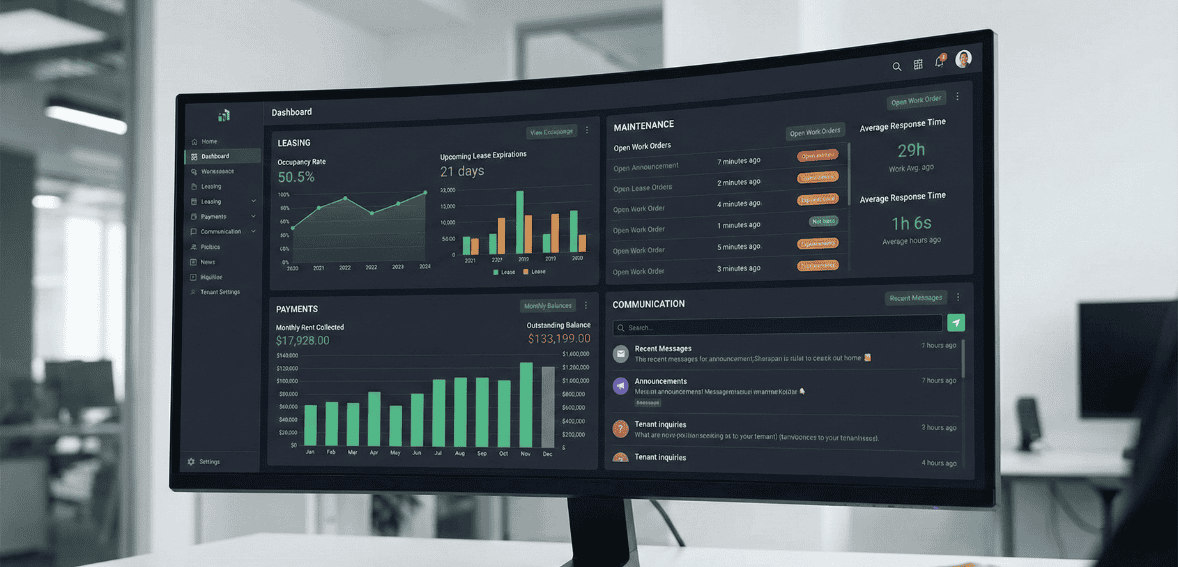
Calculating labor savings begins by estimating how long routine tasks currently take and comparing that to the time required once automation is introduced. Rent collection processes that once required hours of tracking and communication can now be instantaneous. Maintenance coordination shifts from phone calls to structured ticket systems. Financial reporting that was once compiled manually is now available in real-time dashboards. Even small time savings accumulate meaningfully when multiplied across each tenant and each month.

For example, if a property manager saves just 2 hours per week by automating rent reminders and processing, that adds up to more than 100 hours per year per staff member. When multiplied across a team, the value becomes even greater. Better yet, those hours can be reinvested in revenue-generating work, such as marketing units, retention improvements, or long-term growth planning. Labor efficiency, therefore, represents both a direct reduction in operating cost and an indirect boost to revenue expansion opportunities.

How Property Management Software Impacts Revenue Performance

increasing rental revenue with property management software systems

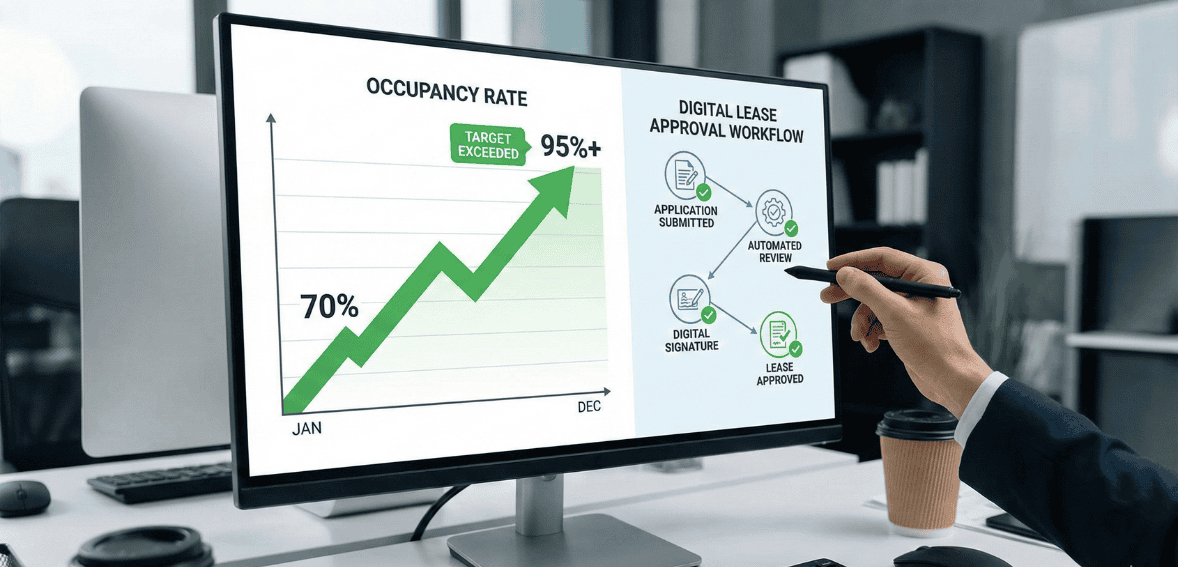
Calculating property management software ROI isn’t only about reducing expenses; it is also about increasing income. Digital systems influence revenue in multiple ways, beginning with reduced vacancy time. When rental listings receive immediate exposure through integrated marketing tools and applications, units can be processed and screened faster, and units turn over more quickly. Faster turnover means fewer days without rent and a stronger yearly yield.

Additionally, digital rent collection significantly improves on-time payments, reducing the number of outstanding accounts and the need for collection efforts. Automated online payment solutions provide tenants with convenient payment options, increasing reliability and minimizing delays.

Another area for revenue improvement is maintenance efficiency. Maintenance delays are a leading cause of tenant dissatisfaction and turnover. When work orders are centralized and tracked digitally, issues are resolved more quickly, service quality becomes consistent, and renters are more likely to stay longer. Lower turnover equals fewer marketing costs, fewer vacancies, and reduced time spent preparing units for new occupants.

Revenue expansion can also come through accurate fee billing and a structured accounting workflow. When software automatically tracks charges, landlords avoid overlooked late fees and missed billings that often occur in manual systems. For many property managers, these seemingly minor adjustments reveal thousands of dollars previously lost each year.

The Financial Value of Tenant Experience and Retention

tenant satisfaction improvements leading to retention and reduced turnover

Some of software’s most significant benefits are intangible but financially powerful. Resident satisfaction directly influences the bottom line by affecting renewals, referrals, and overall brand perception. Renters who receive quick responses, real-time updates, and well-organized communication tend to renew more frequently and participate positively in the community. Higher renewal rates reduce marketing spend, cleaning and renovation costs, vacancy days, and administrative work associated with processing new leases.

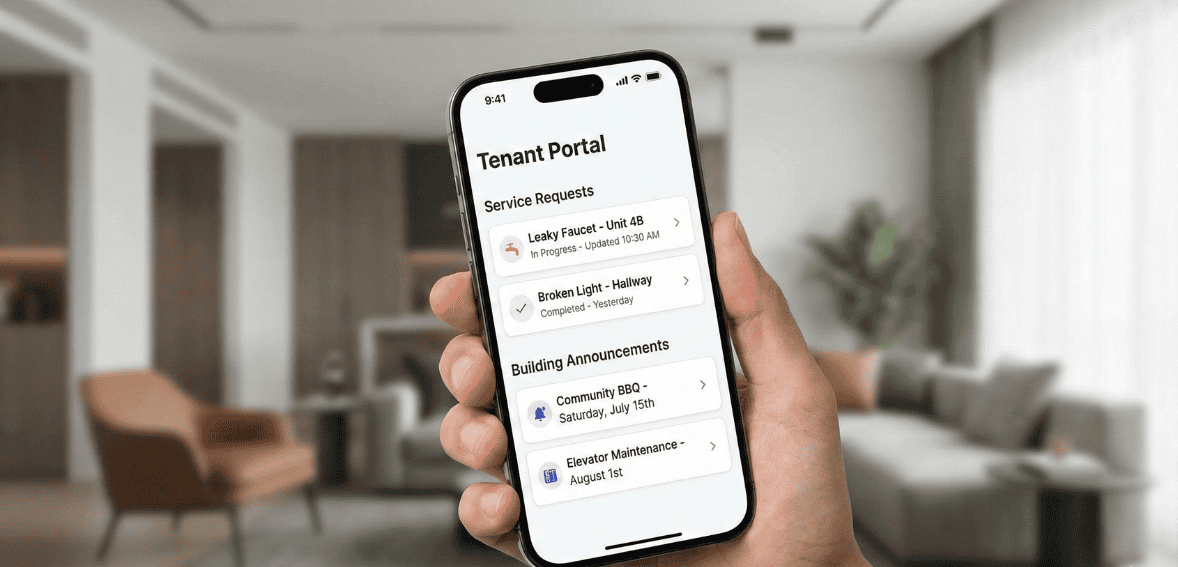
Poor communication, on the other hand, creates misunderstandings, frustration, and negative reviews all of which increase turnover. Every time a tenant leaves, costs multiply, and vacancy risk rises. When software consolidates communication into a unified system, messages are tracked, maintenance requests are recorded with transparency, and tenants feel respected and informed. This improved customer experience results in stronger relationships and predictable revenue, which are core assets in property investment.

Using Technology to Scale Without Expanding Staff Costs

risk reduction and accuracy improvement from automation savings

One of the clearest indicators of ROI is the ability to grow a property portfolio without increasing payroll in proportion. Traditionally, managing more units required hiring more people. Scaling beyond a certain number became unsustainable. Software changes that equation. Automation allows a single manager to oversee significantly more units than was previously possible because most routine work no longer requires manual involvement.

When operations become scalable, the ability to expand without increased staffing becomes a competitive advantage. Growth becomes controlled rather than overwhelming, and profitability strengthens as revenue increases without mirrored expense growth. This is one of the strongest arguments for investing in digital platforms. They enable expansion without sacrificing quality or overloading teams.

How to Calculate Property Management Software ROI Using Real, Practical Formulas

Understanding the financial impact of software becomes much easier when broken down into measurable pieces. ROI isn’t an abstract concept, it’s a straightforward equation that compares what you gain against what you spend. The basic calculation almost everyone uses looks like this:

ROI = (Total Financial Benefits – Total Software Cost) ÷ Total Software Cost × 100%

To apply the formula realistically, managers need to assign values to the savings and improvements they experience after implementation. For example, if software eliminates 40 hours of manual work each month across an office team, those hours have a monetary value. Multiply those hours by the hourly labor rate, and you begin to see real returns. Similarly, if online payment reminders increase on-time rent and reduce collection workload, that benefit becomes part of the ROI. If vacancies are reduced by even 1 or 2 days per turnover due to faster leasing workflows, the recovered rental revenue should be counted too.

ROI becomes most meaningful when it is grounded in actual numbers from your operations, not generalized assumptions. Many property managers are surprised by how quickly returns accumulate when they intentionally track improvements. The moment they see that the software essentially “pays for itself,” decision-making shifts from hesitation to confidence. Calculation provides clarity, and clarity becomes strategy.

Measuring Indirect Returns and Hidden Financial Value

Beyond direct labor savings or faster payments, there are indirect advantages that hold significant financial weight, even if they are harder to quantify. For example, strong tenant communication and faster maintenance service build loyalty, increasing retention and reducing turnover costs. Turnovers are among the most expensive financial events in property management, as they involve lost rent, cleaning, repairs, advertising, showings, and screening. If software reduces turnover by simply improving communication quality, the financial outcome can be enormous.

Another indirect return comes from reducing errors. Manual data entry or undocumented approvals frequently lead to costly mistakes, missed charges, lost paperwork, misunderstandings between departments, or inaccurate reporting. Software centralizes information, creating transparency and accuracy. This lowers risk, protects against disputes, and ensures compliance. Mistakes quietly drain budgets, and eliminating them is a powerful form of ROI.

There is also reputational value. Word of mouth influences leasing decisions more than ever, and a digital presence often determines whether a prospective tenant applies. When a property is known for smooth service and organized processes, reputation turns into revenue. These softer benefits accumulate into real financial value over time, creating a stronger business foundation that compounds year after year.

Maximizing ROI After Implementing Property Management Software

Simply buying software does not automatically produce ROI. The return depends on how effectively the system is adopted and integrated into daily operations. Teams must learn to use automation features consistently rather than relying on outdated manual habits. Processes should be simplified, redundant work removed, and communication centralized on a single platform. The more fully the company commits to digital transformation, the greater the return.

One of the best strategies is to start small and expand quickly. For instance, begin by automating rent collection and maintenance tracking, then move into digital inspections, online lease renewals, and reporting. Each step frees additional time and reduces administrative strain. Training is equally important. When teams understand the value of new tools and feel confident using them, efficiency increases and resistance fades. Clear internal goals such as reducing collection time, decreasing vacancies, or improving tenant response speed also help maintain focus and measure success.

Another way to maximize ROI is to analyze software data to inform decisions. When performance metrics are visible response times, maintenance completion speeds, late payment frequency, lease renewal rates management can see exactly where improvement is needed. Digital visibility enhances accountability and ensures continuous development rather than complacency.

When Software Becomes an Investment Instead of an Expense

software investment returns and long-term recurring gains

Many property managers initially worry about software pricing because they look at it as a cost. But once they view it through the lens of return through time savings, higher retention, lower vacancy loss, increased revenue control, reduced risk, and scalable growth the perspective shifts. It becomes clear that software is one of the few investments that simultaneously strengthens both the operational and financial sides of property management.

Instead of hiring additional staff when the portfolio grows, automation supports expansion. Instead of spending hours fixing problems, teams prevent them. Instead of reacting to emergencies, properties become proactively managed with predictable financial results. The long-term value continues to compound, benefiting not only current operations but also future planning.

The most successful property managers aren’t adopting software simply because others are. They’re choosing systems thoughtfully, calculating expected ROI, and using digital tools to stabilize business performance and increase profit margins. This future-focused approach separates modern leaders from those stuck in outdated models.

Conclusion

Calculating the ROI of property management software isn’t about guessing or hoping for improvement, it’s about understanding exactly how technology transforms performance and profitability. When measured correctly, property management software does far more than streamline tasks. It unlocks time, stabilizes finances, improves tenant relationships, reduces errors, creates growth capacity, and strengthens decision-making. The combination of financial and operational value is one of the most strategic moves a property manager can make.

Technology is not replacing human skill; it enhances it. It frees teams from repetitive strain and enables them to focus on meaningful work: retaining residents, improving communities, and building thriving rental portfolios. When ROI is calculated honestly, the conclusion becomes clear: modern property management is not complete without the tools that support efficiency, accuracy, and scalable growth. The question is no longer whether software is worth it, but how soon managers should adopt it to stay competitive.

Landlords relied heavily on instinct, experience, or basic bookkeeping to understand how their rental properties were performing. They looked at whether rent was paid on time, whether expenses seemed manageable, and whether the property remained occupied. And while intuition still plays a role, the modern rental industry has shifted toward a more reliable source: data. Today, the landlords who consistently outperform others are the ones who use property management KPIs to guides to maximizing rental ROI.

FAQs

How do I accurately calculate the ROI of property management software?

You calculate ROI by comparing the total financial gains from efficiency and revenue improvements with the total software cost using the formula: (net return ÷ total cost) × 100%. Include savings in labor hours, faster rent collection, reduced vacancy days, and fewer administrative errors.

What cost savings can property management software provide?

Software saves money by automating routine administrative tasks, reducing manual labor, eliminating duplicate work, and preventing costly mistakes. Improved organization and faster workflows also directly reduce operational expenses.

How soon can property management software begin paying for itself?

Many property managers achieve positive ROI within the first year, as improved efficiency and fewer vacancies quickly offset subscription costs. Even minor improvements in labor savings or rent collection consistency can produce a rapid financial return.

Does software increase revenue or only decrease expenses?

It does both. Software improves revenue by reducing turnover, speeding leasing, shortening vacancy timelines, improving renewal rates, and enhancing payment reliability. It also reduces expenses by lowering labor hours and admin workload.

What metrics should I track to monitor ROI over time?

Track administrative time savings, maintenance resolution speed, vacancy days per year, rent collection rates, renewal rates, and portfolio growth per employee. These indicators show whether the software is improving operational performance and profit.

ESA verification compliance process in residential housing environment

Regulatory Compliance: Service and ESA Verification in Residential Settings

In rental housing, compliance with assistance-animal regulations has become one of the most sensitive and complex parts of property management. Over the past decade, emotional support animals (ESAs) and service animals have become increasingly common in residential communities, and with that shift has come confusion, conflict, and legal risk. Many landlords want to protect their property from damage or nuisance concerns, while residents with disabilities need equal access to housing and reasonable accommodations that allow them to live independently. 

Navigating these expectations responsibly requires clarity, structure, and a deep understanding of the regulatory landscape surrounding ESA verification compliance.

Unlike pet-related rules, which vary widely by property and policy, assistance-animal regulations are grounded in federal protections tied directly to civil rights law. In other words, the subject is not simply about pets; it is about disability accommodation, and therefore must be handled with accuracy, consistency, and respect. When verification is conducted improperly whether through skepticism, discrimination, or accidental misuse of documentation property managers can face legal complaints, compliance penalties, and damaged reputations. On the other hand, a well-built ESA verification workflow supports transparency, protects fair housing rights, minimizes conflict, and reduces fraud from illegitimate documentation. In today’s housing environment, compliance is no longer optional; it is a professional standard.

To manage this effectively, property managers must understand three connected areas: the legal distinctions between pets, service animals, and ESAs; the rules governing documentation and verification; and the systems and processes that ensure consistent, fair, repeatable decisions. This article explores those concepts in depth and guides on building an ESA verification compliance framework that is both lawful and practical for modern residential settings.

Understanding the Legal Difference Between Service Animals and ESAs

Difference between service animals and emotional support animals in housing compliance

One of the most significant sources of confusion in residential housing is the belief that all support animals are treated the same. They do not. Service animals and ESAs are legally defined differently, protected differently, and cannot be processed identically when evaluating accommodation requests. To remain compliant, property managers must clearly recognize the distinctions.

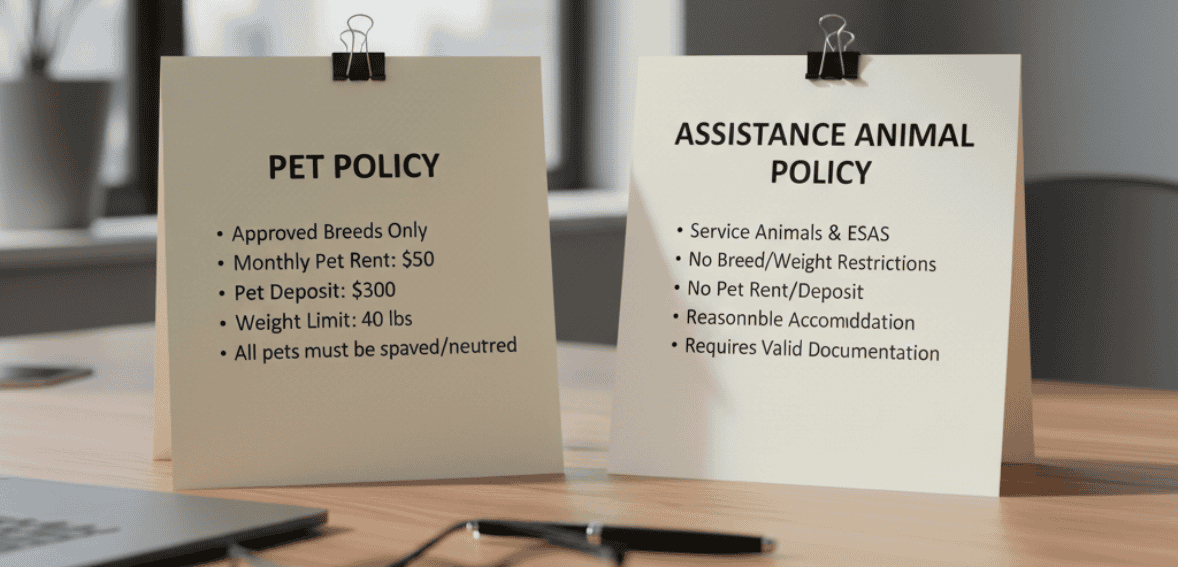
Service animals are trained to perform specific tasks directly related to a person’s disability such as guiding individuals who are visually impaired, alerting to seizures, reminding someone to take medication, or responding to panic attacks. Because they provide task-based assistance, they fall under a different legal category and are protected with much stronger regulatory boundaries. Service animals are not considered pets; therefore, policies such as pet deposits, breed restrictions, or weight limits cannot be applied to them, regardless of the property’s preference.

Emotional support animals, by contrast, do not perform trained tasks but provide therapeutic emotional or psychological support to individuals experiencing disabilities such as anxiety, PTSD, chronic depression, or panic disorders. ESAs are protected within residential settings as part of fair housing disability accommodation. Still, this protection does not automatically extend to public spaces in the same way that service animal rules do. Because ESAs do not require specialized training, verification focuses on documenting the disability-related need rather than proving specific animal skills.

Confusing the two categories can lead to legal exposure and conflict with tenants who feel misunderstood or disrespected. By creating thoughtful policies grounded in fair housing principles, property managers help ensure compliance while maintaining trust and transparency.

The Regulatory Foundation Behind ESA Verification Compliance

Fair ESA verification process compliance checklist for property managers

ESA accommodation requests must be processed in accordance with housing compliance standards that prohibit discrimination and require an individualized evaluation of each request. Because assistance-animal rules fall under disability rights, the focus must always remain on fairness, consistency, and confidentiality. 

When a resident requests an accommodation, the property manager’s responsibility is not to judge the legitimacy of the disability itself, but to verify the need appropriately and confirm the documentation is accurate.

In many cases, property managers may request reliable supporting documentation if a disability or related need is not apparent. This documentation typically comes from a qualified licensed healthcare practitioner who has a legitimate doctor-patient relationship with the resident requesting the accommodation. Proper verification is designed to prevent abuse of ESA status while ensuring residents with valid needs are supported without unnecessary barriers.

One area where many housing providers struggle is the rise of fraudulent ESA documentation mills that generate letters without evaluation or a clinical relationship. 

Properties aren’t required to accept documentation that appears to be commercially generated, lacks appropriate licensing information, or shows no legitimate connection to a care provider. However, rejecting documentation without a clear verification protocol can still lead to conflict or compliance challenges. That’s why structured, consistent workflows are essential, not reactive decisions.

When verification is handled thoughtfully, property managers can balance legal compliance in property management with property protection. The process becomes predictable, transparent, and equitable reducing emotional tension and protecting everyone involved.

Why Clear Processes Reduce Conflict and Legal Risk

Requests involving assistance animals are often emotionally charged because they involve personal health, disability identity, safety concerns, and community standards. Conflicts arise when policies are vague, inconsistently enforced, or appear subjective. Residents expect fairness. Property managers require clarity. Legal authorities evaluate repeatability and documentation.

A clearly defined ESA verification process protects both residents and housing professionals by eliminating guesswork. When every request is handled through the same workflow with consistent timelines, documentation standards, and communication style, individuals feel respected and informed instead of dismissed or challenged. This reduces complaints, misinterpretations, and allegations of discriminatory treatment.

Beyond legal risk, unclear processes create operational strain. Staff members may offer conflicting information, decisions may vary by manager, and outcomes may be questioned. But when compliance standards are written, distributed, and trained across the team, property management becomes more confident, predictable, and defensible. Firm policy is not just about avoiding fines or lawsuits; it is about building a professionally run housing environment grounded in fairness and structure.

In today’s rental environment, compliance is not measured solely by final decisions but also by transparency, documentation, and the consistency of processes.

Evaluating Documentation and Preventing Verification Abuse

ESA verification compliance discussion in residential settings

The growing prevalence of online ESA letters and certification services has created an entirely new challenge for verification compliance. Many of the documents circulating online are purchased through commercial platforms rather than provided by licensed clinicians working directly with a patient. Because of this, property managers must learn to evaluate documentation appropriately without crossing into invasive or illegal questioning.

In a compliant verification process, the goal is to confirm that the documentation is reliable and issued by a legitimate practitioner. It is not appropriate to request details about diagnosis, medical history, or specific symptoms. Instead, the focus is on confirming professional credentials, relationship to the resident, identifiable licensing information, and a reasonable statement explaining how the animal supports the disability-related need.

Without structured evaluation standards, housing providers face a flood of questionable documentation that undermines legitimate accommodation needs, frustrates staff, and creates tension between residents. But when verification methods are consistent, fair, and well-communicated, most conflicts resolve quickly and respectfully. Fraud decreases, misunderstandings fade, and approval decisions become clean and administrative rather than personal or confrontational.

In the next section, we will explore the importance of aligning policies across property teams and standardizing internal training to support long-term compliance and risk reduction.

Creating Internal Consistency Through Team Training and Written Policies

Property management staff training for ESA verification compliance

Even the best compliance strategy fails when only one person understands it. Assistance-animal request handling must never rely solely on personal judgment. When decisions depend on who answers the phone, which manager is on duty, or how stressed someone feels that day, compliance breaks down, and residents lose trust. That’s why internal training is one of the most crucial aspects of ESA verification compliance. Every member of the leasing office, management team, and communication staff must understand what can and cannot legally be asked, what the verification process includes, and how to speak respectfully with applicants.

Training is not just about protecting against legal complaints; it builds consistency. When residents receive the same answer from every team member, they feel respected and reassured that the process is fair. Staff feel more confident, less anxious, and better equipped to respond professionally rather than react emotionally. Written policy documents, step-by-step procedures, internal scripts, and role-play conversations can be incredibly helpful. Instead of improvising, your team follows documented standards that support stable outcomes.

Moreover, clearly defining internal timelines protects both the resident and the business. For example, properties may set a standard review window after receiving documentation, or a specific way to communicate delays or requests for clarification.

 When everything is structured, the conversation becomes administrative rather than personal. The more predictable the process, the less likely it is that conflict will arise. Compliance thrives on clarity, documentation, and repetition — and training is the foundation that supports all three.

Aligning Property Rules With Fair Housing Expectations

Aligning pet rules and ESA housing compliance policies

To truly support ESA verification compliance, properties must ensure that general pet policies and assistance-animal rules remain clearly separated. Many disputes arise from accidentally mixing the two categories applying pet rules or penalties to an assistance-animal request. Assistance animals are not pets, which means rules like pet rent, pet deposits, breed restrictions, or weight limitations cannot be applied to them. It can be tempting to blur these boundaries when property damage or neighbor concerns arise, but attempting to enforce pet-style restrictions against a lawful accommodation can lead to serious compliance issues.

Proper alignment means reviewing all lease agreements, addenda, community guidelines, and notice templates to ensure language is precise. Some properties successfully separate their documentation so residents clearly see the distinction for example, a standard pet addendum for pet-owning residents, and a separate assistance-animal accommodation agreement outlining responsibilities such as cleaning up after the animal, maintaining control in shared areas, and preventing unreasonable disturbances. These behavioral responsibilities apply to all animals, including ESAs and service animals, because they relate to safety and peaceful living not fees or restrictions.

Clarifying what applies and what does not prevents resentment on both sides. Pet owners should understand why rules differ. ESA households feel respected rather than singled out. And property teams become confident in managing requests without guessing or debating. Substantial compliance means clean, organized differentiation and a philosophy built on fairness rather than confrontation.

Managing Community Concerns and Communication Challenges

Managing community concerns about assistance animals through communication

Even when policies are legally correct, community members may express frustrations or misunderstandings about assistance animals such as noise concerns, allergies, fear of certain breeds, or perceived unfairness. In those moments, property managers must act as mediators, balancing individual accommodation needs with community well-being. Handling these situations thoughtfully requires calm communication and education rather than abrupt enforcement or defensiveness.

When residents voice concerns, listening is crucial. Acknowledging feelings builds trust even before solutions appear. Then, managers can explain that assistance animals are permitted under federal accommodation rules and are not categorized as pets. When residents understand the legal foundation, conflict often decreases. 

Beyond education, setting realistic behavioral expectations for all animals in the building reinforces fairness. If an assistance animal is causing genuine disturbances, excessive noise, aggressive behavior, or damage, managers are allowed to respond just as they would with any other issue that interferes with peaceful living. 

Compliance protects disability rights, but it does not require tolerating unsafe or disruptive environments.

Transparent communication also reduces gossip or resentment. When policies are structured, posted clearly, and communicated neutrally, communities adapt more easily. Silence, inconsistency, or secrecy, on the other hand, create distrust and tension. In a well-run residential setting, structure and transparency stabilize the environment, protect vulnerable populations, and reassure everyone that rules are grounded in fairness.

Building a Modern System for ESA Verification Compliance

ESA verification compliance technology system for residential properties

Housing environments are changing rapidly, and residents expect streamlined, professional processes rather than outdated paper systems or improvised responses. Modern workflows rely on structured, organized, and auditable verification methods that protect both the property and residents. Many organizations now use centralized documentation collection, electronic tracking, secure record retention, and standardized communication templates. Digitizing the process reduces lost paperwork, conflicting information, and memory-based decisions that lead to inconsistent treatment.

Centralized systems also help track timelines, record decisions, and securely store documents. When disputes arise, properties have clear evidence that decisions followed policy, respected fairness, and complied with requirements. In a world where complaints and conflicts can cause costly legal reviews, documentation is protection.

Technology also helps detect patterns such as repeated fraudulent submissions, documentation that shares identical characteristics, or recurring misunderstanding areas that require clearer education. Compliance is not a single action; it is a system of ongoing review and refinement. Structured digital processes transform ESA verification from a stressful confrontation into an administrative workflow supported by predictable structure.

Modernized systems reduce errors, increase transparency, and support respectful collaboration between residents and management teams. They make compliance easier, more defensible, and far more professional.

Conclusion

Regulatory compliance around service animals and emotional support animals is not simply about rules; it is about respect, fairness, and professionalism. Properties that approach ESA verification with structure and clarity not only protect themselves legally but also build trust and stability within their communities. When policies are written clearly, enforced consistently, communicated respectfully, and supported by organized systems, conflict decreases dramatically. Fraud becomes easier to identify without bias, and residents with legitimate needs feel safe and respected. ESA verification compliance is no longer an optional best practice; it is a modern housing requirement and a measure of operational maturity.

FAQs

Can a property deny an ESA request if documentation seems questionable?

Yes, if documentation appears unreliable, incomplete, or commercially generated without a clinical relationship, properties can request clarification or additional verification. The goal is not to reject valid needs, but to confirm legitimacy through a fair, consistent process.

Can a landlord ask what a resident’s disability is when reviewing an ESA request?

No. It is never appropriate to ask about a diagnosis or medical details. Verification focuses only on confirming disability-related needs through proper professional documentation, not on personal health information.

Can service animals or ESAs be restricted from housing?

Only in rare cases where behavior poses a genuine safety threat, causes significant property damage, or cannot be controlled appropriately. Restrictions can’t be based on breed, size, or personal preference only documented behavior issues.

Can properties require pet rent, deposits, or insurance for assistance animals?

No. Assistance animals are not pets and cannot be charged pet-related fees. Property managers may charge for actual damages if they occur, just as they would with any resident.

Why is consistent documentation so necessary in ESA verification compliance?

Consistency protects both residents and property owners by eliminating bias and ensuring defensible decisions. Documented workflows demonstrate fairness, reduce complaints, and support compliance accuracy.

lead-to-lease conversion digital process dashboard | online rental application workflow

How to Improve Lead-to-Lease Conversion with Better Online Applications and Screening Workflows

In today’s rental market, the competition for high-quality tenants has never been more intense. The moment a prospect expresses interest, the clock starts ticking. What happens in the next few hours (or even minutes) can determine whether that lead becomes a signed lease or disappears to another property. The rental process is no longer just about showing vacant units and waiting for paperwork to arrive. It has transformed into a fast, digital, user-driven experience where convenience, clarity, and efficiency shape results. Properties that still rely heavily on manual processes, have slow response times, and involve complicated application steps often lose qualified renters not because the home isn’t attractive, but because the workflow is frustrating.

Improving lead-to-lease conversion begins with understanding what today’s renters expect. Modern renters want quick access to information, online applications that work smoothly on any device, clear expectations about screening requirements, and continuous communication throughout the process. They dislike waiting for responses or repeating information across different forms. They want transparency and fairness, and a leasing process that feels professional and trustworthy rather than intimidating or slow. When any part of the process feels confusing, outdated, or inefficient, prospects disengage and another property wins the lease.

The good news is that improving conversion isn’t about spending more on advertising or lowering rents. Most of the improvement comes from optimizing internal workflows especially online application systems and screening. When rental teams reduce friction, simplify steps, communicate clearly, and automate predictable tasks, more prospects complete applications, more qualified applicants are identified faster, and fewer days are lost to follow-ups or delays. That translates directly into lower vacancy costs, faster move-ins, and stronger tenant placement outcomes.

What follows is a deep look at how modern property managers and landlords can build streamlined systems that convert more inquiries into signed leases by leveraging digital workflows designed for efficiency, trust, and consistent standards.

Understanding Today’s Renter Behavior and the New Leasing Expectation Curve

online rental application process improving lead-to-lease conversion

Before improving conversion, it’s crucial to understand how dramatically renter behavior has changed. Today’s prospective tenants are digital-first. They browse listings online, compare properties instantly, and expect seamless interaction from the first inquiry. Many are applying to multiple rentals simultaneously. The property that feels easier, more transparent, and more responsive often wins even if the rent is the same or slightly higher. Leasing is no longer a slow back-and-forth negotiation; it’s a race.

Prospects expect instant access to information pricing, availability, pet policies, screening criteria, application requirements, and lease terms. If these aren’t readily accessible or communicated clearly, they move on. They also expect real-time scheduling, online document upload, and digital signatures without unnecessary phone calls or office visits. The fastest response often wins the lease, not because the property is superior, but because the experience feels professional and respects the prospect’s time.

One significant gap in many leasing systems is the delay in responses. If a prospect submits an inquiry and doesn’t receive immediate confirmation or next steps, they assume the unit isn’t available or that the management is disorganized. Quick, automated responses that include a link to apply or schedule a tour dramatically improve engagement. Similarly, applications that require printing, scanning, or emailing documents create friction that causes drop-off. Every additional step becomes a risk of losing a lead.

Understanding these expectations helps clarify a key truth: improving lead-to-lease conversion is less about marketing and more about reducing obstacles. Renters choose convenience, clarity, and responsiveness. When the leasing journey feels smooth, they stay committed from inquiry to contract.

Creating a Seamless Online Application Experience

The online application is one of the most critical conversion stages. It’s where a prospect moves from interest to commitment. Yet many rental companies unintentionally make this step difficult with long forms, confusing instructions, unclear fees, website glitches, or multiple communication hand-offs. Every barrier decreases completion rates.

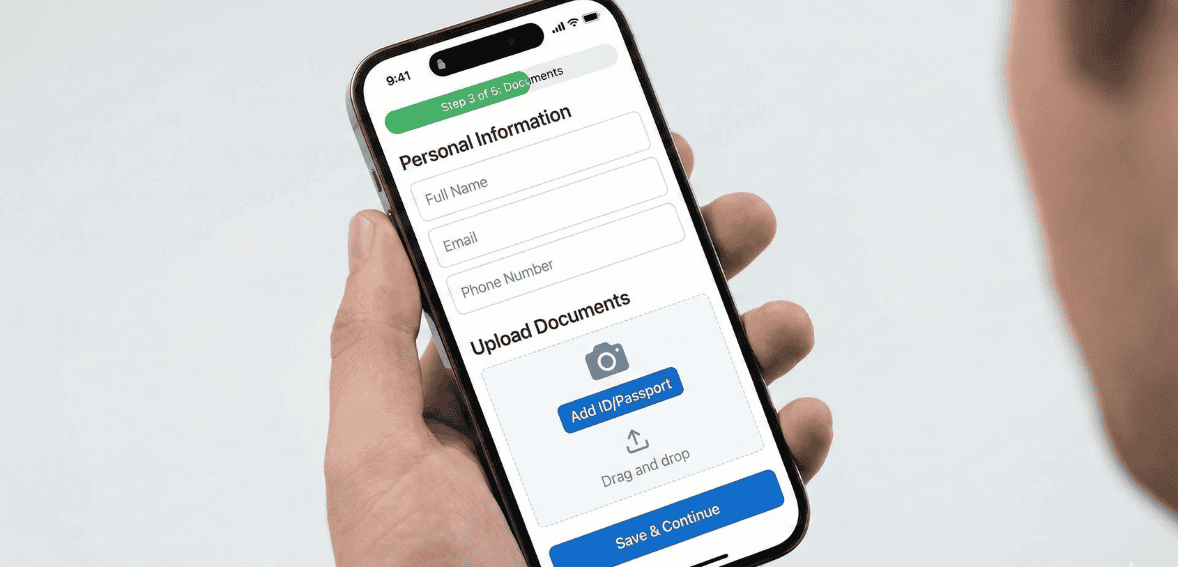
A seamless online application is built around simplicity, accessibility, and speed. It should be mobile-friendly first, because a large percentage of rental shoppers apply from phones. Fields should be short, logical, and easy to follow, with progress indicators so prospects know how long the process will take. Optional uploads should replace mandatory printing. Automatic saving should prevent starting over if a device disconnects. And all costs should be disclosed before entering digital payment information to build trust.

Clarity matters as much as speed. Many applicants abandon the process because they are unsure what documents are required or whether they qualify. When screening criteria, income requirements, pet policies, and co-signer rules are stated upfront, applicants feel confident completing the application instead of hesitating.

Transparency builds trust and trust increases conversions. When renters don’t fear hidden fees or unpredictable requirements, they move forward more willingly. Properties that clearly explain policies and expectations experience fewer disputes later, because renters know what they are committing to from the start.

Finally, applicants should receive automatic confirmation instantly after submitting forms. Silence creates anxiety and uncertainty. A message outlining next steps, what will be reviewed, the expected timeline, or documents pending reinforces that the process is organized and moving forward. Simple details, like estimated screening turnaround times, can significantly increase commitment and prevent people from continuing to apply elsewhere.

Building Trust Through Screening Transparency and Fair Criteria

tenant screening workflow efficiency to improve lead-to-lease conversion

Screening is essential to protecting property assets, maintaining community safety, and ensuring tenants can meet lease obligations. But if handled poorly, screening can become a negative pressure point that causes prospects to withdraw. The key to stronger conversion is not less screening, it is more transparent screening.

Renters worry most about being rejected without explanation, facing unclear rules, or paying non-refundable application fees without feedback. When a property clearly communicates screening standards such as minimum income multiple, rental history expectations, credit considerations, guarantor options, or background check policies prospects feel respected and informed. They stop guessing and start honestly qualifying themselves.

Fairness and consistency help applicants feel confident that the process is objective rather than personal. Reliable workflows ensure every applicant follows the same steps and is evaluated using the same measurable criteria, which prevents miscommunication and potential disputes. When screening policies are publicly accessible, applicants perceive management as ethical and professional, thereby increasing their willingness to apply.

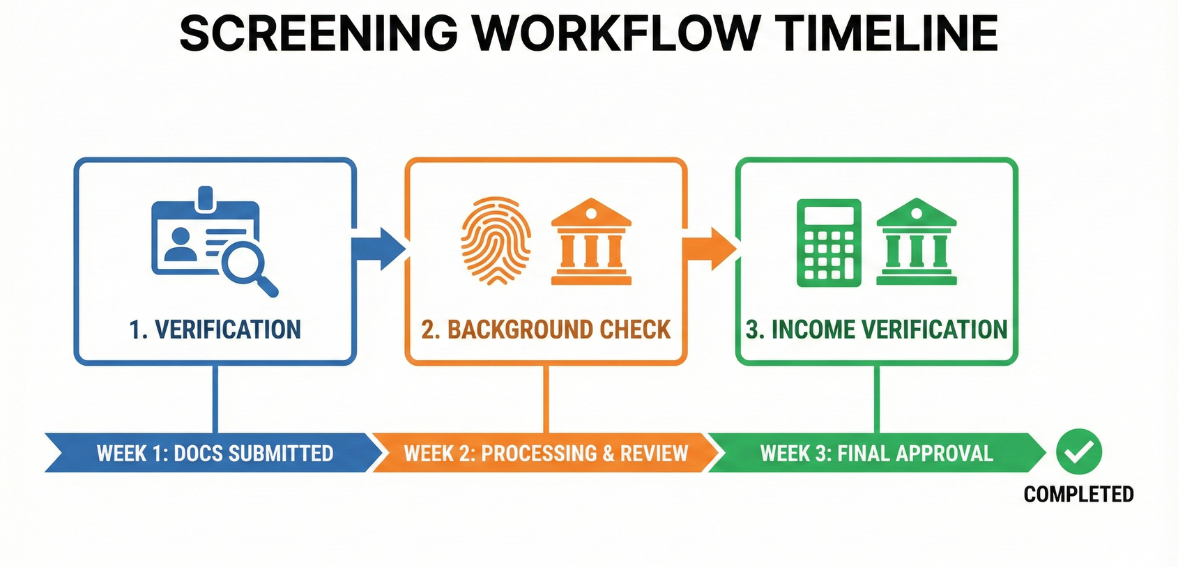
Speed also matters. Long screening timelines cause prospects to explore other units and abandon existing applications. Delays often happen when documentation is missing, communication loops are unclear, or verification efforts require manual chasing. Automating document collection and communication reminders keeps applicants on track and reduces unnecessary waiting.

Respectful screening improves conversion by reducing anxiety, uncertainty, and perceived risk. Applicants who feel informed, guided, and acknowledged remain engaged. Those left in silence disappear not because they were unqualified, but because the process made them feel uncertain. In leasing, trust is currency, and transparent screening turns trust into signed agreements.

Streamlining the Screening Workflow to Reduce Delays and Increase Approval Speed

automated leasing workflow to increase lead-to-lease conversion rates

The most significant hidden cost in leasing is time lost during the screening stage waiting for employment verification, previous landlord feedback, missing documents, or internal review. Every extra hour increases the chance of losing a qualified applicant. A well-designed workflow turns screening into momentum rather than friction.

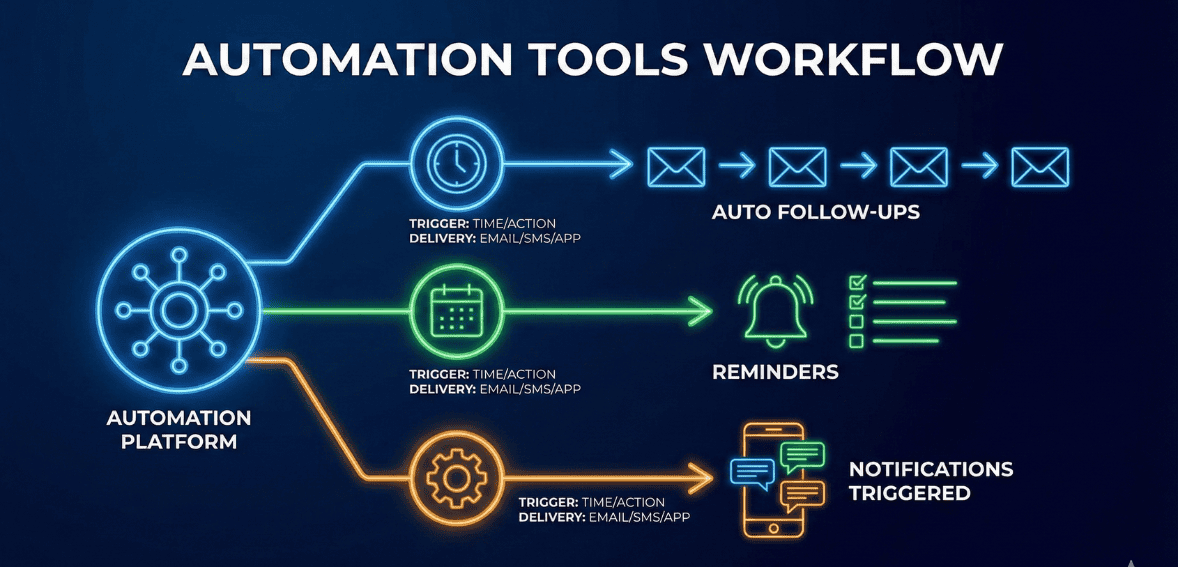
A streamlined process means reducing manual steps and creating a predictable, guided path in which each action automatically triggers the next. Rather than back-and-forth emails, applicants should receive structured instructions: which documents are required, how to upload them, the expected review time, and how communication will occur. Automated reminders for missing items keep the process moving without forcing staff to micromanage future tenants.

Centralizing information matters too. When applications, identification, income verification, and background results are scattered across email threads or stored manually, confusion and mistakes increase. A unified digital workspace allows leasing teams and applicants to communicate in one place, with complete visibility. Applicants appreciate transparency when they can see real-time updates rather than wondering whether their paperwork has been lost.

Speed does not mean rushed decisions; it means eliminating unnecessary waiting. Faster screening doesn’t just improve conversion, it enhances reputation. Renters talk about properties that move efficiently, and in competitive markets, that reputation becomes the strongest marketing tool available.

An organized, technology-assisted screening process improves accuracy, consistency, fairness, and professionalism all qualities applicants look for in a property they want to call home.

Using Automation to Reduce Response Delays and Increase Applicant Commitment

One of the most potent ways to improve lead-to-lease conversion is to eliminate waiting time. In leasing, silence is deadly: when prospects submit questions or applications and don’t immediately hear back, they assume the unit isn’t available, that management is unresponsive, or that the process will be stressful. That moment of uncertainty is when they open another listing and apply to another listing. Every unanswered inquiry is a lead quietly slipping away.

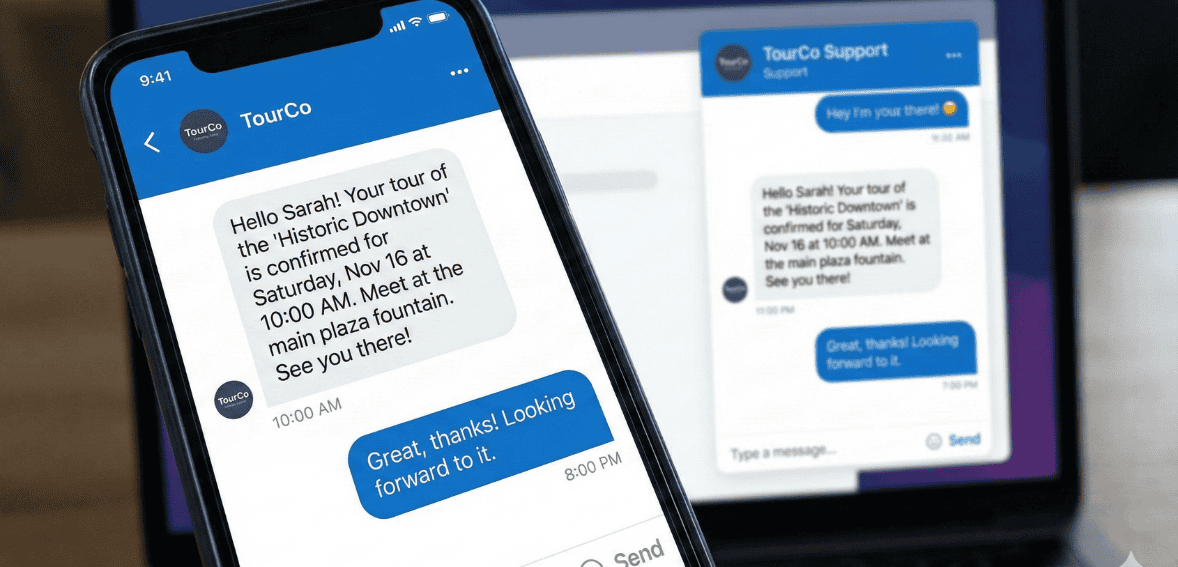
Automation transforms this part of the journey. Instead of relying on manual follow-ups, automated responses ensure prospects instantly receive acknowledgment and next steps. The difference is psychological: when a renter gets a message confirming their inquiry, offering a link to apply, or allowing them to schedule a tour instantly, the process feels active, professional, and reliable. They remain engaged because they feel seen.

Automated reminders also reduce abandonment. Many applicants begin applications but pause to gather documents or think through decisions. If they receive friendly reminders for example, notifications about incomplete uploads or encouragement to finish the screening process they are far more likely to return. Without reminders, applications frequently die halfway through, resulting in unnecessary vacancy and wasted marketing spend.

Automation can also help prioritize leads based on readiness or interest level, allowing leasing staff to focus their time on the most qualified prospects rather than sorting through inquiries manually. This ensures fewer prospects fall through the cracks due to workload overload.

When automation supports communication, screening, and document collection, the leasing team can shift their energy from chasing paperwork to building genuine connections with prospects. And that human connection, along with efficiency, significantly boosts conversion rates.

Improving Communication Across the Leasing Journey

leasing communication strategy improving rental lead conversion

Communication influences conversion more than any other single factor. Renters want confidence that management is organized, attentive, and respectful of time. When communication is delayed, inconsistent, or unclear, renters build emotional distance and begin looking for alternatives. But when communication is responsive, transparent, and proactive, they build trust and loyalty.

Improving communication begins with clarity. Every prospect should know what the application process entails, what documents are required, how screening works, and the estimated timeline. Uncertainty is stressful and leads to withdrawal. When expectations are communicated upfront, prospects stay committed because they feel in control rather than confused or anxious.

The tone of communication matters too. Many leasing conversations sound transactional or robotic, but successful conversion relies on empathy and reassurance. Renters are making big decisions where they will live, budget commitments, changes to routine, and personal comfort. Warm, respectful communication turns the leasing process into a positive experience. Something as simple as checking in after a virtual or in-person tour, asking whether they have any questions, or sharing helpful resources can significantly increase the likelihood of signing.

Communication should also extend beyond email. Text messaging confirmations, application status notifications, and scheduled touchpoints help prospects feel continuously guided. When a leasing journey feels structured and supported, renters gain confidence that management will also be reliable after they move in and that confidence heavily influences conversion.

At its core, communication is how properties demonstrate their value to people. Strong communication creates emotional alignment between renter and manager and that often matters more than the unit itself.

Reducing Application Abandonment with User-Friendly Technology

mobile-friendly rental application reducing abandonment improving conversions

Application abandonment when prospects start but don’t finish the application is one of the most expensive forms of lost revenue. Every abandoned application is not just a missed lead; it represents wasted marketing, advertising, staff time, and vacancy carry-cost. The majority of abandonment occurs because the process is too complicated or time-consuming, not because the applicant changed their mind.

User-friendly technology eliminates most of the friction that causes drop-off. When the application is streamlined and intuitive, renters feel comfortable proceeding rather than overwhelmed. Shorter forms, visual progress bars, automatic saving, document upload via camera, and pre-filled repeating fields all prevent cognitive overload. Renters should never feel like they are trying to navigate a puzzle.

Design and accessibility matter as well. A large percentage of applicants apply using mobile devices, so every element must function flawlessly on smaller screens. Slow-loading pages, broken upload features, or unclear navigation dramatically reduce completion rates.

Providing payment transparency also prevents abandonment. Many renters hesitate when they don’t understand the fees they are about to pay or whether they’re refundable. Displaying clear fee information before payment, along with brief explanations of what each fee covers, builds confidence and reduces resistance.

Finally, combining technology with touchpoints like automated emails confirming submission and personalized follow-ups reassures applicants that they are progressing and not lost in the system. When renters feel guided rather than left to figure things out on their own, they stay committed and move forward.

User-friendly technology proves that efficiency and humanity can coexist and together, they create a smooth experience that significantly increases conversion rates.

Aligning Leasing, Marketing, and Screening Teams to Create a Unified Experience

leasing team collaboration workflow alignment to improve lead-to-lease performance

Even great tools and digital workflows can fail when leasing departments operate in disconnected silos. Many prospects experience confusion because they receive inconsistent information from different staff members or because internal communication is slow. Disconnected workflows lead to repeated questions, delayed decisions, and frustration that causes prospects to drop out.

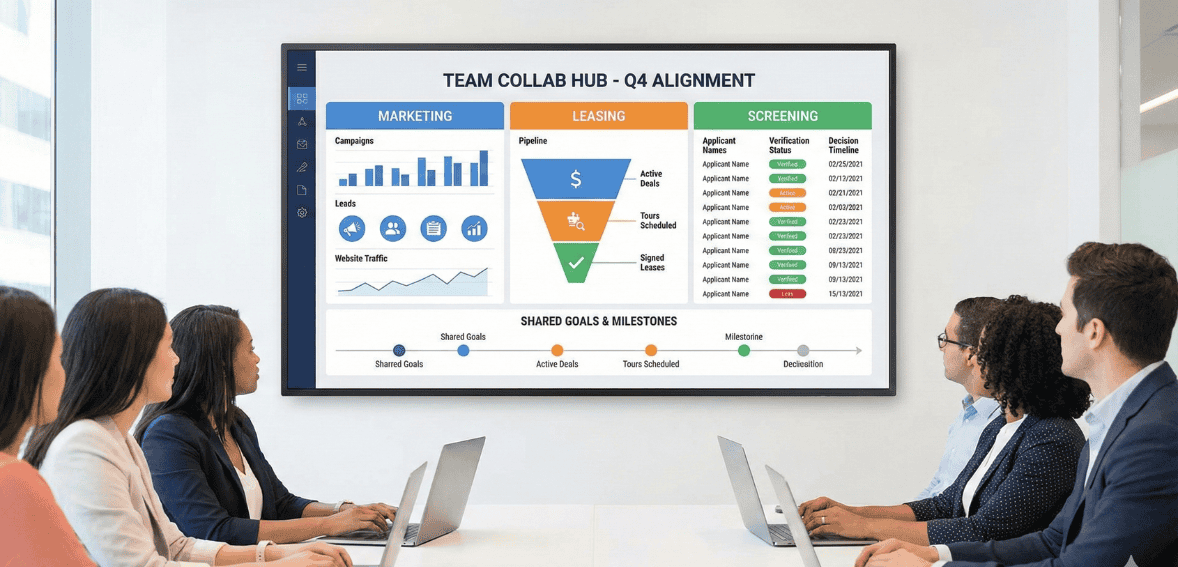
Aligning leasing, marketing, and screening processes ensures that the entire journey feels cohesive. Everyone involved from inquiry responses to tours to screening evaluations should use the same language, share the exact expectations, and have the same access to information. When teams are aligned, prospects receive consistent messaging, immediate answers, and a smooth path from first contact to final signature.

Collaboration also ensures feedback loops are in place. Marketing property should know which leads convert most successfully, leasing should know why applicants hesitate or withdraw, and screening should share insights into the timeline. Continuous improvement happens when departments communicate frequently and adjust based on data.

Team alignment is also culturally significant. Prospects can sense when a leasing team is disorganized or disconnected, and that damages trust. When a team presents itself as unified, confident, and coordinated, prospects feel secure and they associate that confidence with future living quality.

The leasing process is one story with multiple authors. When those authors write together, the result is a narrative prospects want to be part of: smooth, predictable, and professional.

Conclusion

Improving lead-to-lease conversion is not about lowering standards, discounting pricing, or increasing marketing spend. It is about removing friction, creating clarity, and designing a rental experience that respects the renter’s time, trust, and expectations. When leasing teams streamline the online application process, improve screening transparency, communicate consistently, and support workflows with intelligent automation, prospects feel guided rather than overwhelmed and they commit rather than drift away.

Every improvement in workflow is an investment in higher occupancy, reduced turnover, and stronger financial performance. And beyond numbers, it builds a reputation for professionalism and care. The two qualities render value above all.

The leasing experience is no longer merely administrative. It is emotional, psychological, and experiential. Properties that master that experience transform leads into residents, and residents into loyal advocates.

FAQs

What causes most renters to abandon applications?

Most abandonment happens due to confusing processes, unclear requirements, slow response times, and difficulty uploading documents. When applications are mobile-friendly, transparent, and supported by helpful communication, completion rates increase significantly.

How fast should a leasing team respond to new leads?

Ideally, within minutes, not hours. The first property to respond has the highest chance of securing the lease. Automated responses and workflows allow immediate engagement even outside business hours.

Does improving screening speed weaken screening accuracy?

Not at all. Streamlined screening removes delays caused by communication gaps and manual steps, not by reduced evaluation. Faster workflows identify qualified applicants more efficiently and avoid losing good prospects due to wait-time frustration.

Why is transparency important during screening?

Clear criteria and documented processes build trust and reduce anxiety. Renters are more likely to apply when they understand requirements and feel the process is fair and consistent.

How much impact does communication have on conversions?

A tremendous amount. Strong communication improves confidence, reduces doubt, and creates emotional connection all of which significantly increase the likelihood of signing a lease.

move-in/move-out inspection best practices improving transparency and trust in rental properties

Move-In/Move-Out Inspection Best Practices and Dispute Resolution Strategies for Smooth Rental Transitions

The relationship between a landlord and a tenant is heavily shaped by the first and last impressions in a rental property. A move-in inspection sets expectations, while a move-out inspection determines fairness. When done carefully and professionally, these moments create clarity, reduce stress, and significantly minimize arguments about security deposits or property conditions. When done poorly, they create tension, mistrust, and disputes that strain both parties emotionally and financially.

Move-In/Move-Out Inspection Best Practices are no longer just a checklist exercise. They form the foundation of transparent property management, protect legal rights, support accurate documentation, and build trust. A well-structured inspection process ensures everyone understands the property’s condition from Day 1, eliminating uncertainty later when repairs or deductions arise. In a rental industry where turnover can be expensive and time-consuming, reducing conflict around move-out inspections helps protect relationships, minimize legal exposure, and maintain property condition efficiently.

An intense inspection routine also helps prevent damage escalation. Something minor discovered at move-in like a dripping faucet or a loose tile can be fixed early, rather than becoming a costly repair months later. Equally, capturing detailed records at move-out prevents misunderstandings about wear and tear versus tenant negligence. As expectations continue to evolve and rental laws place greater emphasis on transparency, clear documentation, and strong communication, these qualities are central to smooth transitions.

Why Move-In/Move-Out Inspection Best Practices Matter More Than Ever

move-in/move-out inspection best practices protecting tenants and landlords

Move-In/Move-Out Inspection Best Practices are essential for protecting both parties at the start and end of any lease. An inspection is more than a formality; it is a legal safeguard and a relationship builder. At move-in, tenants need confidence that they are stepping into a clean, safe, well-maintained home. Landlords need an accurate baseline record to reference later. When both parties participate openly in the process, they begin the rental relationship from a place of mutual respect.

At move-out, the same documented baseline serves as the reference point for fair decisions on cleaning, repairs, and deposit refunds. Without proper documentation, disagreements turn emotional, and even responsible tenants can feel unfairly accused. Landlords may face negative reviews, legal complaints, and delayed turnaround on the property. Move-In/Move-Out Inspection Best Practices eliminate doubt by providing clear evidence of what was present and what changed over time.

The lack of detail is one of the biggest causes of disputes. A vague note like “floor scratched” means nothing compared to a timestamped photo showing a deep gouge near the bedroom entrance. Similarly, tenants feel better knowing that the damage they did not cause is already recorded and won’t be blamed on them. This transparency helps ensure the move-out does not feel like a surprise evaluation, but rather a predictable process guided by fairness, documentation, and communication.

In today’s rental environment, where reviews and word of mouth influence occupancy and turnover costs, the experience during move-out can shape a property’s long-term reputation. Good inspection practices serve the dual purpose of protecting physical property and nurturing professional credibility.

Setting Clear Expectations from Day One

setting expectations early during move-in inspection to prevent disputes

The strongest Move-In/Move-Out Inspection Best Practices begin long before the tenant collects their keys. Clear expectations clarify responsibilities, reduce anxiety, and set standards for cleanliness, maintenance, and care. Tenants need to understand what condition is expected when they eventually move out, and landlords need to define what qualifies as normal wear and tear versus actionable damage.

Having a structured move-in walkthrough that includes detailed notes, high-quality photos, and agreement signatures ensures everyone begins with the same understanding of the property’s condition. This prevents arguments later because there is no debate over what existed at the start. During this stage, tenants should be encouraged to ask questions and report anything that was missed. When tenants feel included, they feel respected—not monitored.

Equally important is explaining how the deposit works and what could lead to deductions. When tenants know precisely what is expected, they are far more likely to protect the property and maintain cleanliness throughout the lease term. Move-In/Move-Out Inspection Best Practices emphasize transparency because uncertainty breeds conflict, while clarity builds compliance.

Some property managers also schedule a mid-lease check-in. This approach is not about policing tenants, but about identifying repairs early and preventing bigger expenses later. For tenants, it communicates care and proactive management rather than neglect. For the property, it extends the lifespan and keeps turnover costs predictable.

Documenting Property Condition with Transparency and Precision

documenting rental property condition for move-in/move-out inspection best practices

Documentation is the core of effective Move-In/Move-Out Inspection Best Practices, because without it, every disagreement becomes subjective. Professional documentation means more than casually walking through a unit with a notepad. It requires detailed written descriptions, photo documentation, timestamps, and, ideally, video where needed.

When documenting at move-in, it is crucial to record every detail honestly even minor cosmetic imperfections. A small stain, a tiny chip on a countertop, or a scratch on a cabinet door may seem trivial, but during move-out, they could cause disagreements if not already acknowledged. Photos should capture multiple angles, include close-ups of damage, and provide clear proof of the room’s condition. 

Lighting and date records matter because they demonstrate credibility and neutrality.

At move-out, documentation should reflect direct comparisons to the move-in record. Instead of general remarks like “dirty appliances,” clear documentation should show what changed, how severe it is, and why it matters. Tenants do not object to fairness; they object to ambiguity. Move-In/Move-Out Inspection Best Practices rely on accuracy to build trust, and trust is essential to resolving conflicts without them.

One common area of confusion is distinguishing normal wear from actual damage. Wear and tear refers to the natural deterioration that occurs through everyday use, such as mild paint fade or light carpet flattening. Damage reflects neglect or misuse like broken shelves, burn marks, or holes in walls. When this distinction is explained clearly, tenants better understand expectations, and landlords avoid unfairly penalizing tenants.

Detailed documentation also provides legal protection if disputes escalate to claims or mediation. When facts are seen and organized, conflict rarely escalates.

Conducting Move-In and Move-Out Walkthroughs With Professionalism

joint inspections supporting fair move-in/move-out inspection best practices

A walkthrough inspection should always feel like a collaborative, respectful process not an interrogation. Move-In/Move-Out Inspection Best Practices emphasize professionalism, fairness, and open communication. Both parties should ideally be present during inspections, enabling real-time discussion and agreement on condition assessments. When tenants participate, they are far more likely to accept final decisions because they saw the process, contributed to it, and signed off on it.

During move-in walkthroughs, the goal is to accurately document the property, answer questions, and set expectations. During move-out walkthroughs, the purpose is to evaluate changes based on facts, not assumptions. The tone matters enormously. If tenants feel rushed, judged, or rejected, emotions escalate. If they feel respected and informed, collaboration remains intact.

Move-out walkthroughs should ideally be scheduled before the tenant entirely vacates, giving the tenant a chance to address cleanliness or minor issues before deductions are applied. This improves transparency and reduces penalty sentiment. When both sides communicate professionally, security deposit outcomes rarely cause conflict.

A respectful inspection also reflects positively on the property management’s reputation. Tenants often describe move-out experiences in reviews, and those reviews influence future applicants. A smooth, transparent process can become a competitive advantage.

Preventing Deposit Conflicts Before They Happen

preventing deposit conflicts through move-in/move-out inspection best practices

One of the most essential Move-In/Move-Out Inspection Best Practices is preventing conflict before it ever arises. Most disputes over security deposits do not occur because tenants intentionally damage property or because landlords unfairly withhold money. The real cause is almost always miscommunication and the absence of shared understanding. When expectations are vague, even minor deductions can feel like a personal attack, turning a simple disagreement into a tense dispute. The most efficient way to protect both tenants and landlords is through proactive clarity and consistent follow-ups throughout the lease.
Preventing disputes begins with educating tenants from the leasing phase onward. When tenants understand policies clearly such as what constitutes acceptable cleanliness, what constitutes chargeable damage, and what normal wear and tear means in real terms it transforms the entire move-out process. Instead of feeling surprised or blindsided, tenants already know what will be reviewed and what they need to do to avoid charges. A tenant who understands expectations is far more likely to take care of the property and leave it in good condition. This establishes a cooperative tone rather than a defensive one.

Preventive conflict resolution also includes ongoing inspections and maintenance, and responsiveness. Instead of waiting until the move-out day to discover unattended leaks, wall damage, or appliance issues, mid-lease check-ins build a communication bridge. Tenants appreciate proactive care, and landlords benefit from identifying problems early instead of absorbing larger repair bills later. The inspection process should never be treated like a surprise evaluation but rather a shared commitment to preserving property quality. When both parties feel like partners rather than adversaries, resolution becomes easier and more natural.

Handling Security Deposit Deductions with Fairness and Transparency

fair security deposit process using move-in/move-out inspection best practices

Security deposits are the biggest source of tension between landlords and tenants. While most move-out experiences are straightforward, disagreements escalate quickly when deductions feel unfair or unexplained. Fair and transparent handling of security deposits is central to Move-In/Move-Out Inspection Best Practices, because it reinforces trust and eliminates uncertainty. Tenants need to know that decisions are based on documented facts not assumptions, personal opinion, or inconsistent judgment.

Transparency begins with clear evidence. When deductions match verified changes documented through comparisons of move-in and move-out inspections, decisions hold credibility. Photos, videos, annotated condition reports, and repair estimates allow tenants to see exactly what changed and why a deduction was necessary. This prevents arguments rooted in emotion or misunderstanding because the facts speak for themselves. A tenant may not love the outcome, but they will usually accept it if they feel respected and fully informed.

Fairness also requires distinguishing clearly between damage and normal wear and tear. Natural aging of a property is expected. Light carpet wear, slight paint fading, minor nail holes for hanging pictures, and gentle surface wear from everyday activity are part of responsible tenancy. Real damage, however, requires repair like broken fixtures, deep stains, large wall holes, cracked windows, or unauthorized alterations. Move-In/Move-Out Inspection Best Practices encourage objectivity and consistency. A good rule is simple: if it must be repaired or replaced to return the property to its previous functional and aesthetic state, it is damaged; if it is the natural result of time and everyday use, it should not incur charges.

Fair deposit handling also includes issuing refund statements promptly and clearly. The more detailed the breakdown, the fewer questions arise. A vague deduction labelled “cleaning fee” causes frustration. A statement that explains “professional deep cleaning required due to excessive grease buildup beyond normal use (before-and-after photos included)” demonstrates responsibility and transparency. When tenants understand precisely what happened, conflict rarely escalates.

Effective Dispute Resolution Strategies That Promote Respect and Resolution

Even with excellent Move-In/Move-Out Inspection Best Practices, disputes can still arise. What matters is how they are handled. Dispute resolution is not about winning; it is about preserving professional integrity and achieving solutions that respect both parties. The real success of conflict management lies in listening first, explaining calmly, and relying on documented facts not emotion.

The most powerful dispute resolution tool is patience. When a tenant approaches conflict feeling angry or defensive, responding aggressively escalates tension and shuts down problem-solving. A calm, empathetic tone communicates that the goal is fairness, not confrontation. Many disputes are resolved immediately when tenants feel heard and respected. Active listening shows professionalism and creates emotional space for logic to enter the conversation.

Providing evidence rather than opinions is another cornerstone of strong dispute resolution. When decisions are supported by photos, timestamped reports, written communication records, and objective comparisons, the resolution process feels rational rather than subjective. It shifts focus away from personal feelings and toward verifiable facts. When parties share the same foundation of truth, solutions emerge more smoothly.

Some disagreements may require compromise. Offering partial refunds, repair receipts instead of estimates, or additional clarification demonstrates a willingness to find balance. This keeps discussions constructive instead of adversarial. In rare cases where resolution cannot be reached directly, third-party mediation can provide a neutral evaluation. A fair process strengthens trust and protects relationships, even if the outcome is not ideal for both sides.

Good dispute resolution protects reputation. Tenants talk about their move-out experience, and potential renters often care more about how conflicts were handled than whether problems ever occurred.

Building a Move-Out System That Enhances Reputation and Increases Renewal Potential

enhancing reputation with strong move-in/move-out inspection best practices

Move-In/Move-Out Inspection Best Practices influence much more than the inspection itself. They impact future leasing success, tenant perception, and long-term property value. A smooth, transparent inspection process makes tenants feel respected and cared for, which increases the likelihood of positive reviews, referrals, and even renewals. A stressful or confusing experience makes tenants eager to leave and eager to warn others.

A well-designed move-out system reflects organizational strength and professionalism. Sending move-out instructions early, offering cleaning and repair guidelines, providing sample checklists, and outlining timelines allows tenants to prepare confidently. Tenants who know precisely what to expect are far more likely to return the property in excellent condition. The best transition systems also enable tenants to resolve issues themselves before incurring costs. When tenants feel supported instead of surprised, cooperation emerges naturally.

A move-out system also reflects a property management brand’s identity. Every final interaction shapes the story a tenant tells afterward. A respectful, transparent ending reinforces loyalty and trust even when a tenant moves on. A poorly handled ending can undo months or years of good service. Property managers who focus on fairness during transitions demonstrate reliability, an attribute that improves occupancy, retention, and community reputation.

Conclusion

Move-In/Move-Out Inspection Best Practices are essential to successful rental property management. They protect legal interests, maintain property conditions, reduce financial risk, and preserve positive relationships. Transparency, documentation, communication, and professionalism transform move-ins and move-outs from sources of conflict into organized, respectful processes that benefit everyone involved.

When landlords create structured systems and treat inspections as opportunities for collaboration rather than confrontation, disputes decrease dramatically, and tenant experience improves. A well-managed move-out protects property value and reduces turnover costs, but more importantly, it builds trust and trust is the cornerstone of long-term rental success.

Property inspections are a cornerstone of effective property management, influencing everything from maintenance and repair decisions to tenant satisfaction and property valuation. Traditionally, inspections have been carried out using manual methods—paper forms, handwritten notes, and verbal reports. While these methods have served their purpose, they are increasingly being overshadowed by specialized Property Management Inspection Software that offers substantial improvements in efficiency, accuracy, and overall effectiveness.

FAQs

How can I avoid security deposit disputes with tenants?

Clear expectations, transparent documentation, and shared inspection records prevent conflict. When tenants see evidence and understand the reasoning behind deductions, arguments rarely escalate.

What is the most essential part of a move-in inspection?

Thorough documentation. Detailed photos, videos, and written notes establish a clear baseline so both parties know exactly what condition the property started in.

What counts as normal wear versus damage?

Wear and tear result from everyday living, like minor wall marks or light carpet wear. Damage results from neglect or misuse, such as stains, holes, or broken fixtures that require repair.

Should tenants attend move-out inspections?

Yes. Joint walkthroughs encourage transparency and give tenants a chance to resolve minor issues before deductions occur, reducing conflict.

How can property managers resolve disputes effectively?

Stay calm, listen actively, provide proof, and offer a reasonable compromise. Respectful communication and clear evidence lead to cooperative solutions.

Lease renewal strategies improving tenant retention and reducing turnover in rental properties

Lease Renewal Strategies That Boost Retention and Reduce Turnover

Keeping great tenants doesn’t happen by luck. It’s the result of thoughtful communication, intelligent planning, and lease renewal strategies designed to make residents feel valued, understood, and excited to stay. When tenants renew their lease, property managers save time, energy, and money avoiding costly turnovers, vacancy periods, and Digital Marketing hassles. But renewal isn’t just a transaction. It’s a moment where tenants decide whether the place they live still feels like home.

In today’s rental landscape, tenants expect over four walls and a roof. They want good communication, quick maintenance responses, a sense of stability, and a landlord who listens. Lease renewal strategies are ultimately about strengthening trust. If residents feel the property is improving, well-managed, and responsive to their needs, they are much more likely to stay for another year or longer.

Increasing lease renewals begins long before renewal time arrives. It starts from the very first day a resident moves in. Every maintenance request, every notice, every interaction contributes to a tenant’s decision to stay or leave. By the time the lease expiration date is approaching, many tenants have already made up their minds based on how supported they felt throughout the year. That’s why a renewal plan must be proactive, consistent, and tenant centric.

The following lease renewal strategies will help property owners reduce turnover, maintain stable occupancy, and build communities where tenants feel secure and valued.

Communicate Renewals Early and With Respect

Early lease renewal communication strengthening tenant relationships and satisfaction

Renewals should come as no surprise. When reminders arrive late, tenants feel rushed, pressured, or anxious about big decisions. A respectful renewal strategy starts early ideally 90–120 days before the lease ends. This early approach tells residents you care about their planning needs, too.

But sending a reminder isn’t enough. The message must sound friendly, not transactional. A renewal letter should thank them for being great tenants, recap positive tenancy history, and clearly explain any changes in rent or terms. When property managers show gratitude and transparency, residents feel respected which directly impacts their willingness to stay.

Early communication also creates space for discussions. If a tenant has concerns like rent increases, maintenance issues, or needed updates there’s time to address them before frustration builds into a reason to move. The right message delivered early can create comfort and confidence instead of pressure.

Build Renewal Strategies Around Tenant Experience

Tenant experiences improvements driving higher lease renewal strategies and retention

The heart of every lease renewal strategy is simple: happy tenants stay longer. If a resident feels ignored throughout the year, renewal offers won’t change their mind. Improving tenant experience begins with better responsiveness, friendly interactions, and consistent follow-through. Every joyous moment creates emotional connection and emotional connection is the real reason tenants stay.

Maintenance plays a significant role here. Quick repairs show Respect for a resident’s comfort. Clear updates prevent confusion. A clean property signals pride and professionalism. When a tenant sees that their landlord genuinely cares, they feel more comfortable committing to the long term.

Small, personal touches generate loyalty, too. Remembering tenant preferences, congratulating them on milestones, and occasionally asking how the home feels. These gestures take very little time but create enormous goodwill. Renewal strategies are strongest when residents feel seen, supported, and valued throughout their lease journey not just at renewal time.

Enhancing tenant experience using platforms like portals, mobile apps, and automation tools, property managers can offer convenience, strengthen tenant relationships, and drive long-term retention. These digital tools empower tenants while streamlining operations for landlords. 

Offer Fair, Data-Backed Rent Adjustments

Data-based rent adjustments supporting trust in lease renewal strategies

One of the biggest reasons tenants move is unexpected or unreasonable rent increases. Rising costs are understandable but residents want increases to feel fair and grounded in reality, not arbitrary. Lease renewal strategies should include clear rent justification based on market-rate trends, property improvements, maintenance investments, and service upgrades.

A tenant is far more likely to accept a reasonable increase when it comes with context:

  • “We improved lighting in all common areas.”
  • “Your HVAC system was updated this year.”
  • “Maintenance response times are faster because we expanded staff.”

These explanations transform pricing from a burden into an investment in better living conditions.

Excellent renewal planning means studying the local market so that increases stay competitive neither so high that tenants move, nor so low that owners lose revenue potential. An innovative, balanced pricing strategy increases occupancy stability, benefiting everyone in the long term.

Make Renewal Feel Rewarding Not Just Expected

Lease renewal incentives that help reduce turnover and increase tenant loyalty

Humans respond to incentives. And tenants love feeling appreciated. Instead of treating lease renewal as routine paperwork, turn it into a rewarding moment. Small gestures can make a big difference:

  • A small discount for renewing early
  • A one-time upgrade, like a smart thermostat or new appliance
  • A deep cleaning service before the next lease term
  • A gift card or move-in anniversary perk

These gestures cost far less than vacancy turnover expenses. They show tenants:

“You matter. We want you here.”

Even small recognition like a personalized note strengthens connection. A tenant who feels valued is much less likely to explore other housing options, even if competitors offer slightly lower rent.

Calling out their positive history (“Thank you for always paying rent on time”) reinforces the sense of being a respected resident not just a contract number. Rewards don’t replace service quality but they beautifully support the success of renewal strategy.

Proactive Renewal Conversations: Ask, Listen, Adjust

Proactive lease renewal strategies using clear communication to resolve tenant concerns

Many property managers only talk about renewals when a lease is about to expire. That’s too late. The most innovative lease renewal strategies begin with dialogue, not decisions. About three months before expiration, schedule a quick check-in not a “sign now” request, but a genuine conversation: “How has everything been going? Is there anything we can improve for you?”

This shows tenants that you care before asking them to commit. When residents express concerns about noisy neighbors, appliance issues, parking challenges, listen actively and follow up quickly. When a tenant sees problems resolved because they spoke up, they feel heard, respected, and more willing to stay.

Not every tenant will express their needs without prompting. Some quietly put up with annoyances until they get fed up and move. Asking first prevents silent dissatisfaction.

These pre-renewal conversations also give valuable insight into:

  • Who is likely to renew
  • Who needs more attention
  • Who might be considering a move

The earlier you know, the earlier you can creatively retain good residents with minor fixes, additional amenities, flexible terms, or loyalty recognition.

A great renewal strategy isn’t about convincing tenants at the last minute, it’s about removing reasons to leave long before they consider it.

Upgrade Living Conditions to Match Modern Expectations

Rental upgrades that encourage tenants to renew their lease and stay longer

Today’s renters want more not in luxury, but in innovative living experiences. Even modest updates can dramatically influence renewal choices. When tenants see improvements happening around them, they feel progress. A stagnant property, even if decent, creates the sense that moving could bring something better.

Thoughtful upgrades especially those tied to tenant comfort show that management 

  • cares about the resident experience:
  • Smart thermostats → energy savings, comfort
  • USB or smart outlets → convenience
  • High-speed Wi-Fi support → crucial for work & streaming
  • Modern lighting → safety and reduced utility loads
  • Better laundry, secure package storage → everyday quality of life

If residents see their home environment improve, they are less likely to give it up.

Even small visual refreshes like hallway paint and landscaping impact emotional perception. People renew where they feel the property is growing, not declining.

And the best part? These upgrades cost far less than tenant turnover. A single vacancy can mean:

  • Deep cleaning
  • Repainting
  • Repairs
  • Lost rent
  • Advertising and screening

Retention is not just emotional, it is financially strategic.

So when planning budgets, smart landlords ask: “What small changes today can increase renewals tomorrow?”

Transparent Policies Build Trust and Long-Term Commitment

Transparent lease policies increasing tenant trust and renewal confidence

Uncertainty pushes tenants away. Clear expectations pull them closer. Confusion about fees, unclear pet rules, complicated maintenance procedures these mistakes silently damage renewal chances.

Great lease renewal strategies include:

  • Clear communication about policy changes
  • Advance notice on rent adjustments
  • Easy access to rules and resources
  • Straightforward explanations for any updates

When tenants understand why changes happen to insurance requirements, new safety upgrades, rising community costs they collaborate rather than resist. Transparency also prevents resentment, which is one of the biggest revenue drivers.

Trust grows when tenants feel the landlord is honest, consistent, and predictable in operations. Every clear explanation strengthens the relationship. Every unexplained decision weakens it.

A tenant who trusts you will stay longer because safety and fairness matter more than shiny amenities.

Flexibility and Tailored Lease Terms Strengthen Renewals

Flexible lease terms improving lease renewal strategies and tenant retention

Every tenant has their own goals, timelines, and financial situations. Offering only one type of renewal a strict 12-month extension limits your success. Flexible lease renewal strategies make living easier for tenants with different lifestyles:

  • Month-to-month extensions for tenants unsure about long-term plans
  • 18- or 24-month lease options for those who want stability
  • Slightly discounted rates for longer commitments
  • Mid-lease upgrades or refreshes when needed

Not every tenant will ask for flexibility directly. But when you offer it first, tenants feel like the property adapts to them, not the other way around.

Flexibility signals a simple message: “We want you here, and we’re willing to work with you.”

When tenants feel empowered with options, renewal becomes the natural choice.

Renewal Timing Matters: Remove Friction and Stress

Timing is everything. Even happy tenants may walk away if renewal feels stressful. If agreements arrive too close to expiration or during personal life chaos, tenants default to exploring alternatives. The easiest time to renew is when life feels calm.

Effective scheduling means:

  • Sending renewal offers early (90–120 days before)
  • Reminding politely not aggressively
  • Keeping signing procedures digital and straightforward

If renewal takes 5 minutes instead of a frustrating paperwork hour, tenants say yes faster.

Also, avoid requesting renewals during:

  • Holidays (relocation stress is high)
  • Major maintenance disruptions
  • Known local moving seasons (summer turnover peaks)

Smooth logistics create smooth decisions. Renewal becomes a convenience, not a chore.

Recognize and Reward Good Tenants

People stay where they feel appreciated. When renewal conversations are rooted only in terms and rent increases, tenants feel like revenue not residents. Showing gratitude strengthens loyalty.

Recognition can be personal and simple:

  • A handwritten note thanking them
  • A small plan to refresh the carpet or paint
  • Highlighting their positive history
  • Celebrating tenancy anniversaries
  • Optional thank-you gift for renewing

These moments cost little but create a deep emotional return.

Retention isn’t won through paperwork. It’s won through a relationship.

Conclusion

Lease renewal strategies are not just tactics they are expressions of how much a rental community values its residents. When landlords communicate early, respond quickly, and treat tenants with empathy, renewals become the natural outcome. 

Stable occupancy isn’t achieved by demanding commitment it develops through trust, fairness, flexibility, and progress.

Every improvement, clearer policies, smarter upgrades, kind incentives sends a message: This is where you belong. We want you here.

Turnover costs money. But losing a tenant also means losing the community stability they bring. With thoughtful planning, proactive dialogue, and genuine respect, tenants choose to stay again and again.
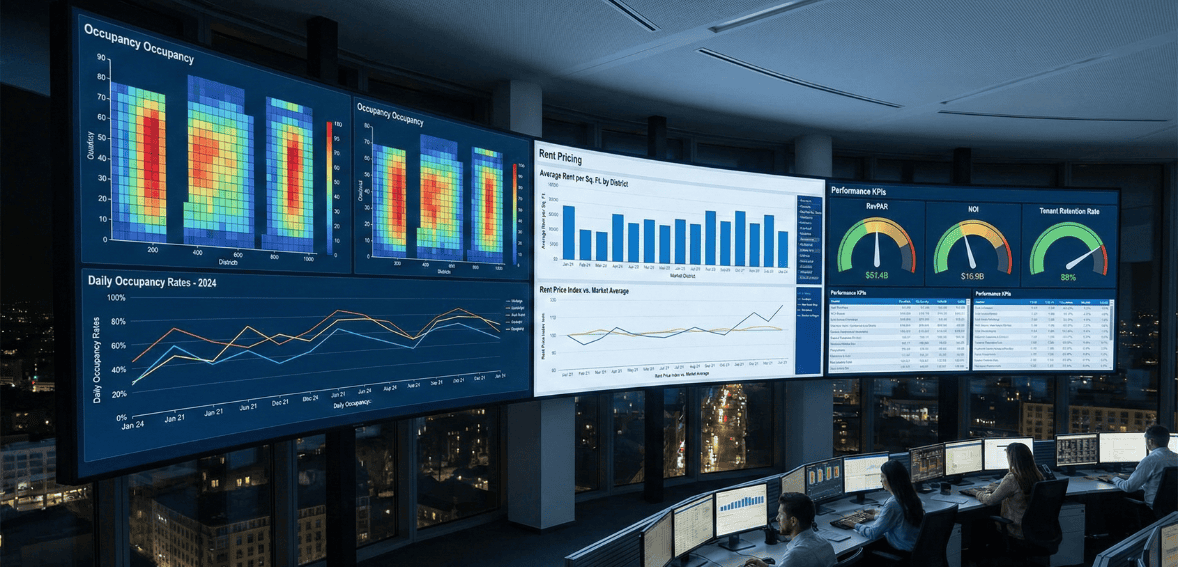
The success of a property isn’t defined by how many new leases are signed.

It’s defined by how many great tenants choose to continue calling that property home.

FAQs

When should lease renewal conversations begin?

Ideally, 90–120 days before expiration. Early communication gives tenants time to plan, discuss concerns, and renew without stress or pressure.

How can landlords improve renewal rates without lowering rent?

Enhance tenant experience faster maintenance, more transparent communication, minor upgrades, and recognition. Emotional satisfaction often outweighs pricing differences.

What is the biggest reason tenants don’t renew?

Unresolved frustration. Poor communication or neglected issues build up over time. Proactive care prevents minor problems from becoming deal-breakers.

Do incentives really help encourage renewals?

Yes, even tiny perks make tenants feel valued. A cleaning voucher, rent discount, or new appliance can save far more money than turnover costs.

How can property owners know which tenants might leave soon?

Look for signs: payment delays, increased complaint frequency, reduced engagement, or short responses during communication. Early outreach can reverse the decision.

Dashboard showing renters insurance verification software tracking tenant compliance and policy status

Renters Insurance Requirements by State: Legal Mandates, Verification Systems, and Compliance Risks for 2025

Renters’ insurance has become one of the most essential tools for compliance and protection in modern rental housing. It shields tenants from financial risk after unexpected events like fire, theft, or water damage and it protects landlords too. When renters have liability coverage, the property owner is not left to pay for accidental damage caused by a tenant. From kitchen fires to burst washing machine hoses, these incidents can cost thousands of dollars if there is no insurance in place.

That’s why nearly all large rental housing operators now require renters’ insurance.

However, the legal framework varies across jurisdictions, and the rules governing how property managers enforce these requirements are evolving rapidly. Some states impose limits on liability coverage amounts. Some housing programs restrict whether insurance can be required. And in one state Oklahoma landlords are not allowed to require renters’ insurance.


Verification is becoming a bigger challenge. Many tenants purchase a policy on move-in day only to cancel it within weeks. That puts the property and everyone in the building at risk. To remain compliant, property managers must not only collect proof of insurance but also continuously verify that coverage remains active.

As 2025 unfolds, property managers are turning to renters insurance verification software to automate monitoring, avoid licensing violations, and protect themselves from legal risk. Manual tracking is no longer enough; missed cancellations can expose landlords to significant liabilities.

This guide breaks down the crucial laws, compliance responsibilities, and risk-management strategies that every landlord and property manager needs to understand to stay protected.

Understanding Renters Insurance Legality in All 50 States

Map illustrating renters' insurance requirements by state including Oklahoma restrictions

There is no federal law requiring tenants to carry renters’ insurance. Instead, rules are determined at the state level and the vast majority support landlord-required coverage as long as it is disclosed in the lease.

In all 49 states, landlords can require renters’ insurance as a condition of tenancy. As long as the lease is clear, landlords may:

  • Set minimum liability coverage amounts
  • Require proof of ongoing insurance
  • Enforce non-compliance as a lease violation

However, Oklahoma is the exception. It uniquely prohibits landlords from requiring renters’ insurance as a condition of renting. Tenants may be asked to provide coverage voluntarily, but refusal cannot be used as grounds for denial, eviction, or fees.

Another important state-level rule exists in Oregon, where coverage is allowed but regulated very strictly:

  • Liability maximum capped at $100,000
  • Landlord cannot be the policy beneficiary
  • Requirements must be applied fairly and equally

Some additional restrictions apply in subsidized or public housing programs. Most government-assisted rentals prohibit requiring insurance because tenants cannot be forced to incur extra housing costs beyond approved limits. However, landlords may still recover costs for tenant-caused damage if it occurs.

The legal foundation is clear: almost everywhere, landlords can require insurance but they must understand local limitations and communicate requirements consistently to avoid discrimination claims.

Defining Standard Coverage for Rental Properties in 2025

Renters insurance liability coverage standards for rental properties shown on a compliance chart

Modern renters’ insurance policies include two critical components:

Personal Property Coverag

Protects a tenant’s belongings (furniture, electronics, clothing) from fire, theft, and certain types of water damage.

Liability Coverage

Protects against accidental damage or injuries caused by the tenant the key protection for landlords.

Industry standards in 2025 generally require:

  • $100,000 minimum liability
  • $300,000 recommended for higher-risk properties

Why liability matters most: If a tenant’s candle starts a fire that damages multiple units, that liability pays for the repairs saving the landlord from tens of thousands of dollars in expenses.

Another growing focus is loss-of-use coverage, which helps Rental Property Payments of tenants pay for temporary housing after significant damage. While not usually mandatory, it prevents displacement issues that can complicate recovery efforts after an incident.

Coverage levels should reflect property type:

  • High-density multifamily → higher liability
  • Older buildings with risk factors → stronger requirements
  • Luxury assets → require personal property coverage that aligns with tenant lifestyles

Clear expectations ensure both parties understand their protection from day one.

The Policy Lapse Problem and Why Verification Systems Are Now Essential

Automated lapse detection inside renters' insurance verification software preventing policy gaps

The biggest challenge in renters insurance enforcement is not the initial requirement, it is what happens afterward. Many property managers check proof of coverage only at move-in. But data inside the industry shows: Over one-third of tenants cancel their policy after providing proof. They do it to save money assuming nothing will go wrong.

That means:

  • Property managers lose protection
  • Landlords unknowingly assume high risk
  • Legal obligations are not maintained
  • Incident response becomes chaotic and expensive

Without tracking policy renewals and expiration dates, landlords are blind to risk and this exposes them legally if they claim to enforce coverage.

Renters insurance verification software solves this by:

  • Automating policy tracking
  • Detecting cancellations instantly
  • Alerting managers when coverage lapses
  • Updating compliance in real time
  • Keeping documented proof in case of disputes

In 2025, software tracking is rapidly replacing manual methods like paper files and spreadsheets. Too much can be overlooked when operators are juggling hundreds of active leases. Automation protects both sides and supports consistent enforcement.

The Critical Distinction: “Additional Interest” vs. “Additional Insured”

Compliance rules for renters' insurance showing permitted landlord actions without licensing

One of the most misunderstood aspects of renters insurance compliance is correctly designating the landlord or property management company on the tenant’s policy.

Here’s the difference:

Additional Interest

  • Receives notifications when the policy lapses or changes
  • Offers visibility but no coverage benefits
  • Most common requirement in multifamily properties

Additional Insured

  • Extends liability coverage to the landlord
  • Stronger protection, especially after major damage
  • Slightly raises tenant premium

Inconsistent enforcement leads to serious challenges:

  • No cancellation notice = no visibility
  • Missed lapses = unprotected buildings
  • Selective enforcement = possible discrimination claims

Most properties adopt this standard rule:

“Landlords must be listed as Additional Interest on the renters’ insurance policy and must receive policy updates and cancellation notices.” This provides the compliance oversight needed while minimizing tenant costs.

Regulatory Compliance: Avoiding Insurance Licensing Violations

Compliance rules for renters' insurance showing permitted landlord actions without licensing

The moment a property manager becomes involved in offering insurance options, the rules change. Many states treat even basic guidance as a regulated insurance activity, which requires licensing.

Property managers can enforce insurance requirements

but MUST avoid:

  • Selling insurance policies
  • Explaining coverage specifics as advice
  • Handling or collecting insurance premiums
  • Creating marketing materials for a policy

Doing any of the above without proper licensing can cause significant regulatory penalties.

The safest compliance approach:

  • Require insurance only as a lease term
  • Provide neutral language about coverage expectations
  • Allow tenants to shop at any licensed provider
  • Use automated verification instead of manual handling
  • Partner only with licensed insurance entities if offering program options

The goal is protection, not accidental entry into the insurance business.

Enforcing Insurance Requirements Fairly to Avoid Legal and Conflict Risks

Fair enforcement of renters insurance requirements with consistent lease compliance procedures

Requiring renters insurance is not only about protection it is also about fairness. If some tenants are held to the policy while others are not, landlords open themselves up to discrimination claims or lease enforcement disputes. Housing laws require equality: identical rules for identical situations.

That means:

  • The requirement must be written in the lease
  • Enforcement must apply to everyone covered under that lease
  • Documentation must be handled consistently
  • Tenants must have a clear timeline to comply
  • Follow-through must be documented for every violation

If a property manager says renters’ insurance is required but fails to verify coverage every time, the rule becomes inconsistent. Courts view inconsistency as unfair treatment, especially if certain tenants are disciplined while others are overlooked.

To prevent this, managers need clear workflows:

  • Require proof before move-in
  • Track expiration dates
  • Receive automated lapse notices.
  • Send reminders quickly
  • Document every enforcement action.

This is where renters’ insurance verification software transforms compliance. It applies the same rules automatically, no favorites, no forgetfulness, no hidden bias. Every policy status update and every reminder is recorded. That data protects managers in court and prevents unjustified enforcement claims.

Fair enforcement isn’t just about following the rules; it protects trust inside the community. Tenants want to know they are treated exactly like everyone else. Transparency builds cooperation, not conflict.

Managing Unauthorized Pets, Roommates, and Coverage Mismatches

Renters’ insurance can become complicated when tenants’ circumstances change mid-lease. Many compliance gaps happen silently:

  • A new pet appears in the unit
  • A roommate moves in without notice
  • The insured address doesn’t match the lease address
  • Tenants switch providers and coverage drops below the minimum required
  • A tenant gets divorced, and the named insured no longer occupies the home

Without real-time visibility, any of these changes can leave the landlord exposed.

Renters insurance verification software helps catch these mismatches early by:

  • Matching tenant names with policy names
  • Confirming correct addresses
  • Tracking changes in liability coverage
  • Ensuring all occupants are correctly listed
  • Alerting managers when coverage requirements are no longer met

The real benefit? The manager no longer discovers these issues after a disaster occurs by then it’s too late.

Even something as small as a missing additional interest designation can mean the landlord receives no notification when the policy is cancelled. Automated cross-checks prevent that oversight and keep compliance clean.

In buildings where pets, roommates, and relationship changes are common, this type of monitoring is no longer optional; it is a core part of operational risk management.

Integrating Renters Insurance with Risk Prevention and Resident Education

Tenant education and renewal reminders through renters insurance verification software improving compliance

Renters insurance works best as a partnership not a punishment. Many tenants only buy coverage because they are forced to. They do not truly understand what the policy protects, or how much financial damage a simple accident can cause. 

Education reduces stress, improves cooperation, and prevents conflicts when claims occur.

Clear messaging should be part of onboarding:

  • Why insurance protects the tenant first
  • How liability prevents sudden large bills
  • What happens if a guest is injured
  • What coverage doesn’t include (maintenance issues, wear and tear)
  • Why keeping coverage active benefits both sides

Instead of presenting insurance as a requirement to avoid penalties, the conversation shifts to:

“This protects you from unexpected financial trouble and ensures we can fix problems quickly if they occur.”

Modern software enhances this by:

  • Sending reminders before expiration
  • Providing simple tutorials on how to upload proof
  • Showing tenants their current compliance status
  • Reducing landlord-tenant arguments about missing documents
  • Offering clear, automated notifications rather than rushed phone calls

When tenants understand purpose, compliance naturally improves. They feel safer living in a well-protected community. And managers spend less time chasing paperwork or handling disputes.

Insurance becomes part of resident satisfaction not resentment.

Conclusion: Why 2025 Demands Smarter Compliance and Tracking

The rental housing industry has entered a new era. Risk is rising from accidental fires, plumbing failures, extreme weather and litigation. At the same time, tenants are more mobile, insurance costs fluctuate more often, and manual paperwork can no longer keep up.

Renters insurance requirements are now standard across nearly all U.S. rental communities. But requirements alone do not keep buildings safe. Consistent verification does.

In 2025 and beyond, the landlords and property managers who protect themselves best will prioritize:

  • Legal compliance in every state where they operate
  • Clear lease language with transparent requirements
  • Proper designation as additional Interest
  • Continuous verification not just move-in checks
  • Fair enforcement with zero exceptions
  • Digital systems replacing risky manual tracking
  • Proactive communication and tenant education

Renters insurance verification software is at the heart of this evolution. It automates compliance, eliminates the risk of human error, ensures fairness, and protects the property every day of the lease, not just on paper.

The future of compliance means knowing coverage is active, not hoping it is.

Landlords who adopt smarter tracking now will save money, reduce disputes, minimize losses, and build stronger, safer housing environments for everyone living in them.

The rental industry trends in 2025 are seeing some significant changes amid economic shifts, rising demands, and technological advancements. Property managers and owners may face challenges adapting to these developments to remain competitive and meet the tenants’ expectations in 2025.

FAQs 

In which states can landlords require renters’ insurance?

Landlords can require renters’ insurance in 49 states. The only exception is Oklahoma, where it is prohibited. In Oregon, landlords may need it, but liability caps apply. Subsidized housing programs usually restrict requirements to ensure affordability.

What is the difference between Additional Interest and Additional Insured?

Additional Interest gives landlords the right to be notified of cancellations or changes. An Additional Insured extends actual coverage protections but may increase tenant premiums. Most communities require at least an Additional Interest for ongoing compliance tracking.

How much liability coverage should tenant carry?

Most properties require a minimum liability of $100,000, while many recommend $300,000 especially in high-density buildings. Stronger coverage reduces the landlord’s financial exposure if tenant-caused damage affects multiple units.

How should landlords verify renters’ insurance?

Verification should be continuous, not one-time. Software systems automatically track coverage status, expiration dates, cancellations, and documentation helping prevent policy lapses that create risk.

Can landlords enforce renters’ insurance without being licensed to sell insurance?

Yes landlords can require insurance as a lease condition without licensing. However, they must not sell policies, collect payments, or provide insurance advice. Compliance is safe as long as enforcement stays structured and neutral.

Dashboard showing pet deposit management software tracking pet fees, deposits, and compliance”

How to Structure Pet Deposits, Pet Rent, and Pet Fees: A 2025 Compliance Guide for Property Managers

Property managers in 2025 are dealing with a new reality. Renters have more pets than ever, regulations are evolving, and compliance mistakes can lead to severe liability. The days of simple “pet rules” written casually into leases are over. Today’s renters expect clear policies, transparency, digital processes, and fair handling of deposits, fees, and monthly charges. At the same time, property owners expect protection from pet-related damage, compliance with HUD rules, and accurate accounting.

Because of these pressures, pet deposit management software and structured pet policies are becoming essential, not optional. With increasing demand for pet-friendly housing, property managers must understand the differences between pet deposits, pet fees, and pet rent. And they must follow the laws that govern each. The challenge is balancing legal compliance, operational clarity, and fair treatment while still protecting the property’s financial interests.

In 2025, pet policies affect lease compliance, risk management, revenue growth, tenant satisfaction, and even insurance coverage. The industry is moving away from informal pet agreements and toward standardized digital systems that handle registration, tracking, deposits, documentation, and ongoing compliance in a clean, automated workflow.

Before discussing automation and software, property managers need to understand the fundamental distinctions among pet-related charges and the legal responsibilities attached to each. Too many managers still treat deposits, fees, and rent as interchangeable terms. They aren’t. And misunderstanding these terms can lead to Fair Housing complaints, state-level violations, and costly legal consequences.

Let’s break these distinctions clearly and carefully.

Understanding the Legal Distinctions Between Pet Deposits, Pet Fees, and Pet Rent

Portfolio-wide view of pet documentation and deposits using pet deposit management software

One of the most significant sources of confusion in rental housing is the difference between a refundable pet deposit, a one-time pet fee, and ongoing monthly pet rent. While these may seem like minor variations in terminology, legally and operationally, they mean very different things. Mislabeling or misusing these terms can expose a property manager to compliance issues, especially under state deposit laws or HUD regulations.

A refundable pet deposit functions just like a security deposit, but exclusively for pet-related damage. It must be returned if the tenant leaves no pet damage behind. It cannot be spent unless actual repair costs exist. In many states, the deposit must follow strict rules: placed in trust accounts, returned within statutory timelines, and itemized when deductions are made. Some states limit the total deposit amount that can be charged. And for HUD-assisted housing, a pet deposit has its own federal rules, including maximum limits and allowance for gradual accumulation. This makes it critical for property managers to label deposits correctly and store them separately from fees or rent.

A pet fee, on the other hand, is non-refundable. It is a one-time charge that compensates the landlord for administrative overhead, general pet-related wear, or the additional turnover handling required for pet-friendly units. Because pet fees are non-refundable, they cannot be deducted from damages later any damages must still be deducted from a deposit or charged separately. Some states regulate non-refundable fees or require them to be clearly disclosed in lease documents.

Then there is pet rent, a recurring monthly charge that compensates for the incremental wear and tear caused by pets. Pet rent helps cover ongoing property costs: cleaning, maintenance of common areas, pest control, landscaping wear and tear, resurfacing, and long-term deterioration. Pet rent is included in the regular monthly rent amount and must be adequately accounted for in the rent ledger.

Many rental communities strategically combine these charges. Some use a refundable deposit plus monthly pet rent. Others use a non-refundable fee besides pet rent. Some states restrict combined totals. The best option depends on state law, market conditions, portfolio strategy, and insurance considerations.

For property managers, clarity matters. A vague or inconsistent pet policy is one of the fastest ways to trigger disputes. A clean, well-structured policy, supported by pet deposit management software, eliminates confusion by clearly labeling charges, applying rules consistently, and storing documentation digitally so there is no misunderstanding during move-out.

Assistance Animals vs. Pets: Where Property Managers Face the Highest Compliance Risk

Fair Housing compliance checklist for distinguishing assistance animals using pet deposit management software

There is no greater compliance risk in rental housing than mishandling assistance animal requests. The Fair Housing Act draws an absolute line between “pets” and “assistance animals.” A service animal or an emotional support animal (ESA) is not a pet. Charging fees, deposits, pet rent, or insurance requirements for these animals is illegal.

This is where property managers often get overwhelmed. Most are not trying to violate the law; they feel unclear about what documentation is allowed, what they can ask, or how to verify legitimate requests. The rise of online ESA letters and fraudulent documentation makes this even more complicated. Property managers must walk a tight line: honoring legitimate disability accommodations without enabling abuse of the system.

A legitimate assistance animal request requires reasonable verification, especially for ESAs. Managers cannot ask about the tenant’s disability. They cannot demand medical records. They cannot demand certification from a specific provider. But they can request reliable documentation if the disability or the disability-related need for the animal is not apparent.

The challenge is keeping this process compliant, consistent, and well-documented. This is where pet deposit management software and digital verification workflows help eliminate human error. The system ensures the manager requests only permitted information, applies the same steps to every applicant, logs each communication, and stores the documentation securely.

Once an assistance animal is verified, the landlord must waive all fees, deposits, and rent. The tenant may only be charged for actual damages at move-out precisely the same way a standard tenant would be charged for damage. The property manager cannot require pet insurance or impose breed, size, or weight restrictions. These limitations are often misunderstood, leading many managers into avoidable compliance problems.

A modern, documented, and standardized workflow protects both managers and residents. It prevents inconsistent decisions, reduces Fair Housing risk, and ensures that disability accommodations are handled with respect, accuracy, and in compliance with the law.

Automating Pet Registration and Compliance Tracking Across Your Portfolio

Automated pet registration workflow inside pet deposit management software

With more renters owning pets than ever before, manual systems for tracking pet documentation are no longer realistic. Lost vaccination records, missing photos, outdated pet profiles, handwritten notes, and scattered paperwork create a significant risk. Unauthorized pets slip into units undetected. Property managers forget to update charges. Renewals happen without updated documentation. And during move-out, managers lack the evidence needed to document or dispute damage.

This is why automation has become standard in 2025. Modern pet deposit management software gives property managers digital control over every pet-related detail without extra administrative labor.

Automation improves the following areas:

Pet registration during application: Applicants upload photos, breed details, vaccination records, emergency contacts, spay/neuter status, and behavioral notes directly within the system. Managers review and approve within minutes.

Tracking multi-pet households: Some tenants have two dogs, a cat, or multiple small animals. Software calculates correct charges automatically based on property rules.

Billing pet rent and deposits: Instead of manually adding charges to the ledger, the system calculates pet rent monthly, posts pet fees, and records deposits accurately for compliance.

Compliance alerts: If vaccination records expire, required documents are missing, or pet profiles need updates, the system notifies both the manager and the tenant instantly.

Unauthorized pet detection: Regular inspections, resident reporting tools, and automated registration workflows help identify unapproved animals. When discovered, retroactive pet rent or deposits can be charged and violations documented.

Portfolio-level visibility: For managers overseeing multiple properties, software provides complete oversight showing which pets belong to which units, which documents are missing, which deposits are held, and which units have unauthorized pets.

Digital systems don’t replace fairness; they support it. Tenants know what is required, managers stay compliant, and properties remain protected. With clear records and consistent rules, disputes decrease significantly.

This is the future of pet policy management organized, automated, fair, and thoroughly documented.

Why Compliance Matters More in 2025 Than Ever Before

Compliance tracking alerts shown in pet deposit management software for property managers

Pet ownership is growing at a historic rate, dramatically shaping the rental housing market. Renters today expect flexibility, transparency, and digital processes when it comes to pets. At the same time, property owners expect protection against risk, especially rising pet-related maintenance costs, turnover expenses, and legal exposure.

This is why the modern property manager must strike a careful balance. An excellent pet policy isn’t about being strict or lenient, it’s about being transparent, lawful, and consistent. The worst problems in rental pet management arise not from pets themselves, but from unclear rules, inconsistent enforcement, and missing documentation.

By 2025, compliance is more critical than ever because:

  • HUD rules around elderly and disabled housing are being enforced more aggressively.
  • Assistance animal fraud complaints are increasing.
  • Insurance carriers are updating pet coverage terms.
  • Tenants are more aware of their rights and more likely to complain.
  • State deposit laws are becoming stricter, especially regarding refundable vs. non-refundable charges.
  • Pet-friendly housing is now an expected amenity, and unclear policies push renters away.

The most competent property managers are moving toward property management systems that minimize errors. A firm policy, supported by pet deposit management software, ensures that the manager consistently treats similar situations protecting the property, complying with regulations, and maintaining fairness.

Inconsistent enforcement is one of the biggest hidden risks. If one tenant is charged a fee and another is not, or if one assistance animal request is handled differently from the next, the property manager becomes vulnerable to claims of discrimination or unfair treatment. A digital system eliminates that danger by applying rules uniformly and preserving timestamped records.

This shift isn’t just operational, it’s part of the broader movement toward transparency and accountability in rental housing. Tenants want to know precisely what they’re paying for, why charges are being applied, and how they can stay compliant. Software enables managers to provide tenants with clear documentation, structured rules, automated reminders, and a transparent breakdown of pet-related charges.

How Modern Pet Policies Strengthen Tenant Satisfaction and Reduce Turnover

Tenant satisfaction improved through transparent policies managed with pet deposit management software

Pet-friendly rentals consistently show higher occupancy rates, longer tenancies, and stronger renewal patterns. When people feel their pets are welcomed not merely tolerated they treat the property with more respect and form a deeper connection with the community.

A transparent, well-managed pet policy:

  • Makes high-quality renters stay longer
  • Attracts a larger applicant pool
  • Eliminates confusion about deposits and fees
  • Reduces arguments at move-out
  • Improves trust between tenants and management

Tenants love clear rules. They want to know how much pet rent is, whether the deposit is refundable, what they need to submit, and how to stay compliant. When the pet onboarding experience is smooth and digital, renters perceive the entire management team as more professional.

Strong policies do not push responsible pet owners away; poorly communicated policies do. The modern renter expects the same transparency they see in other industries: online payment portals, real-time updates, clear charge breakdowns, clean documentation, and digital processes. Property managers who provide this experience using organized systems gain a competitive advantage.

How Automation and Digital Tracking Reduce Risk for Property Managers

Risk reduction features in pet deposit management software identifying missing or unauthorized pet details

Pet damage can be expensive. Unauthorized pets even more so. Missing documentation creates enormous liability, especially when insurance is involved. Inconsistent handling of assistance animals can cause costly Fair Housing disputes.

Yet most of these risks can be controlled with a single shift: moving away from manual tracking and embracing automated Compliance in Property Management.

Automation reduces risk by:

  • Tracking pet charges with perfect accuracy
  • Ensuring no illegal fees are added to assistance animal accounts
  • Documenting all communication for Fair Housing compliance
  • Maintaining proof that the property followed the required procedures
  • Identifying unauthorized pets quickly through inspection logs
  • Creating a digital audit trail that protects owners in disputes
  • Tracking expiration dates for vaccines, breed information, and other requirements

Without automation, policies fall apart slowly: one missed document here, one forgotten fee update there, one unverified ESA letter that accidentally violates compliance rules. These minor lapses accumulate until a conflict arises that could have been prevented.

But with pet deposit management software, the property manager’s job becomes smoother. Every charge is calculated automatically. Every compliance requirement is logged. Every document is stored. Every reminder is triggered. Every tenant knows precisely what is expected.

This kind of system doesn’t just protect properties, it protects relationships.

Conclusion

Pet-friendly housing is no longer a niche category it is the future of rental real estate. But with more pets come more risks, more regulations, and more room for error. Understanding how to structure pet deposits, pet fees, and pet rent is essential for compliance and financial stability. Understanding assistance animals is vital to avoiding Fair Housing violations. And understanding how to automate pet management is critical for operational efficiency in 2025 and beyond.

Pet deposit management software gives property managers the tools to enforce rules consistently, thoroughly document actions, communicate clearly with tenants, and maintain full legal compliance. It reduces risk while increasing transparency. It brings structure to an area of property management that has historically been confusing and inconsistent.

The trends shaping 2025 point toward one clear answer: managers who adopt organized, automated, and fair pet policies will attract better tenants, reduce disputes, improve retention, and protect their properties far more effectively than those using outdated manual processes.

A smart pet policy is not only a compliance tool it is a business strategy. And in a competitive rental market, it is one of the strongest tools a property manager can have.

FAQs

What’s the difference between a pet deposit, pet fee, and pet rent?

A pet deposit is refundable and covers pet-related damage. A pet fee is a non-refundable one-time charge. Pet rent is a recurring monthly amount for ongoing wear and tear. Many properties use a combination based on state rules and revenue strategy.

Can I charge anything for emotional support animals?

No. Assistance animals including ESAs are not pets under federal law. You cannot charge deposits, fees, or pet rent. You may charge for actual damage caused by the animal, just as you would with any tenant.

What are the federal limits for pet deposits in HUD-assisted housing?

HUD caps pet deposits at one month’s rent for eligible units and allows gradual accumulation. Deposits must be held separately and refunded if no pet damage exists.

Should I remove breed and weight restrictions?

Many properties are removing restrictions to increase occupancy, but managers should check their insurance coverage. A better approach is structured screening, vaccination rules, documentation, and appropriate rent/deposit levels.

How do I track unauthorized pets effectively?

Use digital pet registration, routine inspections, lease clauses, and compliance alerts. Software helps identify missing documents and allows you to apply retroactive charges consistently across your portfolio.

Landlord reviewing rental property maintenance budget and repair expenses on a laptop

Budgeting for Rental Property Maintenance: A Financial Planning Guide for Landlords

Keeping a rental property in good condition is one of the most critical responsibilities of any landlord. Tenants might see working appliances, a warm home in winter, functioning plumbing, and clean living spaces as everyday expectations. But behind the scenes, landlords must plan, prepare, and budget to make those expectations possible. A reasonable rental property maintenance budget isn’t just about repairing things when they break; it’s about creating a financial system that keeps the property healthy, safe, and profitable for years.

What makes maintenance planning so challenging is that no two years look alike. One year might be quiet with just a few minor repairs. The following year might bring a failing HVAC system, a leaking roof, or aging appliances that all decide to give up at once. Many landlords get caught off guard, not because the costs are unreasonable, but because they weren’t prepared for the timing. And when unexpected costs strike without warning, cash flow becomes unsteady, stress builds, and the rental business feels unpredictable.

This is precisely why building a substantial rental property maintenance budget is essential. It transforms unpredictable repairs into something manageable, something expected, something that can be planned for instead of worried about. Budgeting creates stability for the landlord, for the property, and for the long-term investment. A well-planned budget protects rental income, prevents financial surprises, and ensures that the property stays in good condition without draining the landlord’s savings or emergency funds.

The key to budgeting isn’t guessing it’s understanding. Understanding the types of maintenance a property needs. Understanding how much repairs usually cost. Understanding how a property’s age, location, and condition shape those costs. And most importantly, understanding how to set aside funds consistently so that major repairs don’t become financial emergencies.

Before diving into formulas or tools, landlords must understand the nature of maintenance itself, how different expenses behave and how each part of the property ages over time.

Understanding the Different Types of Maintenance Costs

Checklist showing types of maintenance costs for creating a rental property maintenance budget

A rental property has three main categories of maintenance expenses, each affecting the maintenance budget differently: routine preventive maintenance, reactive repairs, and capital expenditures. Even though they all fall under “maintenance,” they serve different purposes and require different budgeting strategies.

Routine preventative maintenance is the everyday care that keeps the property running smoothly. These are tasks that prevent bigger problems like annual HVAC servicing, gutter cleaning, landscaping, pest prevention, replacing air filters, or flushing the water heater. These tasks might feel small, but they add up across the year. They also have a significant impact on reducing long-term repair costs. A landlord who spends a little each year on preventative care usually spends far less overall than one who waits until something breaks. Routine maintenance is predictable, which makes it easy to include in a yearly budget.

Reactive repairs are less predictable. These are the sudden issues: leaking faucets, broken door handles, malfunctioning appliances, busted pipes, or emergency plumbing calls. These happen when they happen sometimes at the worst possible moment. While many reactive repairs are minor, they can still cause financial stress if the landlord hasn’t prepared for them. That’s why a portion of the maintenance budget must always be flexible, ready to respond to whatever the property needs.

Finally, there are capital expenditures (CapEx) the big-ticket items. A roof might last 20–25 years, an HVAC system 12–15 years, appliances 7–12 years, and water heaters 8–12 years. These aren’t everyday repairs; they’re major replacements. And when one of those systems fails, costs can be significant. These expenses must be anticipated years in advance, which is why landlords often keep a separate CapEx reserve fund. This prevents panic when a major component reaches the end of its lifespan.

Understanding the rhythm of these expenses helps landlords build a smarter rental property maintenance budget. Some costs are recurring and predictable. Others are sudden but manageable with a cushion. And some require long-term saving. Together, they form a complete picture of what it actually takes to maintain a rental property responsibly.

Why Property Age, Type, and Location Change the Budget Completely

Different property types and ages that influence a landlord’s rental property maintenance budget

A rental property management isn’t a generic object; it has its own personality, its own quirks, and its own cost patterns. That’s why no single number works for every maintenance budget. Property age affects almost everything. An older property may have aging plumbing, electrical systems, roofs, siding, and appliances. While these homes often have character, they also entail higher property maintenance costs. Routine tasks might remain the same, but the number of reactive repairs and upcoming CapEx projects is usually higher.

Property type plays a role, too. A single-family home with a yard, driveway, and multiple systems will cost more to maintain than a small apartment. A multi-unit building may have shared systems that cost more to replace but spread costs across units. A condo might have lower individual maintenance costs but charge association fees, which would change the budgeting structure entirely.

Location influences maintenance in ways many landlords don’t expect. Homes in colder climates face snow, ice, frozen pipes, and strained HVAC systems. Homes in warmer climates face AC-heavy seasons, humidity, and pest issues. Homes in coastal areas are prone to salt corrosion. Homes in rainy climates may require frequent gutter cleaning and moisture control. Environmental factors directly affect landlord maintenance costs, so budgets should always reflect the property’s location.

The more a landlord understands these factors, the more accurate and realistic their budget becomes. It’s not about copying someone else’s formula, it’s about building a system that matches the property’s actual needs.

Budgeting Rules of Thumb: Helpful Guidelines, Not Fixed Rules

Common budgeting rules of thumb used to estimate a rental property maintenance budget

Because maintenance costs can vary, landlords often rely on budgeting guidelines to estimate expenses. These rules of thumb offer a starting point not a perfect calculation, but a reasonable estimate for forming a rental property maintenance budget.

One of the most common guidelines is the 1% rule, which suggests setting aside about 1% of the property’s value each year for maintenance. For a $300,000 property, that means roughly $3,000 annually. This is simple and effective for planning, especially for mid-aged properties in average condition.

Another method is budgeting $1 per square foot per year. A 1,200 sq. ft. home would therefore require about $1,200 annually. This method works exceptionally well when property values don’t reflect the actual cost of maintaining the building’s physical size.

Some landlords prefer using a percentage of rent. For example, budgeting 10–20% of annual rent toward maintenance. This method scales with income and helps landlords set aside funds naturally as rent increases.

The 50% rule is broader it suggests that half of rental income typically goes back into all operating expenses, including maintenance, taxes, insurance, and management. While not specific to maintenance, it helps landlords see the bigger financial picture and avoid underestimating costs.

The real value of these rules is not in choosing the “best” one but in comparing them. If one method estimates $2,000 per year and another estimates $4,000, it suggests the property needs a closer look. Most landlords refine their budgets after a couple of years of expense tracking, making these guidelines valid starting points rather than strict formulas.

How Regular Inspections Strengthen Your Budget

Landlord performing regular inspections to improve accuracy of the rental property maintenance budget

Inspections aren’t just about finding problems, they’re about preventing surprises. When landlords regularly check their properties, they understand how systems are aging and can predict when something will need to be replaced. This helps align the maintenance budget with the property’s real needs.

A quick seasonal inspection might reveal small leaks, worn seals, deteriorating caulking, or minor electrical issues before they turn into expensive repairs. Annual inspections from professionals, such as HVAC technicians or roofers, provide even deeper insights. These findings allow landlords to proactively adjust next year’s budget planning for upcoming expenses rather than reacting to emergencies.

Cloud Rental Manager or any good management software can store inspection records, repair logs, and expense histories. Reviewing the past two or three years reveals natural patterns. The water heater may be nearing the end of its lifespan. Maybe the roof was patched three years in a row. An appliance is nearing the end of its useful life. This historical data becomes a powerful budgeting tool.

Using Past Expenses to Build a Smarter, More Accurate Budget

Tracking past expenses to refine and improve a rental property maintenance budget

One of the most reliable ways to reinforce a rental property maintenance budget is to look backward before looking forward. Every property has a pattern: certain repairs happen often, certain systems age predictably, and specific problems always seem to resurface. When landlords review their historical expenses, they transform their budgeting from guesswork into strategy.

Even if a landlord hasn’t kept perfect records before, starting now makes a difference. A simple spreadsheet listing each maintenance expense, what it was for, how much it cost, and when it happened begins to reveal trends almost immediately. After a year or two, it becomes obvious where the money truly goes. Maybe plumbing calls are widespread. Landscaping costs may spike in summer. Maybe certain appliances are nearing the end of their life.

This historical data also helps separate routine maintenance from major future projects. If the roof was repaired five times in the last three years, it might be time to add roof replacement to the property maintenance expenses forecast. If the HVAC system needed multiple minor repairs, budgeting for a complete replacement in the next few years becomes easier to justify.

Cloud Rental Manager or similar software makes this process smoother. Every invoice, every repair ticket, every vendor cost can be logged automatically. When it’s time to plan next year’s budget, landlords review their expense reports, categorize spending, and set realistic goals for routine and significant costs. Historical data becomes the foundation for a more accurate, more confident maintenance budget.

Why Setting Aside Reserve Funds Is the Heart of Budgeting

Reserve fund savings set aside as part of a rental property maintenance budget

A budget without a reserve fund is just a list of numbers. Real budgeting requires preparation for the unexpected. No matter how careful a landlord is with routine maintenance, major repairs will always surprise someone who isn’t financially ready. A furnace can die without warning. A pipe can burst suddenly. A water heater can reach its limit and leak everywhere. These aren’t hypothetical events, they are inevitable realities of property ownership.

A strong reserve fund protects a landlord from panic. Instead of scrambling for emergency funds, taking on debt, or delaying repairs, the landlord uses the reserve they’ve already set aside. This keeps the property safe, prevents tenant inconvenience, and avoids financial stress.

How much should be in the reserve? It varies by property, but a good rule is to set aside money gradually throughout the year whether that’s 10% of rental income, a fixed amount monthly, or a percentage based on the property’s age. The key is consistency. A healthy reserve fund serves as the backbone of a responsible rental property maintenance budget, providing stability even when unexpected issues arise.

Innovative Tools and Strategies to Manage and Predict Maintenance

Digital tools and software dashboards that help landlords manage a rental property maintenance budget

Even landlords who prefer manual tracking benefit from a little structure. Whether using a simple spreadsheet or multiple properties integrated into a software platform, organizing maintenance finances makes budgeting easier and more transparent.

Spreadsheets offer flexibility; they can track individual repairs, calculate averages, and create charts showing changes over time. Landlords who enjoy customizing their systems often prefer this method. But software provides structure that saves time. Cloud Rental Manager, for example, can track repairs by date and category, produce tax-season reports, and visualize spending across months or properties. For landlords managing multiple units, these automated systems reduce errors and ensure every expense is captured correctly.

Another significant advantage of using tools is their ability to predict. When historical data is organized, landlords can predict future expenses with greater accuracy. For instance, if the HVAC system is 13 years old, budgeting for a replacement in the next two years is reasonable. If the water heater is approaching 10 years old, it should be considered for replacement. If doors and windows are drafty, a future weatherproofing project may be necessary.

Maintenance should never be reactive alone; it should be a combination of responding to immediate issues and preparing for those you know are coming.

How Regular Maintenance Saves Money Long-Term

It might seem counterintuitive, but the more a landlord spends on preventative maintenance, the less they spend overall. A substantial rental property maintenance budget includes recurring tasks, as these small investments help prevent major breakdowns.

Changing air filters protects HVAC systems and prolongs their life. Cleaning gutters prevents water damage and foundation issues. Flushing water heaters extends their lifespan. Checking caulking and seals prevents moisture intrusion and mold. These tasks cost a fraction of the repairs they prevent.

Regular maintenance also shields landlords from emergency calls, which are always more expensive. A furnace tune-up in the fall costs far less than an emergency no-heat call in the middle of winter. Fixing a minor leak early prevents drywall damage, mold growth, or structural issues later. Even minor repairs matter because they preserve the home’s systems and reduce long-term spending.

Preventative care supports steady cash flow, fewer surprises, and healthier profits.

Budgeting for Multiple Properties Without Losing Track

When a landlord owns multiple properties, budgeting becomes more complex but also more predictable. While one property may have a quiet year, another could require numerous repairs. Having a combined maintenance fund helps balance these ups and downs.

However, each property should have its own expense tracking to remain fair and organized. Different properties age differently, have different climates, and require different types of care. One may have older systems, another might have carpets that need frequent replacement, and another might be in a climate with harsher winters.

Budgeting for repairs across multiple properties also allows landlords to leverage economies of scale. Contractors often give discounts for servicing several units at once. Landlords can purchase materials such as filters, paint, and everyday supplies in bulk, thereby reducing per-unit costs. Maintenance becomes more predictable and efficient when spread across a portfolio.

Good software makes multi-property budgeting much easier. When all expense histories and upcoming repairs are logged in a single platform, landlords can analyze patterns, identify which properties cost the most to maintain, and adjust rent or reserves accordingly.

Why Maintenance Budgeting Protects Your Investment

A rental property isn’t a passive asset. It requires care, attention, and financial planning. A well-built rental property maintenance budget protects the building itself, supports tenant satisfaction, preserves property value, and ensures the landlord can continue renting without financial strain.

Well-maintained properties attract better tenants, stay competitive in the rental market, reduce vacancy time, and command higher rents. Tenants appreciate landlords who promptly fix issues, invest in preventive maintenance, and treat the home as a priority. These tenants stay longer, reducing turnover costs and keeping income steady.

Budgeting for repairs and replacements also protects the property’s long-term value. A neglected home deteriorates quickly, minor issues spread, appliances fail prematurely, structural damage becomes costly, and the property’s market value drops. But a home that is consistently maintained retains its value, supports stable rental income, and remains a substantial investment.

Budgeting is not simply a financial exercise, it is a commitment to responsible ownership. And responsible ownership always pays off.

Conclusion

Creating a reliable rental property maintenance budget is one of the most intelligent financial decisions a landlord can make. Maintenance isn’t optional; it’s the foundation of tenant satisfaction, safety, property value, and long-term profitability. By understanding the different types of maintenance, applying budgeting methods, tracking historical expenses, using tools and software, and building strong reserve funds, landlords can approach repairs and replacements with confidence instead of stress.

A reasonable budget transforms maintenance from an unpredictable burden into a manageable, organized part of property management. It protects cash flow, prevents emergencies, and keeps the property in excellent condition year after year. Whether managing one unit or many, the landlords who plan always come out ahead.

Effective financial management with budgeting software is essential for sustainability and growth. Property Management Budgeting Software emerges as a crucial tool in this endeavor, providing managers and owners with the advanced capabilities to handle finances meticulously and strategically.

FAQs

How can I estimate annual maintenance costs for my rental property?

Use guidelines like the 1% rule, $1 per square foot, or 10–20% of annual rent, then adjust based on property age, local climate, and appliance lifespans.

What’s the difference between maintenance and capital expenditures?

Maintenance covers routine repairs and minor fixes. Capital expenditures are major replacements, such as roofs or HVAC systems, that occur every several years and require long-term planning.

How can I reduce unexpected repair costs?

Focus on preventative maintenance, perform regular inspections, build a strong reserve fund, and track past expenses to identify early warning signs.

How should I budget when managing multiple properties?

Track each property individually while maintaining a combined maintenance fund. Use software to organize expenses and create more accurate predictions across your portfolio.

Landlord reviewing tenant engagement incentives dashboard with reward points and on-time rent streaks

Gamifying Tenant Engagement: Innovative Strategies to Boost Retention and On-Time Rent

Building strong relationships with tenants has always been at the center of successful property management. A good landlord knows that a smooth rental experience, consistent communication, and prompt maintenance all matter. But in today’s housing landscape where renters expect more than basic service, landlords are exploring creative ways to add value, motivation, and a sense of connection to their communities. This is where tenant engagement incentives come into play, and gamification becomes the twist that makes everything feel fresh, modern, and effective.

Gamification sounds like something for video games or entertainment apps, but the truth is that the philosophy behind it has been part of everyday life for years. When a bank offers reward points for debit card use, when an airline gives miles for every flight, when shoppers collect stamps for free coffee those are all examples of gamification. The idea is simple: people enjoy being rewarded for positive behavior, and rewards encourage them to keep doing the right things. When applied to property management, that principle becomes a powerful tool.

Many landlords struggle with inconsistent rent, rising turnover, or low tenant participation in community programs. Traditional communication alone can’t always change habits. But when you turn necessary actions like paying rent on time, renewing a lease, referring friends, or taking care of the property into something that feels rewarding and interactive, tenant participation improves naturally. And that’s precisely what gamification aims to accomplish: creating a rental experience that feels engaging, motivating, and even fun.

At its heart, gamification isn’t about making renting into a literal game. It’s about adding friendly incentives, recognition, and simple challenges that improve tenant satisfaction. When tenants feel appreciated, acknowledged, and rewarded, they respond with better behavior, stronger loyalty, and less friction. This creates a better environment for everyone, tenants feel valued, and landlords benefit from fewer vacancies, fewer disputes, and better financial outcomes.

Understanding the Concept of Gamification in Rental Communities

Gamification elements used to motivate renters through tenant engagement incentives

Gamification in property management is the process of applying game-like reward systems to real-life tenant behaviors. It transforms routine tasks like paying rent, reporting issues early, keeping the property clean, or renewing leases into opportunities for tenants to earn rewards. These rewards don’t need to be extravagant. In fact, the effectiveness of gamification comes from the psychology behind it: recognition, achievement, and the satisfaction of being rewarded for good habits.

To better understand this, think about the systems we interact with daily. When someone exercises using a fitness app, they might earn badges for consistency. Credit cards give cashback for spending. Ride-sharing apps reward frequent riders. Even streaming services highlight user “streaks.” These concepts motivate people to stay active, spend more, or stay loyal.

When landlords apply similar ideas, they signal to tenants that their positive actions matter. Paying rent on time is no longer just a requirement, it becomes an achievement. Renewing a lease becomes the equivalent of “leveling up.” Participating in building events becomes a chance to earn something extra. These small psychological motivators have a real effect on behavior.

Gamification also makes the rental environment feel more connected. Instead of landlords only interacting with tenants when something goes wrong, rewards create positive touchpoints. Tenants begin to associate their landlord with appreciation instead of complaints or requests. This shift improves communication and lowers tension, two essential ingredients in strong landlord-tenant relationships.

Creative and Effective Types of Tenant Rewards That Actually Work

Examples of tenant engagement incentives like gift cards, renewal perks, and referral rewards

The beauty of a resident rewards program is that it can be as creative or straightforward as the landlord wants. Rewards don’t need to be expensive; they need to feel meaningful. When tenants feel their efforts are noticed, even a small benefit becomes a gesture of appreciation.

A common approach is to create a points-based reward system. Tenants earn points for each on-time rent payment, which can be redeemed for small rewards later. For example, after a full year of consistent payments, tenants might receive a discount, a gift card, or a home upgrade. Another version of this is “streak rewards,” in which each consecutive month of on-time payments brings tenants closer to a special perk.

Renewal rewards are another effective tool. Lease renewals are expensive and time-consuming for landlords. Offering a one-time incentive, a small rent discount for the first month of renewal, a free deep cleaning, a smart thermostat upgrade, or new blinds can encourage good tenants to stay longer.

Referral bonuses are also powerful. When a current tenant refers to a qualified renter who signs a lease, the referring tenant receives a reward. This not only reduces marketing expenses but also helps build communities where tenants know each other.

Then there are community-based rewards, which are playful and interactive. Some landlords host friendly contests like “Best Balcony Garden,” “Cleanest Patio Area,” or “Holiday Decoration Challenge,” with winners receiving small prizes. These activities spark creativity and make the community feel alive, encouraging participation and strengthening social bonds.

The key is keeping rewards light, fair, and fun not replacing professionalism, but complementing good management practices. Rewards work best when they enhance the rental experience rather than feeling like a transaction.

Technology That Makes Tenant Reward Programs Easy and Organized

Digital tools used to manage tenant engagement incentives and reward tracking

Gamification becomes significantly more effective when technology supports it. Instead of manually tracking points or streaks, landlords can use simple tools or property management software to streamline the process. Cloud Rental Manager, for example, can track on-time rent streaks automatically, based on monthly payment data. This removes guesswork and ensures fairness.

Digital platforms also allow landlords to send automated messages celebrating achievements, announcing winners, or reminding tenants about upcoming community challenges. Technology enables fast, consistent recognition, which is essential for a successful rewards system. When tenants receive timely feedback like “Congrats, you just hit 6 months of on-time payments!” it reinforces the behavior immediately.

Some platforms also offer task-based rewards, such as points for submitting maintenance reports early, responding to surveys, or attending building events. This helps landlords encourage engagement where it’s needed most.

But technology also plays a vital role in fairness and transparency. A digital system provides clear rules, equal opportunities, and automated tracking to prevent disputes. Tenants can see their progress in real time, understand how rewards work, and trust that the system treats everyone consistently.

Even landlords who prefer less technology can use simple methods like spreadsheets, automated email reminders, and monthly tenant lists to build structured reward systems. The point is consistency. With or without advanced tools, the key is ensuring that tenants always know the rules, see their progress, and feel appreciated.

Why Incentives Improve Rent Timeliness and Tenant Retention

Rent payment rewards encouraging on-time payments through tenant engagement incentives

Rewards tap into motivation but they also address efficiency issues in property management. When tenants know they can earn something for paying rent on time, they put more effort into staying consistent. Late fees alone can feel punitive, but rewards add a positive twist that encourages good habits.

Engaged tenants are also more loyal. When people feel appreciated, they are less likely to move. A well-designed tenant retention strategy costs far less than vacancy, cleaning, repairs, and advertising. A single good tenant staying an extra year can save hundreds or thousands of dollars. Small rewards like a renewal gift card or a home upgrade are often far cheaper than turnover costs.

Rewards also improve communication. Tenants who feel recognized are more likely to report issues early, respond to messages, participate in community events, and treat the property with respect. The relationship shifts from purely transactional to something more collaborative.

How Gamification Builds Community and Improves the Living Experience

Community-building activities supported by tenant engagement incentives and friendly rewards

One of the greatest, yet often overlooked, benefits of gamification is the sense of community it fosters. A rental property isn’t just a structure with units, it’s a place where people live their daily lives. When tenants feel like they’re part of something, even something small like a friendly challenge or a shared achievement, the environment becomes more positive and connected.

Gamification adds little sparks of interaction. Maybe two neighbors talk because they both joined the same “recycling challenge.” Maybe someone decorates their balcony because they want to enter the seasonal contest. Maybe tenants congratulate each other when streak rewards are announced. These moments of connection matter more than landlords realize.

Communities don’t grow from grand gestures, they grow from repeated, small interactions that make tenants feel seen. A simple monthly message recognizing “On-Time Payers of the Month” brings people together through shared accomplishment. Hosting a fun challenge like a “Photo of Your Pet” contest or a “Best DIY Wall Art” showcase gives tenants something to smile about.

When people feel connected to their living space, they naturally take better care of it. They become more understanding when minor issues arise. They communicate more openly. They renew more often because it feels like home, not just a temporary stop. Incentives don’t replace good service, but they amplify it by making tenants feel like they’re appreciated beyond the basics.

A landlord who invests in engagement is a landlord who invests in stability. Community doesn’t eliminate every problem, but it softens the edges of daily stress for both tenants and landlords.

Creating a Fair, Transparent, and Motivating Rewards System

Transparent rules ensuring fairness in a tenant engagement incentives program

Rewards only work long-term if tenants trust the system. Transparency is crucial. That means every tenant should understand how rewards are earned, how often they’re given, and how winners are chosen, especially when raffles or drawings are involved.

Fairness doesn’t just protect landlords legally; it also keeps the program fun instead of frustrating. Tenants should never feel like rewards are based on favoritism or random decisions. Using neutral, trackable criteria such as on-time rent, lease renewals, or community participation ensures everyone has equal opportunity.

This is where technology becomes incredibly useful. Cloud Rental Manager can automatically track rent payments, making it easy to see who qualifies for a streak reward. Automated reporting eliminates confusion and provides an objective system that tenants can trust. If tenants know the data comes from the platform not from someone’s memory or personal impression there’s less room for conflict.

Rules should also be simple. If they’re too complicated, tenants lose interest. If they’re too vague, tenants feel uncertain. A great rewards program feels clear, achievable, and exciting. Something like:

  • Pay on time for 12 consecutive months → receive a reward.
  • Refer someone who signs a lease → receive a bonus.
  • Participate in monthly contests → enter a raffle.

These are straightforward, easy to explain, and easy to track. The more predictable and understandable the system is, the more tenants engage with it.

Implementing Incentives Without Overspending

Affordable strategies for offering tenant engagement incentives without overspending

Many landlords love the idea of rewards but worry that they might overspend or hurt their cash flow. But a well-designed tenant engagement incentive program doesn’t require a large budget. In fact, it often saves money in the long run by reducing turnover, improving rent collection, and increasing stability.

The key is thoughtful planning. Rewards should be valuable enough to motivate tenants, but reasonable enough to fit comfortably into the property’s financial structure. Gift cards, small discounts, or minor upgrades are often sufficient. A free ceiling fan installation for a tenant who renews might cost a landlord $150. But losing that tenant could cost four times more when factoring in vacancy loss, cleaning, advertising, and maintenance between tenants.

For raffles or competitions, landlords don’t need to offer multiple prizes; one monthly prize is usually enough. Tenants participate because the possibility of winning creates excitement.

Partnerships can also reduce costs. Local businesses may offer small discounts in exchange for exposure, and landlords can pass those perks on to tenants. Free community events like a pizza night or a simple coffee-and-donuts morning cost little but have a significant impact on satisfaction.

Gamification isn’t about spending more, it’s about spending smarter. Small rewards for the right behaviors often yield bigger returns than traditional strategies.

Gamification for Small Landlords: Simple, Personal, and Effective

A lot of people assume rewards programs are only for large apartment complexes with hundreds of tenants and big budgets. But small landlords benefit the most. With fewer tenants, it’s easier to personalize rewards, track participation, and build meaningful relationships.

A duplex landlord can hand-deliver a small thank-you note and a coffee gift card to tenants who paid on time all year. A four-unit landlord can host a friendly contest or offer tailored perks. Small landlords can even personalize rewards based on what they know about each tenant something big companies can’t do.

The effectiveness of gamification doesn’t depend on scale; it depends on consistency, appreciation, and structure. Even small gestures feel big when tenants don’t expect them.

Smaller landlords also have an advantage when setting culture. They interact directly with tenants, so recognition feels more genuine. When a landlord says, “Thanks for being such a consistent, responsible tenant,” and backs it up with a small reward, it builds genuine loyalty.

Gamification isn’t about building an app or running complex programs. It’s simply about giving tenants goals, recognizing their efforts, and adding positive reinforcement to everyday actions.

Why Gamification Is Becoming a Tenant Retention Standard

Renters today value experience. They want to feel appreciated. They choose communities where they feel recognized, respected, and connected. Traditional property management focuses heavily on systems and procedures but modern renters respond more to human connection and incentives that make their lives feel valued.

Gamification isn’t a trend, it’s becoming a new normal.

More landlords are discovering that rewards reduce stress, cut turnover, improve communication, and keep tenants engaged in the long term. They see that a small investment in appreciation generates far larger savings in retention. And most importantly, tenants view their landlord more positively, which helps avoid many common landlord-tenant disagreements.

In a competitive rental market, a rewards system becomes a differentiator. Tenants compare properties not only by square footage or amenities, but by how they feel about the people who manage the place. A landlord who adopts tenant engagement incentives builds a stronger bond, which often leads to loyalty.

Conclusion

Gamifying tenant engagement doesn’t mean turning property management into a game. It means using the psychology of rewards, recognition, and motivation to create a healthier, happier, and more productive rental environment. Whether through on-time rent incentives, renewal rewards, referral bonuses, community challenges, or small personalized gestures, landlords can transform everyday interactions into opportunities for appreciation.

When tenants feel acknowledged, they communicate better, treat the property with more care, pay rent more consistently, and stay longer. Gamification aligns the landlord’s goals with the tenant’s motivations creating a win-win relationship that strengthens the entire rental community.

With thoughtful planning, clear rules, and simple tools like Cloud Rental Manager to track progress, rewards can be implemented smoothly, fairly, and cost-effectively. Gamification isn’t about flashy prizes, it’s about building trust, connection, and consistency.

In the end, rewards don’t just boost engagement, they build communities where tenants feel proud to live and landlords feel confident in their investment.

Enhancing Tenant Experience through Technology Using platforms like portals, mobile apps, and automation tools, property managers can offer convenience, strengthen tenant relationships, and drive long-term retention. These digital tools empower tenants while streamlining operations for landlords. 

FAQs

What does gamifying tenant engagement mean?

It means applying reward-based features such as points, streaks, perks, or challenges to encourage good tenant habits, such as paying rent on time or renewing leases. It makes renting feel more interactive and appreciated.

Do tenant rewards actually help retention?

Yes. When tenants feel valued and recognized, they stay longer and pay more consistently. Even small incentives can significantly improve satisfaction and reduce turnover.

What rewards work best for renters?

Simple rewards like gift cards, home upgrades, renewal bonuses, referral credits, or monthly raffles are affordable yet motivating. Thoughtful, personalized perks work exceptionally well.

Can small landlords use gamification too?

Absolutely. With fewer tenants, small landlords can personalize rewards and easily track participation with basic tools or simple software features.

Landlord reviewing property management KPIs on a digital dashboard for rental performance analysis

Data-Driven Property Management: Key Metrics and KPIs for Maximizing Rental ROI

In the past, landlords relied heavily on instinct, experience, or basic bookkeeping to understand how their rental properties were performing. They looked at whether rent was paid on time, whether expenses seemed manageable, and whether the property remained occupied. And while intuition still plays a role, the modern rental industry has shifted toward a more reliable source: data. Today, the landlords who consistently outperform others are the ones who use property management KPIs to guide their decisions.

A KPI Key Performance Indicator is not just a number. It’s a measurement that tells a story about how efficiently a property is being run, how profitably it’s operating, and where improvements could be made. KPIs turn uncertainty into clarity. Instead of guessing whether turnover is too high, whether maintenance costs are rising, or whether cash flow is healthy, landlords can look at complex data and see the reality. This shift toward data-driven property management is transforming how rental businesses operate.

The idea is simple: what gets measured gets improved. When landlords consistently monitor rental property metrics occupancy trends, turnover rates, revenue patterns, and maintenance expenses they can spot issues early, optimize their strategy, and protect profitability. KPIs become a feedback loop that highlights what’s working and what isn’t. A property with high occupancy but low cash flow tells a very different story from one with high turnover and strong rent growth. Without data, both properties might “feel” the same. With data, landlords can act with precision rather than hope.

This shift doesn’t just benefit investors; it benefits tenants too. When landlords track maintenance response times, rent collection consistency, and renewal patterns, they improve service quality and reduce friction. A healthier rental operation creates a healthier tenant experience. And in the competitive rental market, better service often leads to better retention.

But to understand the power of KPIs, landlords first need to know why they matter and which ones actually influence ROI. Not every number deserves the same attention. Some metrics directly impact profitability, while others help diagnose deeper issues in the business. A savvy landlord learns to focus on the KPIs that reveal real performance.

Why Tracking KPIs Matters More Than Landlords Realize

Charts illustrating why tracking property management KPIs helps landlords identify trends and issues early

Landlords who avoid data often do so because they feel their property is “doing fine.” Rent comes in, expenses get paid, and there’s no obvious crisis. But profitability is rarely apparent. Costs creep upward slowly. Vacancy gaps stretch a few days each year. Maintenance consumes more money than expected. And before a landlord even realizes it, the property is earning less than it should.

This is precisely why property management KPIs matter. They shine a direct light on performance. Instead of assuming a property is operating efficiently, KPIs confirm it or reveal the areas where profitability is slipping away.

For example, a landlord might believe their vacancy rate is normal. But when they calculate occupancy over the past year, they discover the property sits empty for nearly one month between tenants. That single month reduces annual income by more than 8%. Without tracking occupancy, that loss stays hidden.

Or consider maintenance spending. A landlord may not realize that repair costs have climbed year over year. But once they begin tracking rental property metrics, the trend becomes apparent. Rising maintenance costs could signal an aging system, deferred upkeep, or unreliable vendors. KPIs make those patterns visible.

Cash flow, a key performance indicator, often surprises landlords, too. Many think they’re earning more than they actually are because they don’t regularly review NOI (Net Operating Income). But when they finally measure income against expenses, they discover their property isn’t performing as they assumed. In some cases, ROI drops simply because expenses outpaced rent growth and the landlord didn’t notice the shift.

Data also removes emotion from decision-making. Instead of holding onto a property out of attachment, KPIs show whether it’s truly producing strong returns. Instead of blindly increasing rent, metrics show whether the local vacancy rate supports the decision. Instead of guessing whether to renovate a unit, KPIs clarify whether upgrades will materially improve ROI.

Most importantly, KPIs help landlords act early. An issue identified at the end of a quarter is easier to fix than one discovered after two years. When landlords track rental performance, they prevent ongoing losses and strengthen profitability before problems become expensive.

Research reinforces this mindset: property managers who rely on data outperform those who rely on intuition. They fill vacancies faster, reduce turnover, control expenses more effectively, and adapt their strategy based on real patterns not assumptions. And in a rental market where costs keep rising, these advantages matter.

Understanding the Core KPIs That Drive Rental Success

Dashboard displaying essential property management KPIs for evaluating rental performance

Even though dozens of KPIs exist, only a few fundamentally influence rental profitability. These are the metrics that every landlord whether they manage a single unit or an entire portfolio should monitor regularly. They reflect the heartbeat of the business: how often the property is rented, how efficiently tenants are retained, how much income remains after expenses, and how much return the property generates compared to the cash invested.

The first KPI is the Occupancy Rate. It reflects how often the property is filled rather than vacant. High occupancy signals strong demand, effective pricing, and good tenant relationships. Low occupancy usually indicates marketing issues, uncompetitive rents, slow maintenance response times, or poor listing visibility. Even a slight dip in occupancy has a noticeable effect on annual income, making this KPI one of the clearest indicators of rental health.

Closely tied to occupancy is the Tenant Turnover Rate. Every time a tenant moves out, costs rise, cleaning, repainting, repairs, marketing, showings, and lost rent during vacancy. Turnover is one of the most expensive parts of property management. A high turnover rate often reveals deeper operational issues, such as communication problems, maintenance delays, or dissatisfaction with policies. But when turnover drops, ROI naturally increases. Tracking this KPI helps identify whether tenant retention strategies are working.

Another essential KPI is Net Operating Income (NOI), which represents rental income minus operating expenses (excluding mortgage payments). It is a pure measure of property profitability. A rising NOI suggests the landlord is managing expenses efficiently or increasing income through strategic rent adjustments. A declining NOI signals the opposite: utilities rising, maintenance climbing, or administrative costs increasing. NOI serves as the foundation for analyzing long-term ROI and assessing the stability of the property’s profit margin.

Then there is Cash-on-Cash Return, one of the most valuable metrics for investors. It measures how much cash the property returns each year relative to the upfront investment. For example, an investor who earns $6,000 per year after investing $60,000 receives a 10% CoC return right within the healthy benchmark noted, which states that strong rental ROI generally falls between 8–12%. This KPI helps landlords compare the performance of their rental property with other investment opportunities, such as stocks or bonds.

Maintenance also deserves attention within KPI tracking. The Maintenance Cost Ratio shows the percentage of rental income spent on repairs and upkeep. If maintenance costs grow consistently, the landlord must investigate whether the property is aging, whether preventive maintenance is lacking, or whether contractors are overcharging. Without tracking this KPI, a property may continue quietly draining profits.

These metrics occupancy, turnover, NOI, cash-on-cash return, and maintenance ratio create a complete picture. They reveal whether a property is performing as expected, where profits are being lost, and which areas need closer attention. And because they are based on real numbers, they help landlords make confident decisions rather than hopeful guesses.

How KPIs Turn Raw Data Into Real ROI Gains

Landlord using property management KPIs to identify improvement opportunities and maximize ROI

Understanding numbers is one thing, knowing how to use them is another. This is where many landlords underestimate the power of property management KPIs. These metrics aren’t just academic values on a spreadsheet. They are signals that guide specific decisions that directly influence rental ROI.

For example, imagine noticing that your occupancy rate has quietly fallen from 97% to 92% over the past year. Without tracking that data, you might not realize your units are sitting vacant longer after each move-out. But with KPIs telling the story, you can start investigating: Are asking rents too high? Is your marketing strategy outdated? Are maintenance issues delaying showings? A 5% drop in occupancy might not sound big, but it equals 18 days of lost rent yearly and that loss compounds across multiple units.

The same applies to tenant turnover. Turnover costs are often underestimated because they appear in pieces: cleaning costs here, painting costs there, a week of vacancy in between. But when a landlord calculates turnover as an accurate KPI, the financial impact becomes impossible to ignore. A slight improvement in tenant retention can save thousands annually. And the data tells you exactly where the weakness lies. Maybe tenants consistently leave after the first year, suggesting dissatisfaction early in the tenancy. Maybe they go after rent increases, suggesting pricing sensitivity. KPIs enable landlords to find patterns in the noise.

Net Operating Income (NOI) is the clearest financial indicator, and many landlords never calculate it consistently. They look at rent coming in and assume profit, but NOI reveals the truth. If it falls year over year, the cause might be rising utilities, aging appliances, or inefficient vendors. If NOI rises even when rents stay the same, it might be due to better expense control or more efficient property management. 

NOI doesn’t lie, it distills the business down to what it earns versus what it spends.

Cash-on-Cash Return brings a broader investment perspective. It answers the question: Is this property worth it compared to other places I could have put my money? Investors use this KPI to evaluate whether a rental property outperforms other investments. If CoC return falls below the 8–12% benchmark, it may prompt a reassessment of rent, expenses, or long-term strategy. Without this KPI, landlords might continue operating a property that isn’t generating meaningful returns.

Maintenance cost tracking is another often-overlooked KPI that directly influences ROI. A property that becomes increasingly expensive to maintain year after year may signal that it’s time for capital improvements or system replacements. 

Sometimes investing in a new HVAC or upgrading old plumbing reduces long-term maintenance far more than continually repairing aging systems. But these decisions only make sense when supported by data. KPIs help justify long-term upgrades by revealing spending patterns.

When all these metrics are viewed together, landlords can better understand their rental business. Instead of reacting to problems as they occur, they use data to prevent them from forming in the first place. They strategically adjust rents, improve tenant retention, schedule upgrades more effectively, and allocate budgets based on real patterns not guesswork. Over time, these improvements significantly increase rental ROI.

Tools That Make KPI Tracking Easier and More Accurate

Property management software dashboard displaying automated tracking of property management KPIs

While KPIs are powerful, tracking them manually can be challenging, especially for landlords with multiple units. Spreadsheets work for some, but they require discipline, accurate data entry, and frequent updates. A single typo can skew calculations, and the more properties a landlord manages, the more complicated the spreadsheet becomes.

This is where property management software becomes an invaluable tool. Modern platforms offer built-in reporting features that make KPI tracking far easier. Instead of manually calculating occupancy or NOI, the software automatically calculates them based on stored income and expense data. Dashboards visualize trends, showing at a glance whether performance is improving or declining.

Cloud Rental Manager, for example, offers real-time occupancy tracking, rent arrears reports, income statements, expense breakdowns, lease expiration reminders, and dashboards that help landlords track rental performance without digging for data. If income drops, the system highlights it. If expenses spike, the system flags it. If tenants owe rent, the dashboard shows who and how long it’s been pending. These insights make KPI-driven decisions easier, faster, and more accurate.

For landlords who prefer a hybrid approach, spreadsheets can complement software-generated reports. Some landlords use software for core metrics, and spreadsheets for investment metrics such as cash-on-cash returns or long-term portfolio comparisons. The key is to choose a system that fits your comfort level and ensures consistency.

The most crucial part is accuracy. KPIs are only as powerful as the data behind them. If income or expense entries are incomplete, if rent rolls aren’t updated, or if turnover isn’t logged correctly, the metrics will be misleading. This is why many landlords lean on automated tools to reduce the chance of human error.

Whether using a simple spreadsheet or advanced software, the goal is the same: create a reliable routine for reviewing KPI data and making decisions based on real numbers. Over time, the landlord becomes more confident, more informed, and more prepared to respond to market changes.

Data Brings Clarity: Transforming Property Management From Reactive to Proactive

Data-driven decision making using property management KPIs to shift from reactive to proactive management

The most significant advantage of tracking property management KPIs is not that they offer information, it’s that they provide clarity. When landlords rely on instinct, decisions are reactive. They respond to problems only after they happen: a tenant leaves, a repair becomes urgent, cash flow tightens, or expenses suddenly spike.

But when landlords consistently use KPIs, they become proactive. They anticipate issues before they escalate. They see rent growth opportunities before competition does. They pinpoint inefficiencies that once seemed invisible. KPIs turn property management into a strategic operation rather than a series of fire drills.

For example:

  • A landlord reviewing occupancy trends notes that units stay vacant longer during summer, prompting earlier marketing.
  • Maintenance data reveals rising costs, prompting preventive upgrades instead of emergency fixes.
  • Cash-on-cash returns begin to fall, prompting a deeper look at rental pricing or property improvements.
  • Tenant turnover increases slightly, hinting at issues with communication or service quality.

None of these insights would surface without consistent KPI tracking.

This clarity becomes even more valuable as portfolios grow. What can be managed by memory with one property becomes complex with three, and overwhelming with ten. KPIs are the equalizer; they give landlords a structured way to compare properties, identify top performers, and focus attention where it’s needed most.

Ultimately, KPIs don’t just improve ROI they reshape how landlords understand their business. Each data point becomes a guidepost, each trend a clue, and each improvement a step toward stronger performance. Data creates stability, and stability creates profitability.

Conclusion

The rental industry is more competitive and more data-driven than ever. Landlords who rely solely on intuition risk falling behind, while those who embrace property management KPIs gain the clarity needed to maximize rental ROI. These metrics turn everyday operations into measurable, improvable systems. They highlight strengths, uncover weaknesses, and enable smarter decisions across every part of property management from marketing and leasing to maintenance and long-term investment planning.

Tracking KPIs is not about becoming a financial analyst. It’s about understanding your business accurately. Occupancy, turnover, NOI, cash-on-cash return, and maintenance ratios are the backbone of rental performance. When landlords track these indicators consistently, they gain control over profitability and reduce the guesswork that often leads to unnecessary losses.

With modern tools, from spreadsheets to software platforms like Cloud Rental Manager, KPI tracking has never been more accessible. But the real change happens when landlords review these numbers regularly and respond to what the data reveals. Over time, this leads to smoother operations, stronger financial health, and a rental business that grows with confidence rather than uncertainty.

In the end, KPIs provide what every landlord truly wants: visibility, stability, and a clear roadmap to higher ROI.

FAQs 

What are KPIs related to rental property management?

KPIs are measurable indicators that show how well a rental property is performing. They turn operations into numbers such as occupancy, NOI, and turnover so landlords can evaluate and improve performance.

Which metrics should landlords prioritize?

Occupancy rate, turnover rate, NOI, cash-on-cash return, and maintenance cost ratio are typically the most important because they directly influence profitability and rental ROI.

How does tracking KPIs actually improve rental ROI?

KPIs reveal inefficiencies such as long vacancies, rising expenses, or high turnover so landlords can make targeted changes to increase income and reduce costs over time.

How often should KPIs be reviewed?

Most landlords review financial KPIs monthly or quarterly, while occupancy and collection metrics may be checked more often. Consistency is what makes the data meaningful.

What tools can help track rental KPIs?

Spreadsheets work for simple setups, but property management software provides automated reports, dashboards, and real-time data that make tracking easier and more accurate.